Bony Fish Fossils of the Western Limfjord – An Evolutionary Treasury
Along the steep coastlines of the Western Limfjord in North Jutland, Denmark, lies one of the world's most fascinating geological treasure troves. The cliffs of Hanklit and Knudeklint consist of moler clay, interspersed with dark layers of volcanic ash. These unique deposits date back 55 million years. They contain exceptionally well-preserved fossils from the early Eocene, a period of extreme global warming.
The wealth of fossils in the Western Limfjord is directly linked to one of the greatest catastrophes in Earth's history. These Danish fossils represent the evolutionary resurgence that followed the Chicxulub meteorite impact. In the 11 million years following this disaster, which proved fatal for the dinosaurs, bony fish here evolved at a rapid pace. Scientists have discovered fossils representing between 25 and 29 different orders of fish and more than 80 unique fish species in this area. These finds provide insight into how early modern bony fish rapidly evolved and adapted following the mass extinction caused by the meteorite impact. In addition to fish, fossils of insects, sea turtles and plants have also been found.
Because the sea-bed of the prehistoric sea surrounding the Limfjord was extremely oxygen-poor, fossils of fish, insects, birds and plants have been preserved here in spectacular detail. Thanks to this unique scientific insight into climate adaptation, the cliffs were inscribed on the UNESCO World Heritage List in 2026 as 'The Bony Fish Fossils of the Western Limfjord – Evolution and Climate Adaptation in the Earliest Eocene'.
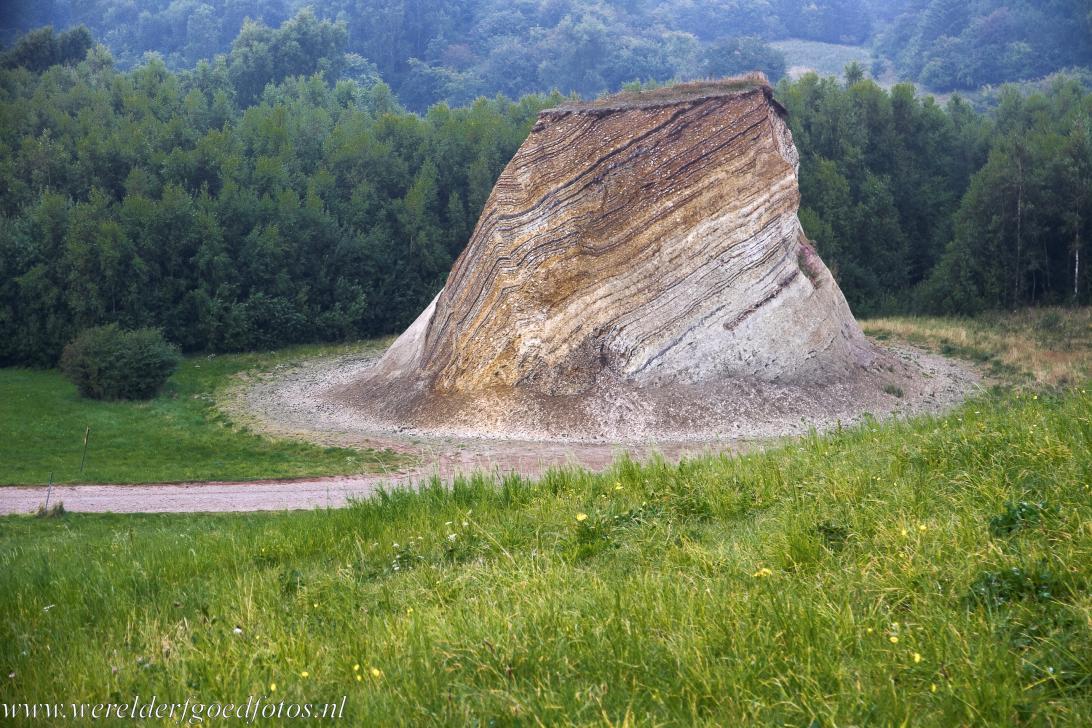
Bispehuen on the island of Fur: This striking rock pillar, known as Bispehuen (Bishop's Mitre), is the most famous moler pillar in the world. Spectacularly folded by glacial pressure during the Ice Age, this pillar reveals a cross-section of Danish moler clay. Although referred to as clay, this unique and extremely rare rock pillar consists of as much as 80 per cent fossilized skeletons of microscopic diatoms (siliceous algae). These algae lived 55 million years ago in a prehistoric sea; they died en masse and sank to the seabed.
Bispehuen on the island of Fur: This striking rock pillar, known as Bispehuen (Bishop's Mitre), is the most famous moler pillar in the world. Spectacularly folded by glacial pressure during the Ice Age, this pillar reveals a cross-section of Danish moler clay. Although referred to as clay, this unique and extremely rare rock pillar consists of as much as 80 per cent fossilized skeletons of microscopic diatoms (siliceous algae). These algae lived 55 million years ago in a prehistoric sea; they died en masse and sank to the seabed.
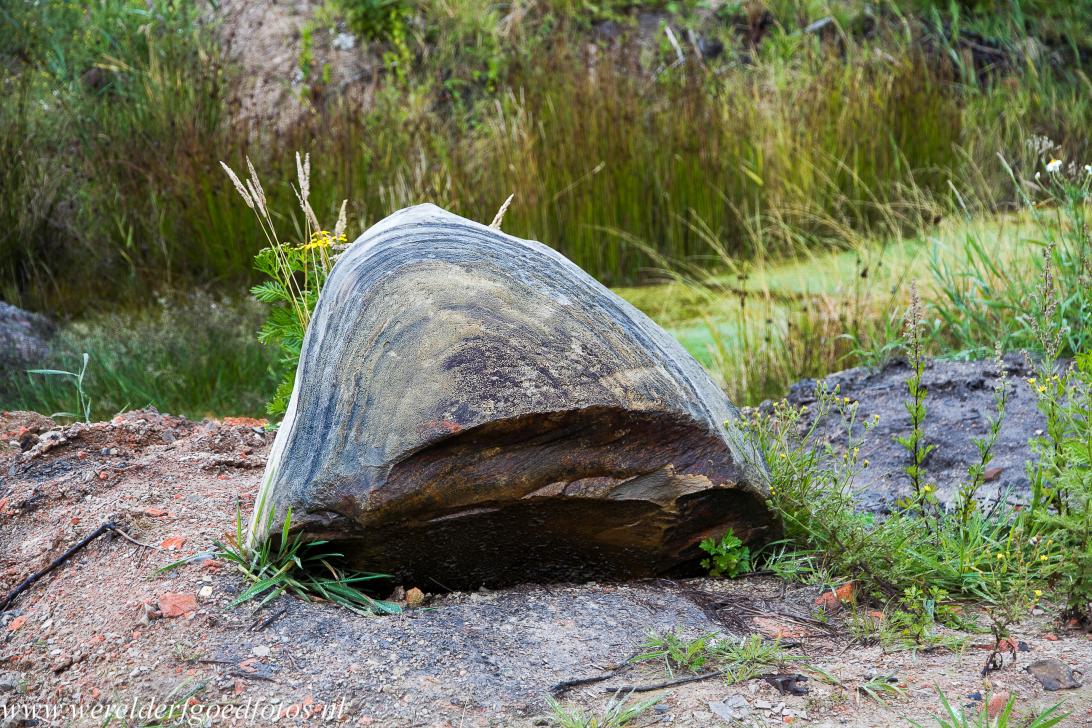
Western Limfjord: This striking boulder is a typical prehistoric cementstone concretion, found in the 55-million-year-old moler of the Western Limfjord. While the surrounding soft clay washes away quickly under heavy rain, these rock-hard limestone formations remain standing upright. The dark and light lines in the rock beautifully reveal the prehistoric sedimentary layers. It is precisely within these specific cementstones that the most complete and detailed bony fish fossils lie hidden. This boulder was found within the man-made Stendal Quarry (Stendalgraven), located close to the famous Bispehuen (the Bishop's Mitre).

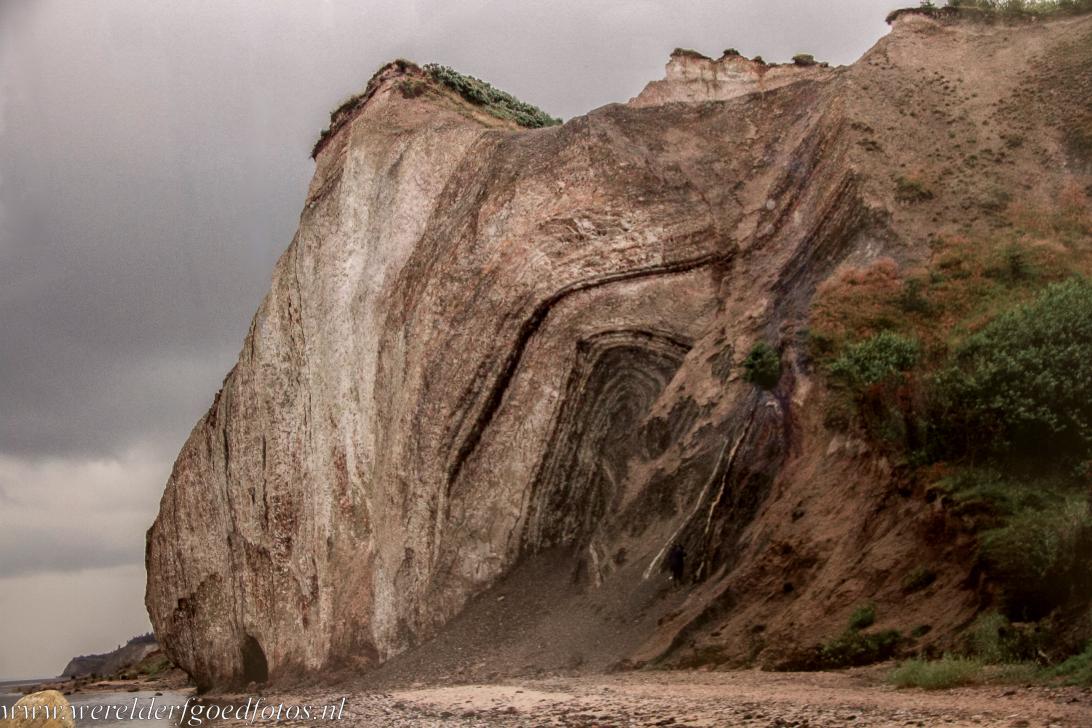
Knudeklint on the island of Fur during a storm and heavy rain. The cliff’s spectacularly folded layers reveal a unique geological landscape. The light-coloured moler clay is clearly visible, interspersed with dark volcanic ash layers dating back 55 million years. Although the cliff face is a paradise for fossil hunters, searching during heavy rain is extremely dangerous; the clay becomes saturated with water, causing massive, heavy chunks to break off suddenly. This impressive Danish site was inscribed on the UNESCO World Heritage List in 2026.

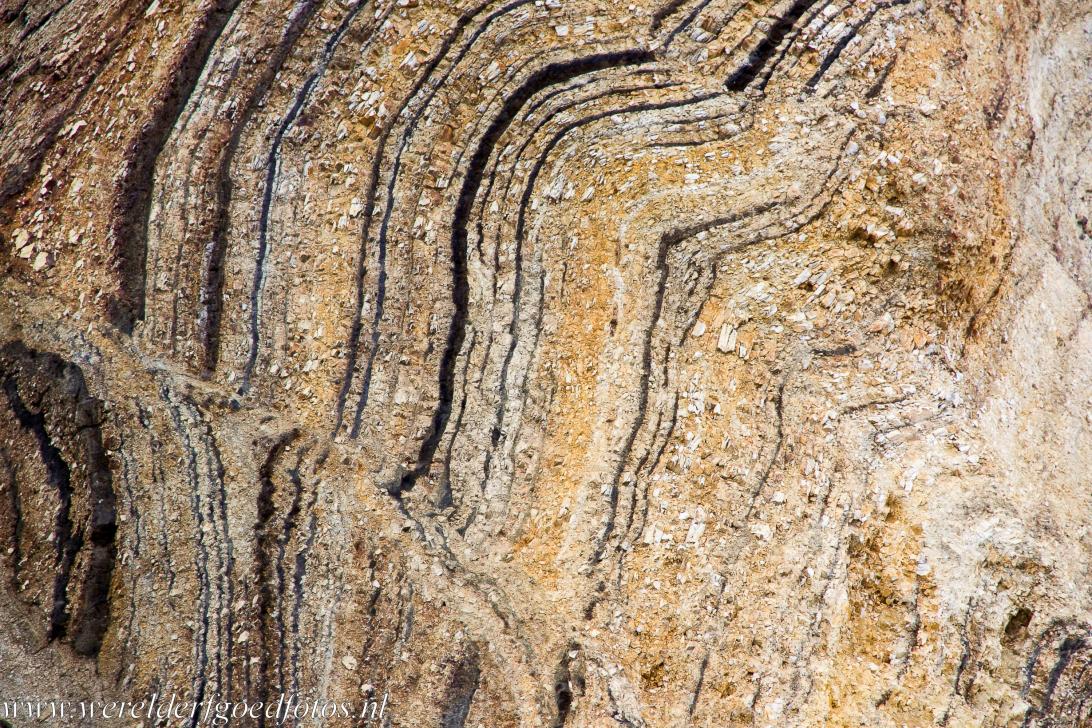
Western Limfjord, the island of Fur: The iconic linear patterns formed by volcanic ash. What makes the moler clay here so remarkable are the dozens of dark, parallel bands running through the rock; these are ash layers from prehistoric volcanic eruptions. During the Ice Ages, the sheer force of the continental ice sheets thrust these millions-of-years-old geological layers upwards and folded them into bizarre, undulating patterns. Thanks to the unique structure of the moler clay, fossils of fish and insects have been preserved in spectacular detail, making this region truly extraordinary.

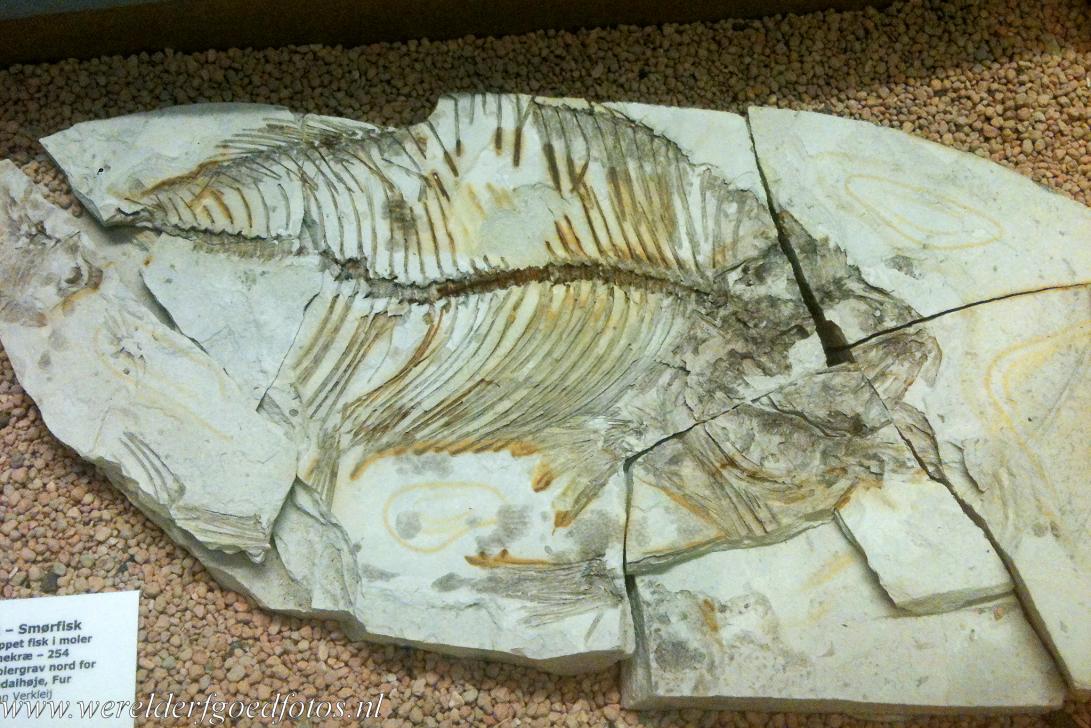
Fur Museum: An impressive and spectacularly preserved fossil of a 55-million-year-old bony fish from the Limfjord. This bony fish (locally known as Smørfisk) was found inside a cementstone concretion on the island of Fur. Because the seabed of the prehistoric sea was oxygen-poor, and dead fish were quickly covered by showers of ash, even the tiniest bones and fin rays remain visible in minute detail after 55 million years. While the soft moler clay along the coast washes away easily during heavy rain, these rock-hard limestone concretions have perfectly preserved the evolutionary history of early bony fish.

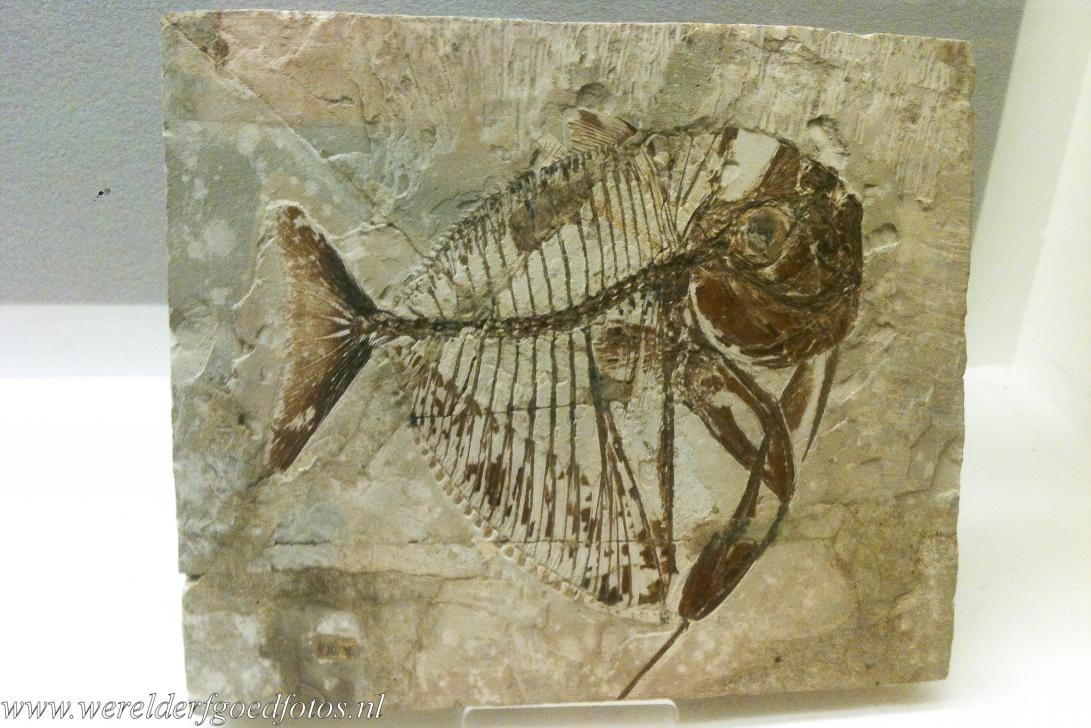
Western Limfjord, Fur Museum: A spectacularly well-preserved fossil of the extinct Eocene moonfish Mene rhombea. Although this complete specimen originates from the famous site in the limestone quarries of Monte Bolca near Verona (Italy), it is displayed here to illustrate the exceptionally rare evolutionary relatives found within the local Danish moler clay. During the early Eocene, closely related species of the family Menidae also inhabited the prehistoric sea surrounding the Limfjord, occasionally leaving behind rare remains that are now carefully preserved as the crown jewels of the museum's collection.

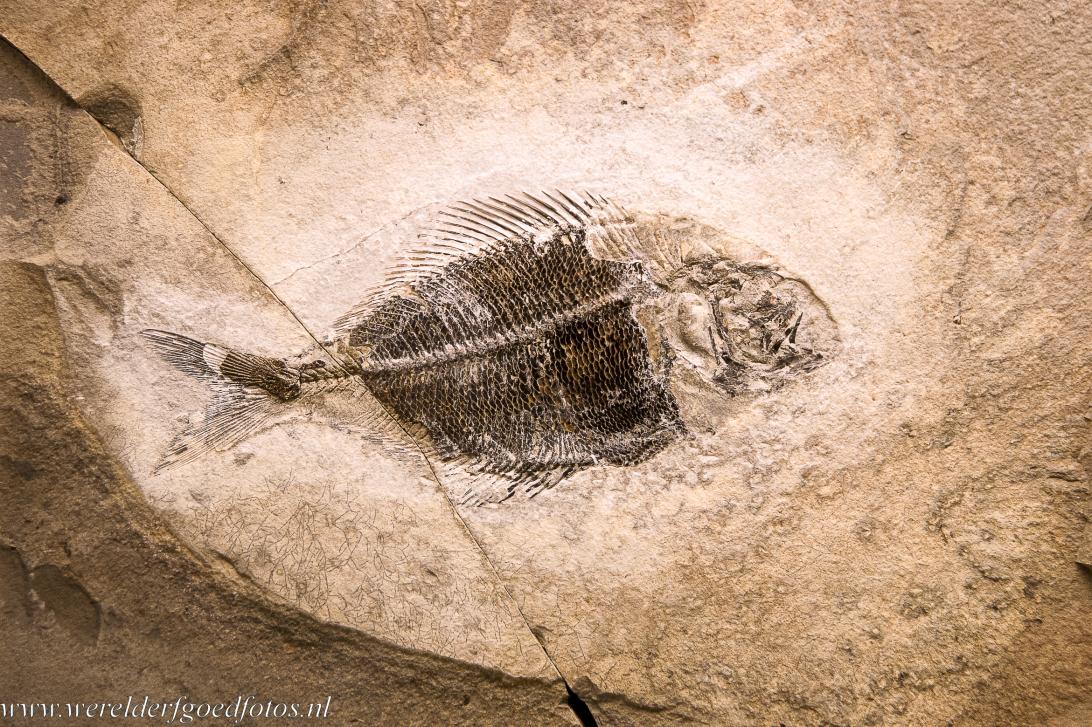
Western Limfjord, Fur Museum: An impressive and spectacularly preserved fossil of the extinct 55-million-year-old bony fish Polyspinatus fluere. Discovered inside a rock-hard cementstone concretion within the local Danish moler-clay, this extraordinary early Eocene specimen reveals minute anatomical detail, including its spread fin rays. The spectacular preservation is due to the oxygen-poor conditions at the prehistoric sea-bed, combined with rapid burial under heavy showers of volcanic ash. While the soft clay along the cliffs washes away easily during torrential rain, these limestone concretions have perfectly locked this evolutionary history in stone.