Speicherstadt and Kontorhaus District with Chilehaus in Hamburg: The Speicherstadt is the largest warehouse district in the world; it is located in the Free and Hanseatic City of Hamburg. Hamburg is located in northern Germany on the banks of the Elbe. This deep river allows large ocean-going ships to reach the inland Port of Hamburg. Hamburg is situated 110 km from Cuxhaven where the Elbe flows into the North Sea. The river is almost three km wide when it passes Hamburg. The Port of Hamburg is the third largest in Europe, after those of Rotterdam and Antwerp. The Speicherstadt was built on small islands in the River Elbe; it was built as a free port to facilitate the transfer of goods without paying customs duties. The Speicherstadt was built between 1885 and 1927. The warehouses of the Speicherstadt stand on timber-pile foundations. The warehouses are multi-storey buildings, built of red brick, a common style in Northern Europe, and decorated with small towers, alcoves and glazed terracotta ornaments. The warehouses are reachable from land and water. The warehouse district is a network of roads, canals and bridges. The Allied bombing raids on Hamburg during the Second World War destroyed 50% of the Speicherstadt. The partial reconstruction took place between 1949 and 1967. The companies in Speicherstadt stored and handled goods such as cocoa, coffee, tea, tobacco and spices. Now, some of the warehouses accommodate museums; the International Maritime Museum of Hamburg is housed in Kaispeicher B, the oldest preserved warehouse in the Speicherstadt. The Kontorhäuser, the office buildings of the merchants, were built in the Kontorhaus District, directly adjacent to the Speicherstadt. The most renowned office building in the Kontorhaus District is the iconic Chile House; this large brick building is a fine example of modernist architecture of the 1920s. The Kontorhaus District bears witness to the prosperity of the former trading dynasties in Hamburg. The Speicherstadt and Kontorhaus District with Chilehaus were added to the UNESCO World Heritage List in 2015.
www.werelderfgoedfotos.nl © Copyright World Heritage Photos
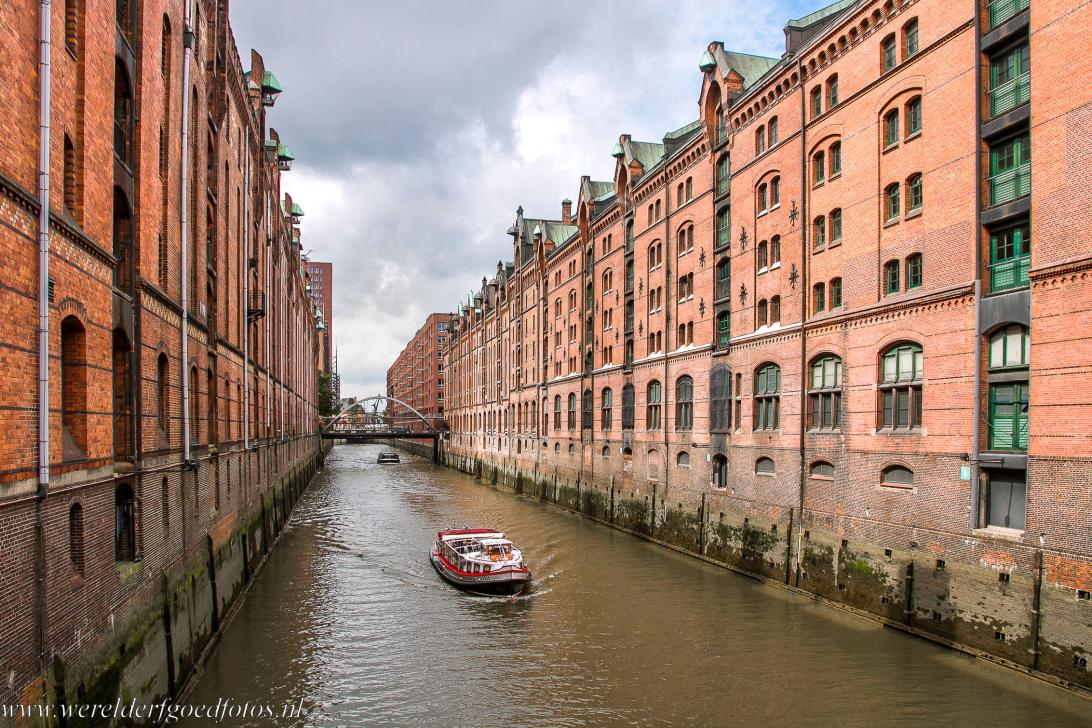
The Speicherstadt and Kontorhaus District with Chilehaus in Hamburg: The red-brick buildings of the Speicherstadt form the largest warehouse district in the world. Situated in the Free and Hanseatic City of Hamburg, this extensive complex was built between 1883 and 1927. Hamburg has the third-largest port in Europe, after the ports of Rotterdam and Antwerp. This historic and imposing warehouse district was inscribed on the UNESCO World Heritage List in 2015.
The Speicherstadt and Kontorhaus District with Chilehaus in Hamburg: The red-brick buildings of the Speicherstadt form the largest warehouse district in the world. Situated in the Free and Hanseatic City of Hamburg, this extensive complex was built between 1883 and 1927. Hamburg has the third-largest port in Europe, after the ports of Rotterdam and Antwerp. This historic and imposing warehouse district was inscribed on the UNESCO World Heritage List in 2015.
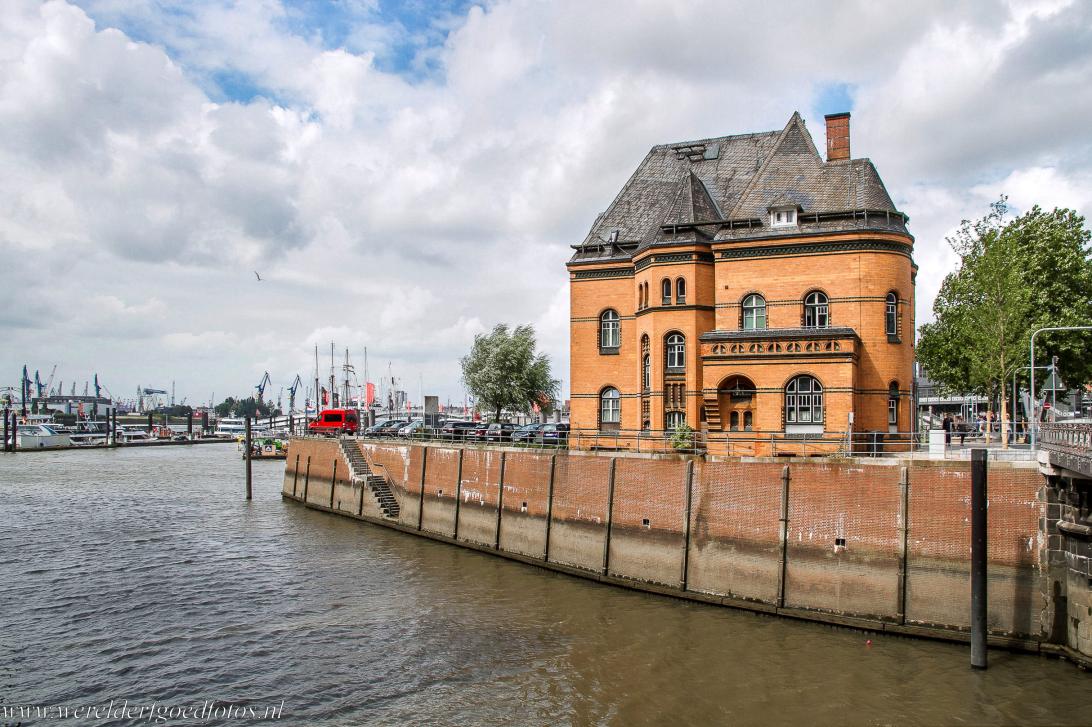
Speicherstadt and Kontorhaus District with Chilehaus in Hamburg: The Hamburg Wasserschloss (Water Castle) is an icon of the Speicherstadt. This historic building once served as housing and a workshop for specialised warehouse workers who operated the winches. Hamburg is located in northern Germany on the banks of the River Elbe. The deep River Elbe allows the huge ocean-going ships to reach the inland Port of Hamburg from the North Sea.

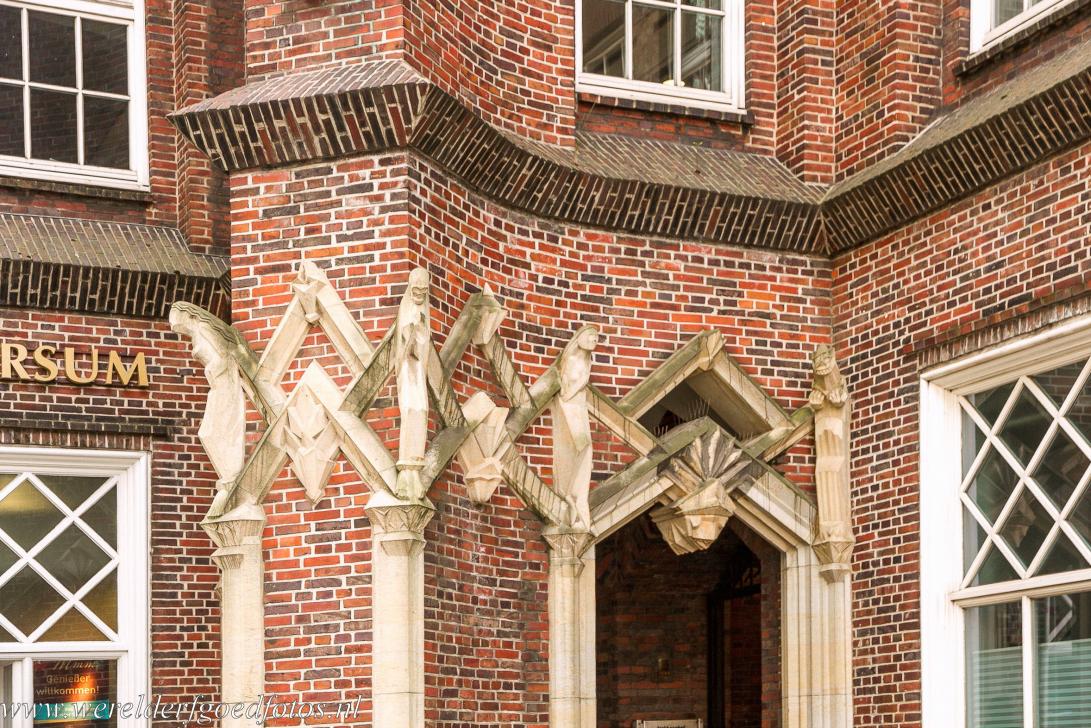
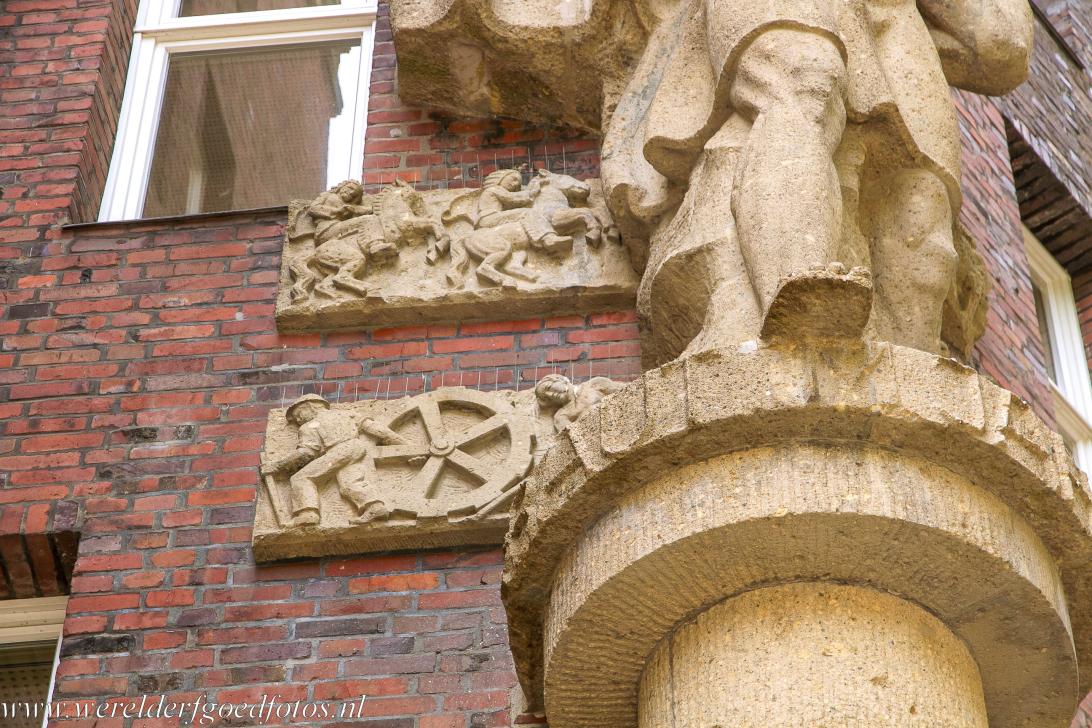
Speicherstadt and Kontorhaus District with Chilehaus in Hamburg: The Mohlenhof was designed by the German architects Rudolf Klophaus, August Schoch and Erich zu Putlitz. This office block was built of red brick between 1927 and 1928. Above the main entrance is a larger-than-life-size sculpture of Mercury, the Roman god of trade. Mercury is flanked on either side by reliefs that symbolise the five continents. The sculpture was created by Richard Kuöhl.

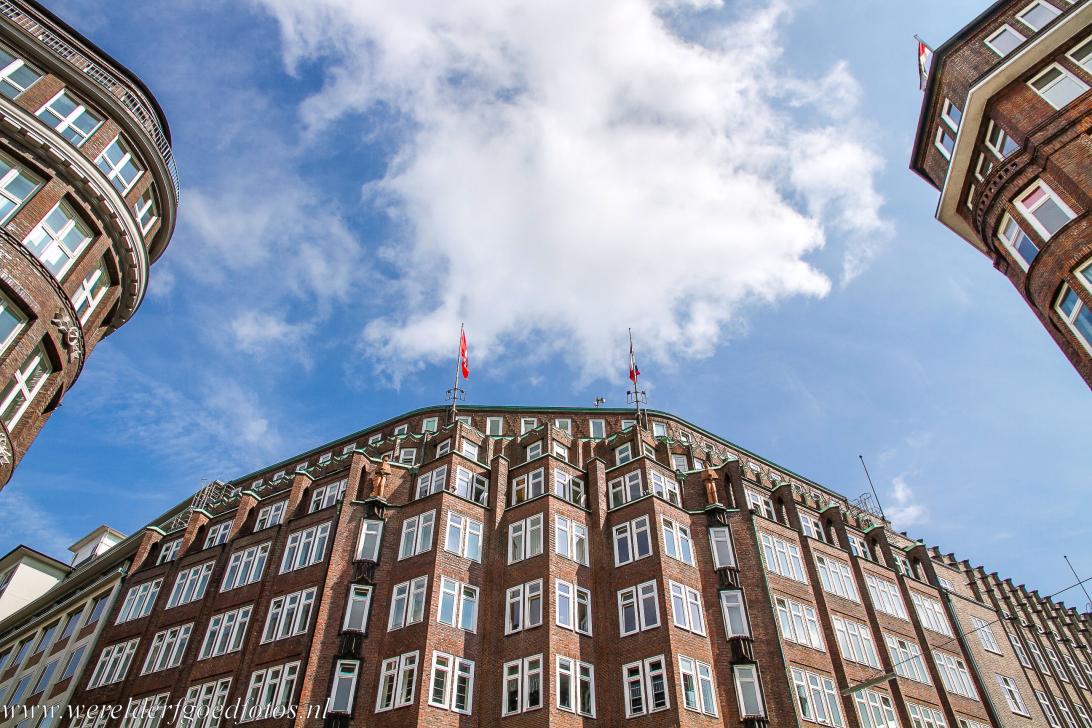
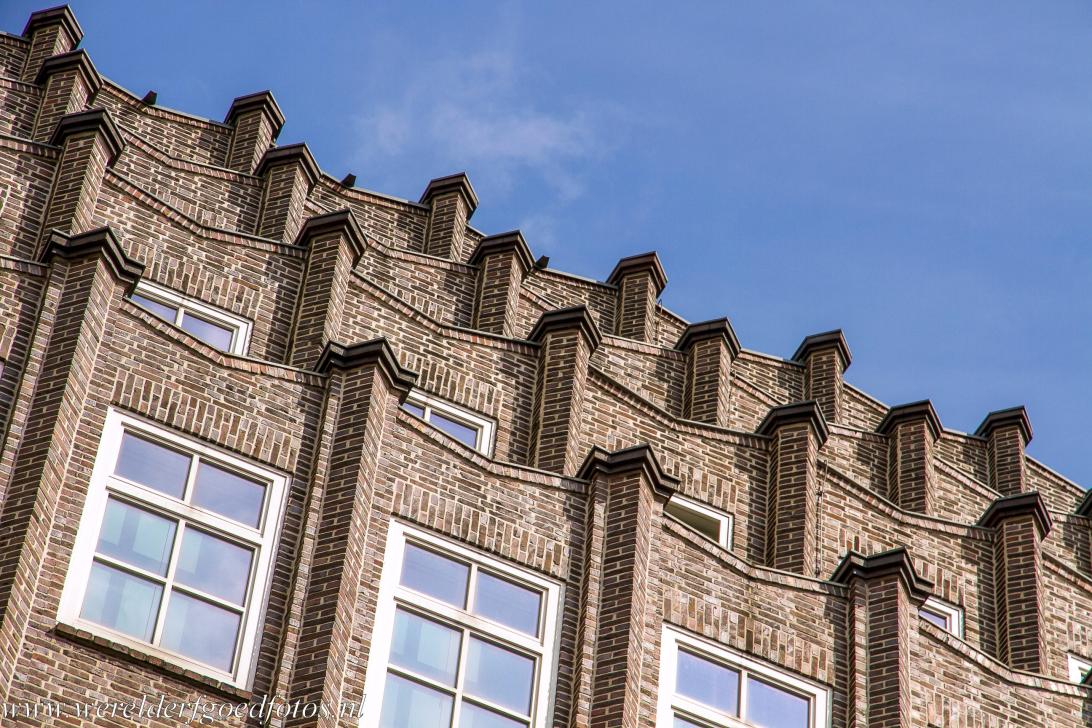
Speicherstadt and Kontorhaus District with Chilehaus in Hamburg: The Montanhof is one of the huge office buildings (Kontorhäuser) in Hamburg. The façade of the Montanhof is adorned with numerous Art Deco decorations, which is unique in Hamburg. The Montanhof is characterised by the Staffelgeschosse, the typical recessed upper floors and bay windows. This way of building allowed more daylight to reach the streets.

Speicherstadt and Kontorhaus District with Chilehaus in Hamburg: The Montanhof was built of reddish-brown brick between 1924 and 1926. The office building was designed by the architects Hermann Distel and Augustus Grubitz. The Kontorhaus district in Hamburg bears witness to the prosperity of the former trading dynasties in the Hanseatic City. The grand office buildings in the Kontorhaus District are among the most notable architectural structures of the 1920s.

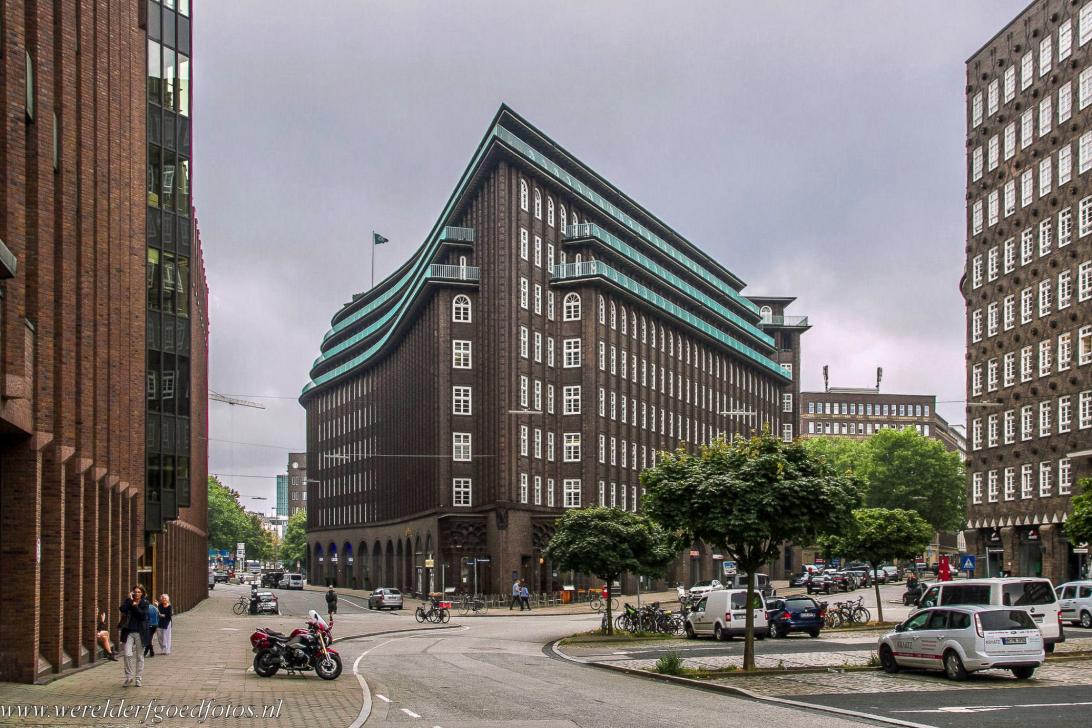
Speicherstadt and Kontorhaus District with Chilehaus in Hamburg: The Chilehaus was designed by the German architect Fritz Höger. He is regarded as one of the leading figures of German Brick Expressionism. The Chilehaus is the largest building within the Kontorhaus District. It was shaped to fit an uneven plot between two streets. The building features the prow of a ship. The eastern corner of the building is known as the sharpest façade angle in Europe.

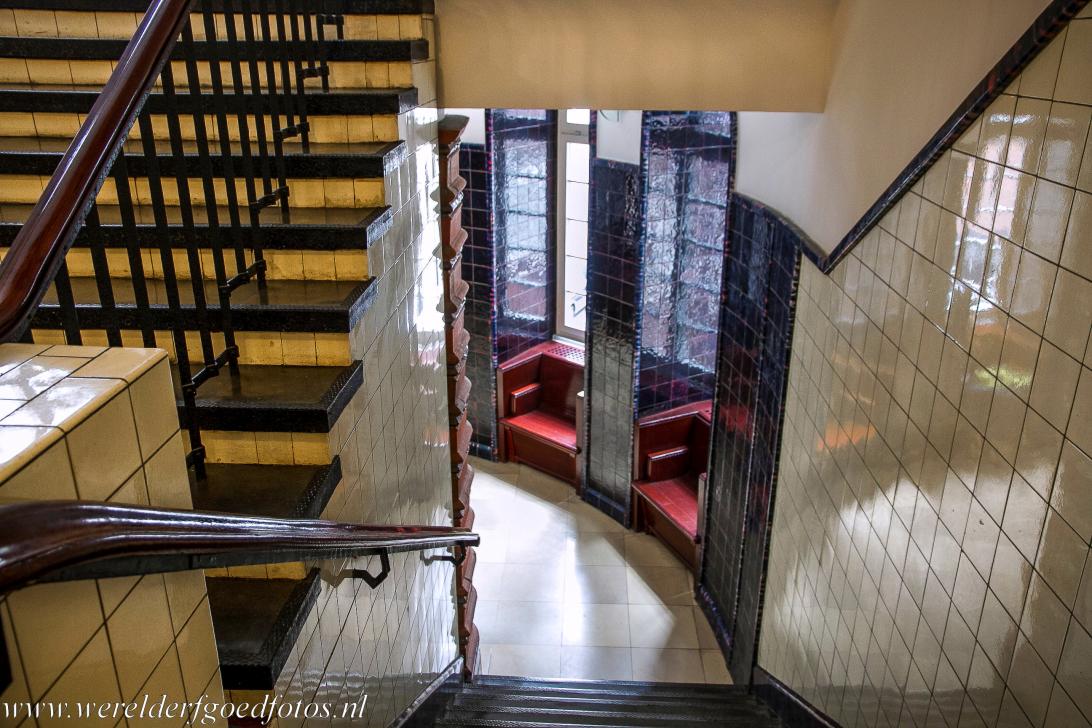
Speicherstadt and Kontorhaus District with Chilehaus in Hamburg: The stairwell inside the Chilehaus is a masterpiece of the Art Deco; it is adorned with handmade ceramic tiles and gilded elements. The Chilehaus is the most famous building in the Kontorhaus District and it is also the most renowned work of the German architect Fritz Höger. These merchant office buildings (the Kontorhäuser) were built directly adjacent to the Speicherstadt.

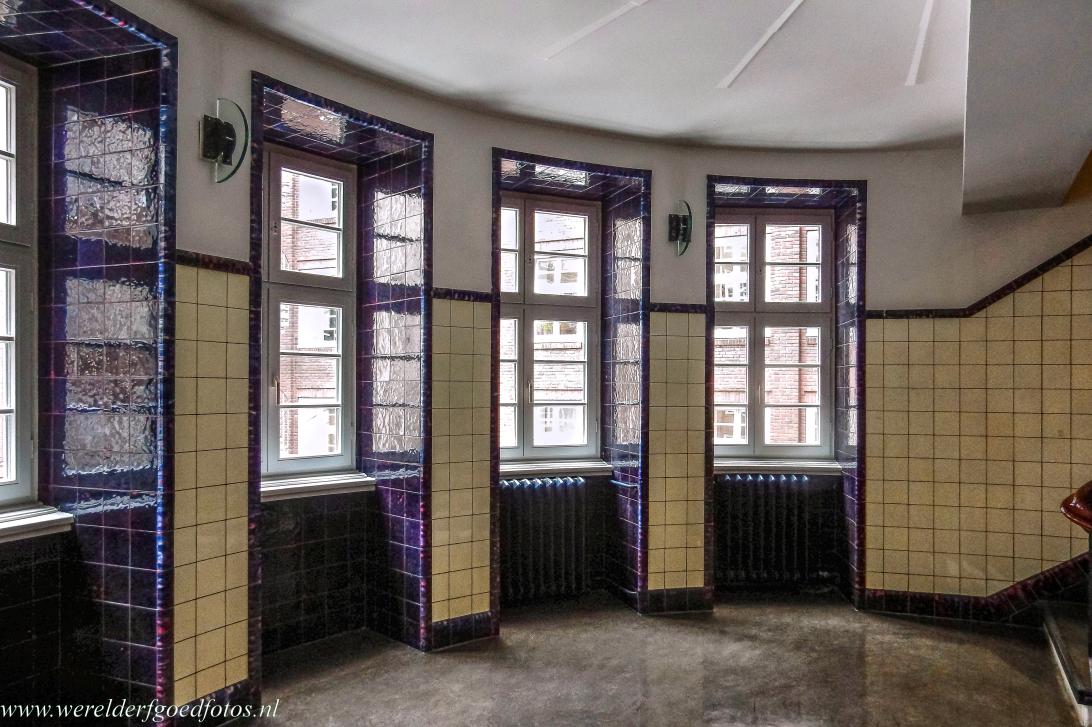
Speicherstadt and Kontorhaus District with Chilehaus in Hamburg: One of the bay windows of the Chilehaus. The Chilehaus was built for the shipping magnate Henry (Chile) Sloman. The ten-storey office building was constructed in the German Brick Expressionism style. The Chilehaus is decorated with ornamental brickwork. This iconic building is a splendid example of Modernist architecture of the 1920s.

Speicherstadt and Kontorhaus District with Chilehaus in Hamburg: The Meßberghof is one of the renowned Kontorhäuser, the monumental office buildings of the city's merchants. These Kontorhäuser were constructed in the Kontorhausviertel, a district specifically built for this purpose. The Kontorhaus District is located directly adjacent to the Speicherstadt, the world-famous warehouse district in the port of the Hanseatic City of Hamburg.

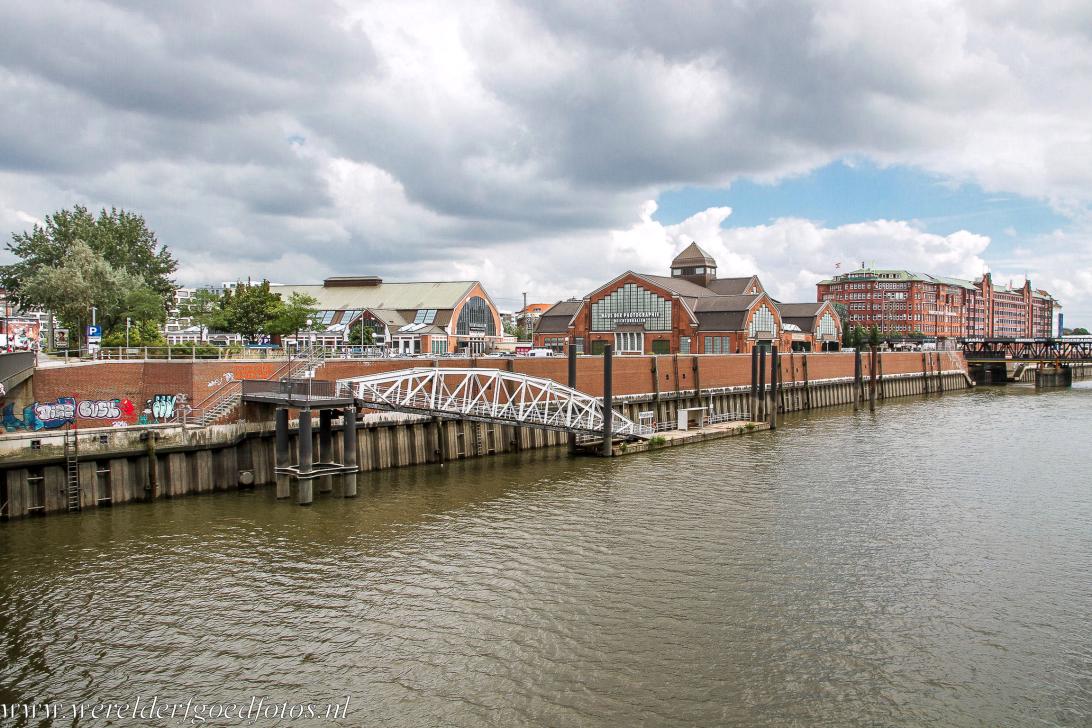
Speicherstadt and Kontorhaus District with Chilehaus in Hamburg: The two Deichtorhallen, now the Haus der Photographie Hamburg, were built as market halls between 1911 and 1914. Today, the Deichtorhallen house one of the largest centres for contemporary art and photography in Europe. The Speicherstadt and Kontorhaus District with Chilehaus gained status as a UNESCO World Heritage Site in 2015.