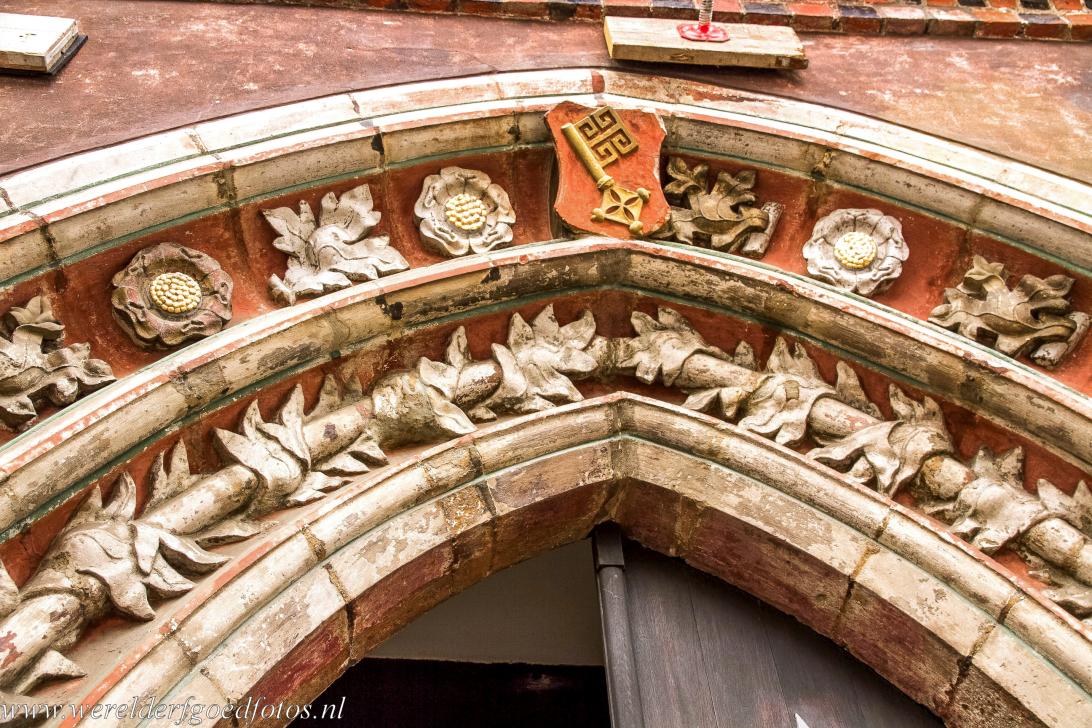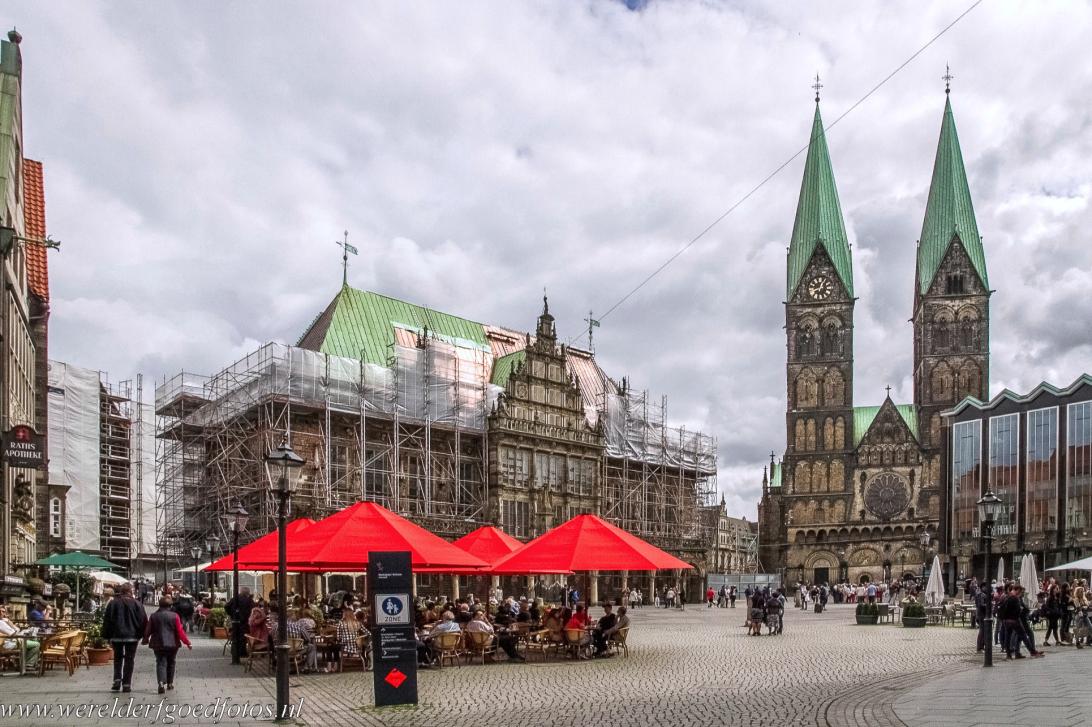
Town Hall and Roland on the Marketplace in Bremen: Bremen is a Free Hanseatic City on the Weser River, situated in northwestern Germany. The historic Marketplace of Bremen is situated in the centre of Bremen. The most important building on the Marketplace is the Town Hall of Bremen, it was built in the Gothic Style between 1404 and 1410. In the early 17th century, the façade was rebuilt in the Weser Renaissance Style, a prominent style in north Germany during the Late Renaissance period, also known as Northern Mannerism, that occurred in the north of Europe in the beginning of the 16th century and lasted until the early 17th century. The wine cellar of the town hall was was often visited by artist and writers, such as Heinrich Heine. The Roland statue stands in front of the Town Hall of Bremen and faces Bremen Cathedral, it is the largest Roland statue in Germany. The statue was made of limestone and is 5.5 metres tall, it dates back to 1404 and is one of the oldest and most representative of all the Roland statues in Germany. The Roland statue is the very symbol of the freedom and the trading rights of a town. The actual Roland was a hero and the chief paladin of the Emperor Charlemagne. The Town Hall and Roland on the Marketplace in Bremen became a UNESCO World Heritage in 2004.
www.werelderfgoedfotos.nl © Copyright World Heritage Photos
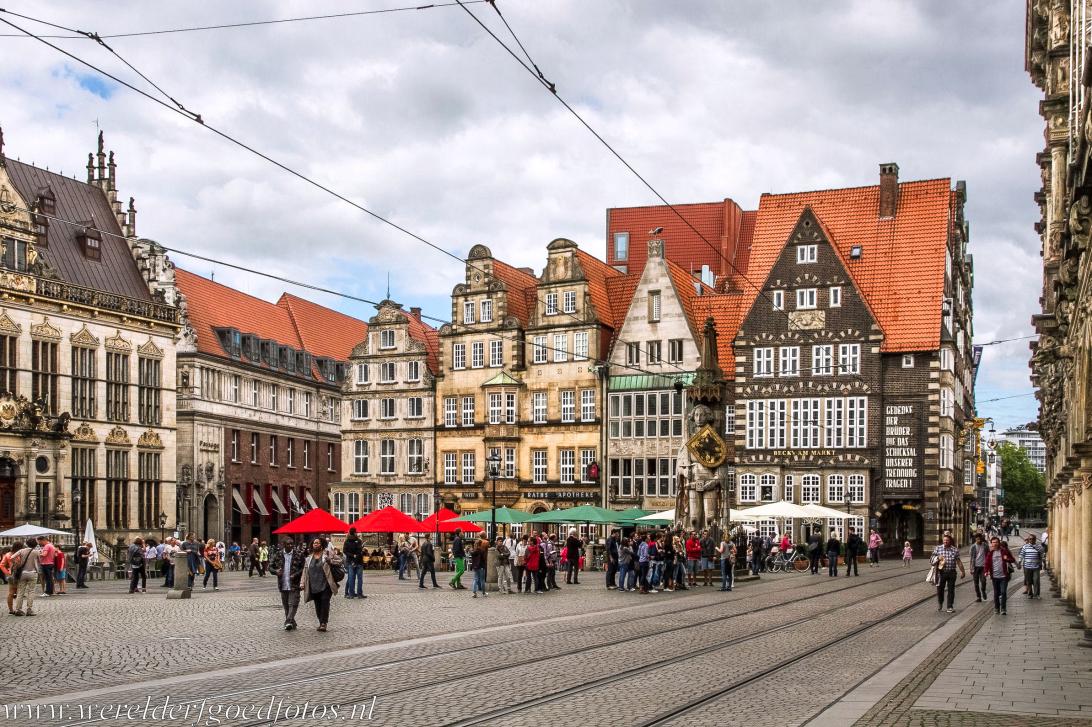
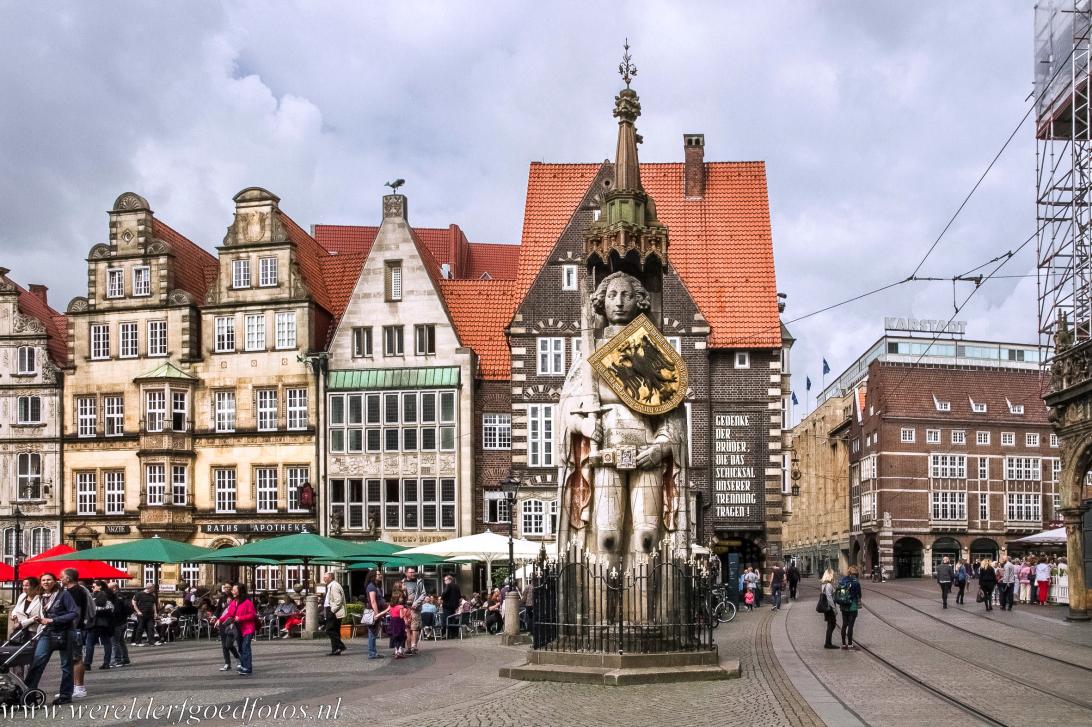
Town Hall and Roland on the Marketplace of Bremen: The Roland statue stands in front of the Town Hall of Bremen. A Roland statue is a symbol of the freedom and the trading rights of a town. The 5.47-metre-tall Roland statue of Bremen dates from 1405 and is the oldest surviving Roland statue. The real Roland was a legendary medieval hero and Charlemagne's chief paladin, the foremost of his twelve paladins.
Town Hall and Roland on the Marketplace of Bremen: The Roland statue stands in front of the Town Hall of Bremen. A Roland statue is a symbol of the freedom and the trading rights of a town. The 5.47-metre-tall Roland statue of Bremen dates from 1405 and is the oldest surviving Roland statue. The real Roland was a legendary medieval hero and Charlemagne's chief paladin, the foremost of his twelve paladins.
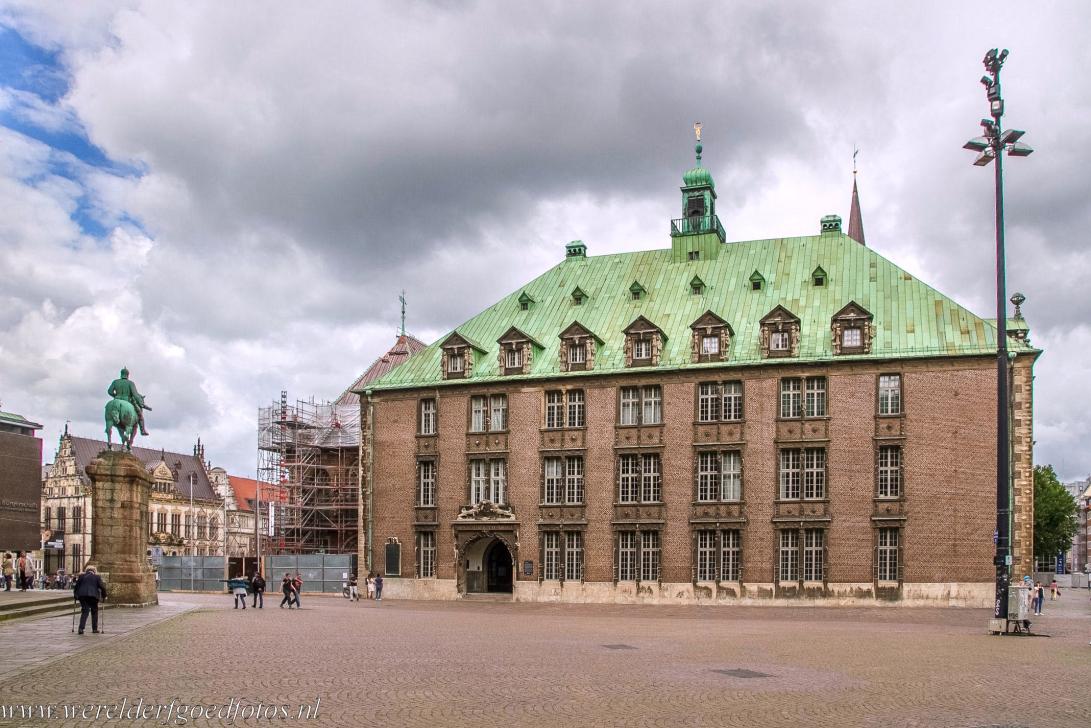
Town Hall and Roland on the Marketplace of Bremen: The equestrian statue of Bismarck on the Domshof (Cathedral Square) in front of the New Town Hall of Bremen. The New Town Hall was designed by the German architect and engineer Gabriel von Seidl in the early 20th century and blends seamlessly with the medieval town hall. During our visit, the Old Town Hall was covered in scaffolding for restoration work.

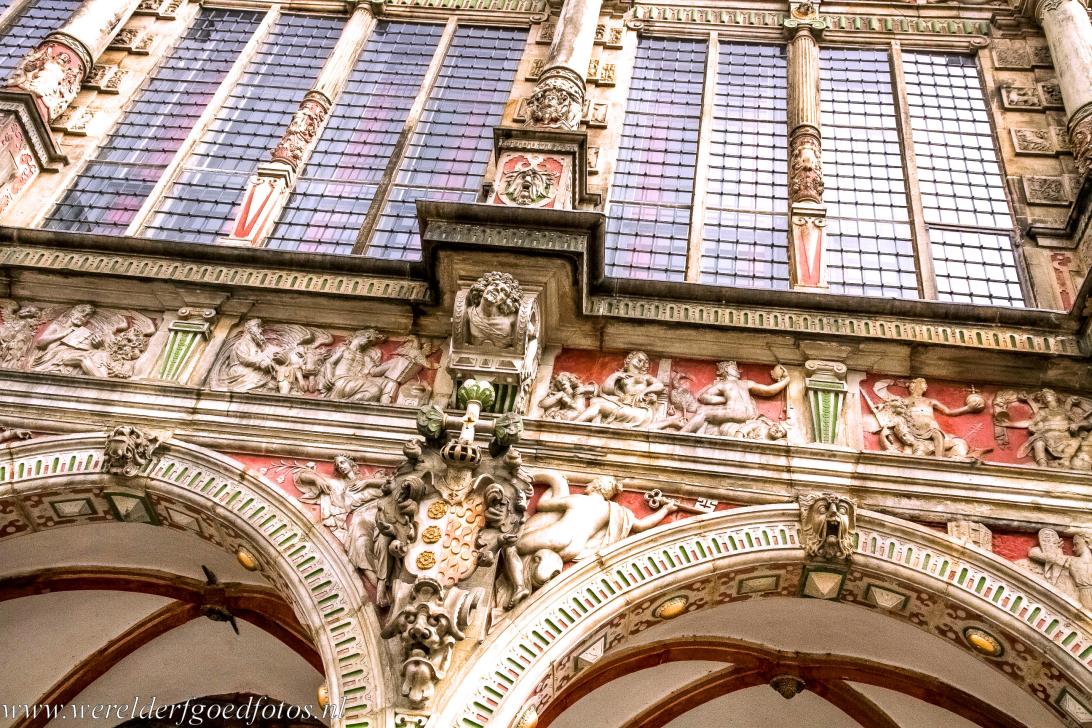
Town Hall and Roland on the Marketplace of Bremen: The Town Hall of Bremen consists of two adjacent buildings; the Old Town Hall, built between 1404 and 1410, and the New Town Hall, built between 1906 and 1913. In the early 17th century, the magnificently decorated façade was added in the Weser Renaissance style; a style that only flourished in Europe north of the Alps.

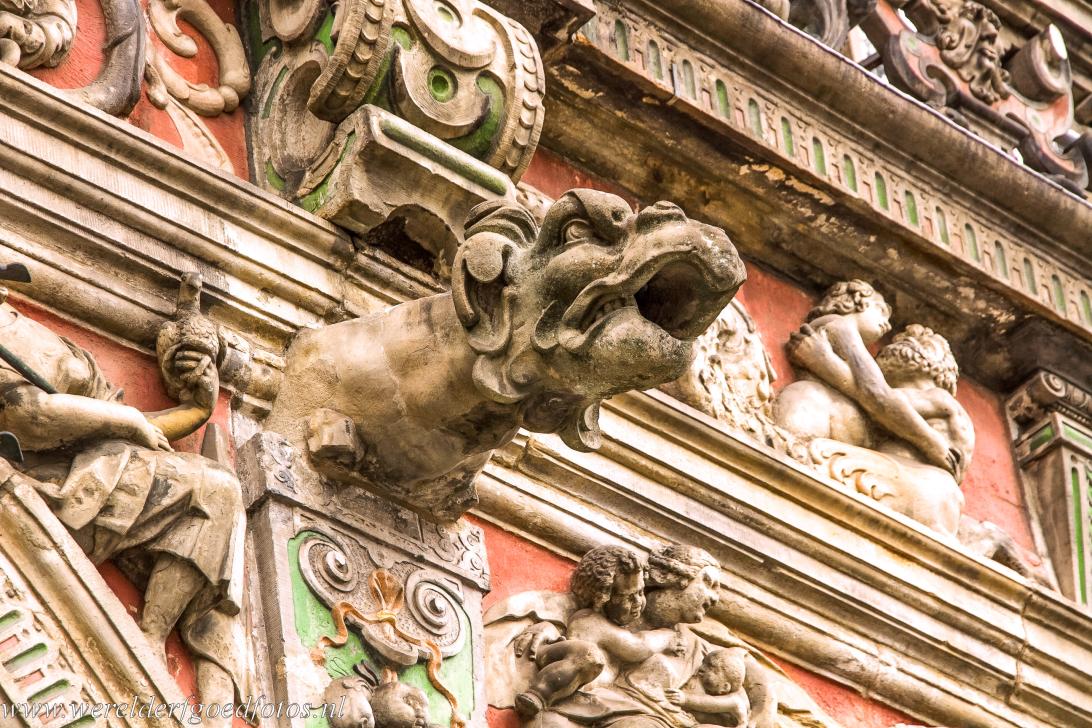
Town Hall and Roland on the Marketplace of Bremen: One of the gargoyles on the façade of the Old Town Hall of Bremen; the façade was built in the Weser Renaissance style, a prominent style in the north of Germany during the Late Renaissance. The style blended Italian and Northern Renaissance elements, drawing significant influence from the Dutch Renaissance architecture.

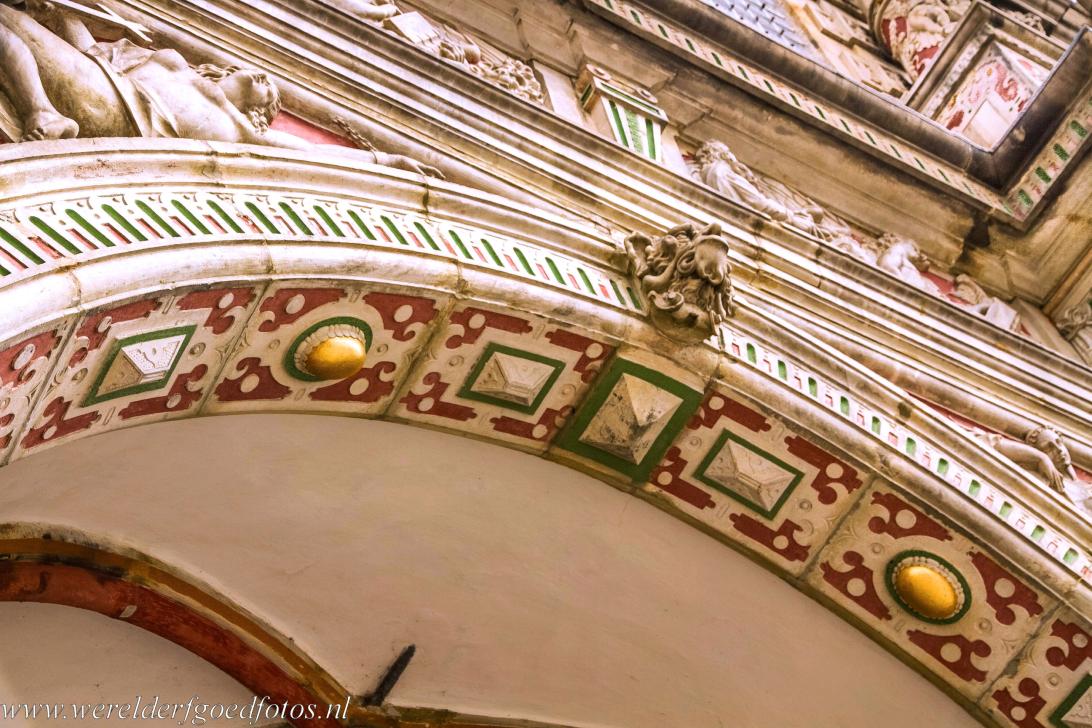
Town Hall and Roland on the Marketplace of Bremen: The sculptures above the entrance on the left façade of the Old Town Hall. The building contains several stylish rooms: the Lower Hall, the Upper Hall, and the Golden Hall are notable; most of the rooms are adorned with wood carvings and wall paintings. The Golden Hall (Güldenkammer) was decorated in 1905 in the ornamental Jugendstil or Art Nouveau style.

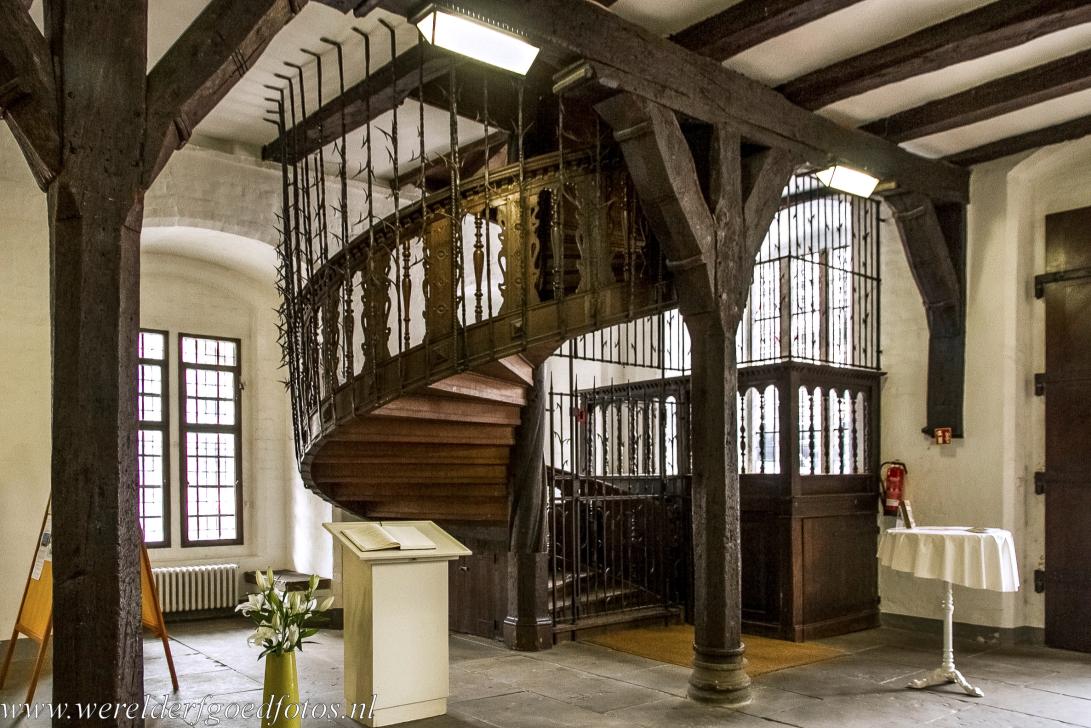
Town Hall and Roland on the Marketplace of Bremen: A spiral staircase inside the Town Hall of Bremen. The Lower Hall is supported by twelve oak pillars; this hall has retained its unadorned original form. In medieval times, it functioned as a market hall for fine goods. For more than 600 years, the Town Hall of Bremen has been the seat of the mayor.

Town Hall and Roland on the Marketplace of Bremen: The wine cellar beneath the Town Hall is over 600 years old. It houses the Rosefass, the oldest wine cask in Germany, which contains a Rüdesheimer Apostelwein (Apostle Wine) from 1653; this is known as 'Rose Wine', named after the ornamental decorations in the wine cellar. Writers such as Heinrich Heine used to come here for inspiration.

Town Hall and Roland on the Marketplace of Bremen: Numerous Roland statues were erected in Germany and other parts of Northern and Central Europe during the Middle Ages as an emblem of the trading rights of a city and a symbol of freedom. The Marketplace was repaved with grey sandstones in 1836; darker stones depict a huge wheel with spokes. In the middle of the wheel, pinkish stones depict the Hanseatic Cross, a reference to the Hanseatic League.

Town Hall and Roland on the Marketplace of Bremen: During the recent restoration of the Town Hall, the impressive Weser Renaissance façade was hidden behind scaffolding. To the right side stands the medieval Bremen Cathedral; its façade faces the marketplace and the Roland statue. The town hall and Roland on the marketplace in Bremen were inscribed on the UNESCO World Heritage List in 2004.

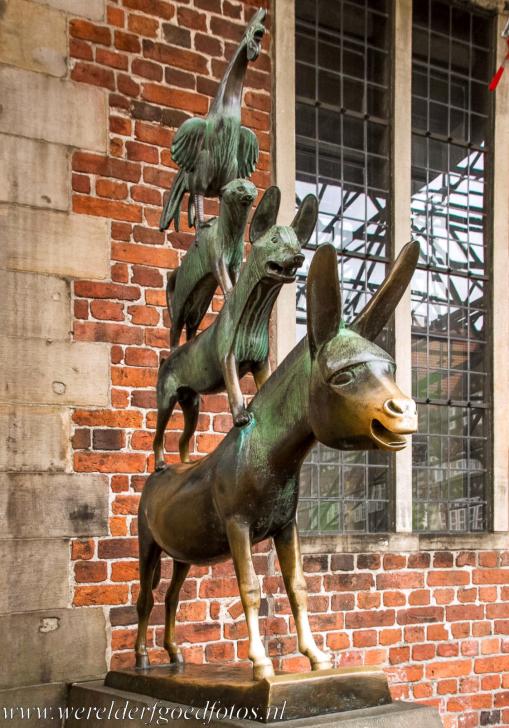
Town Hall and Roland on the Marketplace in Bremen: The bronze statue of the Bremen Town Musicians, situated on the western side of the Town Hall of Bremen. The statue was created by Gerhard Marcks in 1951. The statue is based on the Bremen Town Musicians, a fairy tale by the Brothers Grimm. According to legend, touching the front legs of the donkey brings good luck. The Gerhard Marcks Haus in Bremen is dedicated to the work of the sculptor Gerhard Marcks.