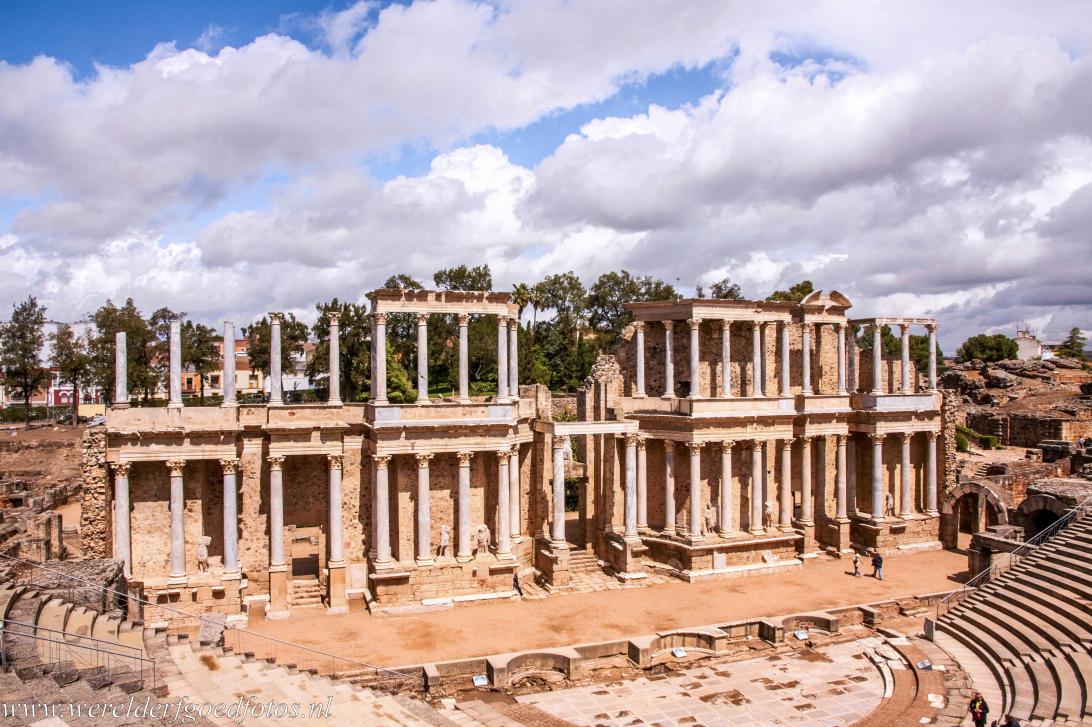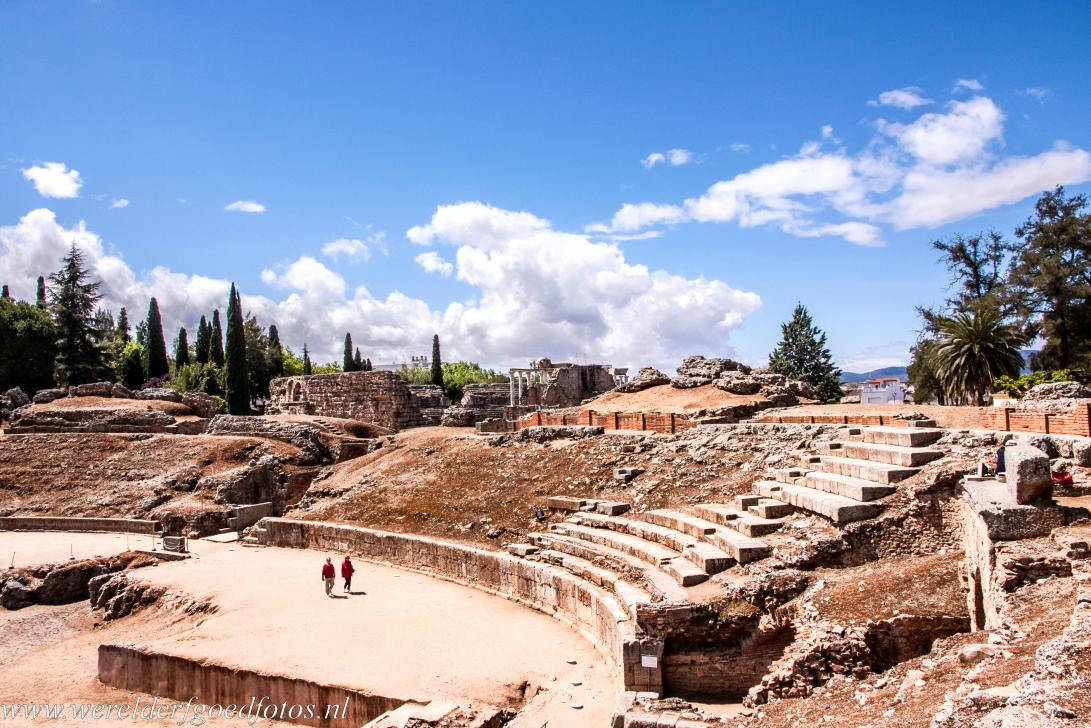
Archaeological Ensemble of Mérida: The city of Mérida was founded as Augusta Emerita in 25 BC. Augusta Emerita was the Roman name for Mérida. Augusta Emerita served as the capital of the Roman province of Lusitania. This city was a major centre with a vast network of roads branching out across the Hispanic territory. Several important roads met in Mérida, including the famous Silver Route (Via de la Plata) and the roads to Lisbon, Córdoba and Toledo. The Archaeological Ensemble of Mérida features many monuments from Roman times, including a theatre, an amphitheatre, temples, aqueducts and a stone bridge over the River Guadiana. The Roman theatre of Mérida was built between 16 and 15 BC. This historic building is the most complete and best-preserved of its kind in Europe. The amphitheatre of Mérida was officially opened in 8 BC; it is located close to the impressive Roman theatre of Mérida. The imposing Los Milagros Aqueduct was built during the 1st century AD; it was one of three aqueducts built in Mérida. The other aqueducts of Augusta Emerita were the San Lázaro Aqueduct and the Aqua Augusta. The Archaeological Ensemble of Mérida is situated in the Extremadura region of west-central Spain and is one of the largest and most notable archaeological sites in the country. Mérida is set roughly 75 km south of the World Heritage Old Town of Cáceres. This outstanding ensemble was declared a UNESCO World Heritage Site in 1993.
www.werelderfgoedfotos.nl © Copyright World Heritage Photos
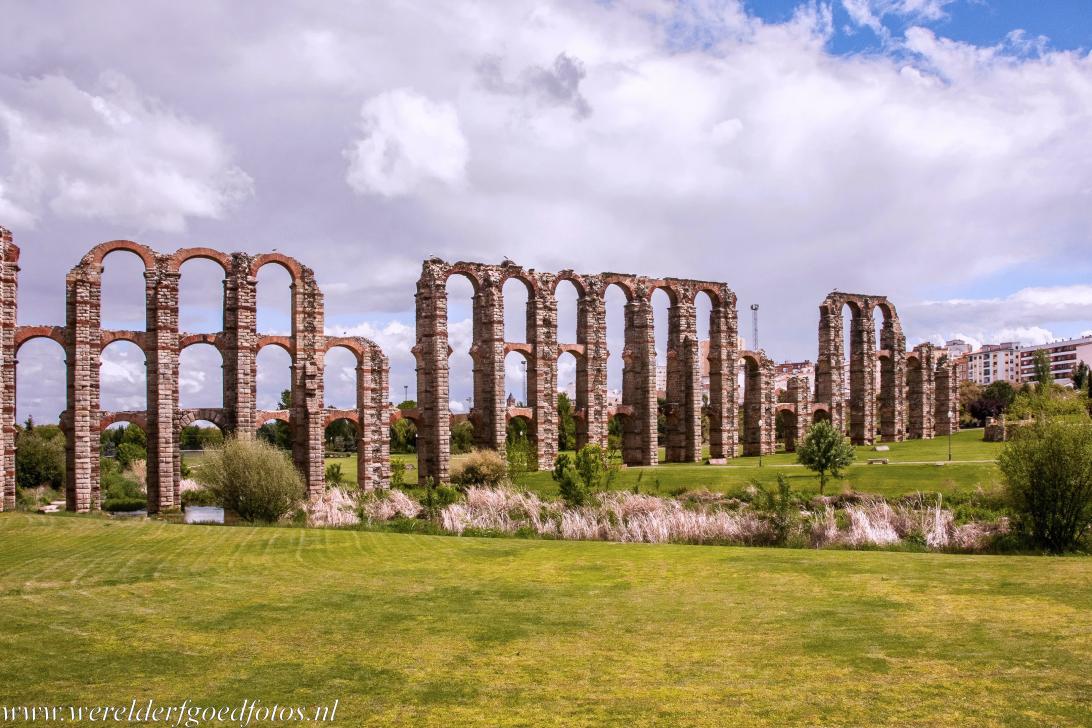
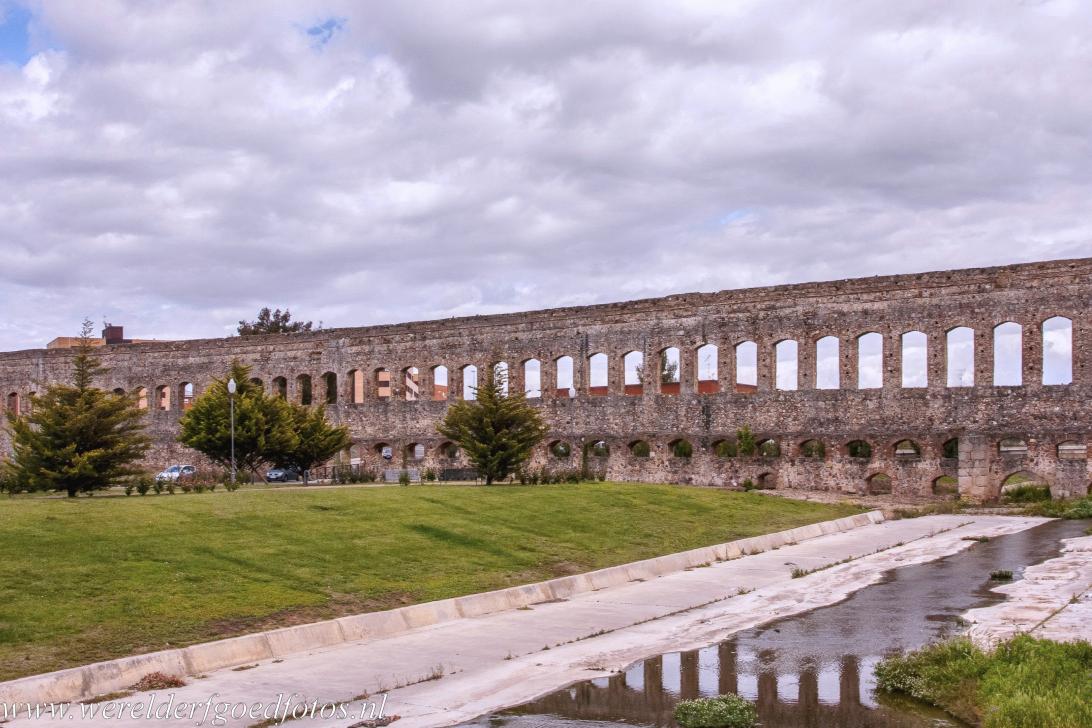
Archaeological Ensemble of Mérida: The Los Milagros Aqueduct was built in the first century AD. This imposing Roman monument was one of three aqueducts built at Augusta Emerita, modern-day Mérida. The other two aqueducts were the San Lázaro Aqueduct and the Aqua Augusta. The aqueduct has a maximum height of 25 metres. The colossal arches were constructed of granite combined with brick. This masterpiece of Roman engineering supplied water to Mérida. The Los Milagros Aqueduct crosses the River Albarregas.

Archaeological Ensemble of Mérida: The Los Milagros Aqueduct was built in the first century AD. This imposing Roman monument was one of three aqueducts built at Augusta Emerita, modern-day Mérida. The other two aqueducts were the San Lázaro Aqueduct and the Aqua Augusta. The aqueduct has a maximum height of 25 metres. The colossal arches were constructed of granite combined with brick. This masterpiece of Roman engineering supplied water to Mérida. The Los Milagros Aqueduct crosses the River Albarregas.

Archaeological Ensemble of Mérida: The Roman theatre of Mérida was built in 16 and 15 BC. Its semi-circular walls are still intact as well as the back wall with its double-tiered columns. This ancient theatre is the most complete and well-preserved Roman theatre in Europe. The theatre is situated close to the amphitheatre of Mérida. Since 1933, the Festival of Classical Theatre has been held annually in the Roman theatre. The Archaeological Ensemble of Mérida gained status as a UNESCO World Heritage Site in 1993.

Archaeological Ensemble of Mérida: The Roman amphitheatre of Mérida was officially opened in 8 BC. It was used for gladiator fights and animal hunts and could seat at least 15,000 spectators. The amphitheatre is situated close to the Roman theatre of Mérida. This city was founded in 25 BC as Augusta Emerita, the capital of the Roman province of Lusitania. Mérida has a number of impressive monuments from the Roman period, such as temples, a theatre, a stone bridge over the River Guadiana, aqueducts, and the amphitheatre.

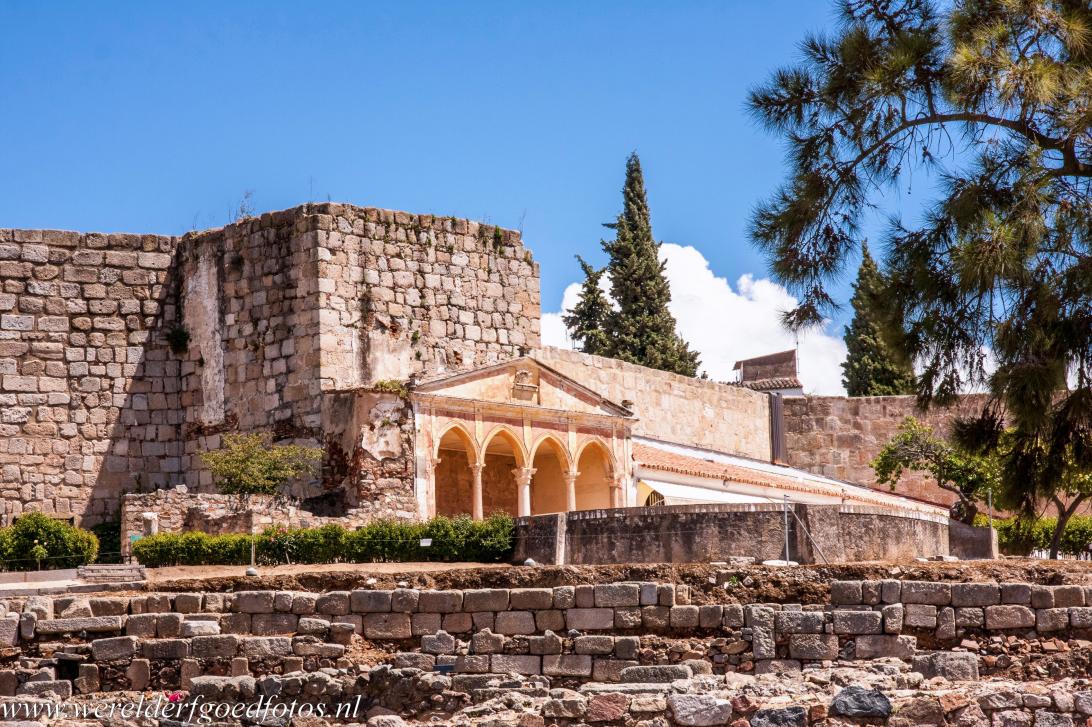
Archaeological Ensemble of Mérida: In the 8th century, the Umayyad dynasty conquered Mérida during the Muslim expansion of Hispania. The Alcazaba was built as a military fortress in 835 AD to dominate the city. This impressive Muslim fortification was built on the remains of the Puerta del Puente and was part of the city walls. The Alcazaba was the first Arab citadel on the Iberian Peninsula. Inside this strategic fortress is a Roman reservoir for storing drinking water. After the Christian Reconquest of Spain, it was given to the Order of Santiago; they used it as a convent.

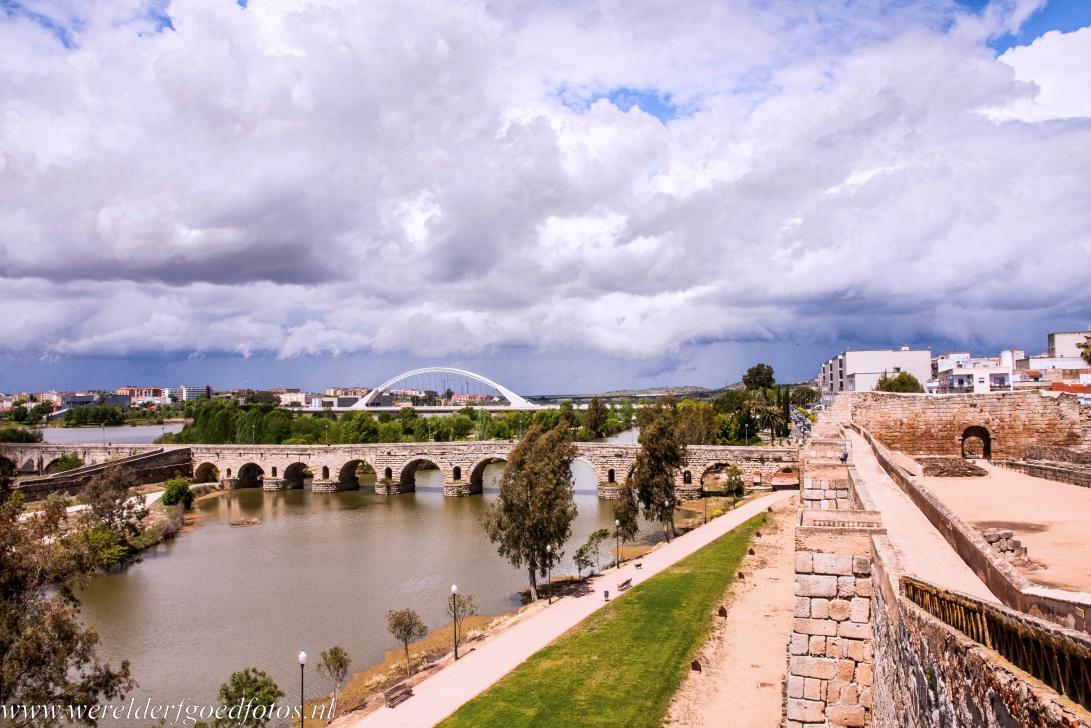
Archaeological Ensemble of Mérida: The Roman bridge over the River Guadiana, the impressive walled Alcazaba to the right. The Roman bridge is 792 metres long and 12 metres high above water level. Augusta Emerita, modern-day Mérida, was one of the most important cities on the Iberian Peninsula. The arched stone bridge was a major crossing; the Roman roads crossing the Iberian Peninsula all met in Augusta Emerita, including the famous Silver Route (Via de la Plata). The bridge was the main entrance to the Roman city.

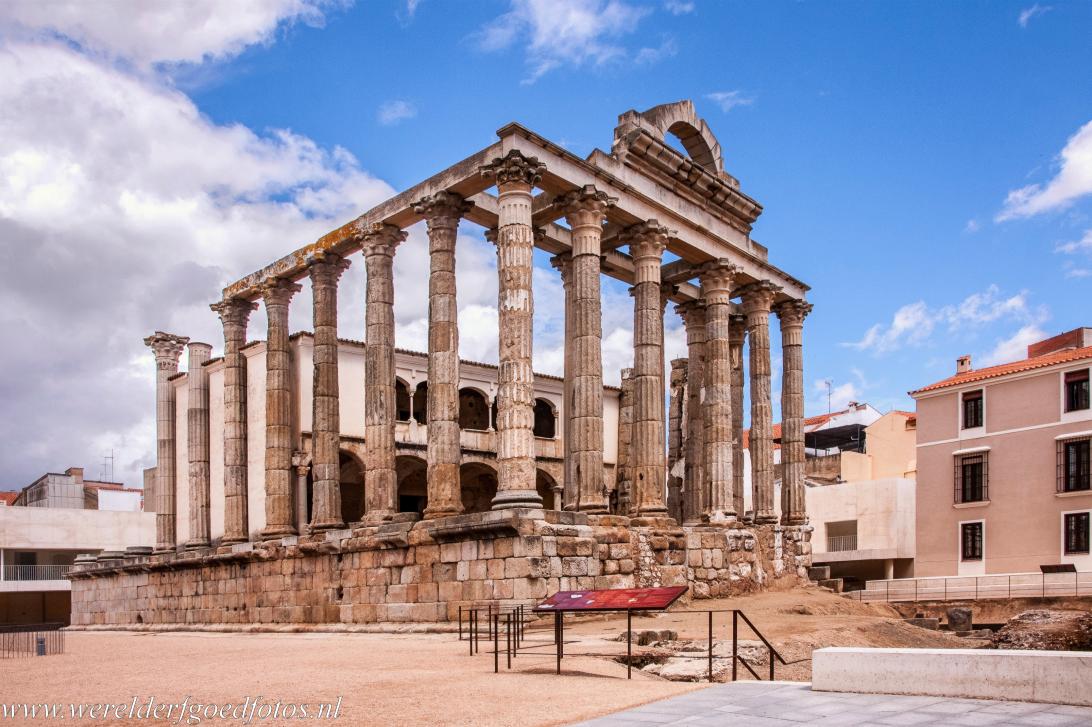
Archaeological Ensemble of Mérida: The Temple of Diana was erected by the Romans at the end of the first century BC. This temple is one of the oldest Roman buildings and the only example of Roman religious architecture in Mérida that has been preserved in relatively good condition. It stands on a three-metre-high base and was originally set in a sacred garden enclosed by a wall. The tympanum is supported by six granite Corinthian columns. The Archaeological Ensemble of Mérida is one of the largest archaeological sites in Spain.

Archaeological Ensemble of Mérida: The San Lázaro Aqueduct served as one of the main water supplies to the Roman town Augusta Emerita. The aqueduct was rebuilt during the 16th century. The original Roman structure was built during the 1st century AD; only three main pillars remain today. It is also known as Rabo de Buey. This aqueduct was one of the longest of the aqueducts in Mérida, the former Roman town Augusta Emerita. The Aqua Augusta or Cornalvo Aqueduct was the longest aqueduct of Mérida; it transported water over a length of about 15 kilometres.