Bamberg is a remarkable example of a Central European town with a largely early medieval plan. The town stretches over seven hills and each of them is topped by a church. Bamberg is often referred to as the Franconian Rome because it was also built on seven hills, just like Rome. The Baroque architecture of the town had a strong influence on northern Germany, but also on surrounding countries, such as Poland and Hungary. In the 18th century, Bamberg became a major centre of the Enlightenment in southern Germany. One of the most iconic monuments in Bamberg is the 14th-century Old Town Hall, built in the middle of the River Regnitz. Other notable monuments include the Old Court and the New Residence, and Bamberg Cathedral. The cathedral houses a unique work of art: the 13th-century stone statue of the Bamberger Reiter (the Bamberg Horseman). Little Venice is a small colony of medieval half-timbered fishermen's houses along one side of the Regnitz. The Baroque New Town Hall was built by the renowned architect Balthasar Neumann between 1732 and 1737; it is situated on the Maximiliansplatz, the largest square in town. Bamberg is situated about 64 km from Bayreuth and about 95 km from Würzburg. The town of Bamberg gained status as a UNESCO World Heritage Site in 1993.
www.werelderfgoedfotos.nl © Copyright World Heritage Photos
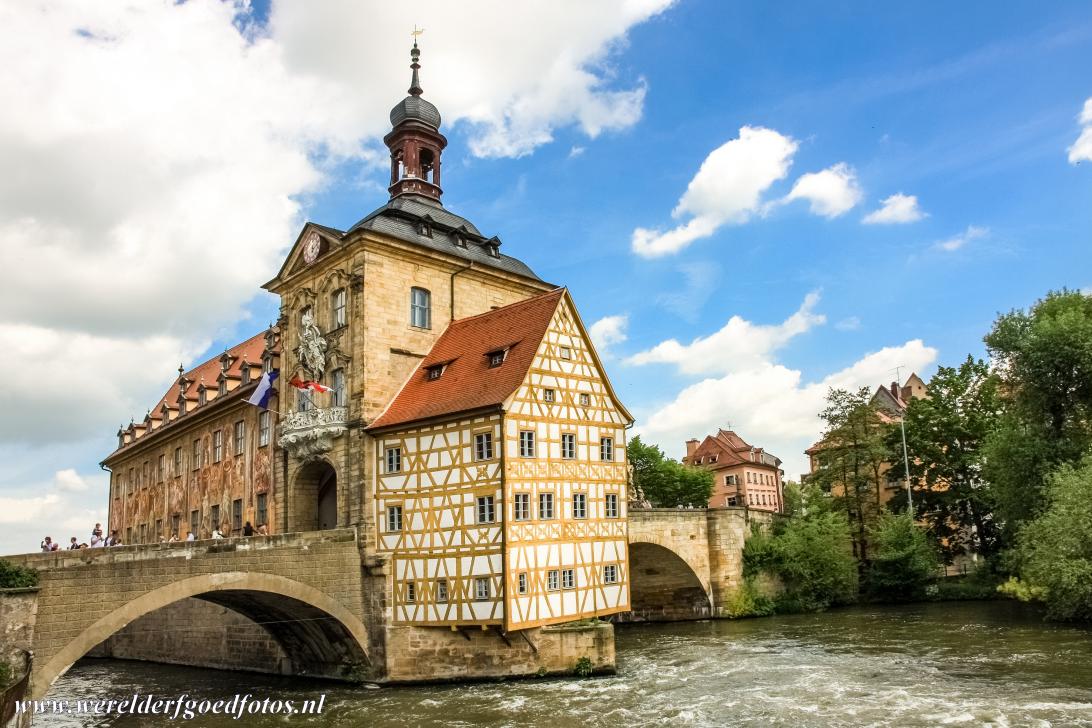
The Old Town Hall of Bamberg was built in 1387; after a devastating fire, this iconic building was rebuilt between 1461 and 1467. The Old Town Hall was converted into the Baroque and Rococo styles between 1744 and 1756. From the 10th century onwards, Bamberg was an important link with the people of Poland, Pomerania and several other Slavic countries. The town of Bamberg was declared a UNESCO World Heritage Site in 1993.
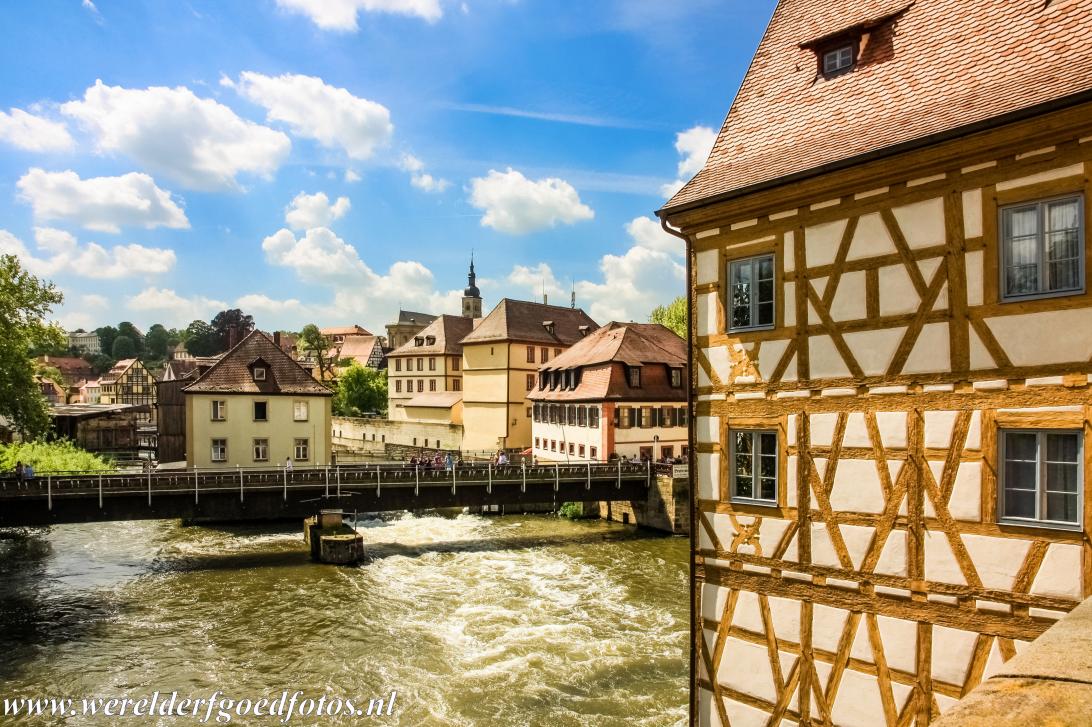
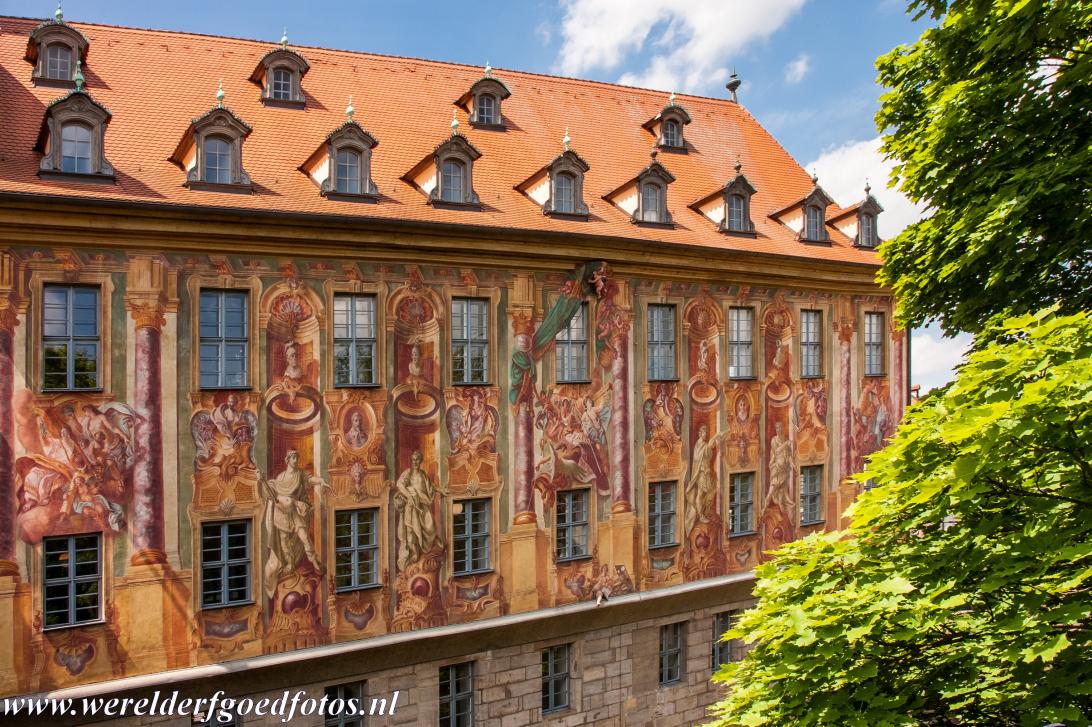
The Old Town Hall of Bamberg was built in 1387; after a devastating fire, this iconic building was rebuilt between 1461 and 1467. The Old Town Hall was converted into the Baroque and Rococo styles between 1744 and 1756. From the 10th century onwards, Bamberg was an important link with the people of Poland, Pomerania and several other Slavic countries. The town of Bamberg was declared a UNESCO World Heritage Site in 1993.
The half-timbered Corporal House of the Old Town Hall (on the right hand side) of the town of Bamberg. The Old Town Hall was built in the middle of the River Regnitz and is accessible by two bridges. According to the legend, the Bishop of Bamberg did not allow the inhabitants to build the town hall on the existing land, so they created this structure on a man-made island in the middle of the Regnitz. This striking Old Town Hall was originally built in the 14th century.

Town of Bamberg: Numerous marvellous frescoes embellish the exterior walls of the Old Town Hall. The building is set in the middle of the River Regnitz, which is quite unique in Germany. The colourful frescoes depict the story of the construction of the town hall in the middle of the river. The Old Town hall (Altes Rathaus) was converted into the Rococo and Baroque styles between 1744 and 1756; notable is the fine Rococo Hall. The town hall was first mentioned in 1387.

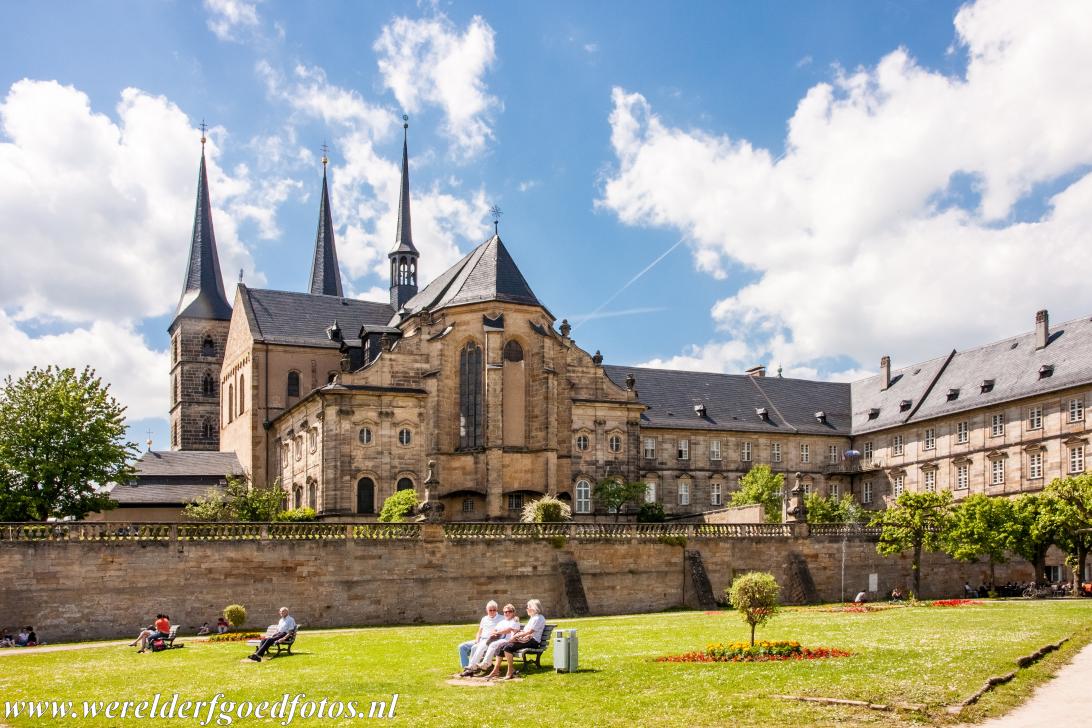
Town of Bamberg: Michaelsberg Abbey was founded in 1015 and was built on the Michaelsberg, one of Bamberg's seven hills. Michaelsberg Abbey was rebuilt in Neo-Gothic style after a ruinous fire in 1610. The terrace behind the former abbey provides breathtaking views over the town of Bamberg. The Baroque terraced garden of Michaelsberg Abbey is accessible via the Benedictine Path (Benediktinerweg).

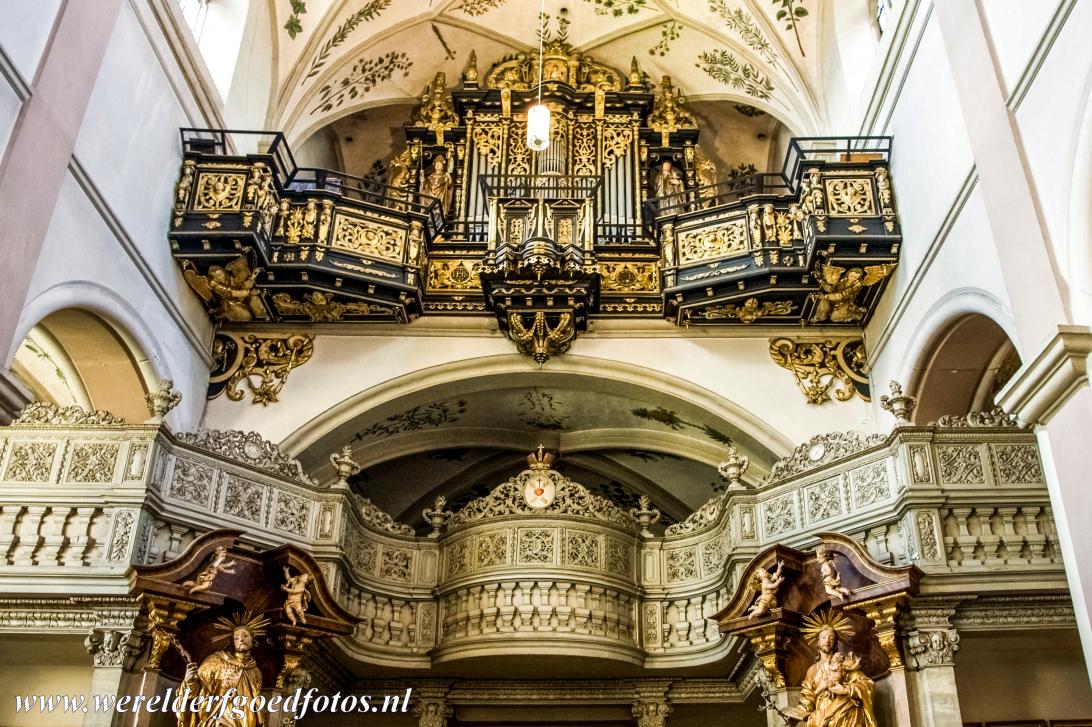
Town of Bamberg: The organ of Michaelsberg Abbey. The vault of the abbey church is decorated with paintings of 578 flowers and medicinal herbs. The vault is called the 'Garden of Heaven'. The flower beds in the courtyard garden of the abbey show some of the 578 plants depicted on the vault of the church. The flower beds of the abbey also feature plants mentioned in the Bible, along with the respective Bible verses and their symbolic meanings and healing powers.

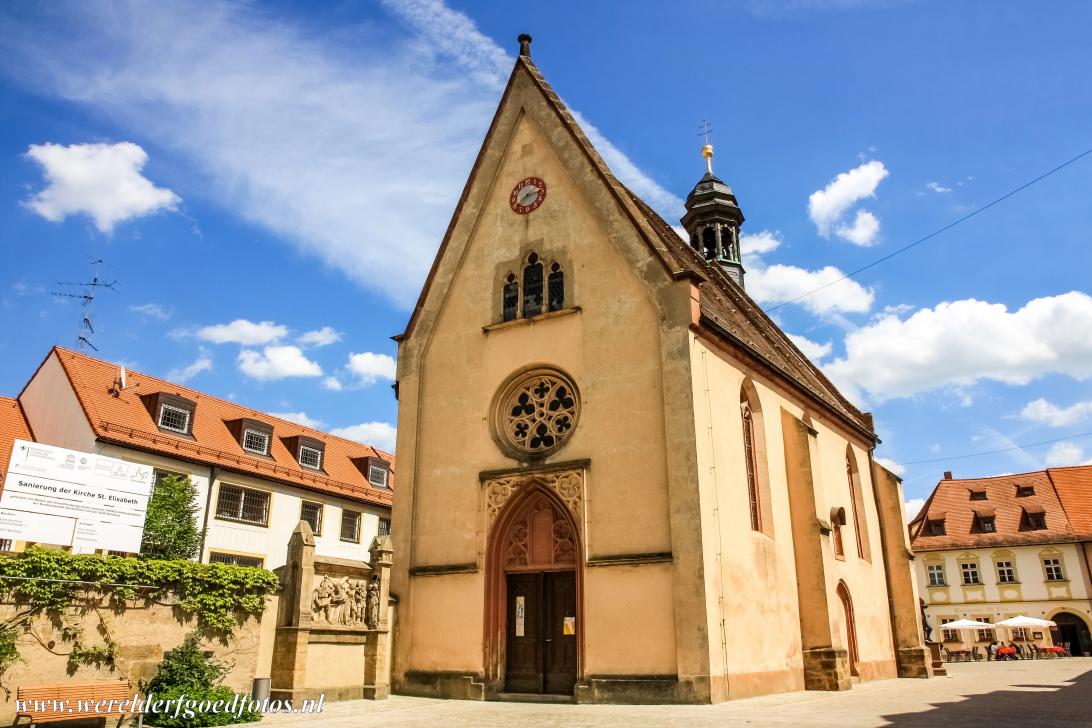
Town of Bamberg: St. Elisabeth's Church is located in the centre of Elisabeth Square. In the 13th century, the medieval church was built as a chapel for St. Elisabeth's Hospital. Bamberg is home to the oldest Via Dolorosa in Germany, known as the Bamberger Kreuzweg (Way of the Cross). The Via Dolorosa is still completely intact; it leads from St. Elisabeth's Church to the Church of St. Getreu. The Bamberger Kreuzweg dates back to 1503.

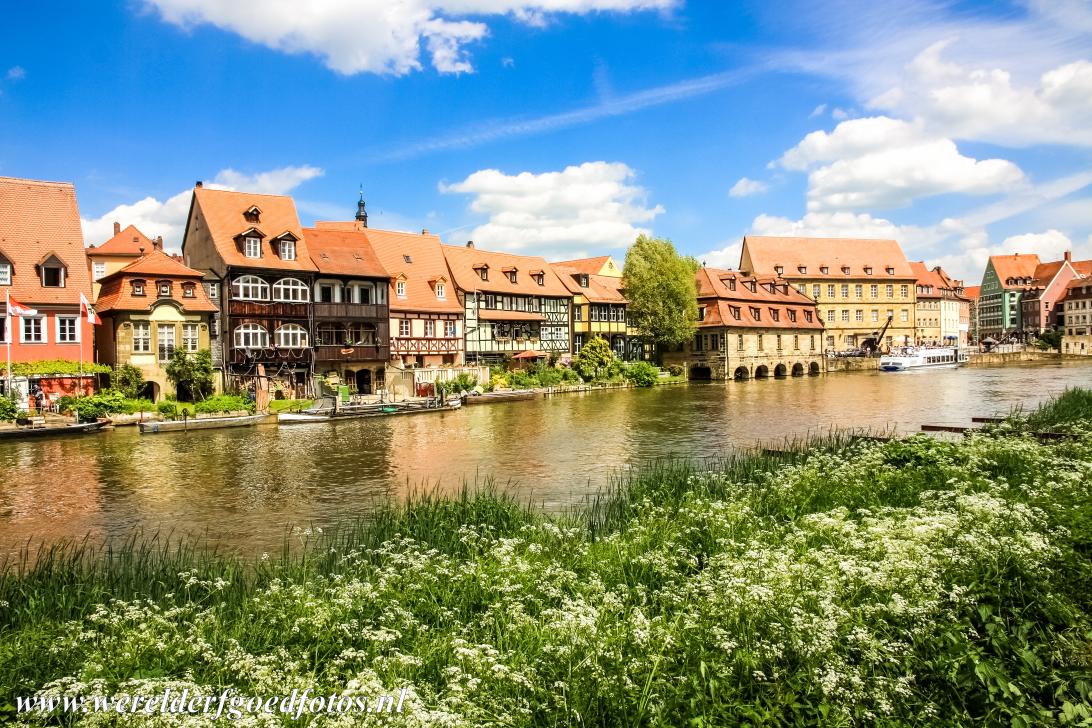
Town of Bamberg: Little Venice (in German: Klein Venedig) viewed from the Leinritt, the towpath on the opposite bank of the River Regnitz. Little Venice was a settlement of fishermen's houses; the picturesque houses are medieval half-timbered buildings, each house has its own jetty. Little Venice is set along one side of the Regnitz. The town of Bamberg was inscribed on the UNESCO World Heritage List in 1993.

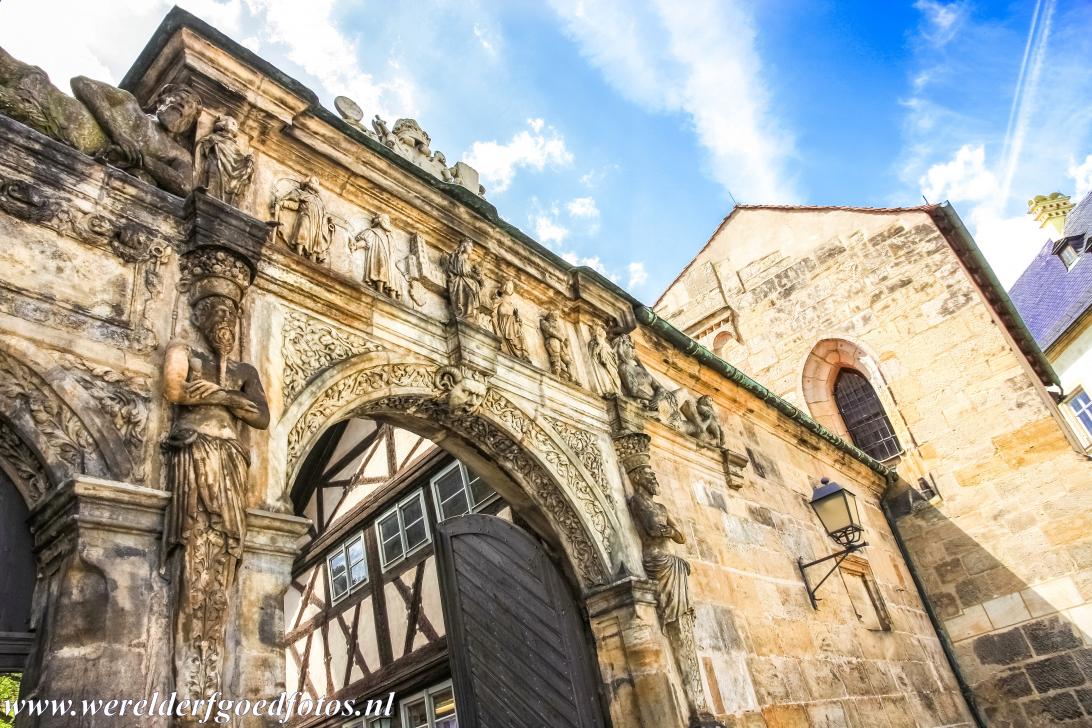
Town of Bamberg: The Schöne Pforte (the Beautiful Gateway) leads into the inner courtyard of the Old Court; this gateway is a sculpted masterpiece. The Old Court was built as a palace for the Prince-Bishops of Bamberg in 1576. The palace is considered to be one of the first German Renaissance buildings. It is now home to the Museum of History and St. Catherine's Chapel. The Old Court (Alte Hofhaltung) was once connected to the Imperial Cathedral of Bamberg.

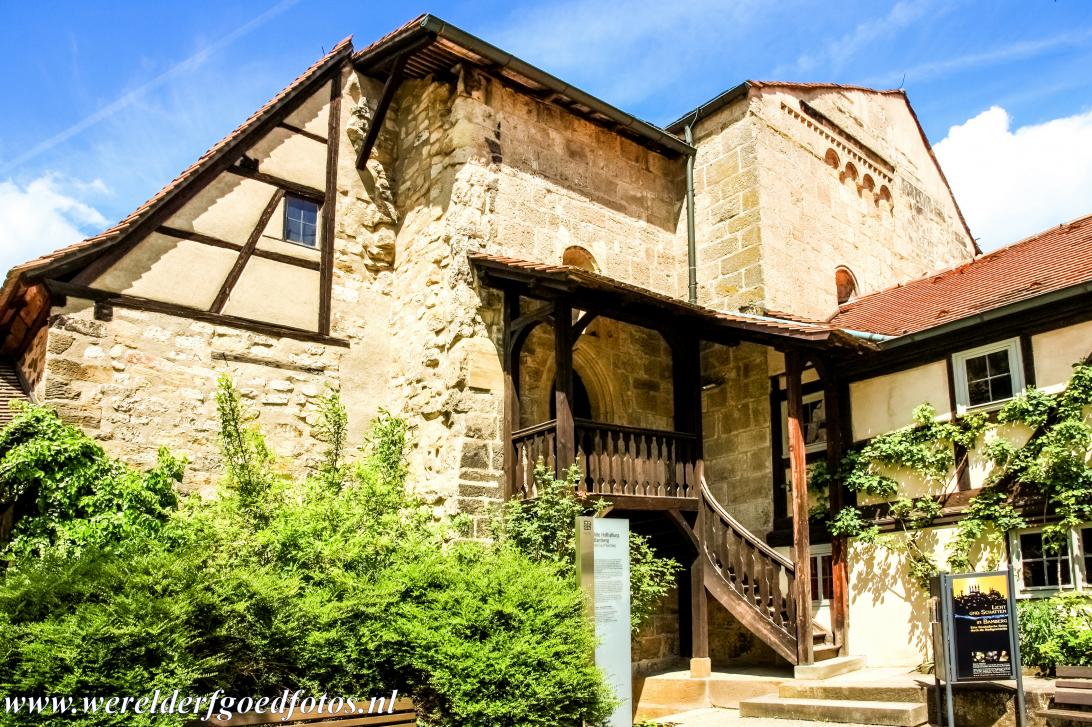
Town of Bamberg: St. Catherine's Chapel is situated in the inner courtyard of the Old Court; this courtyard is surrounded by half-timbered buildings. The Old Court (the Alte Hofhaltung) is the former imperial court of the Prince-Bishops of Bamberg. They also lived in Geyerswörth Castle. This castle was built between 1585 and 1587. The tower of Geyerswörth Castle offers one of the most breathtaking views over the historic town of Bamberg.

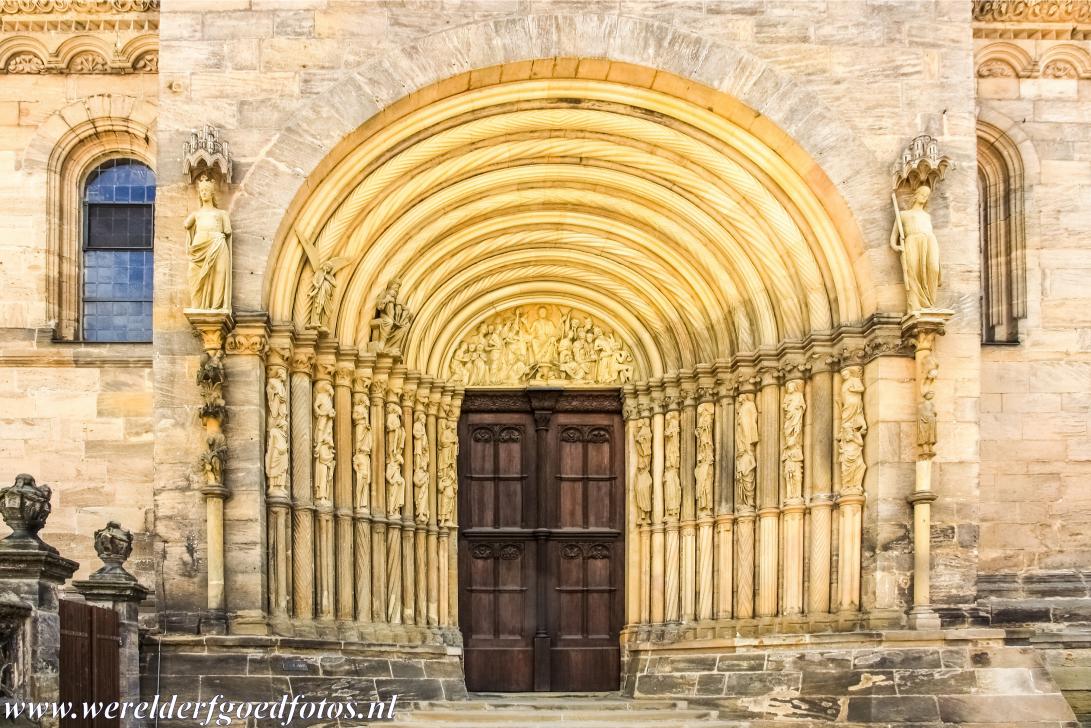
Town of Bamberg: The Prince's Portal is the main entrance of the Imperial Cathedral of Bamberg. This Romanesque-Gothic portal was completed in 1237. As in the Middle Ages, it is only used for special occasions. The jambs of the Prince's Portal are embellished with statues of prophets and apostles. The tympanum above the portal depicts the Last Judgement. This finely sculpted portal faces the huge Cathedral Square. In winter, the portal is protected from frost by a wooden casing. The cathedral houses the remains of Pope Clement II, who died in 1047.

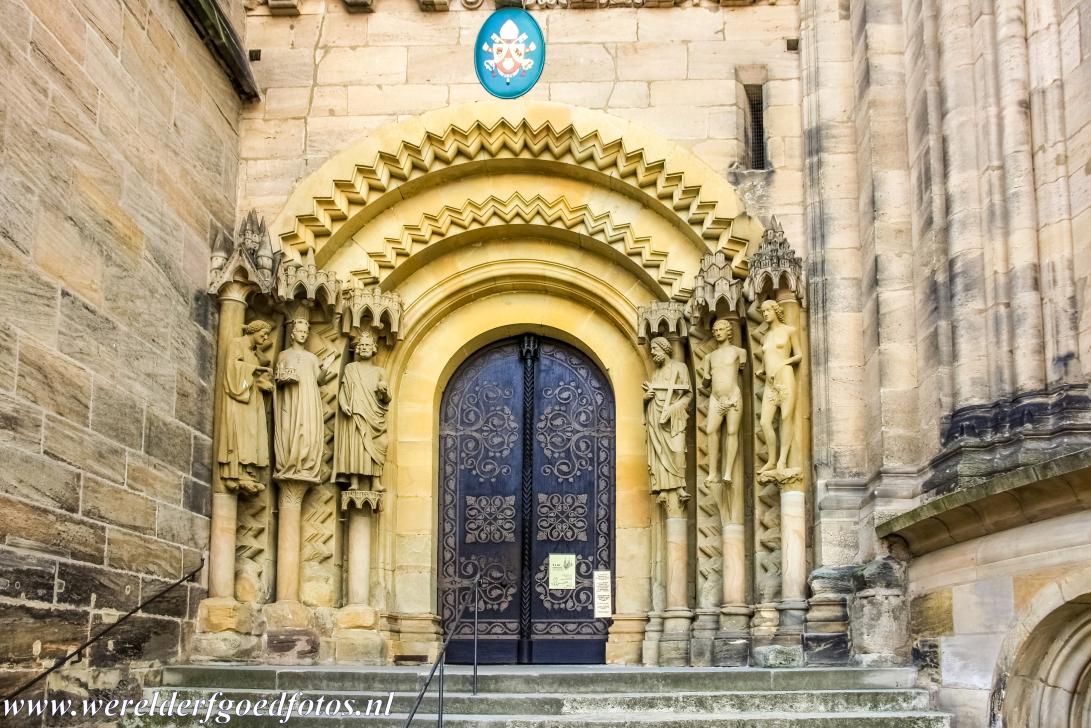
Town of Bamberg: Adam's Portal of Bamberg Cathedral; the cathedral is also known as Dom St. Peter und St. Georg. The current cathedral was completed in 1237; it features both Romanesque and Gothic elements. One of the most important objects inside the cathedral is the statue of the Bamberger Reiter. Some other important sights inside the building are: the tomb of the imperial couple Emperor Heinrich II and Empress Kunigunde, sculpted in 1513; the Marienaltar (1523); the statue of Bishop Friedrich von Hohenlohe (1352); the 13th-century papal tomb of Clement II.

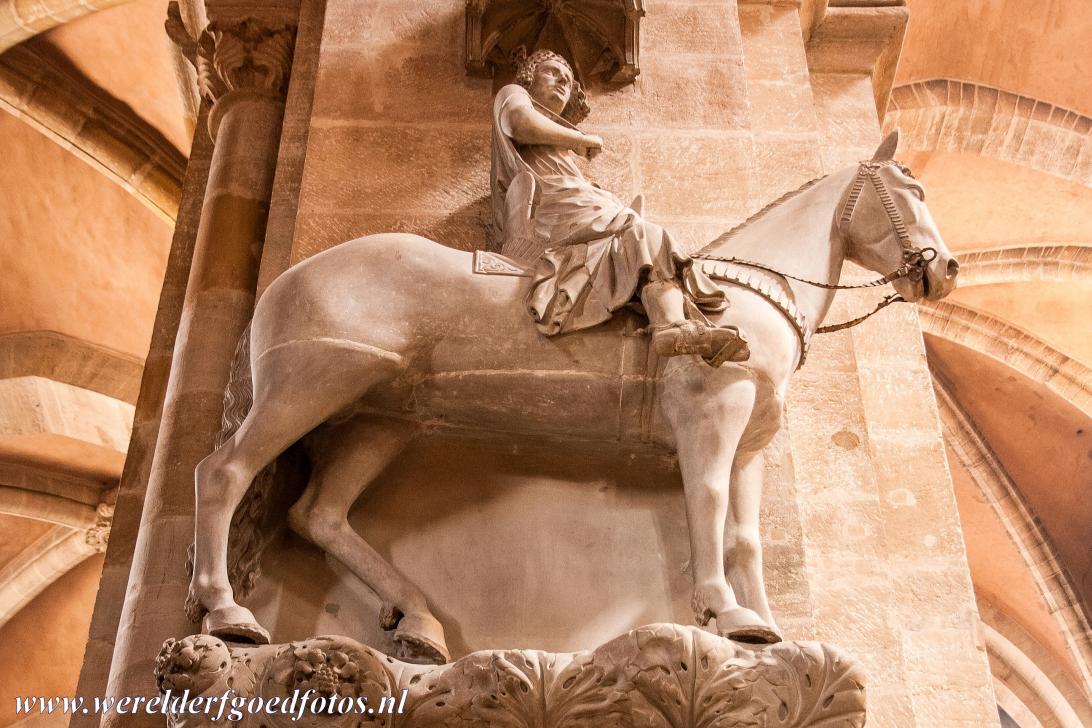
Town of Bamberg: The renowned statue of the Bamberger Reiter, the Bamberg Horseman. The Bamberger Reiter was created around 1235 by an unknown artist. The noble figure of the horse and the regal posture of the rider illustrate the dignity of a nobleman, but it is uncertain who he is. The Imperial Bamberg Cathedral is adorned with masterly stone sculptures; the statue of the Bamberger Reiter is the most important sculpture in the cathedral.

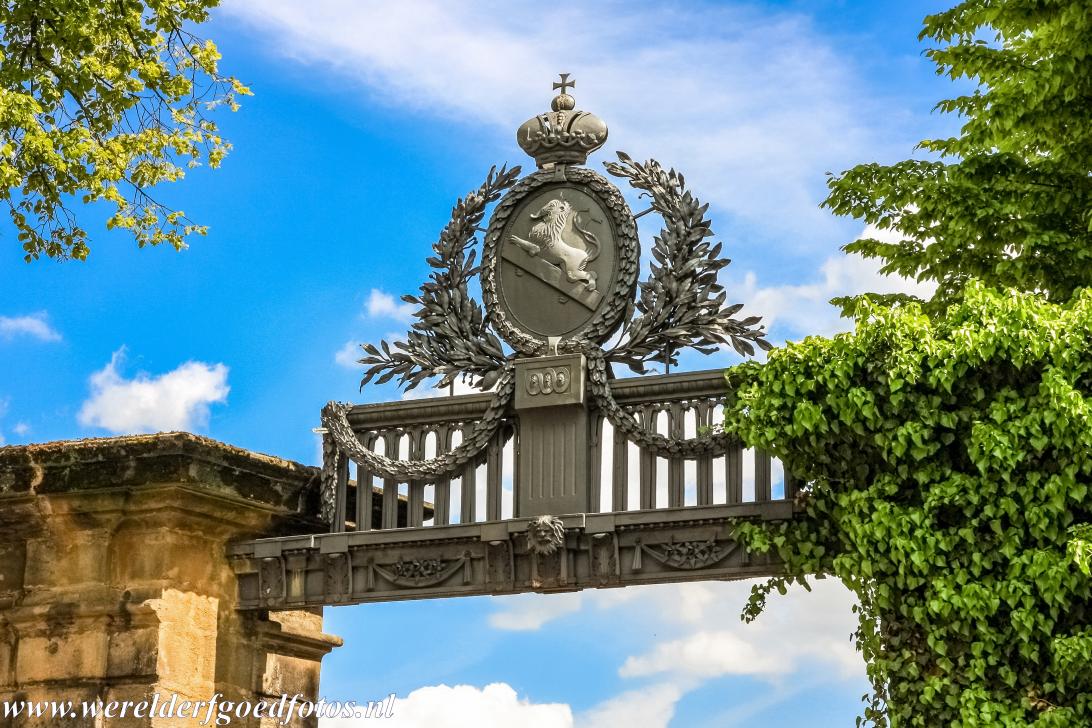
Town of Bamberg: The entrance gate into the New Residence. The residence was built in 1602; the Baroque wings were built in 1697–1703. The Prince-Bishops of Bamberg lived and governed in the New Residence until 1802. The New Residence (Neue Residenz) accommodates valuable collections of paintings. The Rose Garden, designed by Balthasar Neumann, has preserved its Baroque appearance; it offers marvellous views over the town of Bamberg and St. Michaelberg.

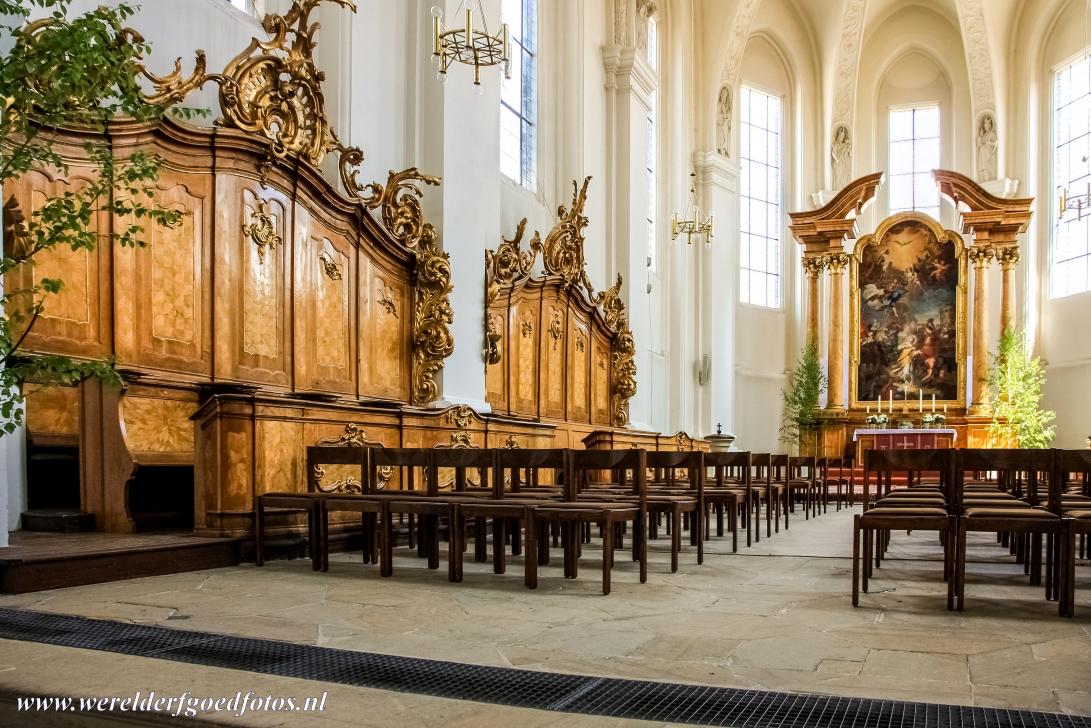
Town of Bamberg: The Baroque interior of St. Stephen's Church (also known as St. Stephan). This church was built on the easternmost of the seven hills of Bamberg. The church is dedicated to the martyr Stephanus. The original medieval church was probably a gift from the Holy Roman Empress Kunigunde and was consecrated by Pope Benedict VIII in 1020. The present church was built in the 17th century and has been the main Protestant church of Bamberg since 1807.

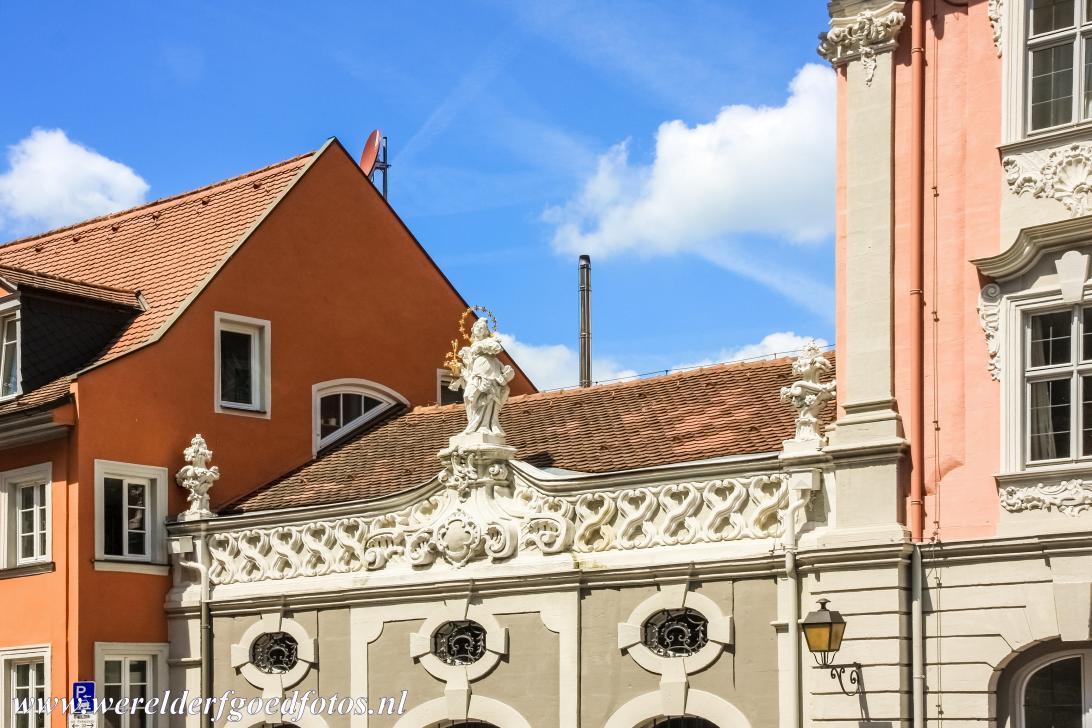
Town of Bamberg: A roofline detail of the Baroque Villa Concordia. The water castle was built in the period 1716–1722. Villa Concordia was built on the banks of the River Regnitz. Nowadays, it is home to the International Artists' House Villa Concordia. In the 12th century, the architecture of Bamberg had a strong influence on the architecture in the northern part of Germany and also in a number of surrounding countries, such as Poland and Hungary.

Town of Bamberg: The birthplace of Joseph Heller, a wealthy merchant and art collector. He donated his art collections to the Bamberg State Library. In the 18th century, Bamberg became a centre of the Enlightenment in southern Germany. The medieval and Baroque architecture of Bamberg strongly influenced northern Germany and Hungary. Philosophers and writers such as Hegel and Hoffmann lived in Bamberg. Claus von Stauffenberg also lived in Bamberg.

The Obere Pfarre (the Upper Parish) is the only pure Gothic church in the town of Bamberg. The Wedding Portal is decorated with Gothic statues. The church was built between 1338 and 1350. It stands on top of the Kaulberg (Hill of the Obere Pfarre), one of the seven hills of Bamberg. The official name of the Upper Parish is the Church of Our Lady. Bamberg is often referred to as the Franconian Rome, because just like Rome, the town was built on seven hills.

Town of Bamberg: The Baroque interior of the Upper Parish (the Obere Pfarre) dates from 1711. The nave of the church is 50 years older than the Late Gothic chancel, whose foundations date from 1375; flying buttresses support the high chancel. The Upper Parish houses a 16th-century painting by the famous Venetian painter Tintoretto: Assumption of the Virgin Mary. The church is called the Upper Parish by the locals; its official name is the Church of Our Lady.

Town of Bamberg: The Maximilian Fountain and the Baroque New Town Hall. This monumental fountain was built on Maximiliansplatz in 1880. It is decorated with bronze statues, among them those of King Maximilian I of Bavaria, Emperor Heinrich II, and his Empress Consort Kunigunde. Maximiliansplatz is the largest square in Bamberg, named 'Maxplatz' for short; it is dominated by the New Town Hall of Bamberg, built by Balthasar Neumann between 1732 and 1737.

Town of Bamberg: The New Residence and Bamberg Cathedral viewed from the Michaelsberg. The town of Bamberg stretches over seven hills and each hill is topped by a church. The town is home to numerous monuments from the 11th to the 18th centuries. Bamberg consists of three historic centres, Bergstadt, Inselstadt and Gärtnerstadt. These centres are part of the UNESCO World Heritage Site. The town of Bamberg became a UNESCO World Heritage Site in 1993.