World Heritage Photos

Wartburg Castle

Wartburg Castle is located in Eisenach, in the eastern part of Germany, about 83 km from the town of Weimar. The fortified castle is set on a steep, forested hillside. The castle was founded in 1067; only some small parts from this period have survived. It has been renovated and expanded throughout its existence. During the 19th century, the Wartburg was reconstructed and restored to its original Romanesque style. The Luther Room retains its original floor and panelled walls. From May 1521 to March 1522, Martin Luther stayed at the Wartburg. It was during his exile here  that he translated the New Testament from Greek into commonly spoken German. He used the Textus receptus, the first printed Greek New Testament edited by the Dutch humanist Erasmus, as the basis for his translation. The Elizabeth Kemenate (room) is dedicated to Saint Elizabeth of Hungary. Elizabeth lived at the Wartburg from 1211 until 1228. She was renowned for her charitable work and was canonised by the Roman Catholic Church. The renowned poet and novelist Goethe spent five weeks at the Wartburg in 1777; he made numerous drawings and sketches of the castle. King Ludwig II of Bavaria was inspired by the Wartburg; it served as an inspiration for numerous rooms and details at Neuschwanstein Castle, Germany's most famous castle. Wartburg Castle became a UNESCO World Heritage Site in 1999.

www.werelderfgoedfotos.nl   © Copyright   World Heritage Photos

Wartburg Castle - Wartburg Castle was founded in 1067. It stands majestically on a steep forested hill close to the German town...

Wartburg Castle was founded in 1067. It stands majestically on a steep forested hill close to the German town of Eisenach. The castle is surrounded by the dense Thuringian Forest. During the Middle Ages, the Wartburg was an important centre of power and the seat of the Landgraves of Thuringia. Its most renowned resident was the German theologian and reformer Martin Luther. The castle is a UNESCO World Heritage Site.

  1. Wartburg Castle - Wartburg Castle was founded in 1067. It stands majestically on a steep forested hill close to the German town...

    Wartburg Castle was founded in 1067. It stands majestically on a steep forested hill close to the German town of Eisenach. The castle is surrounded by the dense Thuringian Forest. During the Middle Ages, the Wartburg was an important centre of power and the seat of the Landgraves of Thuringia. Its most renowned resident was the German theologian and reformer Martin Luther. The castle is a UNESCO World Heritage Site.

  2. Wartburg Castle - Wartburg Castle: The Gatehouse was built in 1150. This fortified castle is only accessible via a small drawbridge and the Gatehouse....

    Wartburg Castle: The Gatehouse was built in 1150. This fortified castle is only accessible via a small drawbridge and the Gatehouse. Throughout its long existence, Wartburg Castle has been expanded and renovated numerous times. The oldest and most original parts of the castle are the Great Hall (Palas), the Gatehouse and the South Tower. Much of its interior dates back to the 19th century.

  3. Wartburg Castle - Wartburg Castle: The 15th-century oriel window of the Vogtei (bailiff's offices). The Vogtei is a part of the Vorburg (bailey), which...

    Wartburg Castle: The 15th-century oriel window of the Vogtei (bailiff's offices). The Vogtei is a part of the Vorburg (bailey), which is situated in the first courtyard and dates back to the 14th and 15th centuries. The Luther Room is located in the half-timbered Vogtei. On the wall of this historic room hangs a portrait painted by Lucas Cranach the Elder; the painting depicts Martin Luther disguised as Junker Jörg.

  4. Wartburg Castle - The Luther Room (Lutherstube) is the most famous room in Wartburg Castle. From May 1521 to March 1522, the reformer Martin Luther stayed at...

    The Luther Room (Lutherstube) is the most famous room in Wartburg Castle. From May 1521 to March 1522, the reformer Martin Luther stayed at the castle. In the Luther Room, he translated the New Testament into commonly spoken German. He was not the first translator of the Bible, but the 'Luther Bible' became widely known due to the invention of the printing press. He used the whale vertebra next to his chair as a footstool.

  5. Wartburg Castle - Wartburg Castle: In the corner of the courtyard stands a small water well. The castle had its own water supply; this was very...

    Wartburg Castle: In the corner of the courtyard stands a small water well. The castle had its own water supply; this was very important, especially when under siege. A large cistern is situated in the second courtyard. From lower sources, drinking water was also carried up the mountain in barrels by donkeys via the 'Donkey Trail'. Inside the strong defensive walls, the castle also had a vegetable garden. Wartburg Castle was inscribed on the UNESCO World Heritage List in 1999.

  6. Wartburg Castle - Wartburg Castle: One of the colonnades in the Great Hall (Palas). The Romanesque Palas was built in the 12th century and is...

    Wartburg Castle: One of the colonnades in the Great Hall (Palas). The Romanesque Palas was built in the 12th century and is the oldest part of the castle; it is the largest structure within the complex. It houses many historic rooms such as the Elizabeth Room, the Knight's Room and the Singers' Hall. The interior of the Palas was extensively restored in the 19th century to its former glory. The Pals is considered the best preserved Romanesque secular building north of the Alps.

  7. Wartburg Castle - Wartburg Castle: The Elisabeth Kemenate (chamber) is adorned with colourful mosaics; these consist of more than a million tiny...

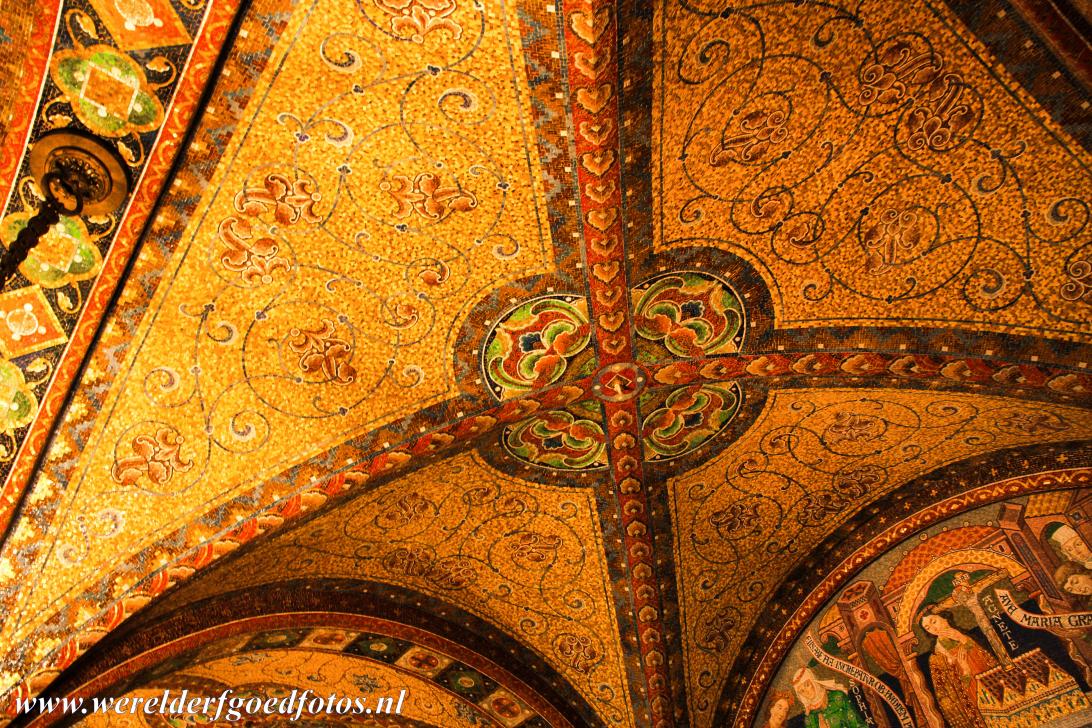
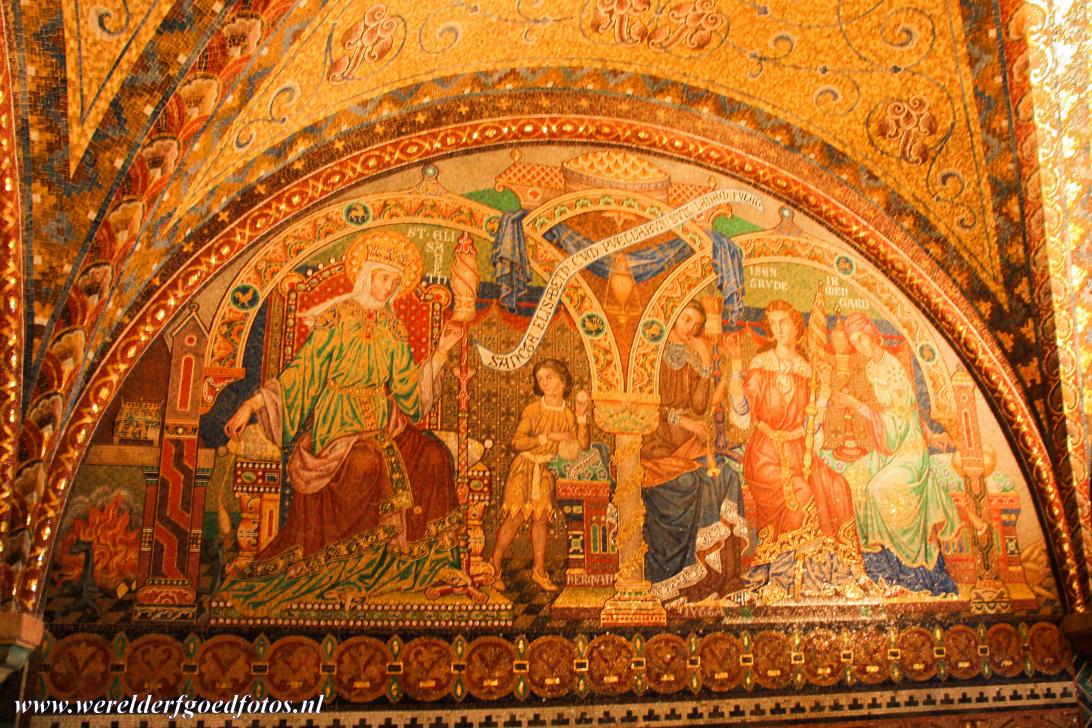
    Wartburg Castle: The Elisabeth Kemenate (chamber) is adorned with colourful mosaics; these consist of more than a million tiny pieces of glass, gold leaf tiles and mother-of-pearl. Elizabeth of Hungary was the wife of the Landgrave of Thuringia, Ludwig IV. This was the chamber where she lived. Every surface is completely covered with mosaics: the walls, the ceiling and even the columns. Elizabeth married at the age of 14, and was widowed at 24.

  8. Wartburg Castle - Wartburg Castle: The Elizabeth Room is dedicated to Elizabeth of Hungary; she lived at Wartburg Castle from 1211 until 1228. The colourful...

    Wartburg Castle: The Elizabeth Room is dedicated to Elizabeth of Hungary; she lived at Wartburg Castle from 1211 until 1228. The colourful mosaics depict the short life of Elizabeth of Hungary. She was renowned for her charitable works. After becoming a widow, she was driven out of the Wartburg by her brother-in-law. She died at the age of 24 in Marburg and, soon after her death, was canonised as a saint by the Roman Catholic Church.

  9. Wartburg Castle - Wartburg Castle: Even the columns in the Elizabeth Room (Elizabeth-Kemenate) are decorated with mosaics. The last German emperor, Kaiser Wilhelm...

    Wartburg Castle: Even the columns in the Elizabeth Room (Elizabeth-Kemenate) are decorated with mosaics. The last German emperor, Kaiser Wilhelm II, commissioned the decoration of the Elizabeth Room to keep her memory alive. The colourful mosaics were designed and created by the German artist August Oetken between 1902 and 1906. He embellished the walls, vaults, and columns with exquisite mosaics in the Neo-Byzantine style.

  10. Wartburg Castle - Wartburg Castle: The Rittersaal is the Room of the Knights, which is situated in the Palas, the oldest part of the castle. The Room...

    Wartburg Castle: The Rittersaal is the Room of the Knights, which is situated in the Palas, the oldest part of the castle. The Room of the Knights was restored to its original Romanesque style in 1854. The wall paintings depict the castle's history. Goethe spent five weeks at the Wartburg in 1777; he made numerous drawings and sketches of the castle, including this impressive hall. He also laid the foundation for the castle's scientific collection

  11. Wartburg Castle - Wartburg Castle: An original Romanesque carved stone capital in the Palas. There are about 200 carved capitals in the Palas; a third of them...

    Wartburg Castle: An original Romanesque carved stone capital in the Palas. There are about 200 carved capitals in the Palas; a third of them are original masterpieces of Romanesque sculpture. Many capitals show eagles, the symbol of the bond between the landgraves and the emperor. The Palas is one of the few remaining Romanesque palaces north of the Alps. It was restored in the 19th century; several elements of Romantic Revival architecture were added.

  12. Wartburg Castle - Wartburg Castle: To the left is the imposing, decorated Singers' Hall. During the Middle Ages, the magnificent castle was a major...

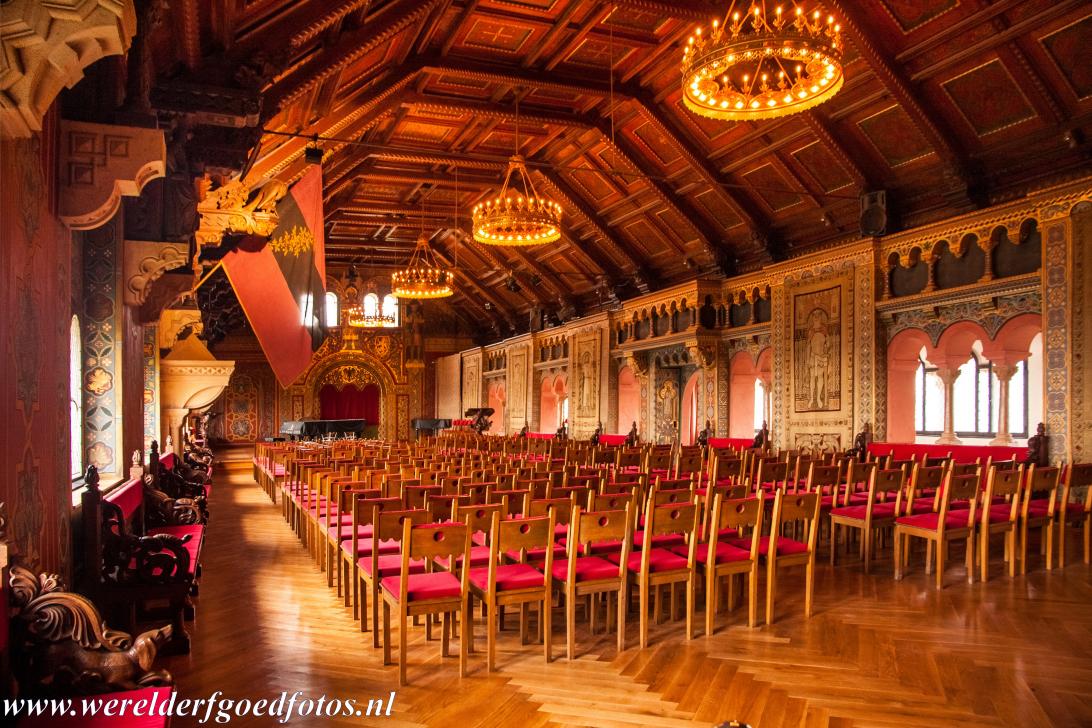
    Wartburg Castle: To the left is the imposing, decorated Singers' Hall. During the Middle Ages, the magnificent castle was a major centre of power, the arts and music. In 1207, it was the location of the Minstrel Contest (Sängerkrieg), or Wartburg Song Contest. The participants in this contest were Minnesingers, noblemen who performed lyric poetry. The famous German composer and conductor Richard Wagner based his opera 'Tannhäuser' on this legendary contest.

  13. Wartburg Castle - In the Singers' Hall of Wartburg Castle, the legendary Minstrels' Contest took place in the Middle Ages. Today, the...

    In the Singers' Hall of Wartburg Castle, the legendary Minstrels' Contest took place in the Middle Ages. Today, the Singers' Hall is regularly used for the performance of Richard Wagner's famous opera 'Tannhäuser' (full title: Tannhäuser und der Sängerkrieg auf Wartburg). This impressive Neo-Romanesque hall has fantastic acoustics. The castle deeply inspired Ludwig II of Bavaria to build his fairytale castles, such as Neuschwanstein.

  14. Wartburg Castle - The Bergfried is the imposing keep of the Wartburg; the tower was rebuilt in 1859 on medieval fundaments. This iconic tower offers...

    The Bergfried is the imposing keep of the Wartburg; the tower was rebuilt in 1859 on medieval fundaments. This iconic tower offers amazing views over the Thuringian Forest. During the Nazi regime, the cross on the Bergfried was replaced by a swastika. Hitler was a great admirer of the Wartburg; he called it 'the most German of German castles'. Wartburg Castle gained status as a UNESCO World Heritage Site in 1999.