World Heritage Photos

Speyer Cathedral

Speyer Cathedral: Speyer is a town in southwest Germany, situated on the banks of the river Rhine, about 40 km of Heidelberg. Speyer is famous for its cathedral, commonly known as the Kaiserdom zu Speyer, the Imperial Cathedral of Speyer. Speyer Cathedral is one of the largest and most important cathedrals of Germany and also the largest Romanesque cathedral in the world. The cathedral is one of the most important Romanesque monuments of the Holy Roman Empire. The Speyer Cathedral was founded by the Holy Royal Emperor Conrad II in 1030 and is considered to be a 'turning point' in the architecture of Europe. The cathedral has the earliest example in Germany of a colonnaded dwarf gallery that encircles the entire building. The crypt of Speyer Cathedral is the largest Romanesque columned hall crypt in Europe. For almost 300 years, the monumental crypt was a royal burial place, it contains the tombs of German kings and emperors as well as several bishops. Along with the Cathedral of Santiago de Compostela, the Durham Cathedral and Cluny Abbey, Speyer Cathedral was the most ambitious project of that time. During the Nine Years' War, the inhabitants of Speyer took shelter in the cathedral when the troops of the French King Louis XIV were looting Speyer. Speyer Cathedral is situated about 65 km northwest from the World Heritage Site in Maulbronn and about 55 km south from the World Heritage Site in Lorsch. Speyer Cathedral became a UNESCO World Heritage in 1981. 

www.werelderfgoedfotos.nl   © Copyright   World Heritage Photos
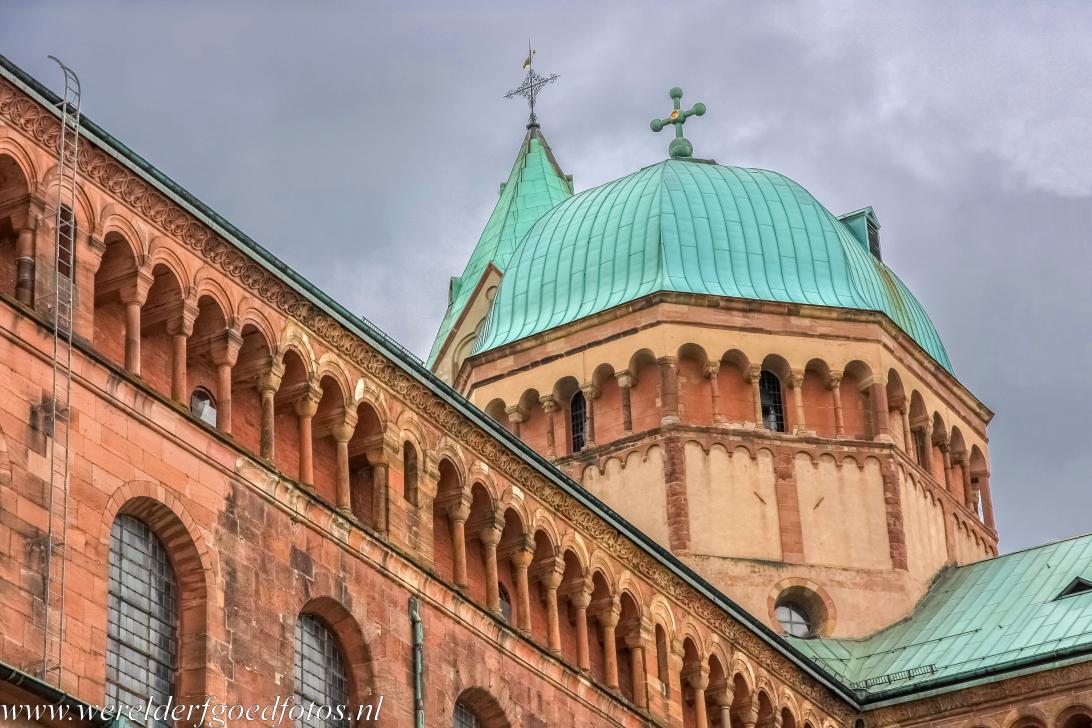
Speyer Cathedral - Speyer Cathedral features the earliest example in Germany of a colonnaded dwarf gallery that encircles the entire building....

Speyer Cathedral features the earliest example in Germany of a colonnaded dwarf gallery that encircles the entire building. The domes, the nave and the four towers are roofed with copper, weathered to a pale green colour in the course of time. The western dome houses the nine bells of the cathedral. Speyer Cathedral is one of the most important Romanesque monuments of the Holy Roman Empire. Speyer Cathedral was declared a UNESCO World Heritage Site in 1981.
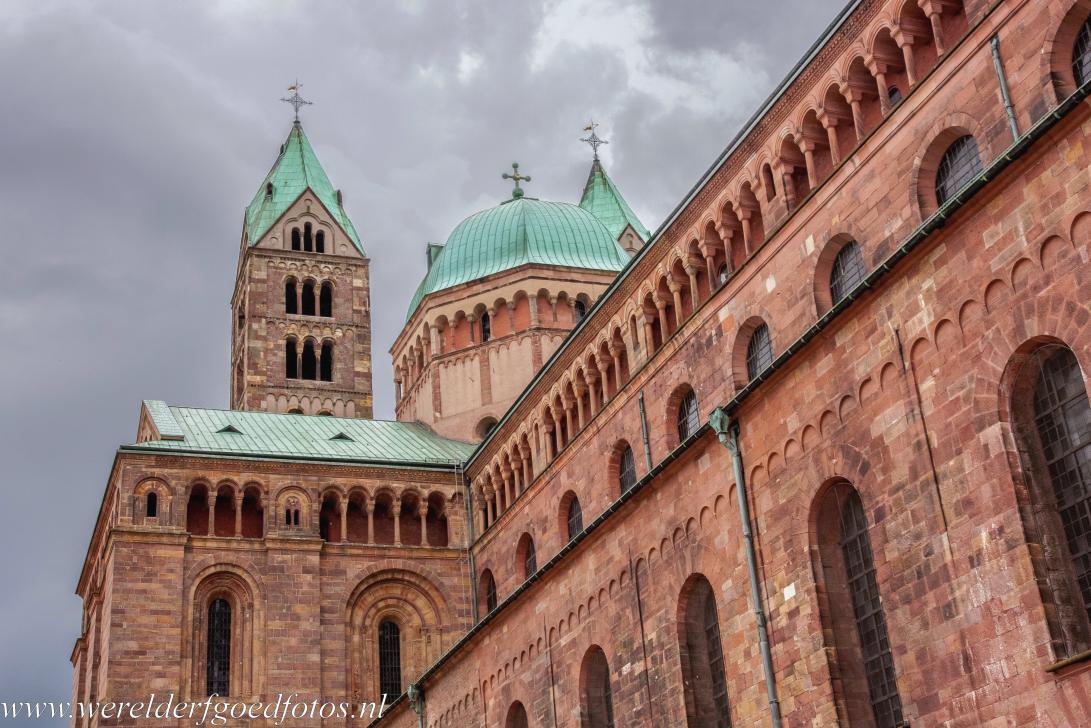
  1. Speyer Cathedral - Speyer Cathedral features the earliest example in Germany of a colonnaded dwarf gallery that encircles the entire building....

    Speyer Cathedral features the earliest example in Germany of a colonnaded dwarf gallery that encircles the entire building. The domes, the nave and the four towers are roofed with copper, weathered to a pale green colour in the course of time. The western dome houses the nine bells of the cathedral. Speyer Cathedral is one of the most important Romanesque monuments of the Holy Roman Empire. Speyer Cathedral was declared a UNESCO World Heritage Site in 1981.
  2. Speyer Cathedral - Speyer Cathedral: The construction of the cathedral started in 1030 under the Salian Emperor Konrad II, who wanted to build the most imposing and...

    Speyer Cathedral: The construction of the cathedral started in 1030 under the Salian Emperor Konrad II, who wanted to build the most imposing and largest church of his time. The cathedral was built of red-brown sandstone from the mountains of the Palatine Forest. Speyer Cathedral is the largest Romanesque cathedral in the world, and the monumental crypt of the cathedral is the largest Romanesque columned hall crypt in Europe.

  3. Speyer Cathedral - Speyer Cathedral: Above the main portal of the west façade is a row of statues; the central figure depicts the Virgin and Child. The...

    Speyer Cathedral: Above the main portal of the west façade is a row of statues; the central figure depicts the Virgin and Child. The cathedral is an important Romanesque monument of the Holy Roman Empire. Speyer Cathedral was founded by the Holy Roman Emperor Conrad II in 1030 and was consecrated under his grandson Hendrik IV in 1061, well before the cathedral was eventually completed in 1106. Speyer Cathedral is considered to be a 'turning point' in European architecture.

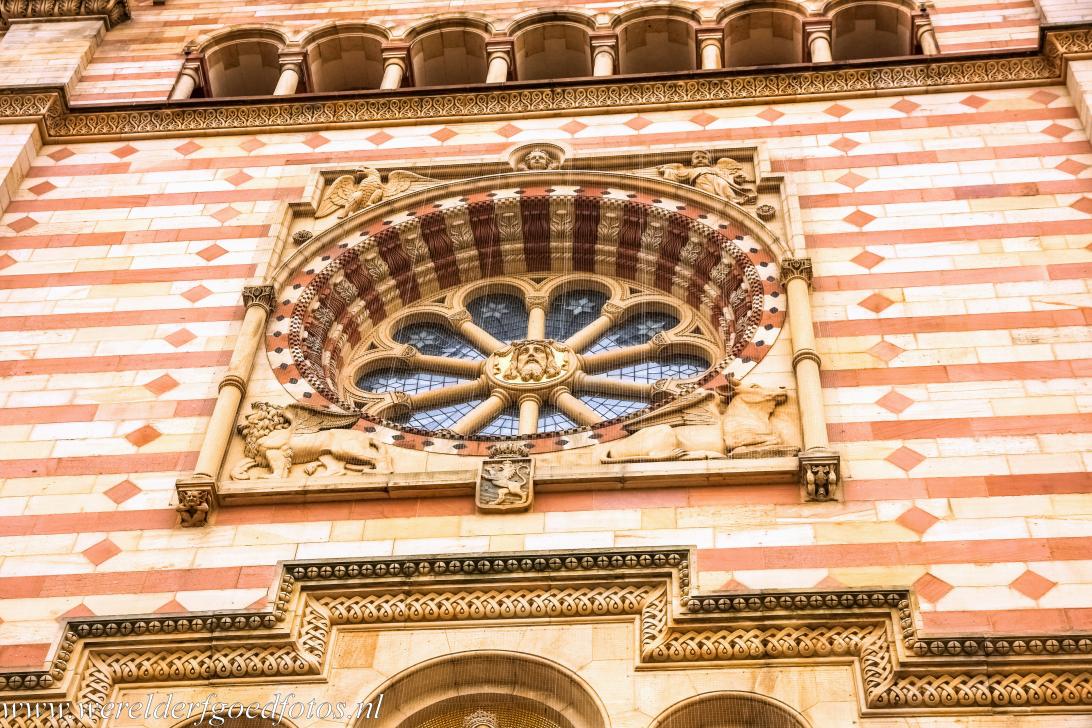
  4. Speyer Cathedral - Speyer Cathedral: The rose window on the façade of the Westwerk; the sculptures depict Jesus surrounded by the symbols of the Four...

    Speyer Cathedral: The rose window on the façade of the Westwerk; the sculptures depict Jesus surrounded by the symbols of the Four Evangelists. During the Nine Years' War, also known as the Palatine War (1688 -1697), the inhabitants of Speyer took shelter in the cathedral when the troops of the French King Louis XIV were looting the German town of Speyer. The Westwerk of Speyer Cathedral was completely destroyed; it was rebuilt in a simpler version in 1770.

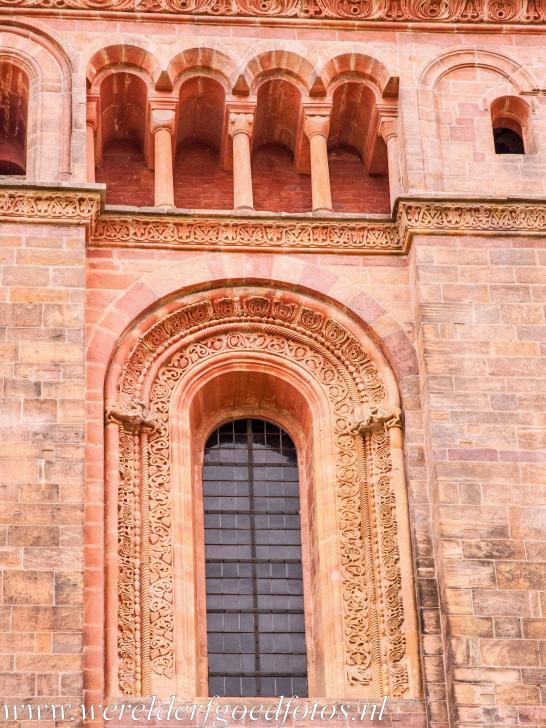
  5. Speyer Cathedral - Speyer Cathedral: The Romanesque sandstone windows are adorned with fine engravings. The cathedral is generally known as the Kaiserdom...

    Speyer Cathedral: The Romanesque sandstone windows are adorned with fine engravings. The cathedral is generally known as the Kaiserdom zu Speyer;  the Imperial Cathedral of Speyer. The official name of Speyer Cathedral is Domkirche St. Maria und St. Stephan. The cathedral was the final resting place of several German kings and emperors for almost 300 years. The tombs were originally situated in the nave, but were moved to the crypt between 1900 and 1906.

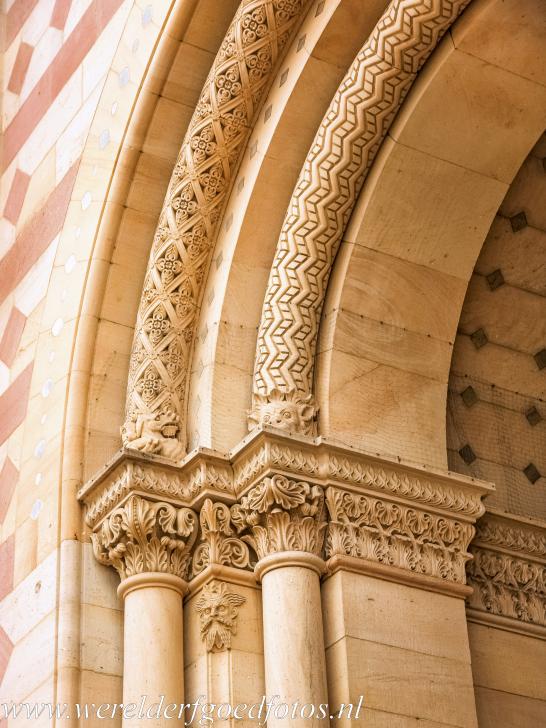
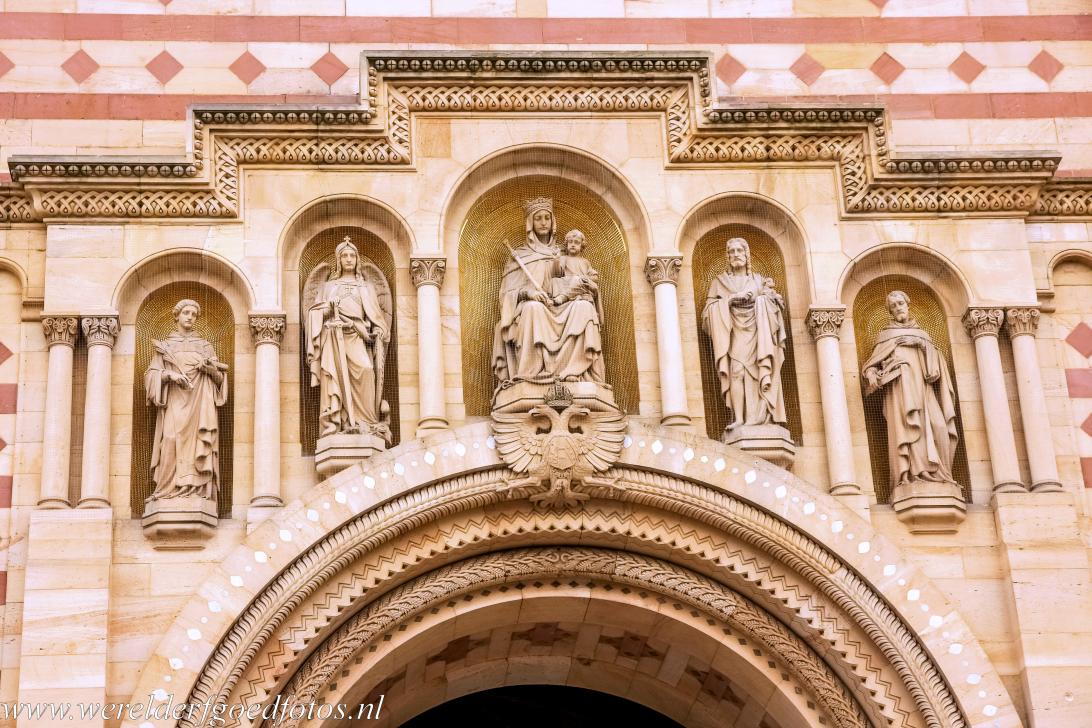
  6. Speyer Cathedral - A detail of the fine sculptures on the main entrance portal of the Westwerk (westwork) of Speyer Cathedral. The Westwerk is the monumental...

    A detail of the fine sculptures on the main entrance portal of the Westwerk (westwork) of Speyer Cathedral. The Westwerk is the monumental west-facing entrance building of the cathedral; it symbolised the power of the emperor and the state. In 1689, during the Nine Years' War, or the War of the Palatine Succession, Speyer Cathedral was severely damaged. The Cathedral was not restored until the 18th century 

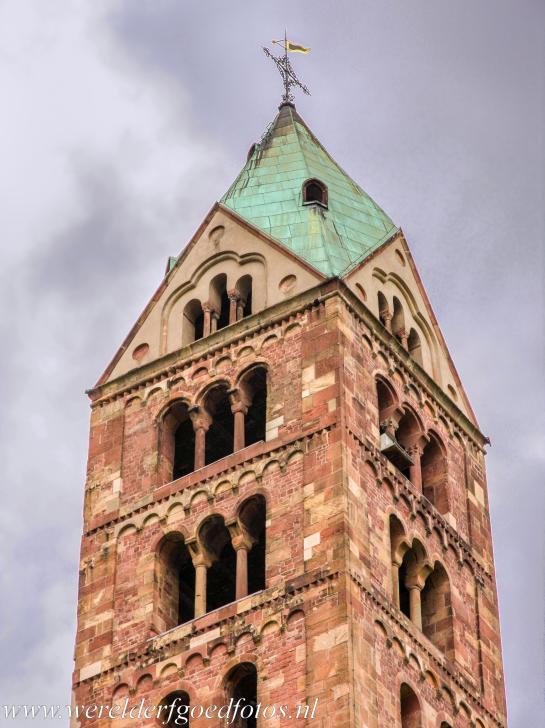
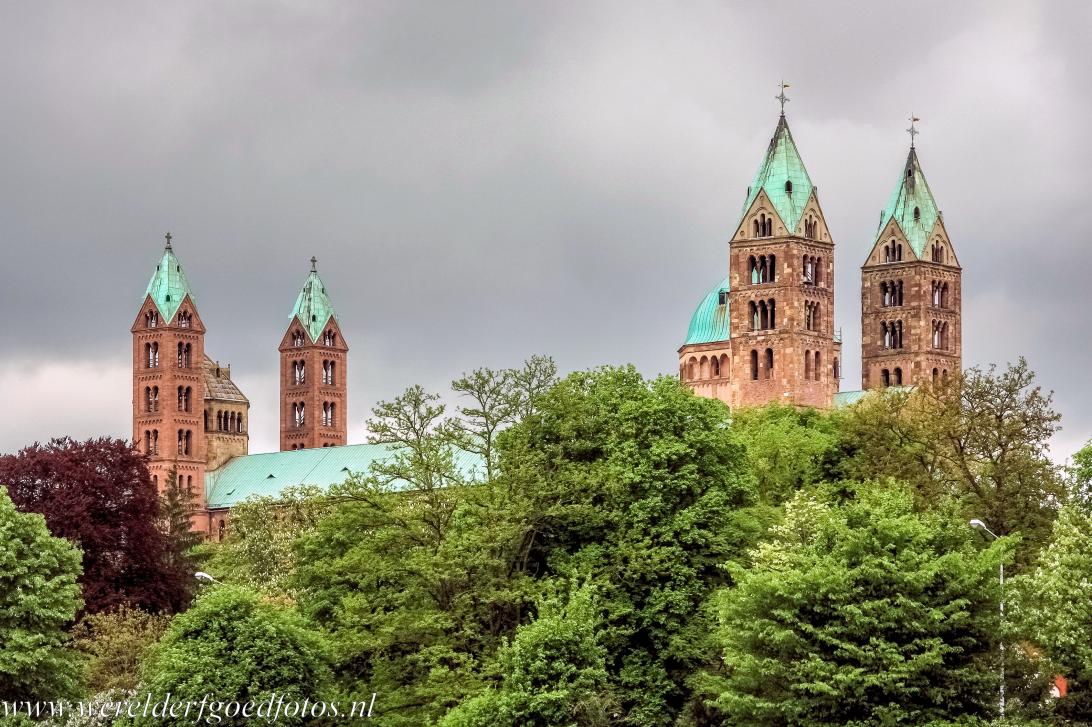
  7. Speyer Cathedral - Speyer Cathedral: One of the towers of the cathedral. These towers are known as 'deaf towers', so called because they were never...

    Speyer Cathedral: One of the towers of the cathedral. These towers are known as 'deaf towers', so called because they were never equipped with bells. The western dome serves as the belfry; the dome houses the chime of Speyer Cathedral. The chime is composed of nine bells; the four larger bells were cast in the German town of Heidelberg in 1822, the five smaller bells were cast in 1963, also in Heidelberg. The Maximilianus Josephus (the Kaiserglocke) is the largest bell and weighs 5350 kg.

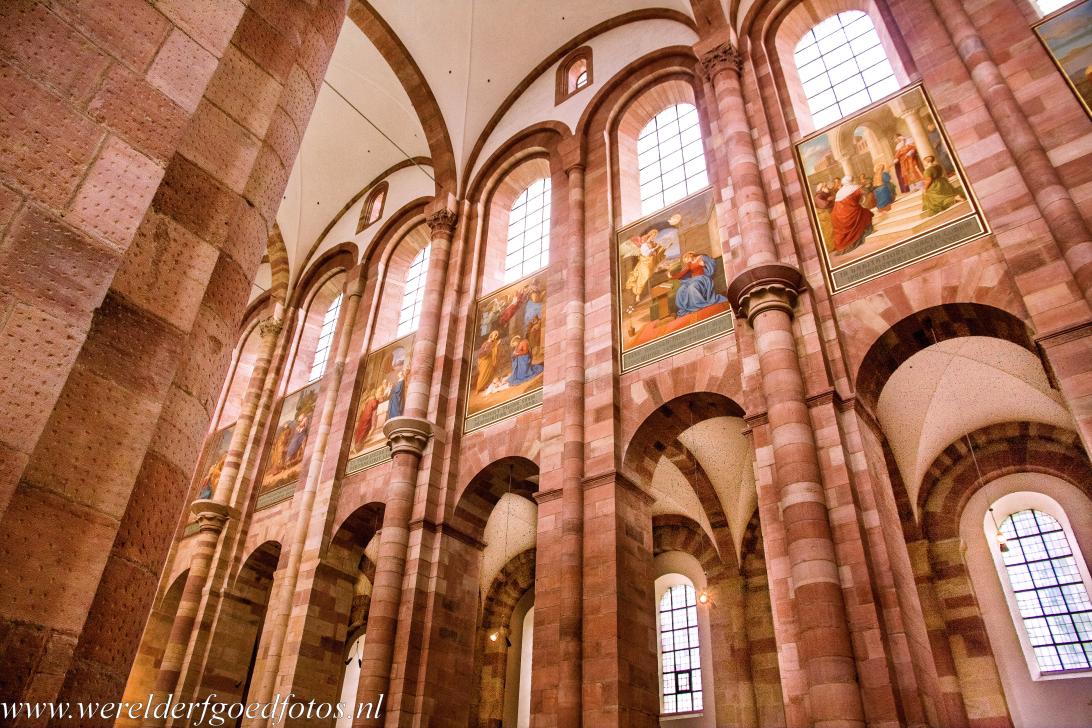
  8. Speyer Cathedral - The flat wooden ceiling of Speyer Cathedral was replaced by stone vaults between 1082 and 1106. The nave...

    The flat wooden ceiling of Speyer Cathedral was replaced by stone vaults between 1082 and 1106. The nave is decorated with colourful paintings in the Late Nazarene style; these paintings were created by Johann Schraudolph between 1846 and 1853. The twelve tribes of Israel and the twelve apostles are symbolised in the twelve arches of the nave. The Nazarenes were an early 19th-century group of German Romantic painters.

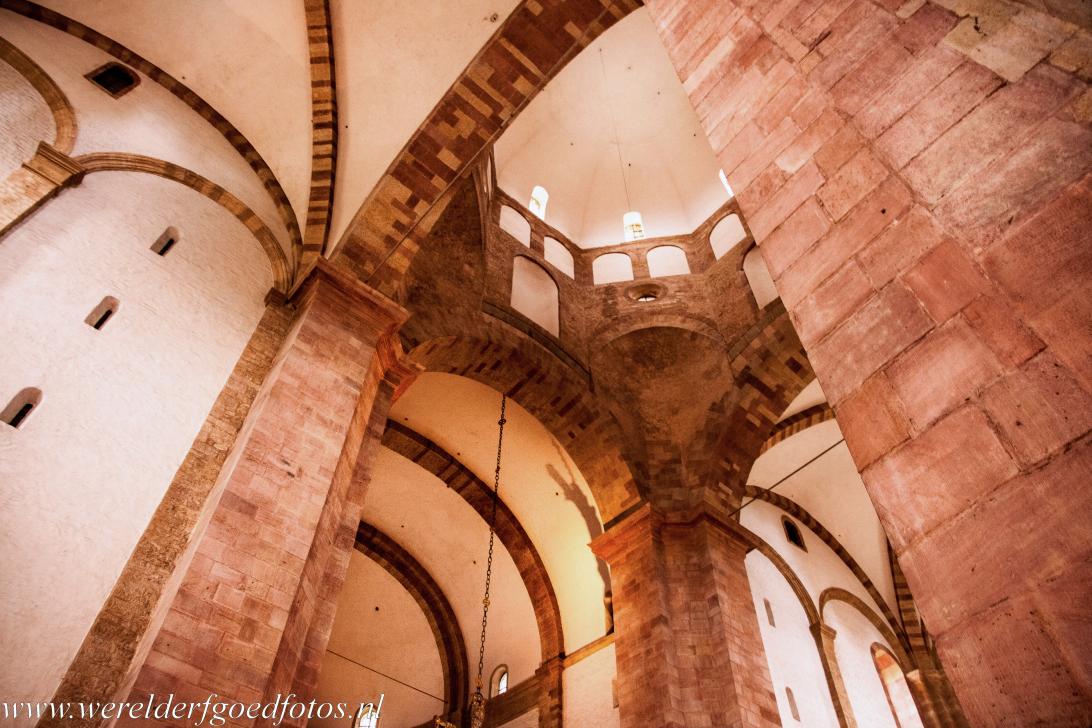
  9. Speyer Cathedral - The Vierungsturm (the crossing tower) is the most important dome of Speyer Cathedral. The Vierungsturm is situated above the...

    The Vierungsturm (the crossing tower) is the most important dome of Speyer Cathedral. The Vierungsturm is situated above the intersection of the nave and the transept. The main altar is situated directly under the crossing dome. The Cathedral Treasure is located in the Historical Museum of the Palatinate; it houses thousands of objects, such as several burial crowns of German kings and emperors.

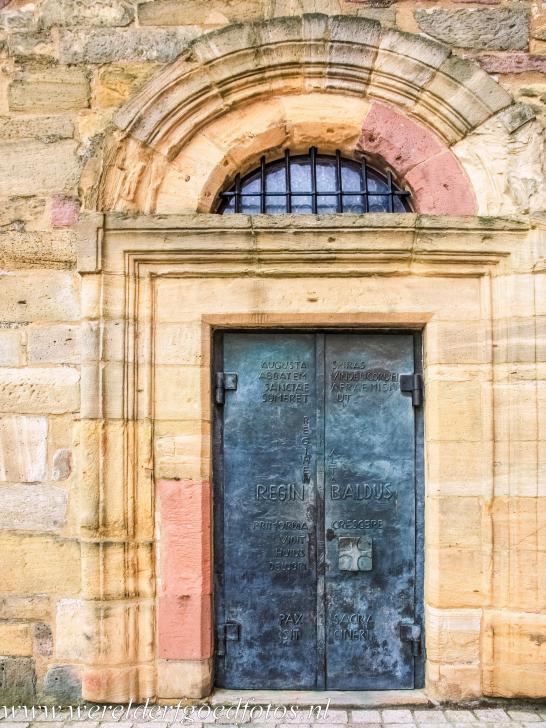
  10. Speyer Cathedral - Speyer Cathedral: The door of the St. Afra Chapel; the chapel is situated on the northern side of the cathedral. The chapel was named...

    Speyer Cathedral: The door of the St. Afra Chapel; the chapel is situated on the northern side of the cathedral. The chapel was named after the Christian martyr Afra. The Holy Roman Emperor Henry IV was initially buried in the unconsecrated St. Afra Chapel; his remains were reburied in the royal crypt of the cathedral in 1111. During a renovation in 1971, a parchment page of the Wulfila Bible was discovered in the St. Afra Chapel. The Wulfila Bible, or Gothic Bible, was written in the 4th century.

  11. Speyer Cathedral - Speyer Cathedral is a basilica with four huge towers and two large domes. The floor plan of the Romanesque cathedral has the form of a Latin...

    Speyer Cathedral is a basilica with four huge towers and two large domes. The floor plan of the Romanesque cathedral has the form of a Latin cross. Together with the Cathedral of Santiago de Compostela, Durham Cathedral and Cluny Abbey, Speyer Cathedral was the most ambitious project of its time. Speyer is a town in southwest Germany, located on the left bank of the Rhine. Speyer Cathedral was inscribed on the UNESCO World Heritage List in 1981.