The par force hunting landscape in North Zealand – An Ancient Royal Hunting Ground
This unique landscape covers the two former royal hunting forests Store Dyrehave and Gribskov, as well as the hunting park Jægersborg Dyrehave and Jægersborg Hegn. The hunting grounds and forests are all situated north of Copenhagen. The forests and related buildings are part of a well-preserved hunting landscape designed in the late 17th and 18th centuries. The foundations for this design were laid in 1669, when King Frederick III decided to transform the area now known as Jaegersborg Dyrehave and Jægersborg Hegn into his private hunting ground.
King Christian V came to power in 1670; having experienced par force hunting at Versailles, he introduced it to Denmark. He shaped the royal hunting grounds to fit the par force hunting system, hunting with a pack of hounds. This style of hunting required a much larger area. The king expanded the boundaries of the hunting forests to include the area that is today known as Jægersborg Hegn. He also included the Eremitagesletten, an expansive area within Jægersborg Dyrehave that once comprised the fields of Stokkerup. This village was completely demolished to clear the landscape; only the former village pond, Stokkerup Kær, remains today. Christian V created a Baroque par force landscape with a star-shaped system of straight hunting roads and geometric squares. The Hermitage Hunting Lodge stands proudly in the middle of Jægersborg Dyrehave amidst a network of hunting trails.
Jægersborg Dyrehave is located about 20 kilometres north of Copenhagen. There are a number of fascinating UNESCO World Heritage Sites situated around the Danish capital within easy reach: Roskilde Cathedral about 45 kilometres to the west, Kronborg Castle about 40 kilometres to the north, and Stevns Klint about 80 kilometres to the south. The par force hunting landscape in North Zealand was declared a UNESCO World Heritage Site in 2015.
www.werelderfgoedfotos.nl © Copyright World Heritage Photos
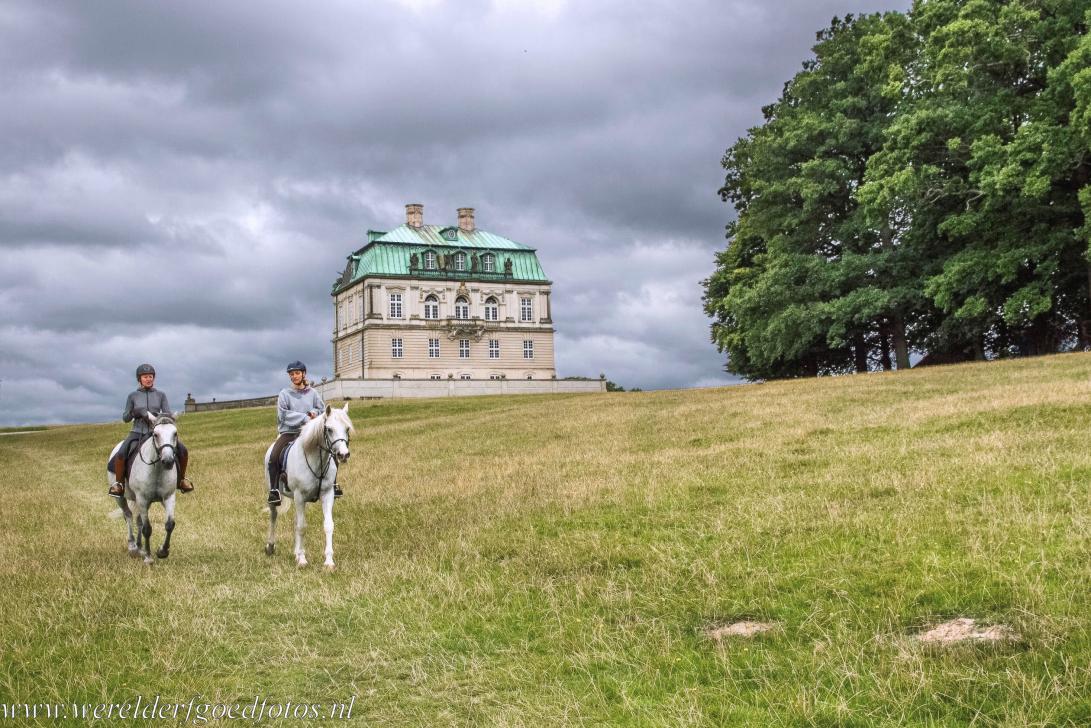
The par force hunting landscape in North Zealand: Two horse riders in front of the Hermitage Hunting Lodge in Jægersborg Dyrehave, a deer park north of Copenhagen. The hunting lodge stands atop a hill amidst an extensive network of hunting paths, overlooking the Øresund (the Sound). This UNESCO World Heritage Site encompasses the two former royal hunting forests of Store Dyrehave and Gribskov, as well as the former hunting park of Jægersborg Dyrehave and Jægersborg Hegn.
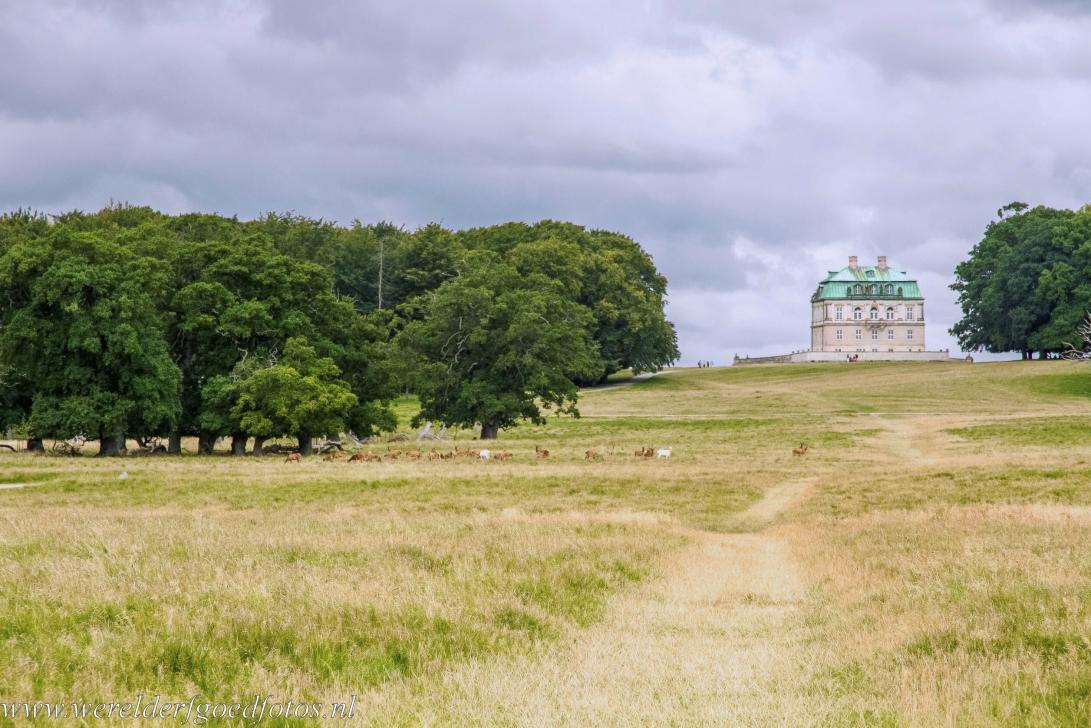
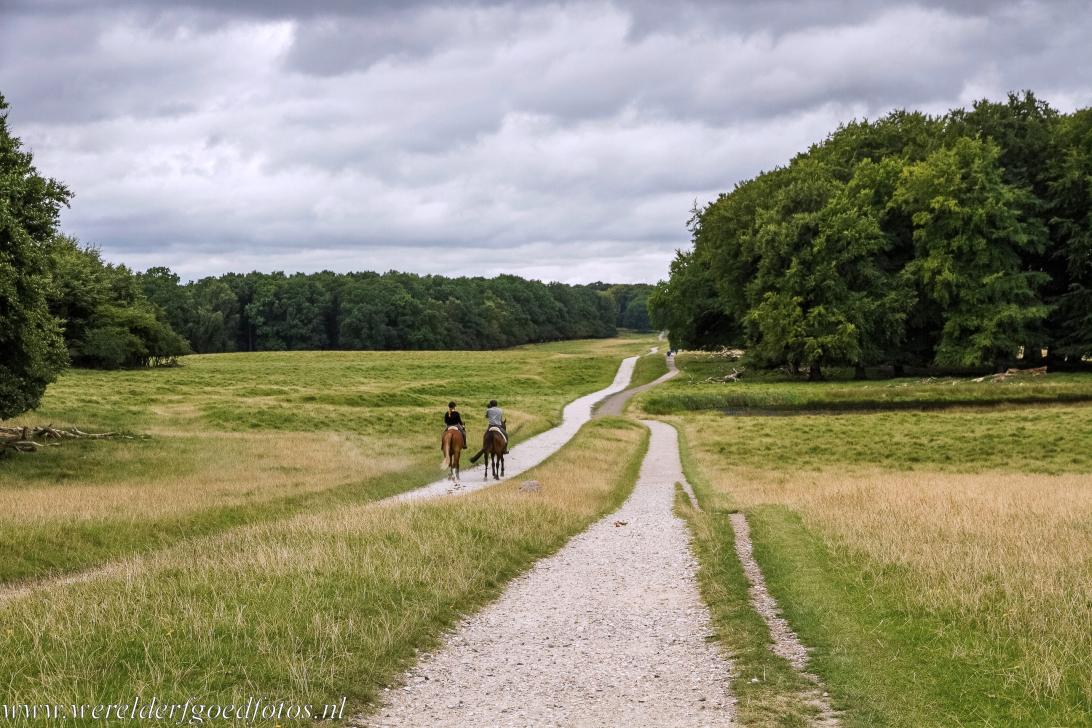
The par force hunting landscape in North Zealand: Two horse riders in front of the Hermitage Hunting Lodge in Jægersborg Dyrehave, a deer park north of Copenhagen. The hunting lodge stands atop a hill amidst an extensive network of hunting paths, overlooking the Øresund (the Sound). This UNESCO World Heritage Site encompasses the two former royal hunting forests of Store Dyrehave and Gribskov, as well as the former hunting park of Jægersborg Dyrehave and Jægersborg Hegn.
The par force hunting landscape in North Zealand: The Hermitage Hunting Lodge was never designed as a royal residence; it was solely meant for hosting lavish banquets during the deer hunt in the surrounding Jægersborg Dyrehave. This park is renowned for its large populations of red deer and fallow deer. The historic Mølleåen (Mill Stream) winds through the area, dividing Jægersborg Dyrehave and the adjacent Jægersborg Hegn in two. Together, these interconnected forested parks form a vast, protected landscape north of Copenhagen, Denmark.

Par force hunting landscape in North Zealand: In the forests of Store Dyrehave and Gribskov, King Christian V created a par force landscape with a star-shaped system of straight hunting roads. This dramatic style of hunting, which relied on a large pack of hounds to pursue the prey to exhaustion, required a vast amount of land. To accommodate the system, the king also expanded the boundaries of the hunting forests to include the area known today as Jægersborg Hegn. Here, radiating from the central hunting lodge, historic trails criss-cross the plain in a classic star pattern.

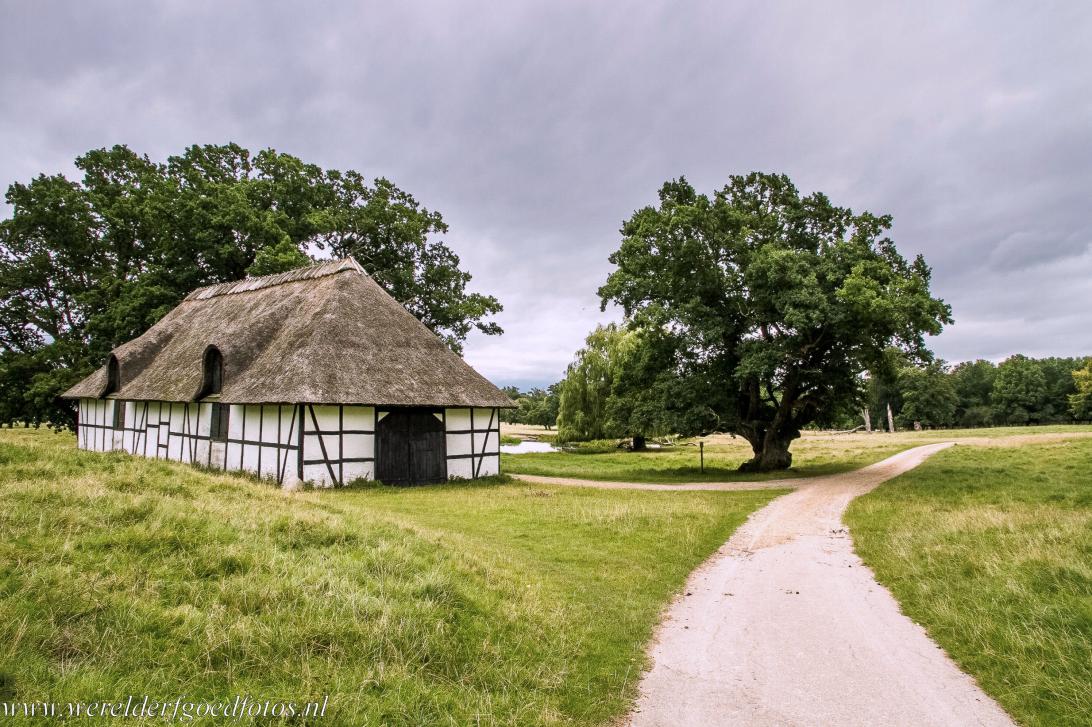
The par force hunting landscape in North Zealand: A picturesque thatched barn next to an English oak. This monumental oak (Quercus robur) is called Englænderegen and is between 250 and 360 years old. The historic oak is situated in Jægersborg Dyrehave, on the Eremitagesletten plain, close to the Hermitage Hunting Lodge. According to local legend, in 1807, two English soldiers stole the regimental wages and buried them under the oak. There have been numerous searches for the treasure, even at the request of Queen Victoria, but it has never been found.

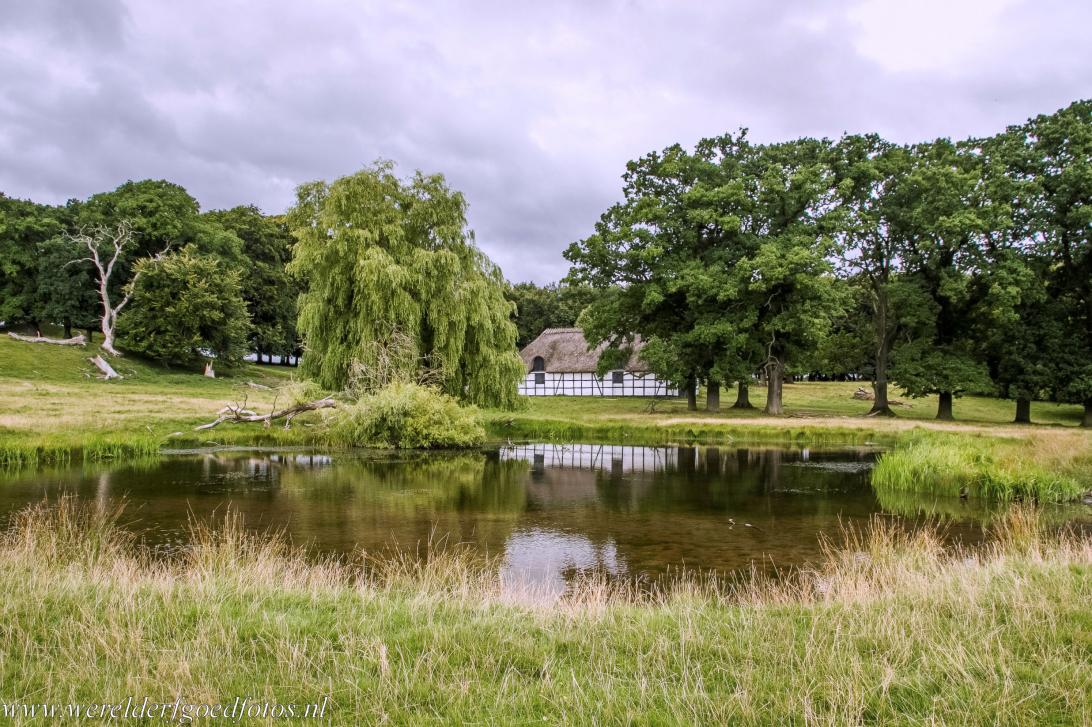
The par force hunting landscape in North Zealand: The striking, solitary weeping willow hangs gracefully over the water's edge and, along with the thatched building in the background, is beautifully reflected in the water of the Magasindammen. This Magazine Pond is located near the hunting lodge in Jægersborg Dyrehave and acquired its name back when it was surrounded by ammunition depots (magazines). The pond is most famous for hosting the dramatic water-crossing highlight of the annual Hubertus Hunt.

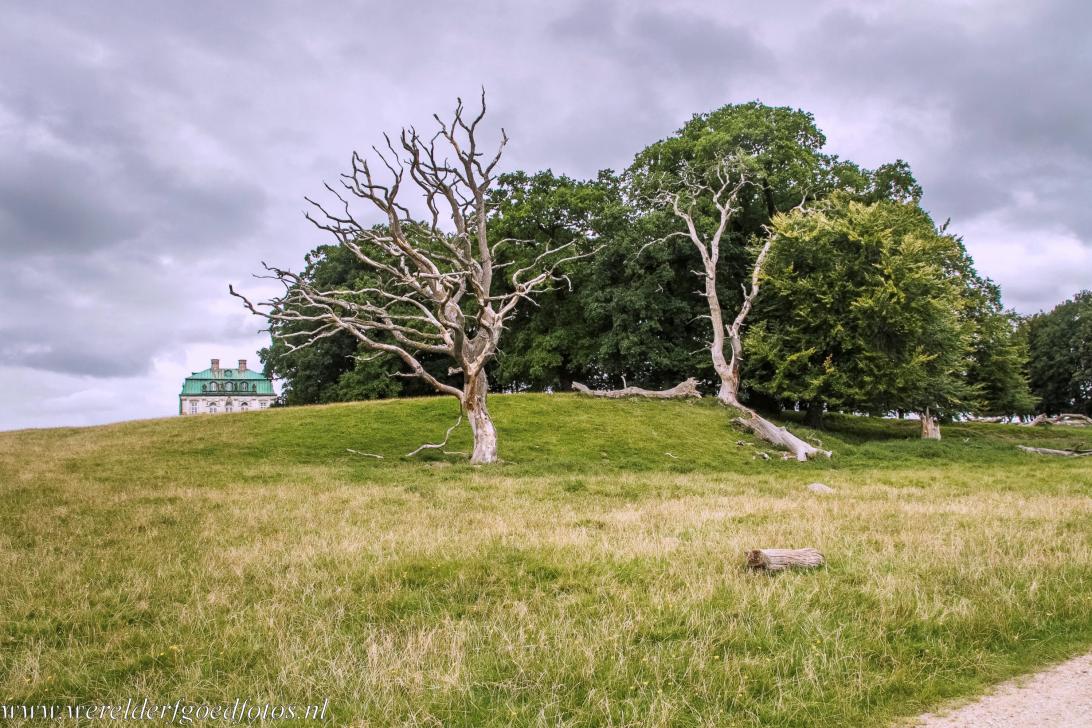
The par force hunting landscape in North Zealand: The hunting lodge lies behind the hill, and several prehistoric burial mounds are situated beneath the trees. There are approximately 80 burial mounds scattered throughout Jægersborg Dyrehave and Jægersborg Hegn; most date back to the Bronze Age. Some of them are located near the Dyrehavsbakken amusement park, which is situated within the former hunting grounds. These monuments, thousands of years old, are recognisable as small, strikingly round grassy mounds, often topped by a cluster of trees or a distinctive old tree stump.

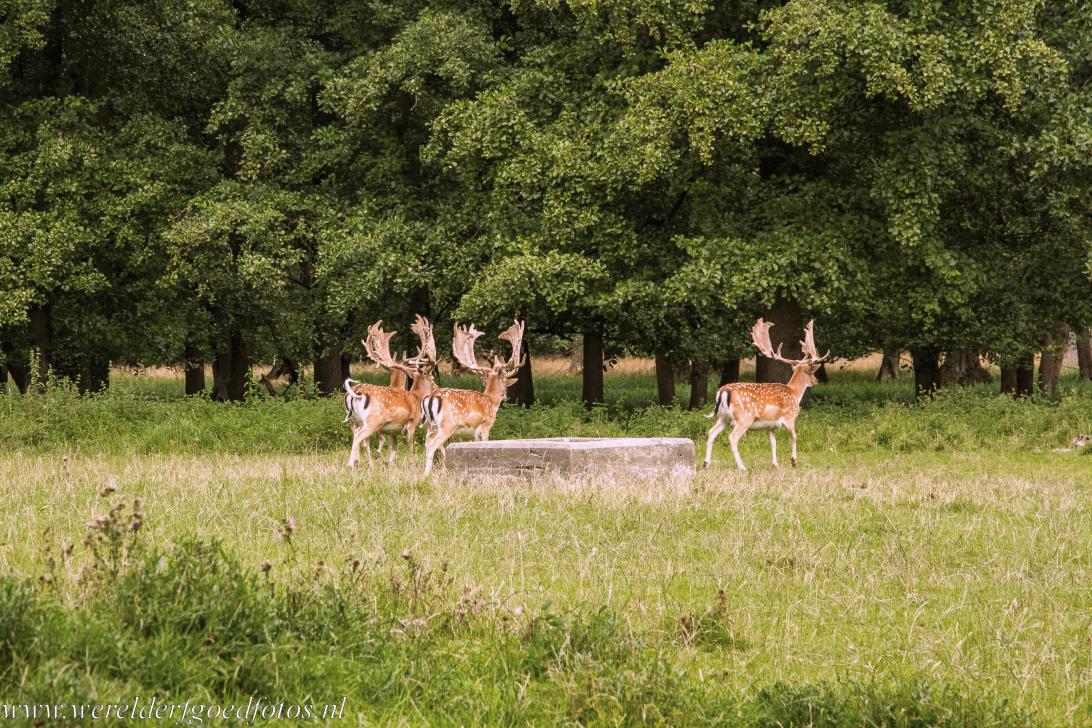
The par force hunting landscape in North Zealand: A number of fallow deer near the Dousbad Vildthus in the deer park Jægersborg Dyrehave. Over the last 300 years, the deer population in these royal hunting grounds has steadily grown. Today, there are more than 2,100 deer living in this renowned deer park: about 300 red deer, 1,700 fallow deer and 100 sika deer. This Asian species was introduced in 1900 and is also known as the spotted deer or Japanese deer; its name comes from 'shika', the Japanese word for 'deer'.

The par force hunting landscape in North Zealand: The Dousbad Vildthus, the Dousbad Wild House, is one of the winter feeding stations in the deer park Jægersborg Dyrehave: the deer only need supplemental feeding in the winter. Jægersborg Dyrehave is the most visited and probably the most interesting part of the par force hunting landscape in North Zealand. The hunting park is accessible on foot; cycling and horseback riding are permitted only on paths and forest roads.

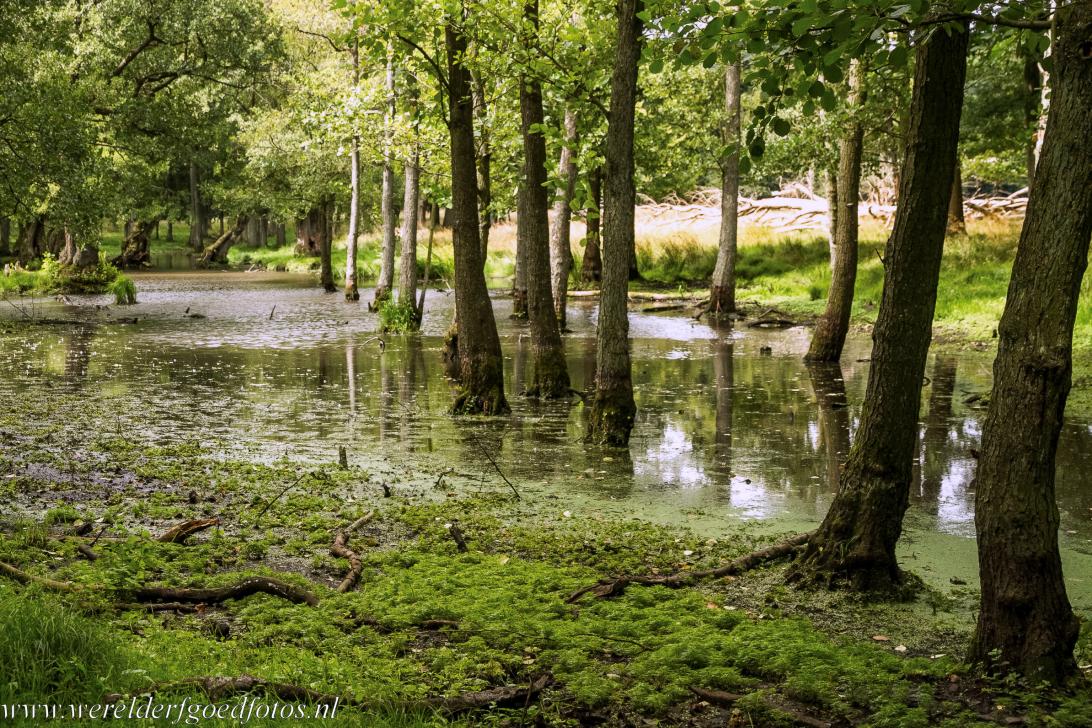
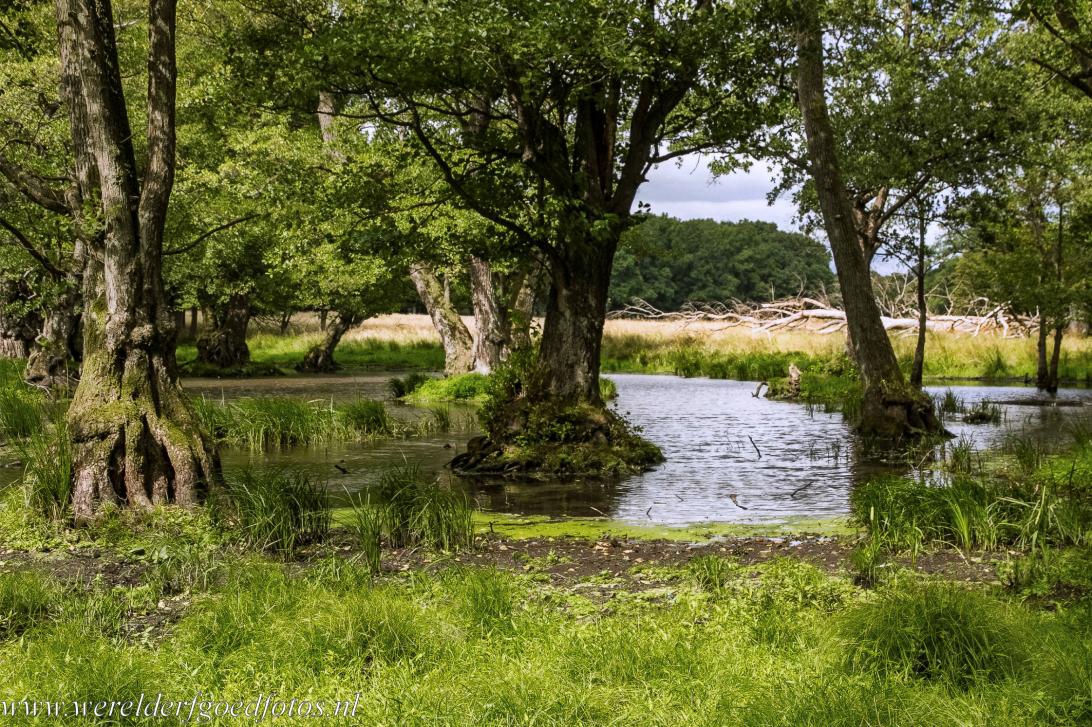
The par force hunting landscape in North Zealand: The mysterious Dousbad Swamp. Over the last 400 years, the trees have been allowed to grow freely, although the wet soil does inhibit their growth. This fairytale-like area is part of the original forest, which dates back to the 13th century, long before it became a royal hunting ground. Long ago, the farmers from the vanished village of Stokkerup used the coppice in this historic swamp for timber and firewood.

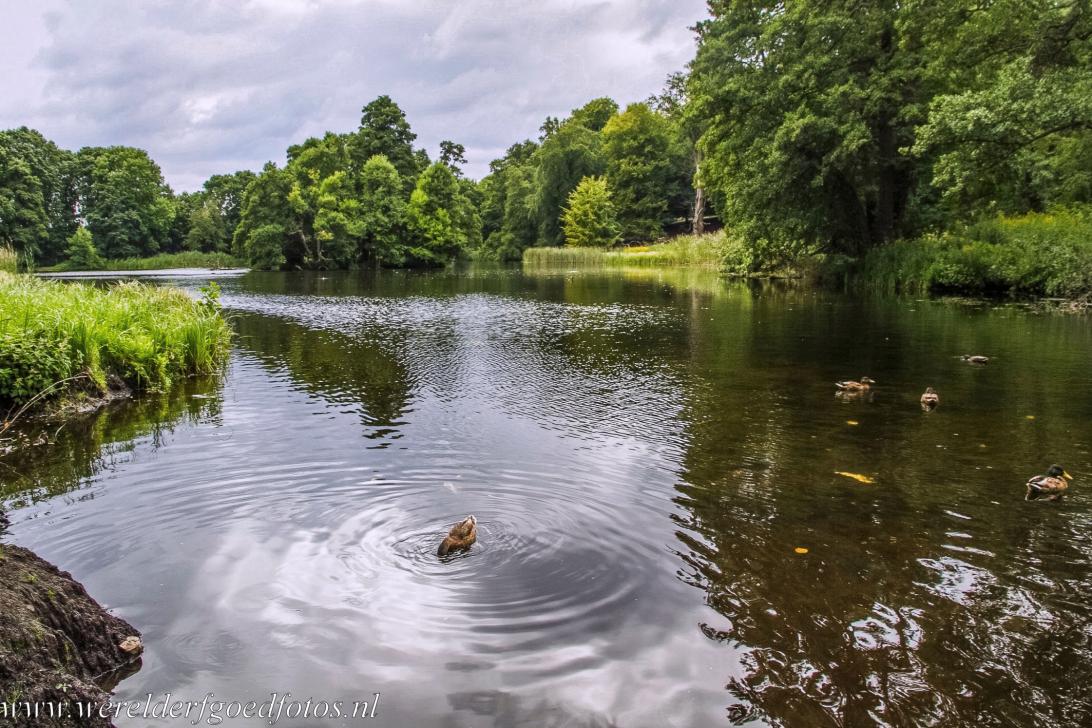
The par force hunting landscape in North Zealand: The Stille Vand is a small and peaceful lake in Jægersborg Dyrehave and Jægersborg Hegn where the deer come to drink. This pond inspired the Danish painter Christian Zacho to create his famous painting: Et Stille Vand i Dyrehaven (Still Water in the Deer Park). This deer and former hunting park is renowned for its ancient and huge oak trees. The park is situated about 20 km north of Copenhagen. Two other hunting grounds are also located north of the Danish capital: Gribskov lies along the shore of Esrum Lake, and the hunting forest of Store Dyrehave near the town of Hillerød.

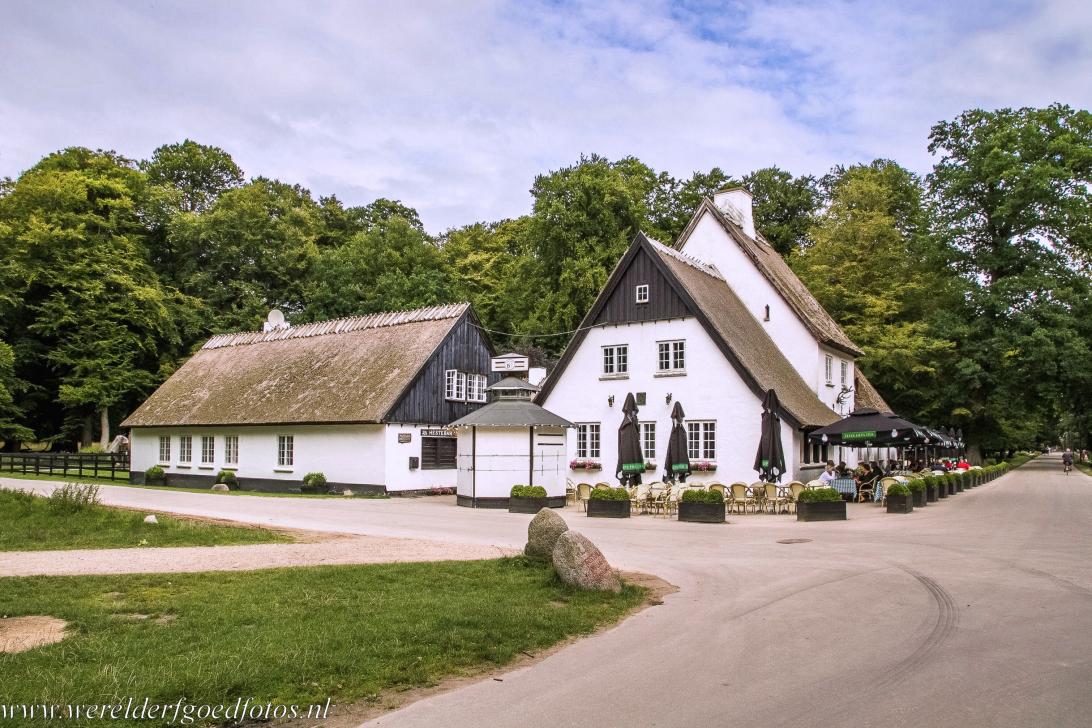
The par force hunting landscape in North Zealand: The Peter Lieps Hus is the most renowned restaurant in Jægersborg Dyrehave. The building stands on the site of the original 18th-century house of Peter Lieps. After a devastating fire, the house was rebuilt in 1928. The restaurant is named after Peter Lieps, the first gamekeepe and the royal hunter of the king. The building is situated in the Von Langens Plantage, the most visited part of Jægersborg Dyrehave.

The par force hunting landscape in North Zealand: The Kildesø in Jægersborg Dyrehave is an elongated, picturesque pond surrounded by the park's characteristic centuries-old oaks and beeches. Beside the pond lies Kirsten Piils Kilde, a natural spring discovered in 1583 by Kirsten Piil, a devout woman whose life remains shrouded in mystery. The spring became a popular pilgrimage site, as people at the time believed that Kirsten Piil had endowed the ice-cold, pure water with beneficial and healing properties.