Monte San Giorgio – Secrets of the Ancient Lagoon
Monte San Giorgio is a cross-border UNESCO World Heritage Site, shared by Switzerland and Italy. The wooded mountain lies in the southern part of the canton of Ticino in Switzerland, 50 km from Bellinzona and 40 km from Varese. The pyramid-shaped mountain is situated on the Italian-Swiss border and is overlooking Lake Lugano.
Monte San Giorgio is a site of extreme historical, archaeological and scientific importance. The rocks of Monte San Giorgio contain a rich quantity of fossils that date back to the Triassic Period (250-230 million years ago). During the Triassic Period, Monte San Giorgio was not the mountain that we know today, but a subtropical lagoon. It was partially separated from the open sea by an offshore reef; the seabed of this unique environment was favorable to the preservation of the remains of the animals that inhabited it. Because the lagoon was near the coast, the fossils include not only marine fossils, but also fossils from the nearby land, such as insects, reptiles, and plants.
The Fossil Museum in the town of Besano in Italy exhibits a selection of the fossilized animals and plants from the Monte San Giorgio and nearby mountains, just like the Fossil Museum in the Swiss village of Meride. Monte San Giorgio became a UNESCO World Heritage Site in 2003. A section of the Italian mountains Poncione d'Arzo (or Monte Pravello) and Monte Orsa was added in 2010. The Monte San Giorgio is a natural World Heritage Site. Two other major fossil sites in Europe are the Messel Pit in Germany and the Western Limfjord in Denmark.
www.werelderfgoedfotos.nl © Copyright World Heritage Photos
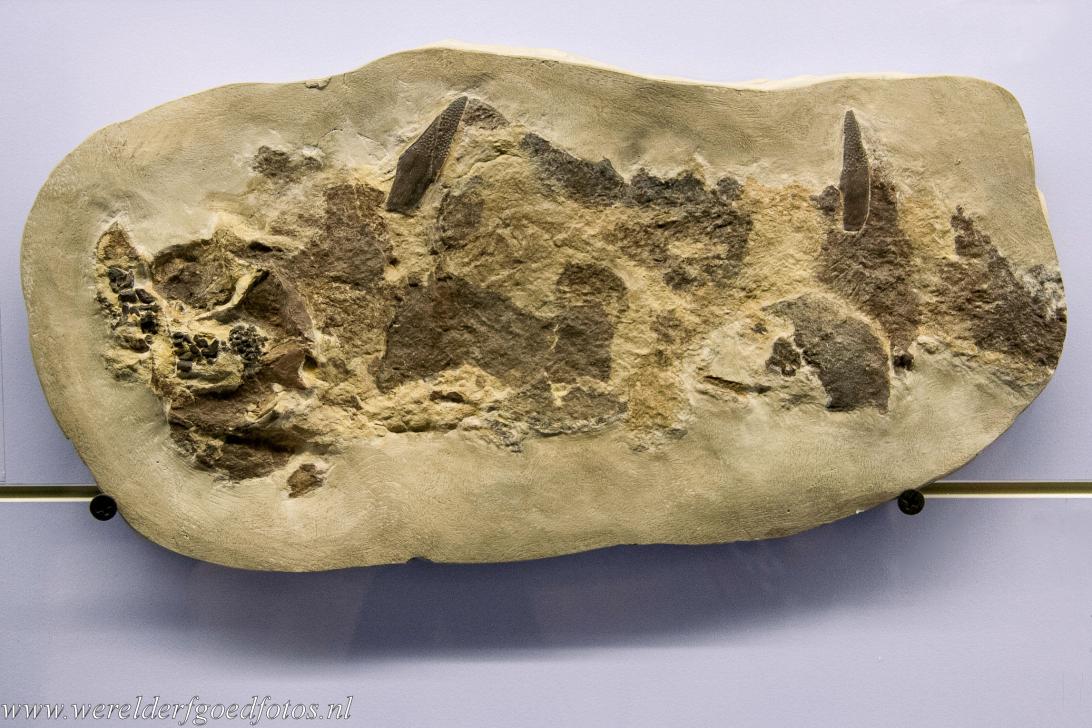
A fossil of the teeth of the Acrodus georgii, the fossil was found at Besano in Italy. Thousands of fossils were found on the Monte San Giorgio since the 19th century. This mountain gained the status as a UNESCO World Heritage in 2003. An extension of the site and a section of the nearby mountains Poncione d'Arzo (or Monte Pravello) and Monte Orsa in Italy were inscribed on the UNESCO World Heritage List in 2010.
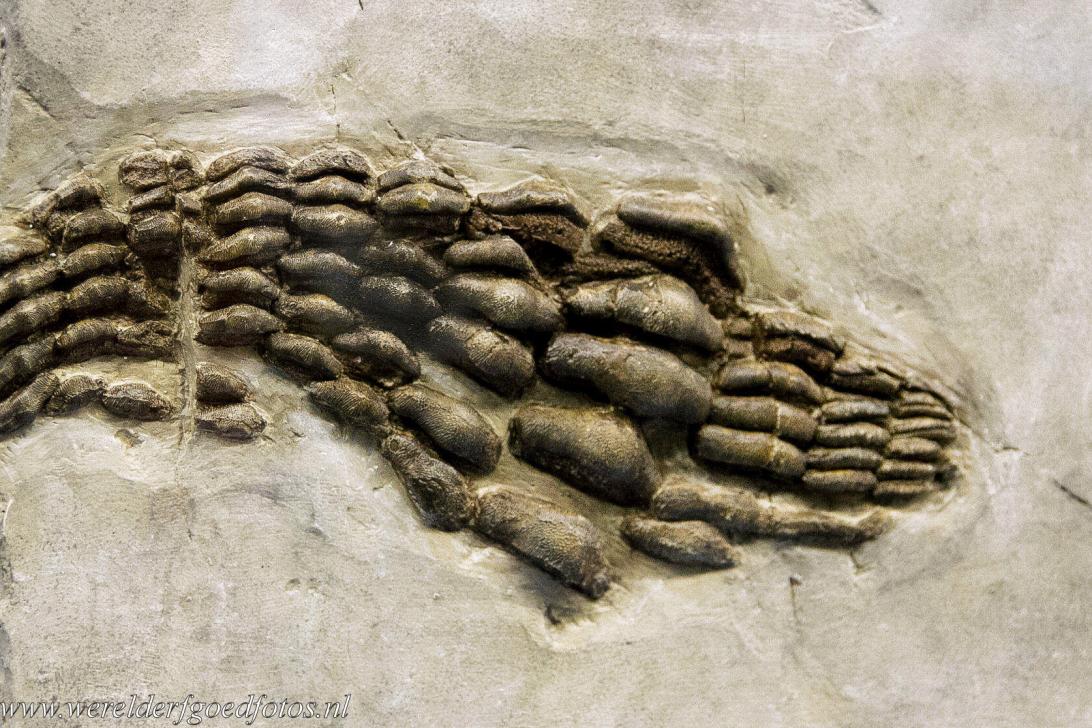
A fossil of the teeth of the Acrodus georgii, the fossil was found at Besano in Italy. Thousands of fossils were found on the Monte San Giorgio since the 19th century. This mountain gained the status as a UNESCO World Heritage in 2003. An extension of the site and a section of the nearby mountains Poncione d'Arzo (or Monte Pravello) and Monte Orsa in Italy were inscribed on the UNESCO World Heritage List in 2010.
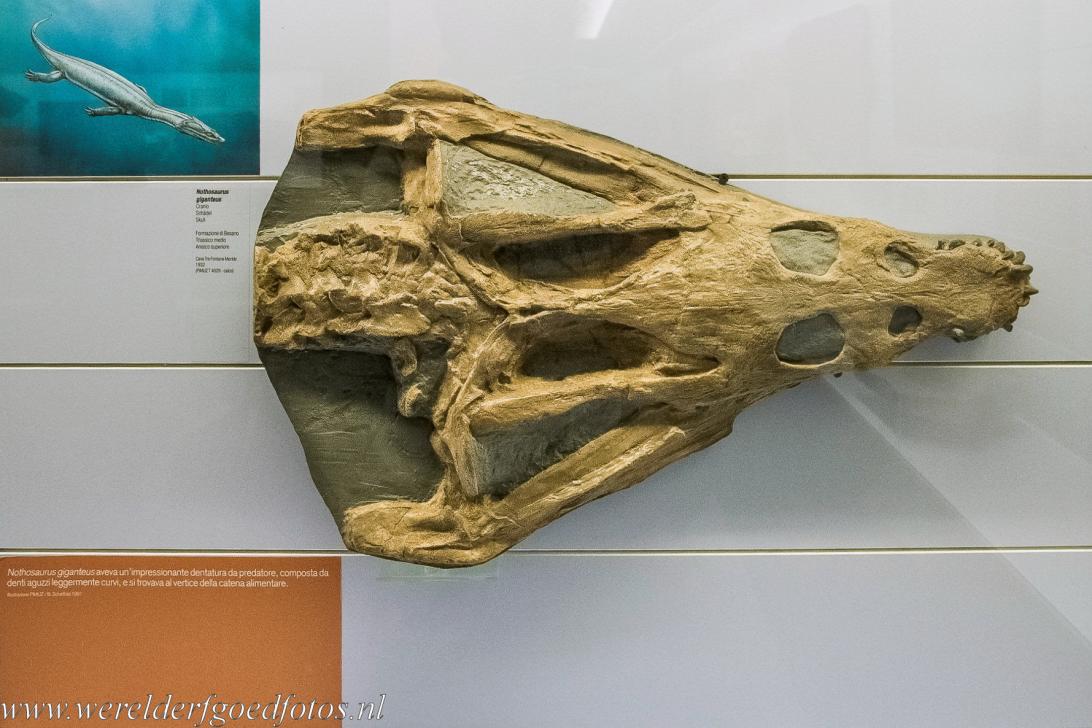
The skull of a Nothosaurus giganteus was found in the Besano Formation in Italy. The Fossil Museum in the Swiss town of Meride and the Fossil Museum in the Italian town of Besano exhibits a selection of fossilized animals and plants found on the Monte San Giorgio and the nearby mountains Poncione d'Arzo (also known as the Monte Pravello) and Monte Orsa.

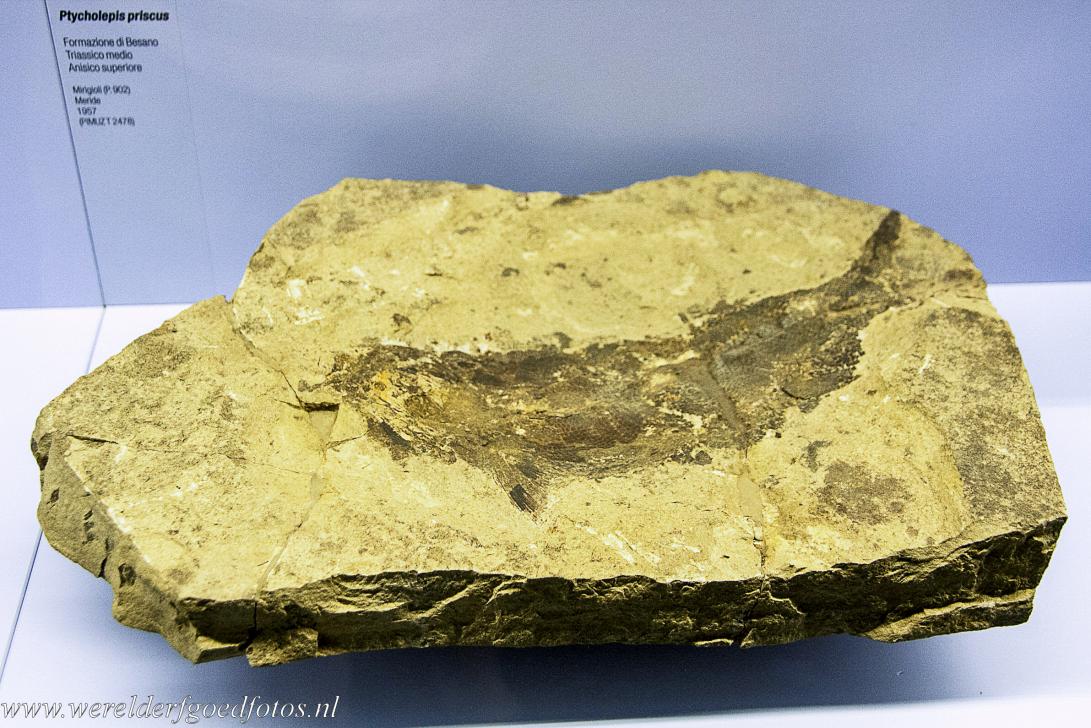
A fossil of a Ptycholepsis priscus, a primitive ray finned fish, was discovered in the Italian Besano Formation. The first fossils at the Monte San Giorgio were found during mining excavations of oil shale. The deposits of the Monte San Giorgio mainly contain marine organisms such as algae, fishes and marine reptiles.

A fossil of the Acrodus georgii, the fossil was found in the Besano Formation, Italy. The fossils found at the Monte San Giorgio, a former subtropical lagoon, include not only marine fossils, but also some fossils from the nearby land, such as insects, plants and terrestrial reptiles.

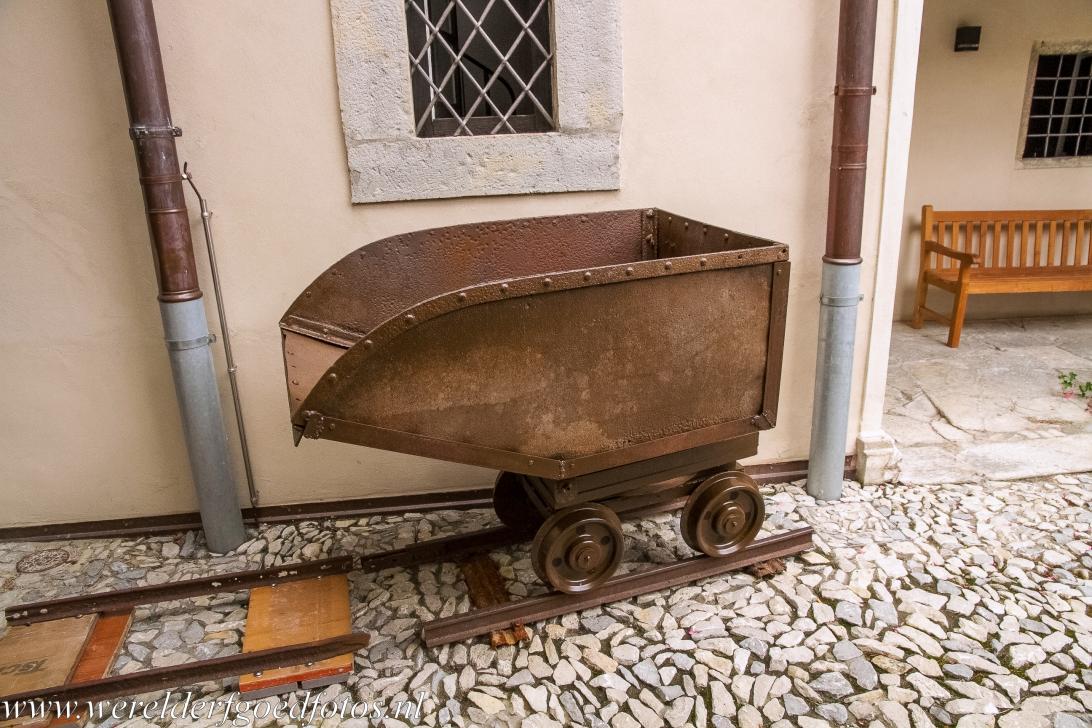
This mining cart was used to transport oil shale, the oil shale of the Monte San Giorgio was mined in order to extract mineral oil and a bituminuous salve. The layers of the oil shale of the Monte San Giorgio were also rich in fossils, they were discovered during mining excavations of the oil shale.

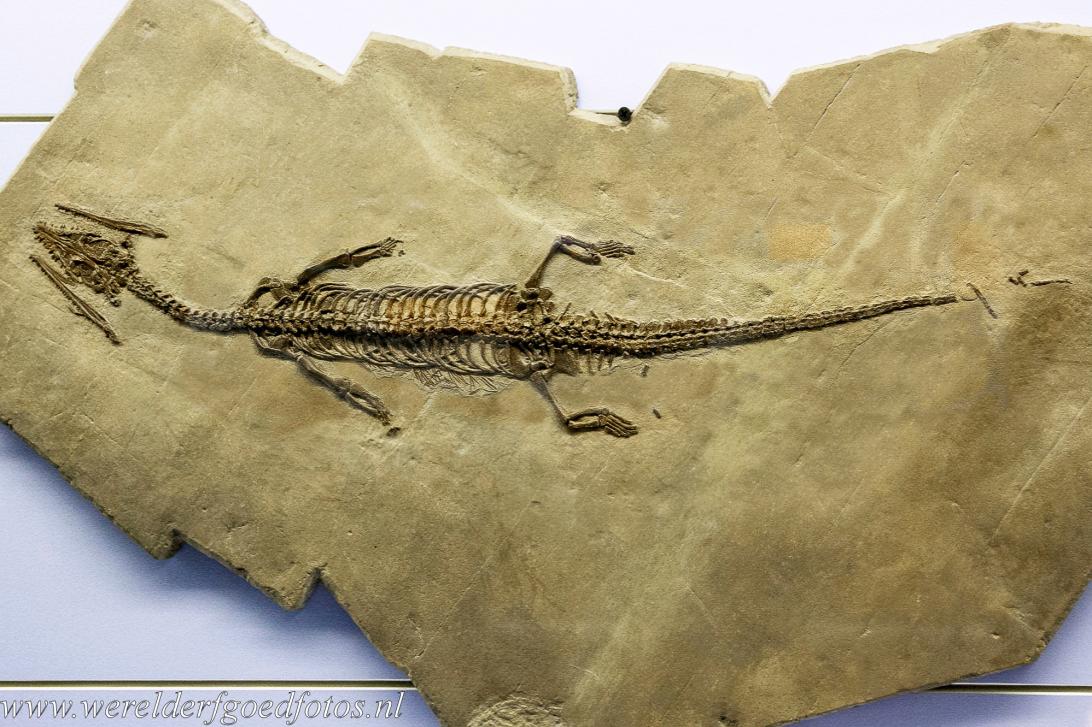
The fossil of the Serpianosaurus mirigiolensis, an extinct species of a semi-aquatic reptile. These reptiles lived about 242 millions years ago. The fossil was found close to Besano in 1954, on the border between Italy and Switzerland.

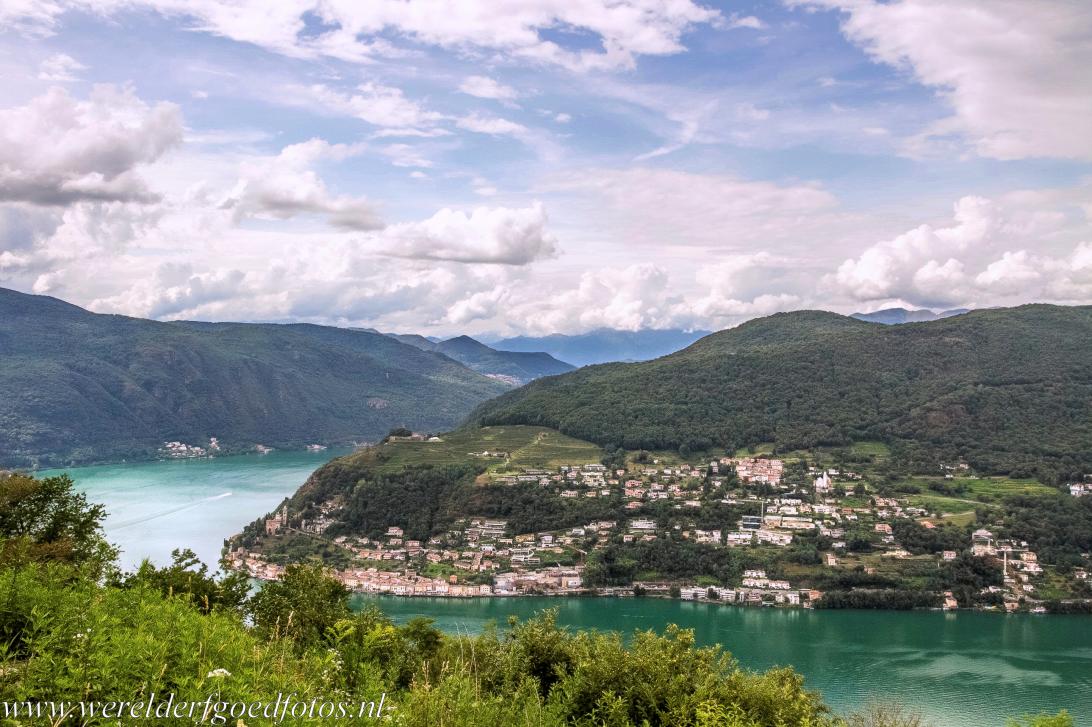
Lake Lugano viewed from the Monte San Giorgio, the wooded mountain is a site of extreme archaeological, historical and scientific value. The mountain is located in the Alps in southern Switzerland nearby the Italian border. The rocks of Monte San Giorgio contain a rich quantity of fossils that date back as far as the Triassic Period (250 tot 230 million years ago).