World Heritage Photos

Old Town of Quedlinburg

Collegiate Church, Castle and Old Town of Quedlinburg: Quedlinburg is a medieval German town situated north of the Harz Mountains. The Old Town of Quedlinburg is situated on two hills: the Münzenberg and the Schlossberg. Quedlinburg is widely considered one of the most beautiful towns in Germany; the steep, narrow cobblestone streets are lined with more than 2,000 well-preserved half-timbered buildings. It has the highest concentration of half-timbered houses in Germany. The Romanesque Collegiate Church of St. Servatius and the Castle of Quedlinburg, set on the Schlossberg, dominate the historic centre. The town became the first capital city of Germany when King Henry I was crowned in Quedlinburg in 919. He was the founder of the Ottonian dynasty. During the 10th and first half of the 11th centuries, the town continued to be the political centre of the Ottonian Empire. Queen Mathilde, the consort of Henry I, founded a convent in 936. Their granddaughter, also named Mathilde, became the first abbess in 966. The royal graves of King Henry I and Queen Mathilde can be found in the crypt of the Collegiate Church of St. Servatius on the Schlossberg. The Nazis exploited Quedlinburg's history for their propaganda. The Collegiate Church and the crypt of the St. Wigbert Church (Wipertikirche) were converted into SS shrines. Following the end of the Second World War, the buildings were restored to their original Christian purpose. Quedlinburg is the birthplace of the poet Klopstock, who influenced the early work of Goethe. The Lyonel Feininger Gallery is a museum dedicated to the work of the artist Lyonel Feininger, one of the first masters at the Bauhaus in Weimar. Having been spared during the Second World War, most of its buildings have remained authentic. Quedlinburg was part of the former GDR, during which time many houses fell into disrepair. Since the reunification of Germany, Quedlinburg has undergone extensive restoration. The Collegiate Church, Castle and Old Town of Quedlinburg gained status as a UNESCO World Heritage Site in 1994. 

www.werelderfgoedfotos.nl   © Copyright   World Heritage Photos   Classic Car Road Trip  
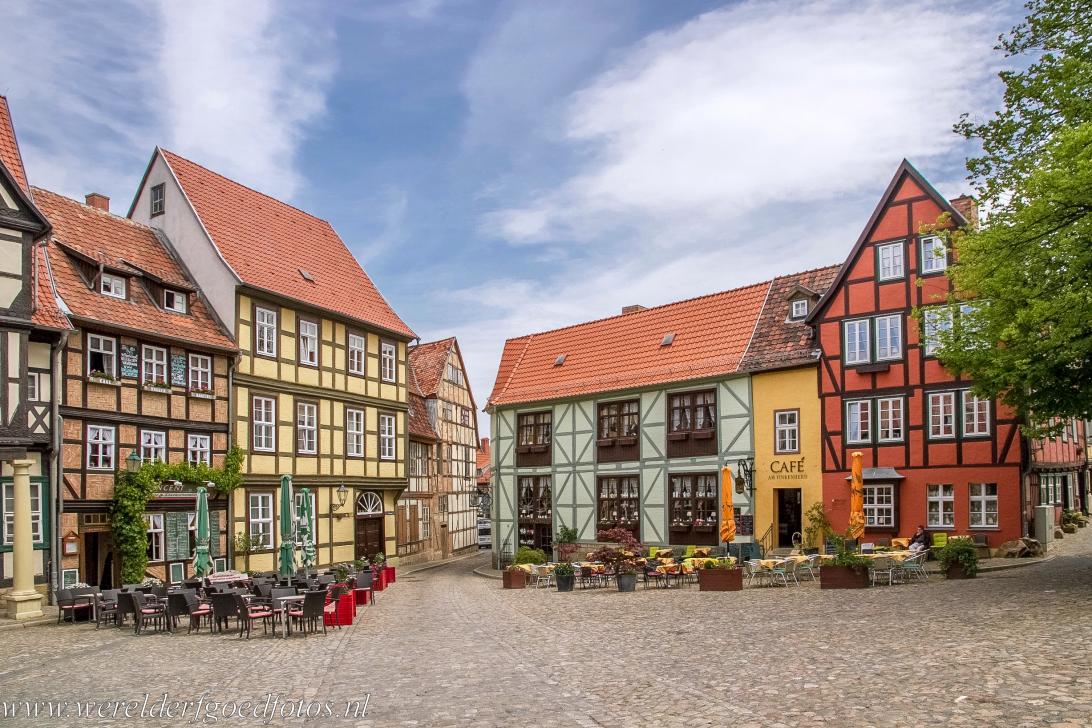
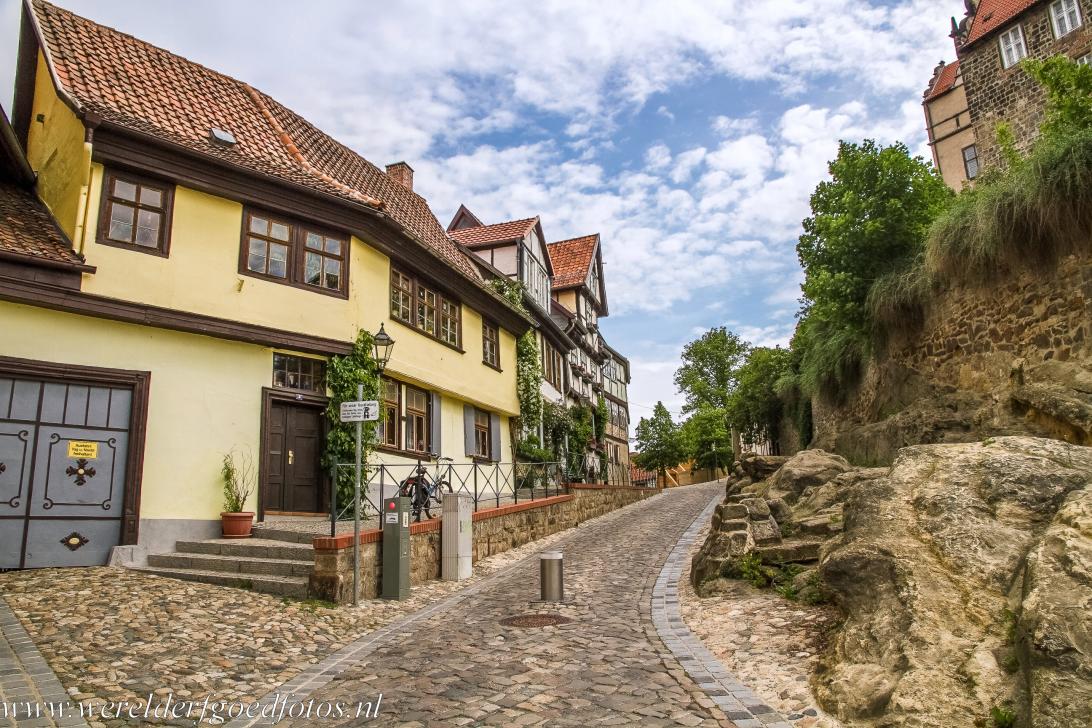
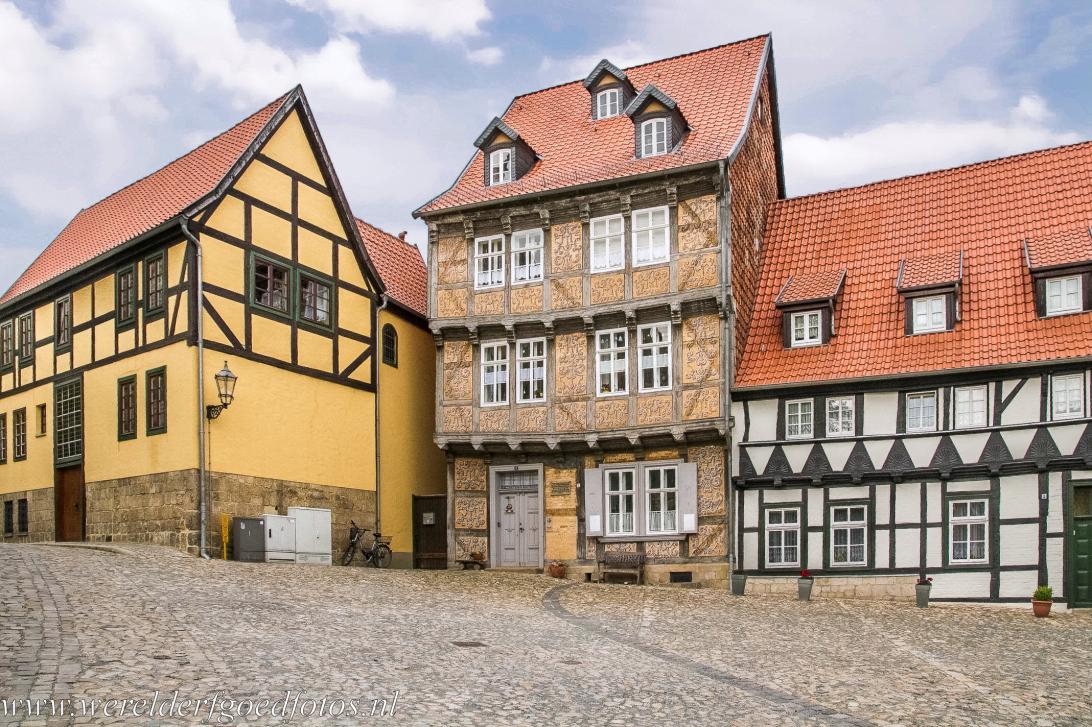
Old Town of Quedlinburg - Collegiate Church, Castle and Old Town of Quedlinburg: One of the picturesque squares in the historic town. Quedlinburg is widely considered one...

Collegiate Church, Castle and Old Town of Quedlinburg: One of the picturesque squares in the historic town. Quedlinburg is widely considered one of the most beautiful towns in Germany. The narrow, cobbled streets are lined with more than two thousand half-timbered buildings. The Collegiate Church of St. Servatius, the Castle and Old Town of Quedlinburg were declared a UNESCO World Heritage Site in 1994. 
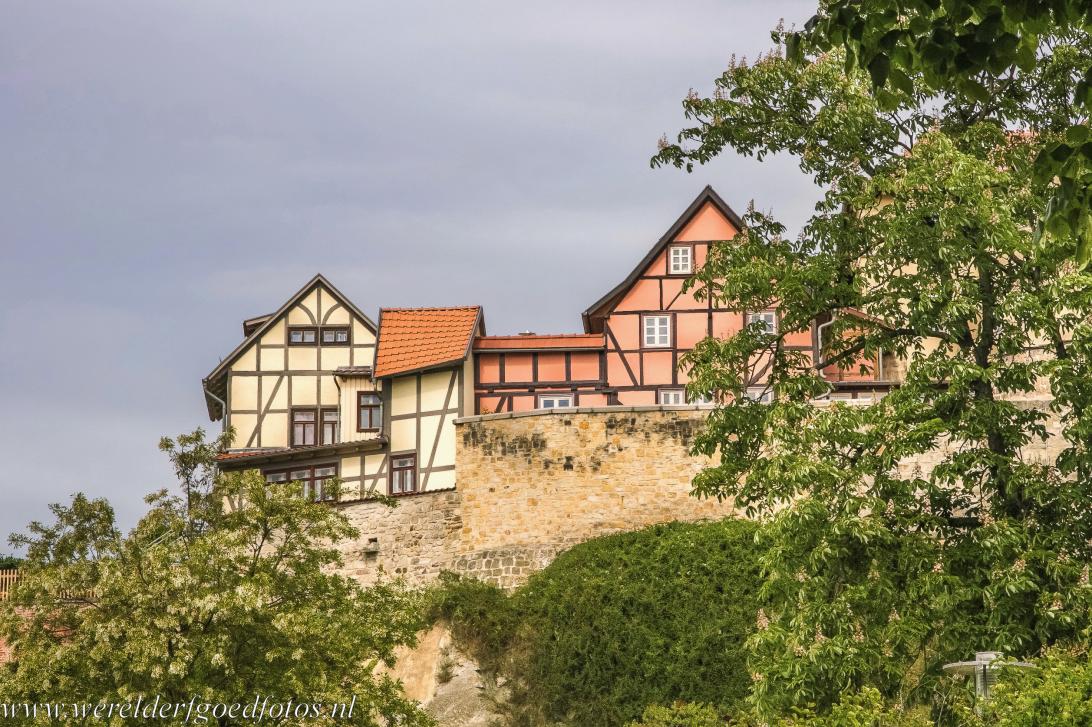
  1. Old Town of Quedlinburg - Collegiate Church, Castle and Old Town of Quedlinburg: One of the picturesque squares in the historic town. Quedlinburg is widely considered one...

    Collegiate Church, Castle and Old Town of Quedlinburg: One of the picturesque squares in the historic town. Quedlinburg is widely considered one of the most beautiful towns in Germany. The narrow, cobbled streets are lined with more than two thousand half-timbered buildings. The Collegiate Church of St. Servatius, the Castle and Old Town of Quedlinburg were declared a UNESCO World Heritage Site in 1994. 
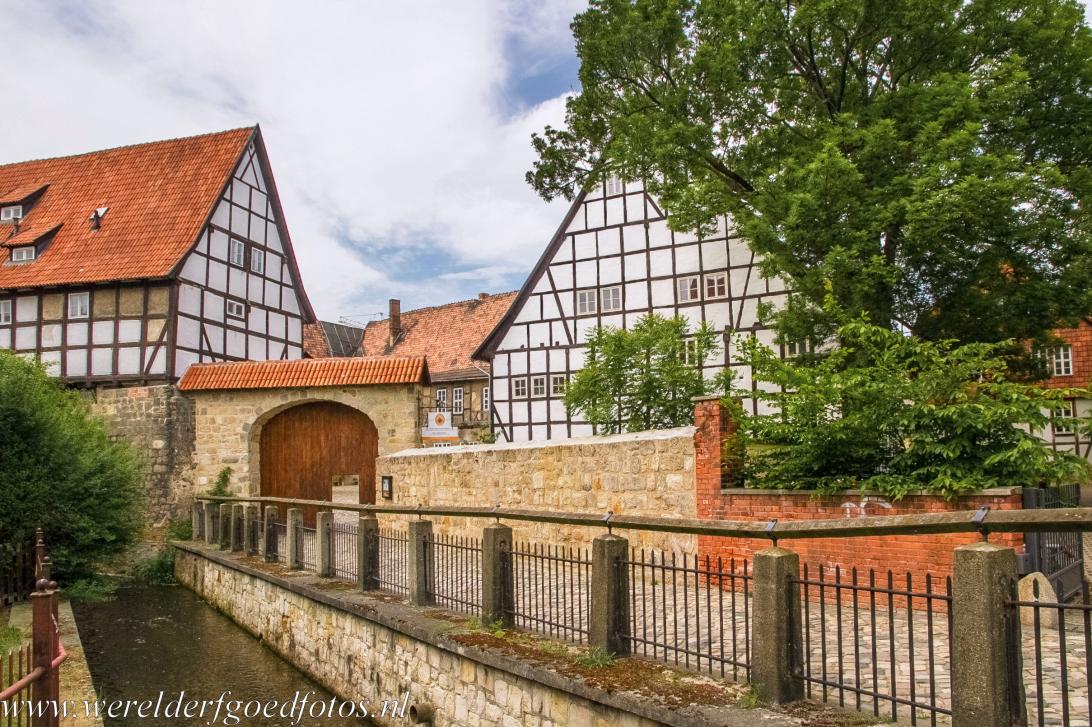
  2. Old Town of Quedlinburg - The Collegiate Church, Castle and Old Town of Quedlinburg: A Benedictine monastery and the St. Marienkirche (St. Mary's...

    The Collegiate Church, Castle and Old Town of Quedlinburg: A Benedictine monastery and the St. Marienkirche (St. Mary's Church) were founded on the Münzenberg in 946. The complex was completed in 995. Following the Protestant Reformation and the dissolution of the monastery in 1539, the buildings fell into disrepair. The Münzenberg now houses a number of half-timbered buildings and a monastery museum.

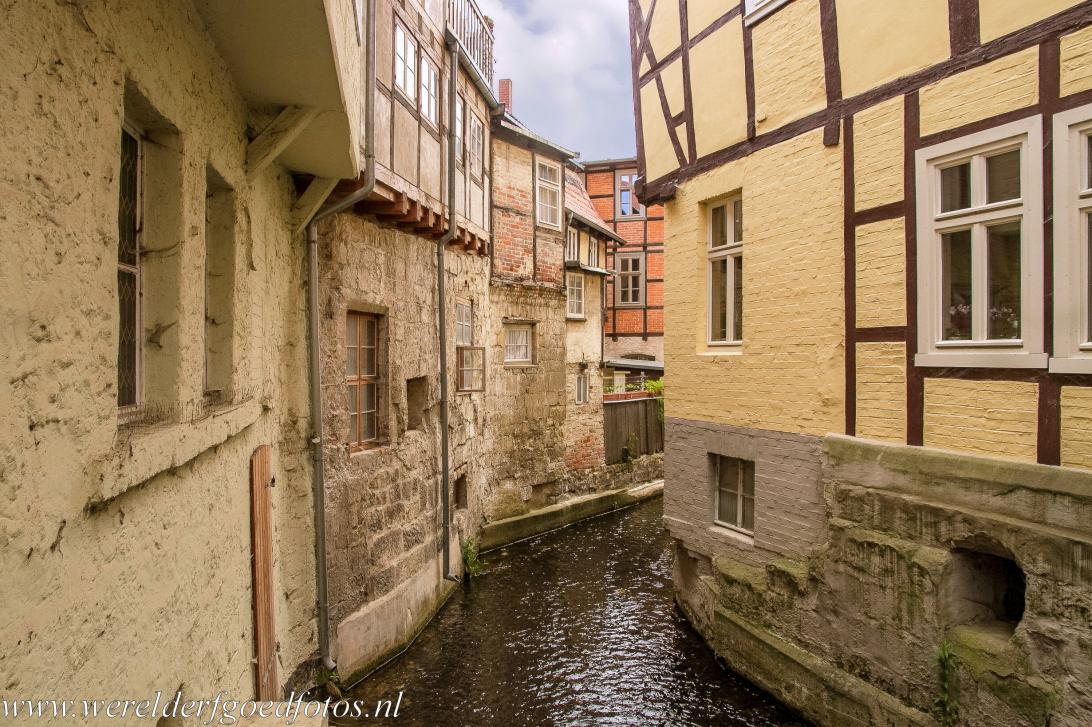
  3. Old Town of Quedlinburg - Collegiate Church, Castle and Old Town of Quedlinburg: The river Bode. Quedlinburg is situated north of the Harz Mountains; it was built...

    Collegiate Church, Castle and Old Town of Quedlinburg: The river Bode. Quedlinburg is situated north of the Harz Mountains; it was built on two hills: the Burgberg and the Münzenberg. In the 16th century, small half-timbered houses were built within and around the ruins of the church and the Benedictine monastery on the Münzenberg; at the time, this was the poorest part of Quedlinburg. 

  4. Old Town of Quedlinburg - Collegiate Church, Castle and Old Town of Quedlinburg: The footpath up the Burgberg (Castle Hill). Quedlinburg became the first capital of...

    Collegiate Church, Castle and Old Town of Quedlinburg: The footpath up the Burgberg (Castle Hill). Quedlinburg became the first capital of Germany, as it became the primary residence of King Henry I in 919. He was the founder of the Ottonian dynasty. During the 10th and the first half of the 11th centuries, the town of Quedlinburg continued to be the political centre of the Ottonian Empire.

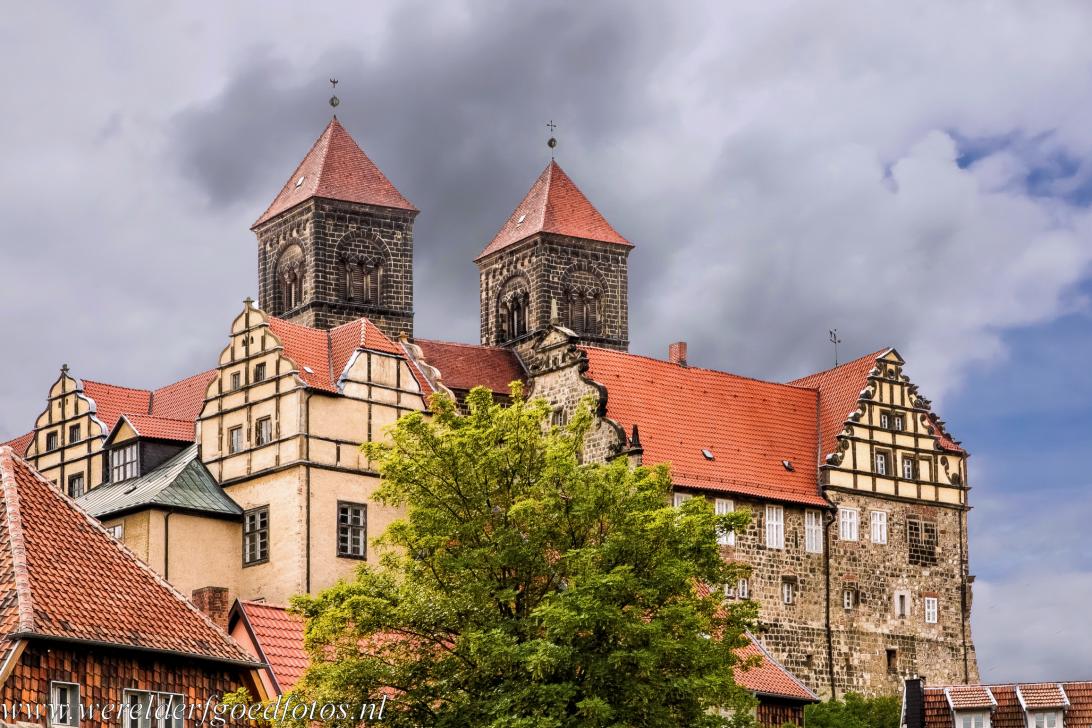
  5. Old Town of Quedlinburg - Collegiate Church, Castle and Old Town of Quedlinburg: The Romanesque Collegiate Church of St. Servatius and the Castle of Quedlinburg stands...

    Collegiate Church, Castle and Old Town of Quedlinburg: The Romanesque Collegiate Church of St. Servatius and the Castle of Quedlinburg stands atop the Schlossberg; this hill is also known as the Burgberg (Castle Hill). The church and the castle dominate the historic town. The royal graves of King Henry I and Queen Mathilde are situated in the Romanesque crypt of the church. The church houses an important treasury; both the crypt and the treasury are open to visitors

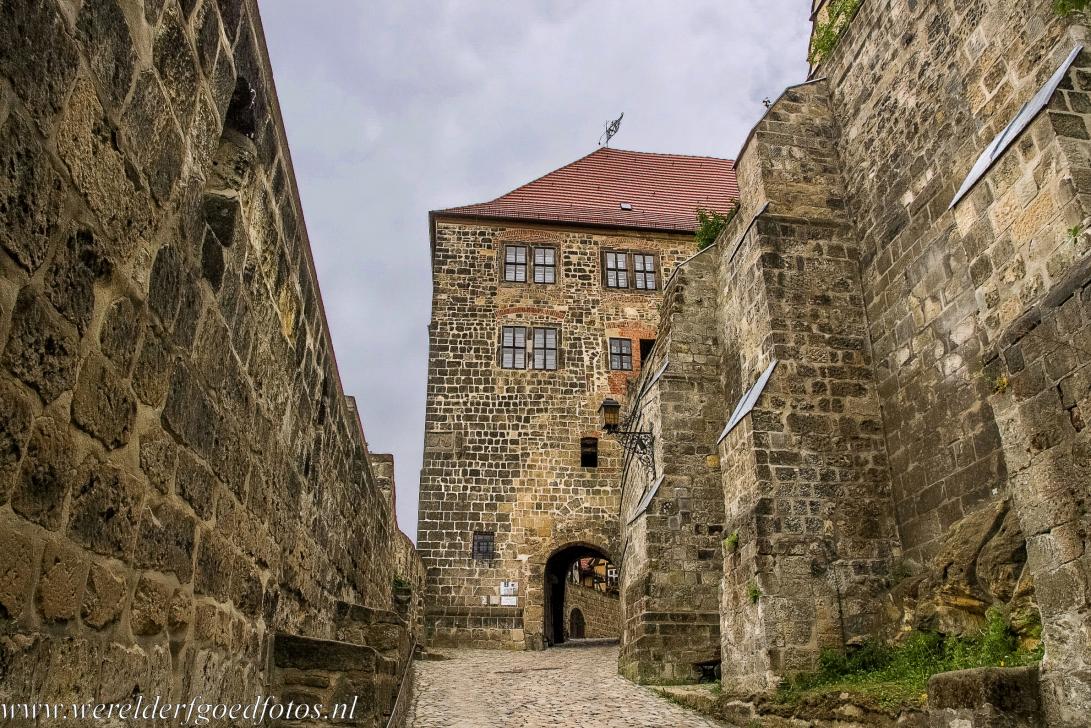
  6. Old Town of Quedlinburg - Collegiate Church, Castle and Old Town of Quedlinburg: The massive entrance gate to the Castle of Quedlinburg. This imposing castle is...

    Collegiate Church, Castle and Old Town of Quedlinburg: The massive entrance gate to the Castle of Quedlinburg. This imposing castle is set atop the Burgberg (Castle Hill). The Lyonel Feininger Gallery at the foot of the hill presents the work of the German-American draughtsman, graphic artist and painter Lyonel Feininger; he was also a photographer and one of the first masters at the Bauhaus in Weimar.

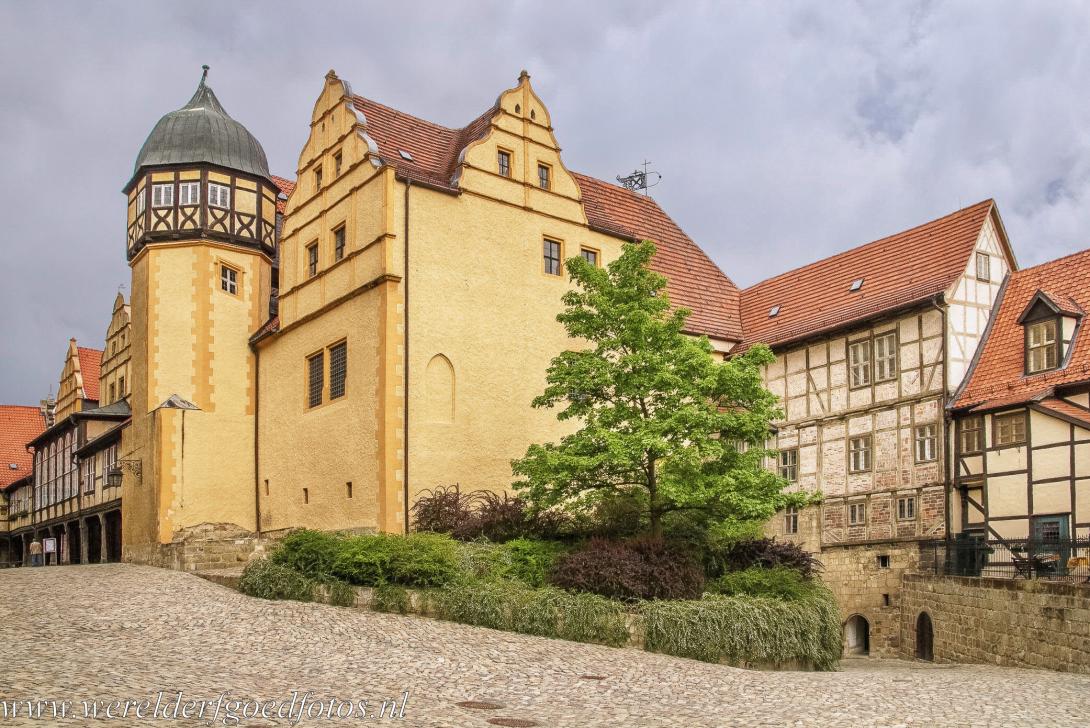
  7. Old Town of Quedlinburg - The Collegiate Church, Castle and Old Town of Quedlinburg: The Castle of Quedlinburg on the Burgberg (Castle Hill). The original castle was built...

    The Collegiate Church, Castle and Old Town of Quedlinburg: The Castle of Quedlinburg on the Burgberg (Castle Hill). The original castle was built for King Henry I; it was expanded by Emperor Otto I in the 10th century. Between the 16th and 18th centuries, its three wings were rebuilt in the Renaissance style. The castle garden offers breathtaking views over this historic town and its numerous half-timbered houses.

  8. Old Town of Quedlinburg - Collegiate Church, Castle and Old Town of Quedlinburg: At the foot of the Burgberg stands the birthplace of the epic and lyric poet...

    Collegiate Church, Castle and Old Town of Quedlinburg: At the foot of the Burgberg stands the birthplace of the epic and lyric poet Friedrich Gottlieb Klopstock. He profoundly influenced the early work of the famous German novelist, poet and statesman Johann Wolfgang von Goethe. Klopstock's birthplace is one of more than two thousand authentic half-timbered houses in the historic town of Quedlinburg and is one of Germany's most important literary memorials.

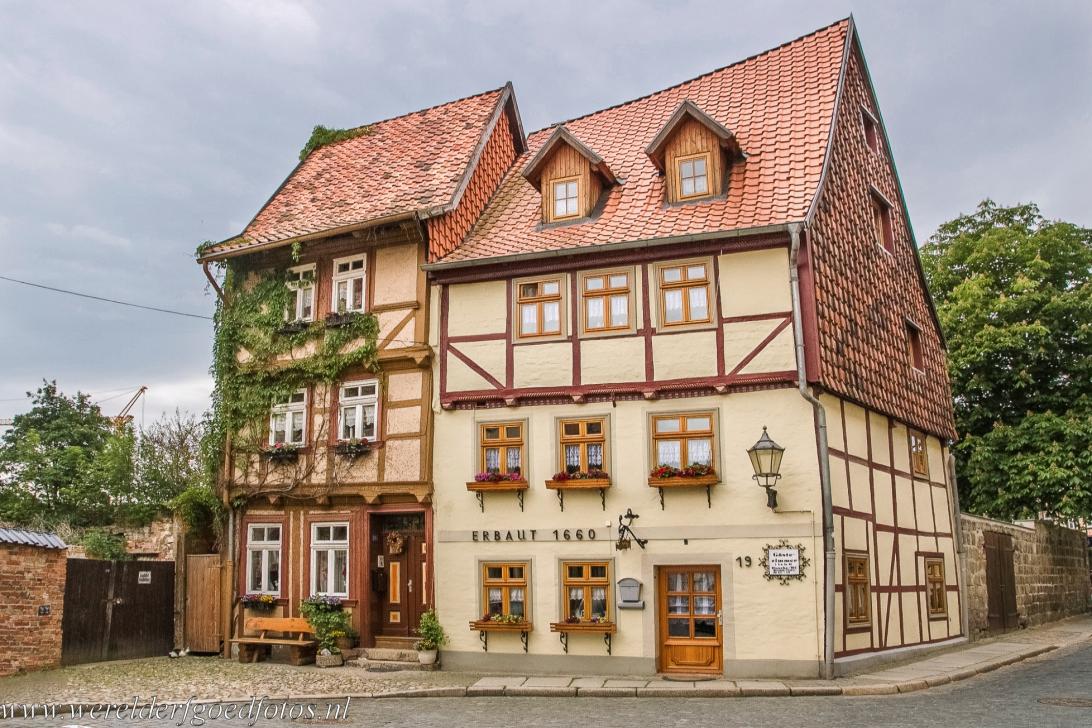
  9. Old Town of Quedlinburg - Collegiate Church, Castle and Old Town of Quedlinburg: This half-timbered house was built in 1660. Most of the houses are authentic because the...

    Collegiate Church, Castle and Old Town of Quedlinburg: This half-timbered house was built in 1660. Most of the houses are authentic because the town was not a target of the Allied bombing raids during the Second World War. The majority of the historic buildings date from the 17th century, in the rebuilding period following the Thirty Years' War (1618–1648). Quedlinburg has the largest number of half-timbered houses in Germany.

  10. Old Town of Quedlinburg - Collegiate Church, Castle and Old Town of Quedlinburg: The river Bode flows through the Old Town of Quedlinburg. The town is situated on...

    Collegiate Church, Castle and Old Town of Quedlinburg: The river Bode flows through the Old Town of Quedlinburg. The town is situated on the west bank of this small river. Quedlinburg was part of the former GDR. Shortly after the German reunification in 1990, Quedlinburg started the restoration of its historic centre. The Old Town of Quedlinburg, including the Collegiate Church and the Castle, was inscribed on the UNESCO World Heritage List in 1994.