Old Town of Ávila with its Extra-Muros Churches: The Old Town of Ávila features the most complete fortifications in Spain. The Town of Ávila, the 'City of Saints and Stones', was founded in the 11th century to protect the Spanish territories. Construction of the fortifications started in 1090 and includes 88 semicircular towers and 9 gates. The Cathedral of Ávila, the Cathedral of Christ the Saviour, is the second oldest Gothic cathedral in Spain; the oldest one is the Cathedral of Cuenca. The cathedral was built as an integral part of the fortifications of Ávila.
The Town of Ávila has a large number of Romanesque style churches inside and outside the medieval walls. Among the churches built outside the town walls of Ávila are the 12th-century Basilica de San Vicente and the small Hermitage of Santa Maria de la Cabeza, the latter built in the Romanesque and unique Mudéjar styles. Ávila is located about 112 kilometres northwest of Madrid and about 70 kilometres north of Segovia. The Old Town of Ávila with its Extra-Muros Churches gained status as a UNESCO World Heritage Site in 1985.
www.werelderfgoedfotos.nl © Copyright World Heritage Photos
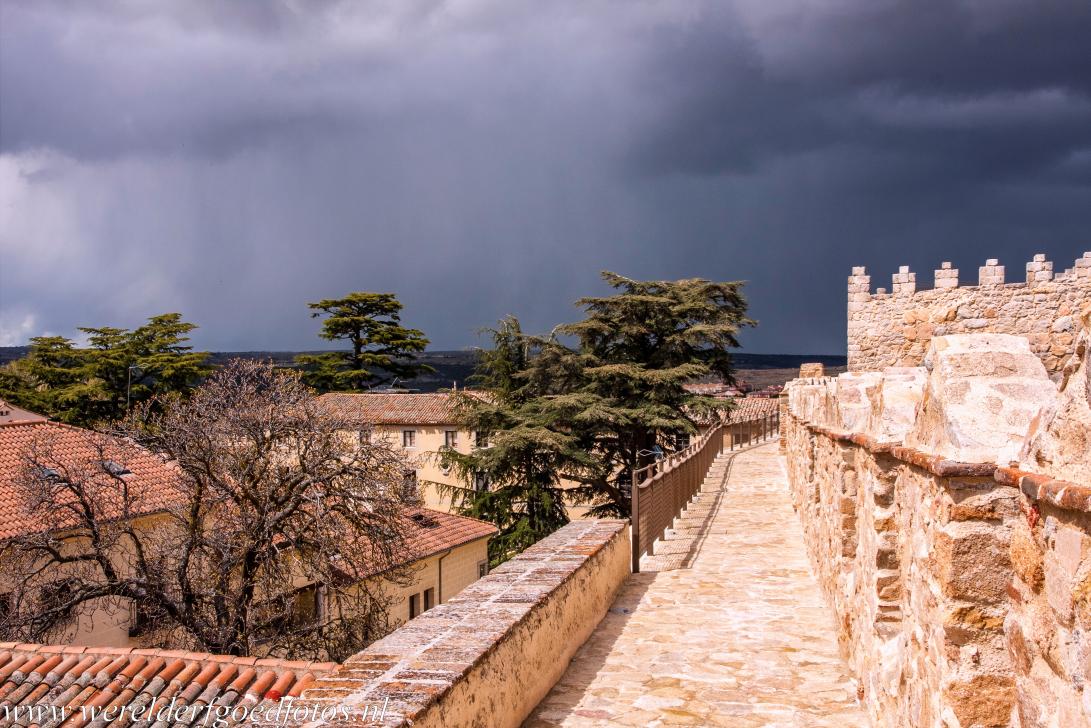
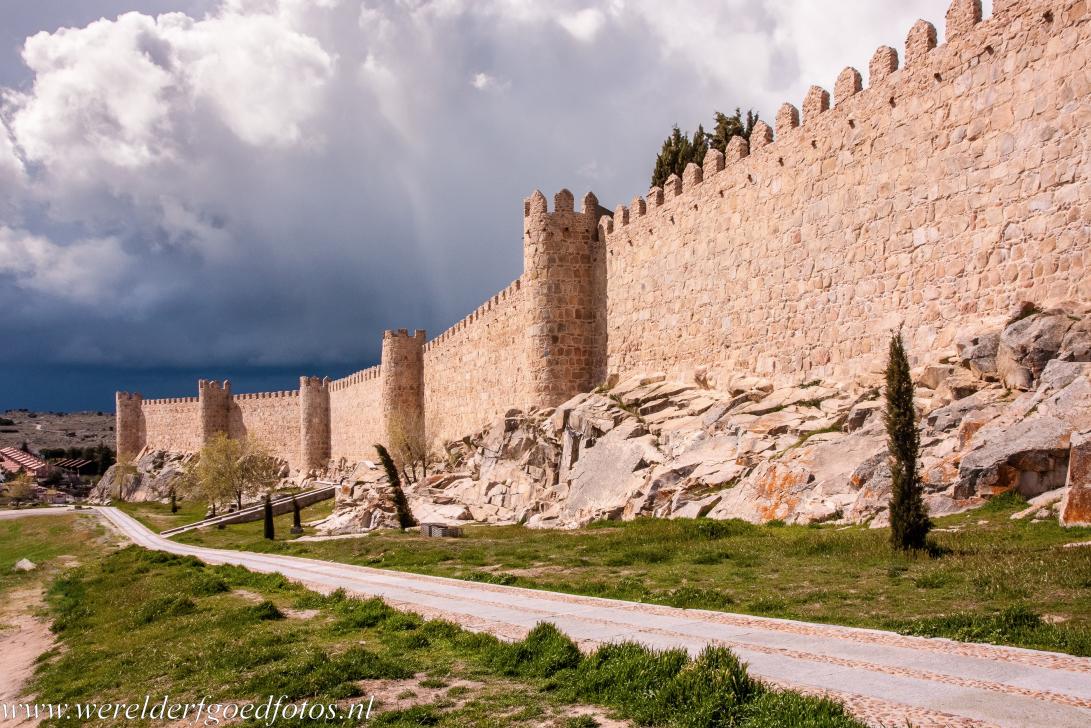
Old Town of Ávila with its Extra-Muros Churches: A heavy snow shower looms over the ancient town walls of Ávila. Large sections of these walls are accessible to visitors. A walk along these imposing walls offers a magnificent view of Ávila's most noteworthy monuments: the churches, monasteries, and medieval defensive walls with their gates and towers. But above all, the most notable are the medieval town walls. The Old Town of Ávila with its Extra-Muros Churches was inscribed on the UNESCO World Heritage List in 1985.

Old Town of Ávila with its Extra-Muros Churches: A heavy snow shower looms over the ancient town walls of Ávila. Large sections of these walls are accessible to visitors. A walk along these imposing walls offers a magnificent view of Ávila's most noteworthy monuments: the churches, monasteries, and medieval defensive walls with their gates and towers. But above all, the most notable are the medieval town walls. The Old Town of Ávila with its Extra-Muros Churches was inscribed on the UNESCO World Heritage List in 1985.

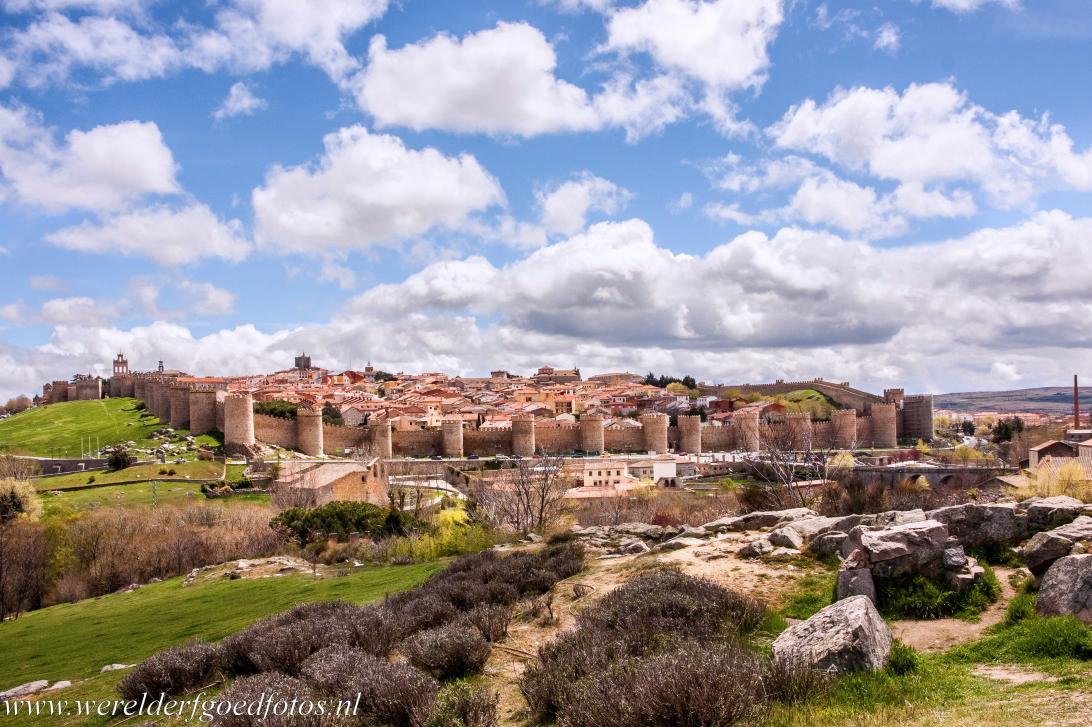
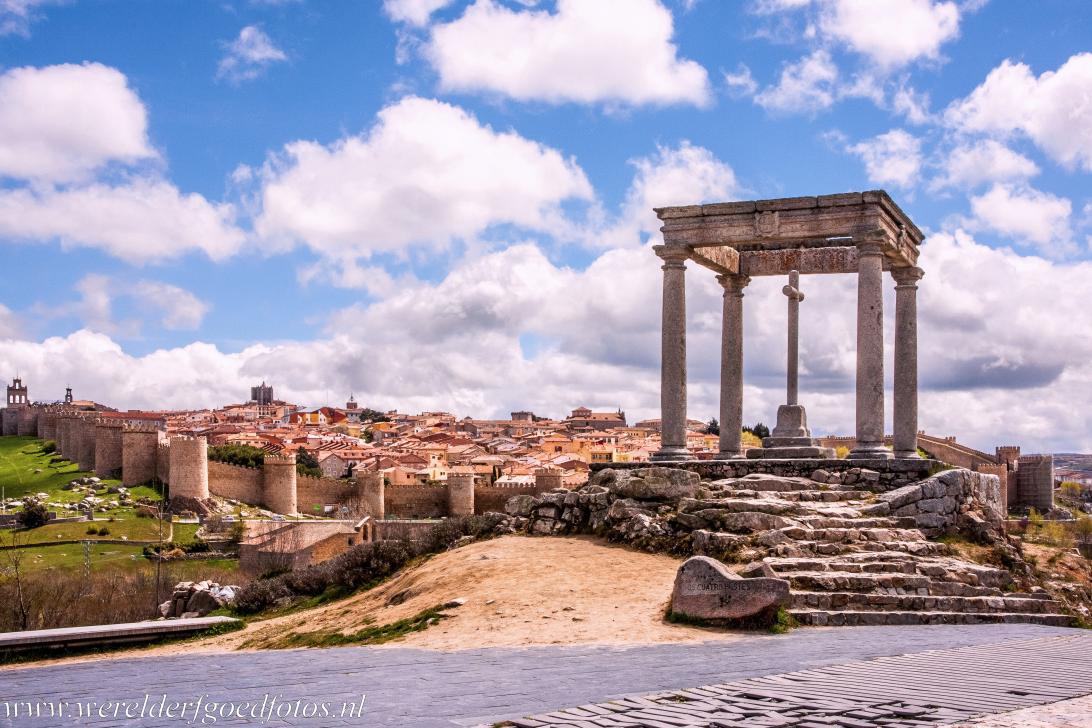
Old Town of Ávila with its Extra-Muros Churches: The Old Town of Ávila viewed from Los Cuatro Postes (the Four Pillars). The Old Town of Ávila is still surrounded by its medieval town walls and features the most complete fortifications in Spain. Next to the apse of the cathedral is one of the entrances to the wall walk on the medieval city walls, only part of which are accessible to visitors. The Town of Ávila is the highest provincial capital in Spain; it is situated at an altitude of 1,130 metres above sea level.

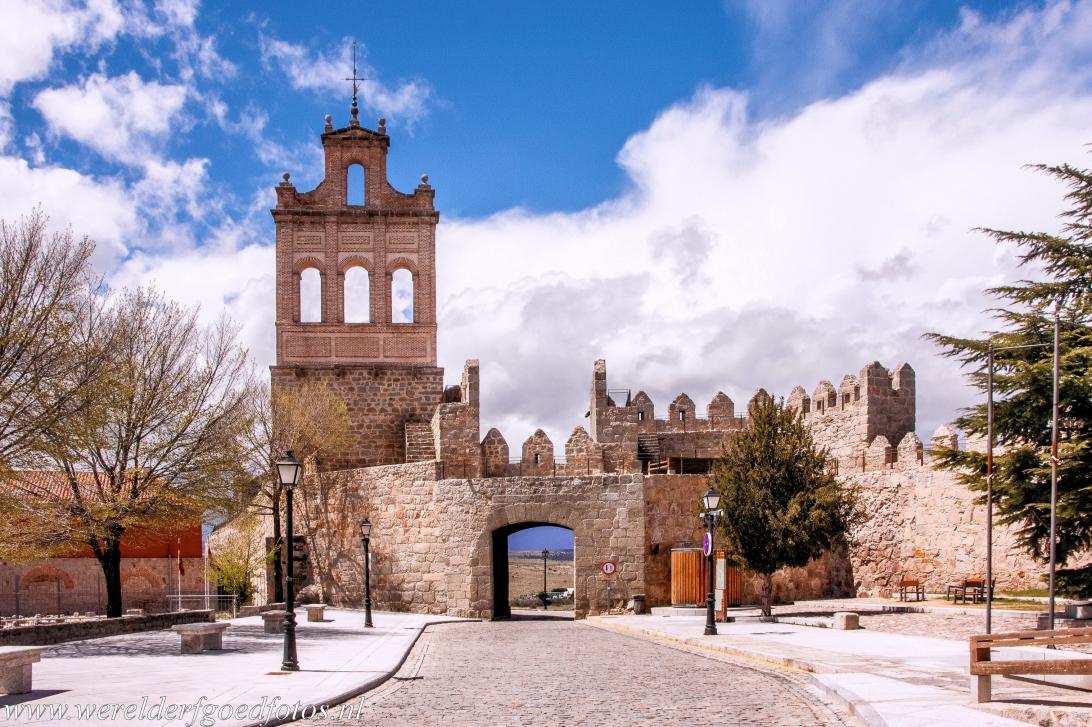
Old Town of Ávila with its Extra-Muros Churches: The Puerta del Carmen, or Carmen Gate, and its tower. The bell gable of this tower is the last remaining part of a monastery that was sacked by Napoleon's troops. The south side is the lowest part of the town walls of Ávila, whereas the north and the west side are stronger. The east side is the strongest section of the fortifications. Nine gates provide access to the Old Town of Ávila. Most of the gates were built in the 12th century. The strongest gates are the Alcázar Gate and the San Vicente Gate. Taking a walk along the city walls of Ávila is a beautiful experience.

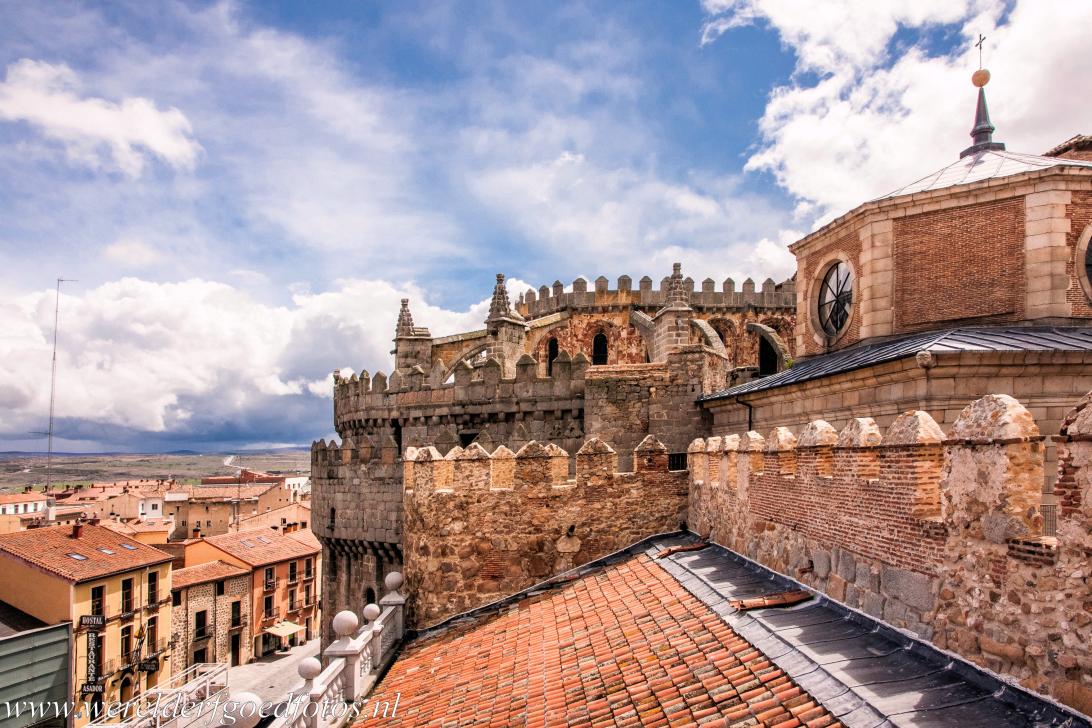
Old Town of Ávila with its Extra-Muros Churches: The Catedral de Cristo Salvador (Cathedral of Christ the Saviour) is the Cathedral of Ávila; it connects to the city walls with its apse and forms part of the impressive fortifications of the town. One of the towers was responsible for the defence of the Puerta de los Leales (Gate of the Loyalists). The Cathedral of Ávila was built as an integral part of the fortifications; this 12th-century fortress-cathedral is one of the oldest Gothic cathedrals in Spain. A number of houses were also built against the town walls.

Old Town of Ávila with its Extra-Muros Churches: Even today, the medieval fortified town walls still completely surround the Old Town of Ávila. Construction of the town walls and fortifications began in 1090 and includes 88 semicircular towers and 9 gates. These mighty town walls have an average thickness of 3 metres and stand 12 metres high; the total perimeter is 2,516 metres. Certain buildings, such as the cathedral, form part of the fortified walls. During the Middle Ages, Ávila was of strategic importance due to its location between the Islamic south and the Christian north of Spain.

Old Town of Ávila with its Extra-Muros Churches: The Alcázar Gate (Puerta del Alcázar) is flanked by two semicircular towers. It is the most impressive and important gate in the fortified walls of Ávila's medieval center. King Alfonso VI commissioned the construction of the gate following the conquest of the city and surrounding areas from the Moors. This robust gate was built upon the foundations of a Roman wall; construction began in 1090 and took nine years to complete.

Old Town of Ávila with its Extra-Muros Churches: The bell gable of the Puerta del Carmen (Carmen Gate) was built on the city walls. The square towers of this gate were used as a prison during the medieval period. For the walls, the medieval builders used a variety of materials from the Roman period, such as stones from old temples and even Roman tombstones. The religious buildings of Ávila are located both inside and outside the walls of the historic city. The Old Town of Ávila with its Extra-Muros Churches is a UNESCO World Heritage Site.

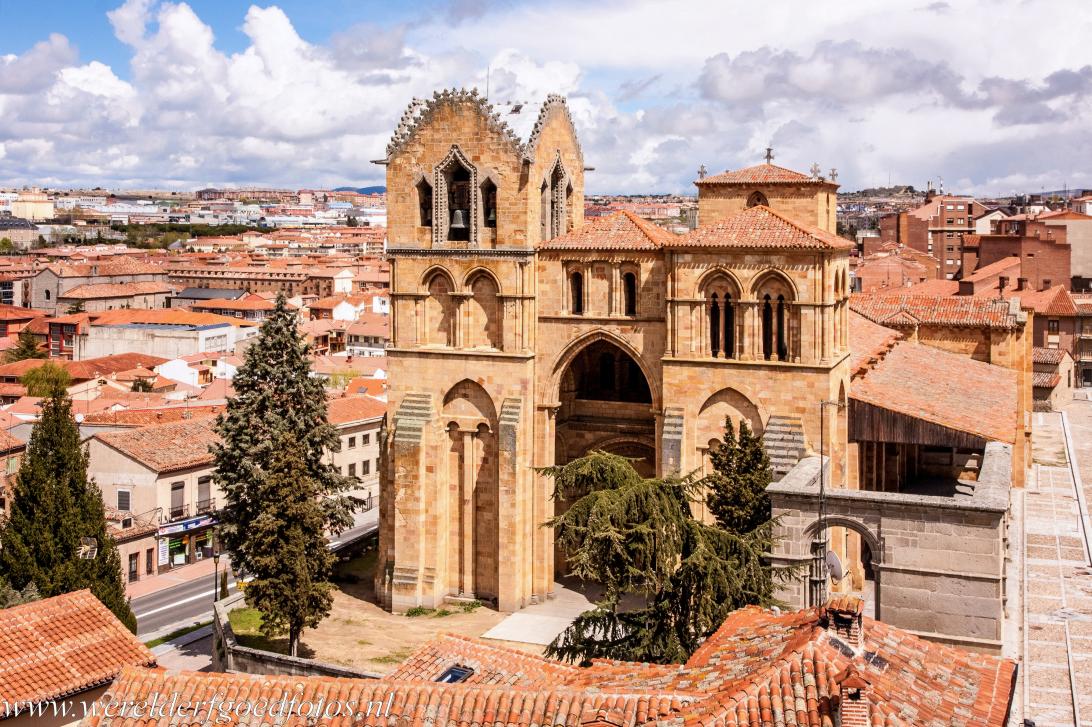
Old Town of Ávila with its Extra-Muros Churches: The Basilica de San Vicente viewed from the medieval walls of the historic town of Ávila. The 12th-century basilica is mostly in Romanesque style. Tis imposing was built outside the town walls on the site of the martyrdom of San Vicente. He was martyred during the rule of the Roman Emperor Diocletian, who was known for his cruel and large-scale persecution of Christians. Inside the church stands the tomb of San Vicente. The Rock in the crypt is said to be the site where San Vicente and his sisters Sabina and Cristeta were tortured and killed.

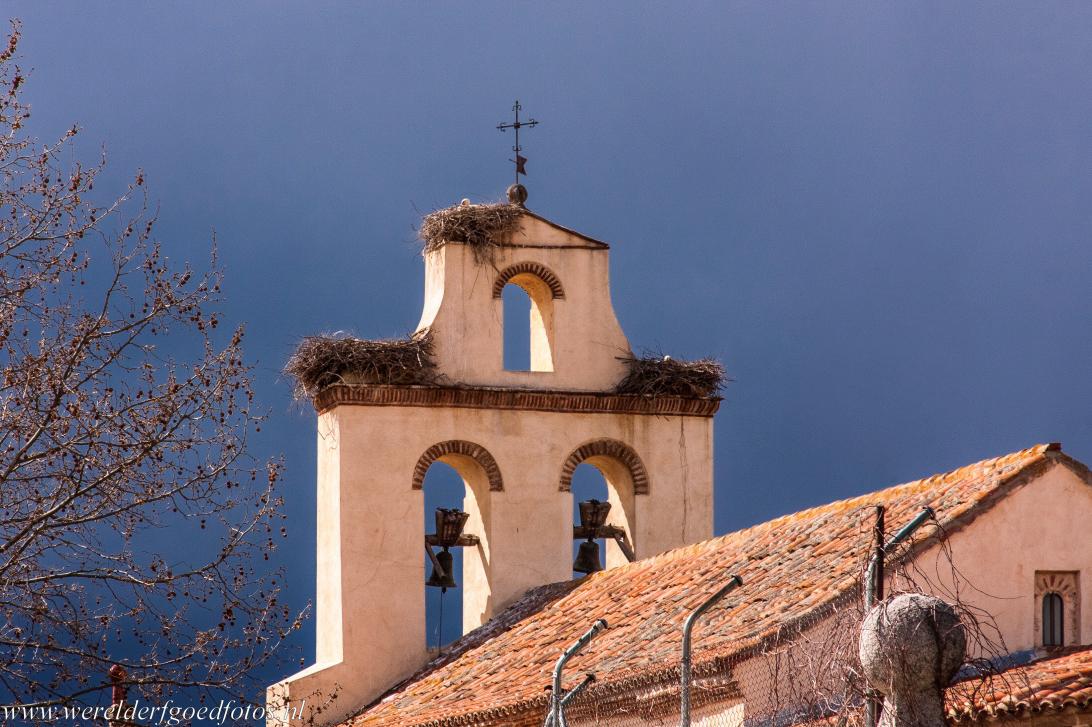
Old Town of Ávila with its Extra-Muros Churches: Several storks nesting on top of the typical Spanish bell-gable of the Hermitage of Santa María de la Cabeza. The small church is situated just outside the impressive fortified walls. Construction started in the Romanesque style, followed by the nave in the unique Mudéjar style. The church was consecrated in 1210 and is the last example of the Romanesque style in Ávila. A number of churches were built outside the fortified walls of Ávila; the most important is the Basilica de San Vicente, commemorating the martyrdom of Saints Vicente, Sabina and Cristeta.

Old Town of Ávila with its Extra-Muros Churches: Los Cuatro Postes (Four Pillars) was built in 1556. This historic monument is situated approximately 1.5 kilometres outside the town of Ávila and offers a spectacular view of the historic town of Ávila with its medieval fortified town walls. There are several legends about this monument; some of them are associated with Teresa of Ávila, a nun, an eminent Spanish mystic, writer and reformer who was born in Ávila in 1515. Her Jewish grandfather was forced to convert to the Catholic faith (a converso). Teresa became one of the most famous mystics among the Catholic saints.