Monuments of Oviedo and the Kingdom of the Asturias in Spain: During the Caliphate of Córdoba, the small Kingdom of Asturias was the only Christian stronghold where Christianity was kept alive in 9th century Spain. Several Asturian pre-Romanesque monuments date from this period; they played a significant role in the development of religious architecture on the Iberian Peninsula.
Santa María del Naranco (Church of St. Mary at Mount Naranco) is an Asturian pre-Romanesque church on the slopes of Mount Naranco situated 3 kilometres from Oviedo. The building was constructed as a royal palace in 848 and consecrated as a church at the end of the 13th century. The decorations of the church were influenced by the Byzantine style. Santa María del Naranco was part of a larger complex of royal buildings, including the nearby Asturian pre-Romanesque Church of San Miguel de Lillo, which served as a royal chapel.
The Asturian pre-Romanesque Church of San Julián de los Prados is situated in Oviedo, a town along the Way of St. James to Santiago de Compostela. The church was built between 812 and 842. The murals are the most important aspect of this church. The Asturian pre-Romanesque Church of Santa Cristina de Lena stands on a hilltop near Pola de Lena, a small village about 33 kilometres south of Oviedo, on the border between Asturias and León. Pola de Lena is situated along the Route of Santiago de Compostela. The Monuments of Oviedo and the Kingdom of the Asturias gained status as a UNESCO World Heritage Site in 1985.
www.werelderfgoedfotos.nl © Copyright World Heritage Photos Classic Car Road Trip
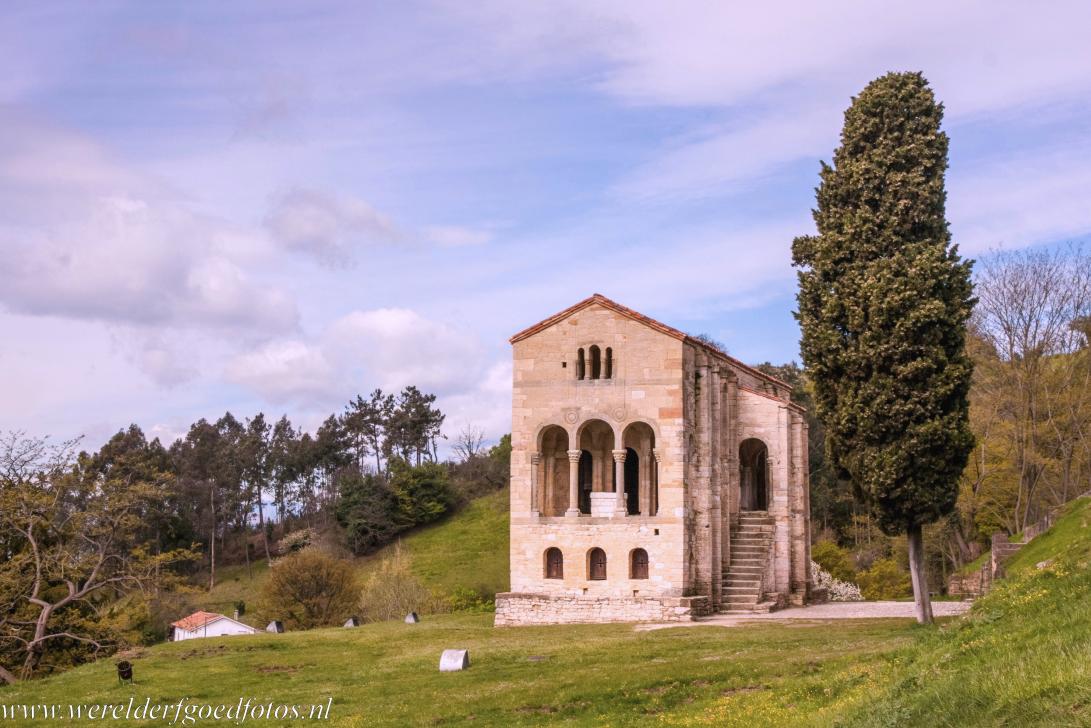
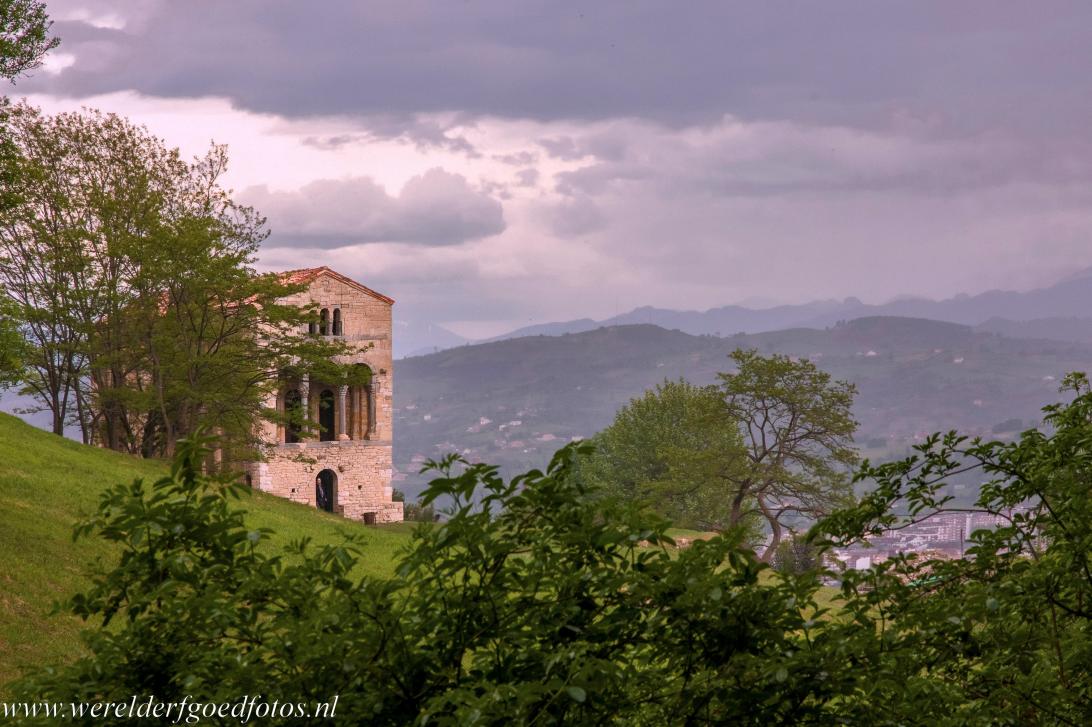
Monuments of Oviedo and the Kingdom of the Asturias: In the 9th century, the small Kingdom of Asturias was a Christian stronghold in northern Spain. It existed exactly from 718 until 924. Several outstanding pre-Romanesque monuments of this period remain. These structures played an important role in the development of religious architecture on the Iberian Peninsula. Santa María del Naranco, built in 848 as a royal palace, is one of the finest and best-preserved monuments from this period.
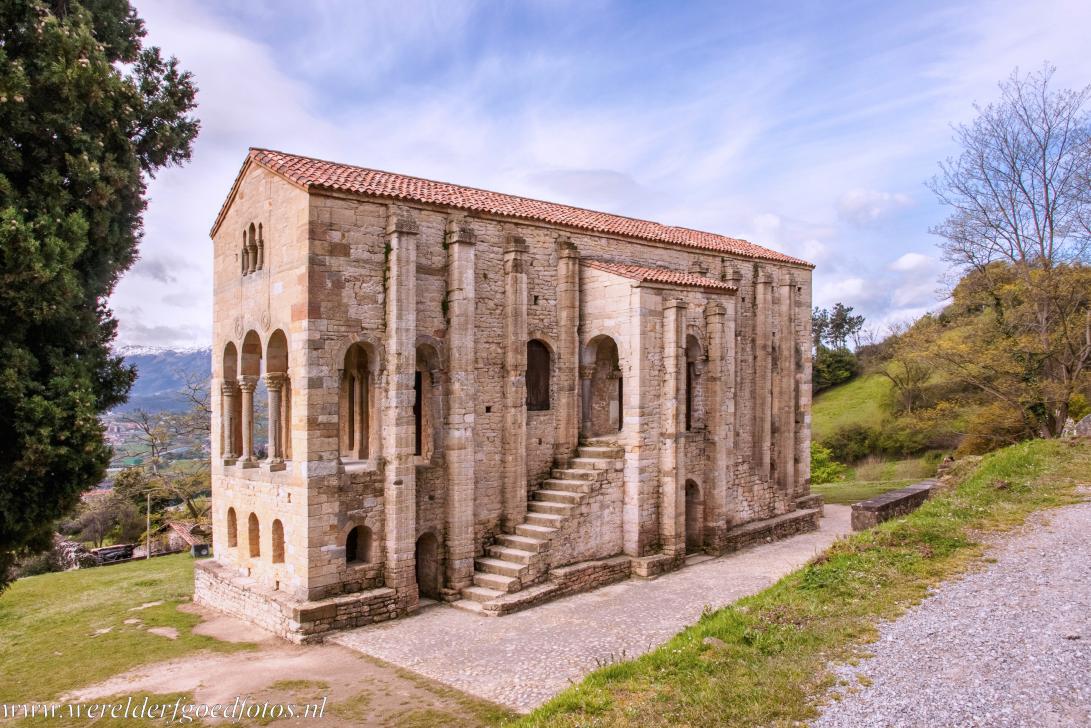
Monuments of Oviedo and the Kingdom of the Asturias: In the 9th century, the small Kingdom of Asturias was a Christian stronghold in northern Spain. It existed exactly from 718 until 924. Several outstanding pre-Romanesque monuments of this period remain. These structures played an important role in the development of religious architecture on the Iberian Peninsula. Santa María del Naranco, built in 848 as a royal palace, is one of the finest and best-preserved monuments from this period.
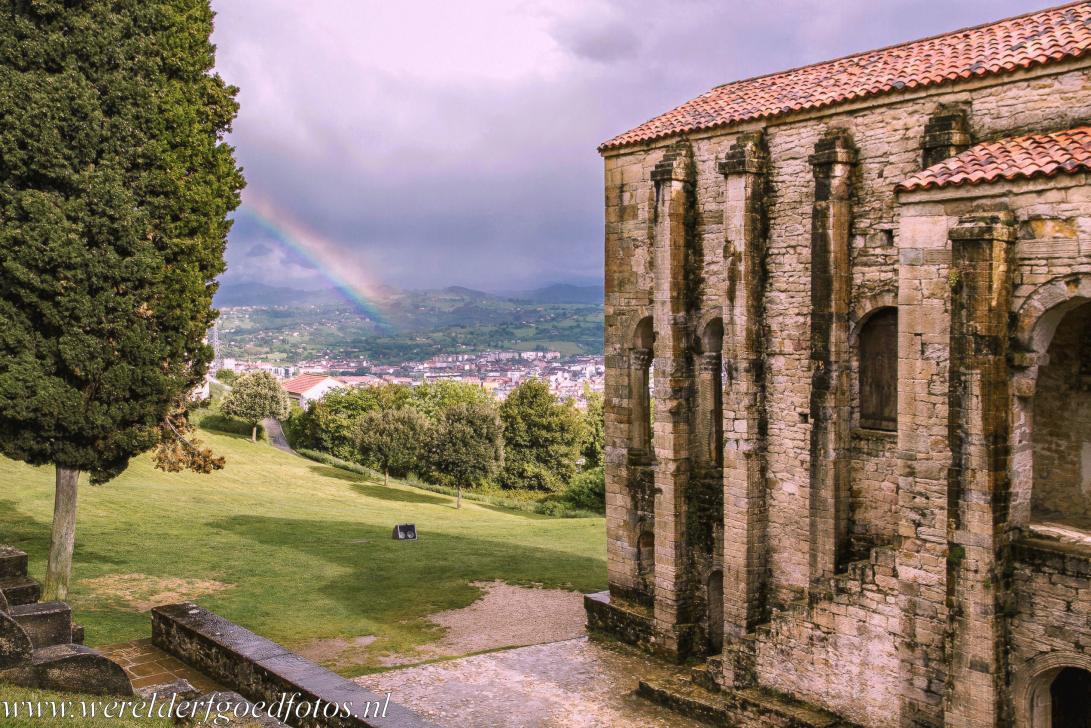
Monuments of Oviedo and the Kingdom of the Asturias: On the outside of Santa María del Naranco, an exterior staircase leads to the hall on the upper floor. This former royal hall, featuring open galleries on both sides, has a vault that is unusually high for its time. It is the most important part of the building. Santa María del Naranco is nestled in the hills near Oviedo and was built as a royal palace in 848; it was converted into a church in the late 13th century. The Monuments of Oviedo and the Kingdom of the Asturias gained status as a UNESCO World Heritage Site in 1985.

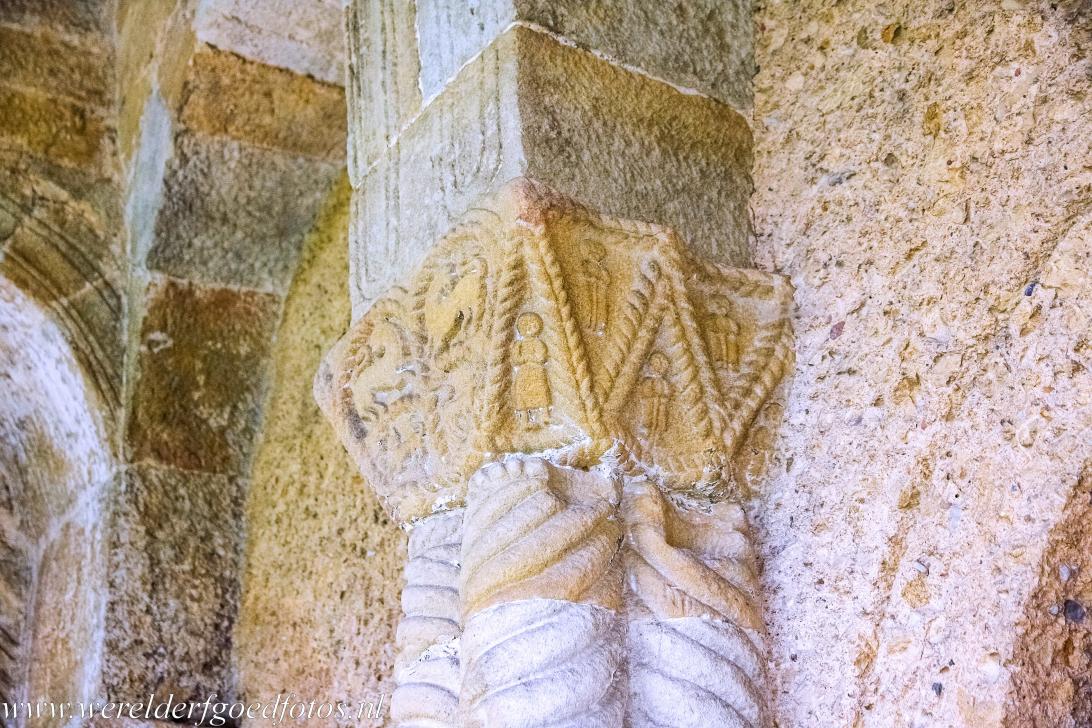
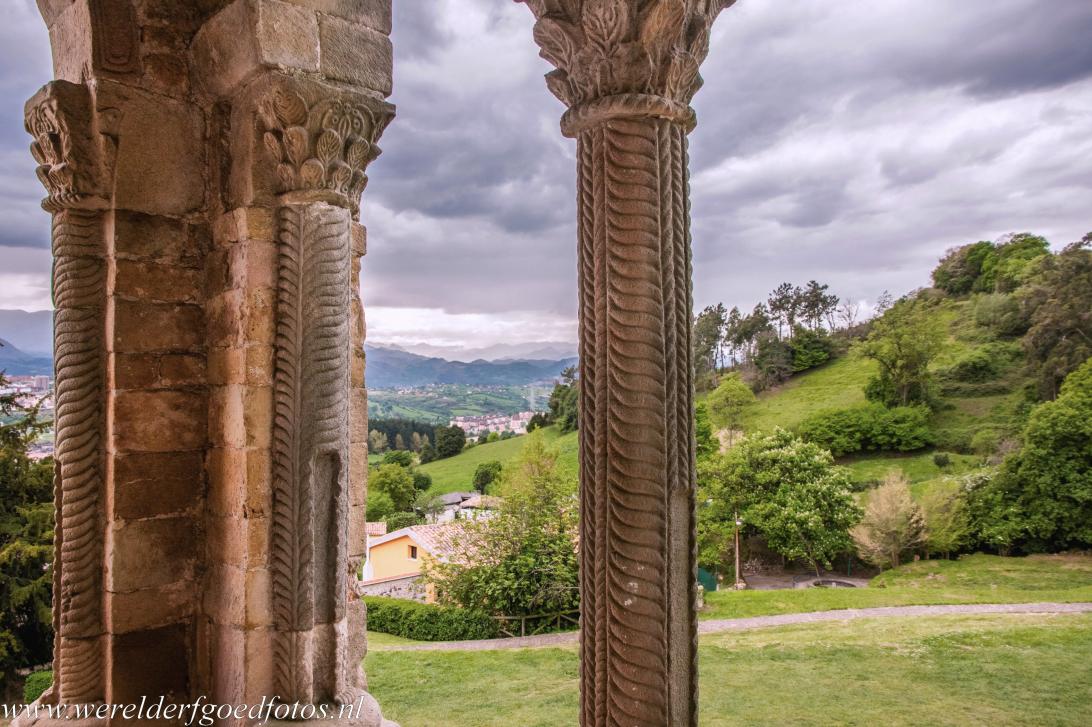
Monuments of Oviedo and the Kingdom of the Asturias: The upper floor of Santa María del Naranco features a belvedere at each end to let the light in, a novelty at the time. The attractive rope decorations are typical of Asturian pre-Romanesque architecture. Although the capitals appear Corinthian due to the sculpted acanthus leaves, they are not; in Asturias, the sculptors added reliefs of horses and lions. The decorations are mainly to be found on the upper floor. They bear a resemblance to the Early Christian and Byzantine art of Ravenna, Italy. Santa María del Naranco was built as a recreational palace.

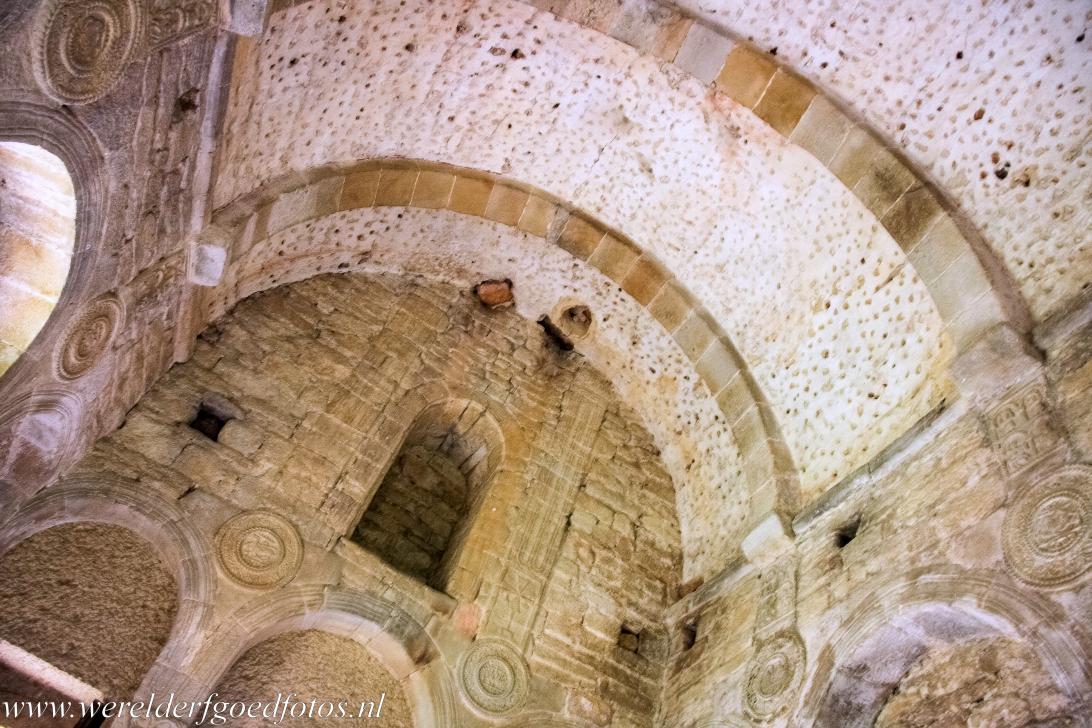
Monuments of Oviedo and the Kingdom of the Asturias: The decorated barrel vault of the Asturian pre-Romanesque church of Santa María del Naranco. For that time, the vaulting represented a technical marvel that did not appear elsewhere in Europe until the 11th century. The vaulting features six arches supported by columns built into the wall. On the exterior of the building, heavy buttresses were built to withstand the lateral thrust of this extraordinary vault. The rectangular building has two floors; the lower level, or crypt, has three chambers.

Monuments of Oviedo and the Kingdom of the Asturias: The finely adorned capitals in Santa María del Naranco were influenced by the Byzantine style. For the first time, a Greek cross seems to be sculpted as the emblem of the Asturian Kingdom; it was probably also meant as a protection against evil. Santa María del Naranco was built as a royal palace and converted into a Roman Catholic church at the end of the 13th century, dedicated to the Virgin Mary. A replica of the altar is situated outside the church and has a Latin inscription dating from 23 June 848, the year the palace was completed.

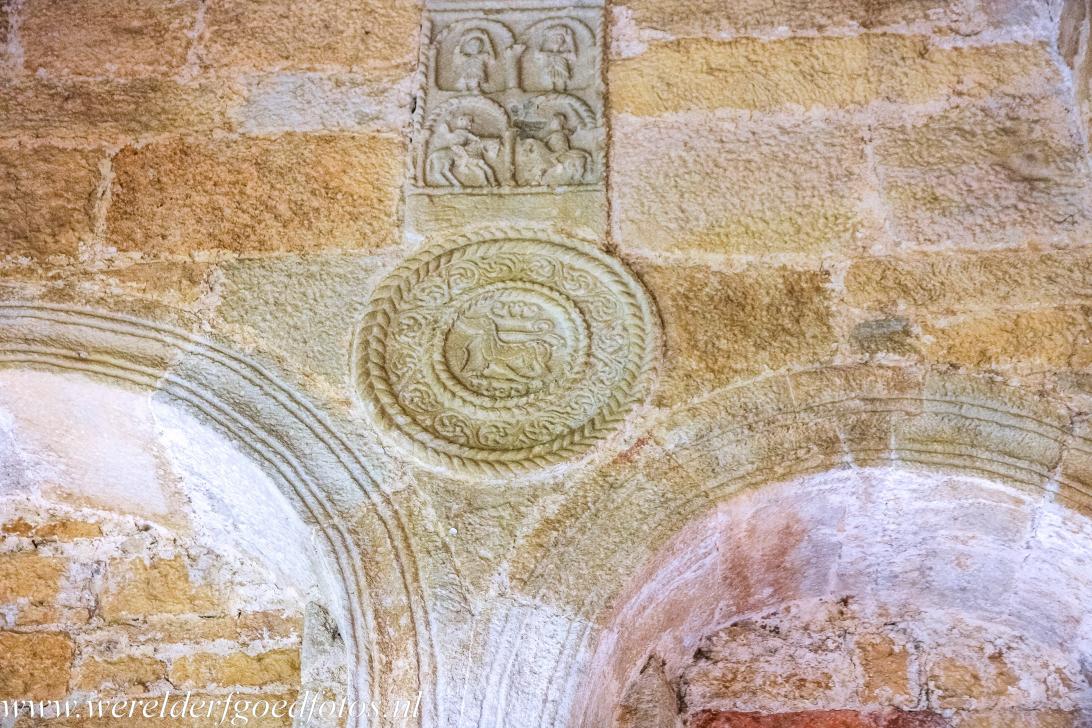
Monuments of Oviedo and the Kingdom of the Asturias: The decoration of the Santa María del Naranco, the St. Mary at Mount Naranco, is mainly concentrated in the hall of the upper storey. Here, the 32 medallions are located between the arches of the vault. They are sourrounded by sculpted rope moulding, a feature typical of the Asturian pre-Romanesque style. The medallions are similar in shape and size, their centres are intricately carved with tiny figures such as birds, grapes and animals, including horseman.

Monuments of Oviedo and the Kingdom of the Asturias: Santa María del Naranco (St. Mary at Mount Naranco) is arguably the most remarkable of all the pre-Romanesque churches in Asturias, thanks to its unique location in the woodland overlooking the city of Oviedo. After a severe thunderstorm and heavy rainfall, a magnificent rainbow appeared over Oviedo and the surrounding hills. The Asturian pre-Romanesque Church of Santa María del Naranco and the nearby Church of San Miguel de Lillo can be visited only by a guided tour.

Monuments of Oviedo and the Kingdom of the Asturias: The Church of Santa María del Naranco is located halfway up the slope of Mount Naranco, three kilometres outside Oviedo. King Ramiro I had it built as a throne room and banqueting hall. Santa María del Naranco was part of a larger complex of royal buildings, including the Church of San Miguel de Lillo, a hundred metres away. At the top of Mount Naranco stands a 30-metre-high stone statue of Christ that was officially inaugurated in July 1981. This Cruz de la Victoria is an important symbol of Asturias and reminds Spaniards that the foundations of modern-day Spain were laid in these mountains.

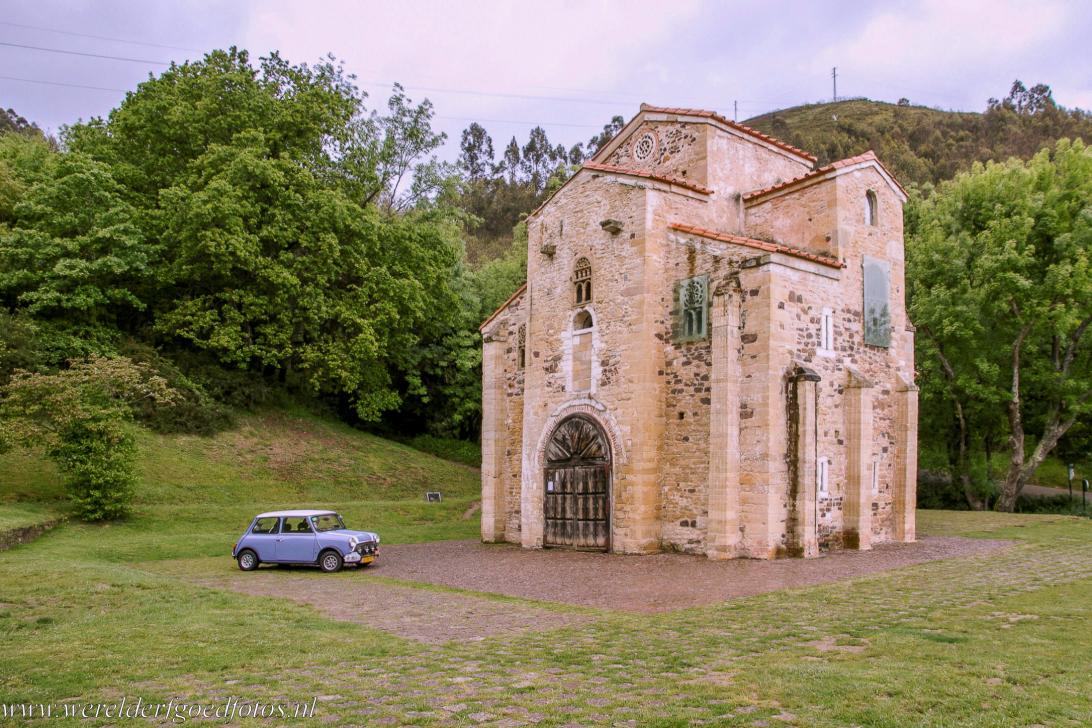
Monuments of Oviedo and the Kingdom of the Asturias: A Mini Authi in front of San Miguel de Lillo, an Asturian pre-Romanesque church near Oviedo. The building once served as a royal chapel, connected to the palatial complex that also included the Santa María del Naranco, which is about a hundred metres away. San Miguel de Lillo was consecrated in 848 AD. The door jambs were sculpted in Byzantine style. Above the entrance is a raised gallery where the king would attend Mass. Half of the building collapsed centuries ago; only the entrance portal and the first few metres of the structure are still standing.

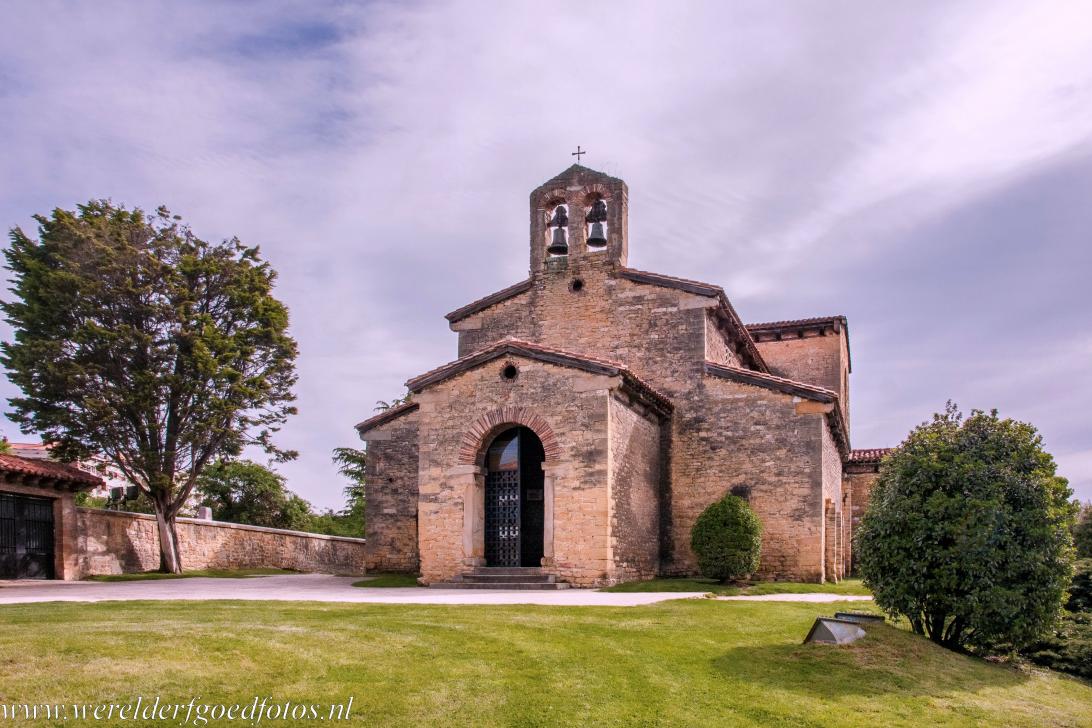
Monuments of Oviedo and the Kingdom of the Asturias: The Asturian pre-Romanesque Church of San Julián de los Prados is also known as Santullano. The church was built between 812 and 842 AD, and its murals are the most important feature The preserved decoration on the walls and vaults shows geometrical, vegetal and architectonic motifs, including a Latin cross featuring the Alpha and Omega. The paintings contain no representations of human figures, as they were created during a period of religious conflict when depicting saints or other biblical figures was stricktly forbidden. The decoration of the interior makes the church unique in Western Europe.

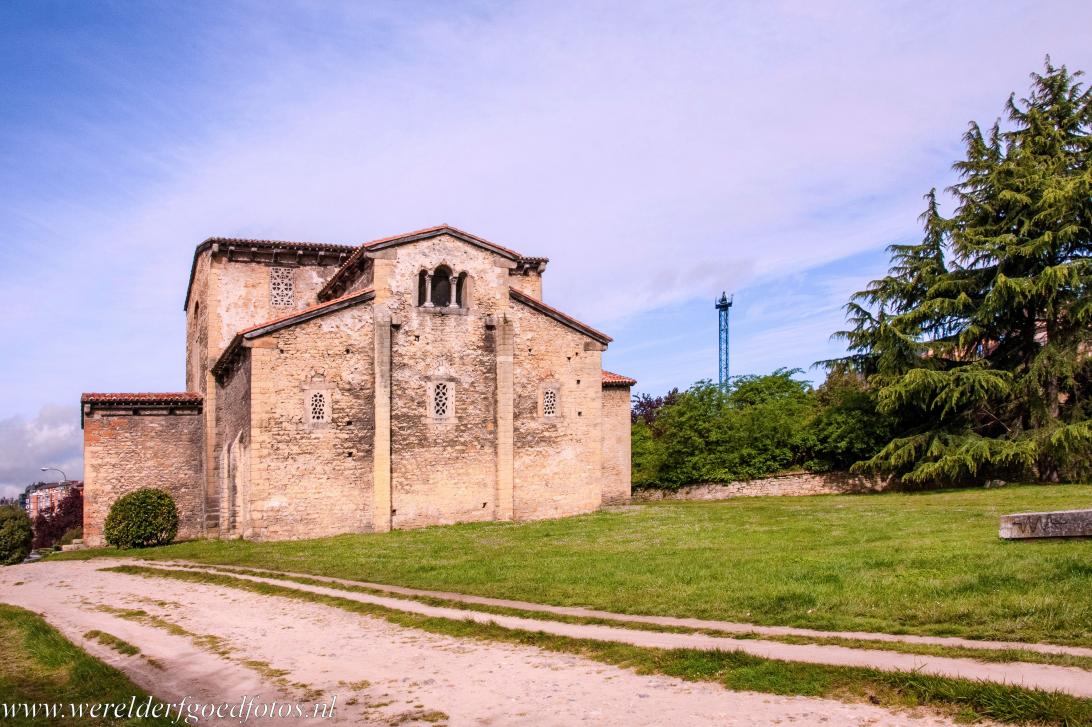
Monuments of Oviedo and the Kingdom of the Asturias: The original pre-Romanesque windows on the rear façade of the Asturian Church of San Julián de los Prados. The triple-light window (triforium), featuring two small pre-Romanesque columns, looked out onto a secret space high above the altar. It is unclear what purpose this space served. The church was built during the reign of King Alfonso II of Asturias and dedicated to the Saints Julián and Basilissa, two Egyptian martyrs. Because it was a royal palace church, the building also houses a special royal gallery. This unique church stands on a hill in the city of Oviedo and is a UNESCO World Heritage Site.

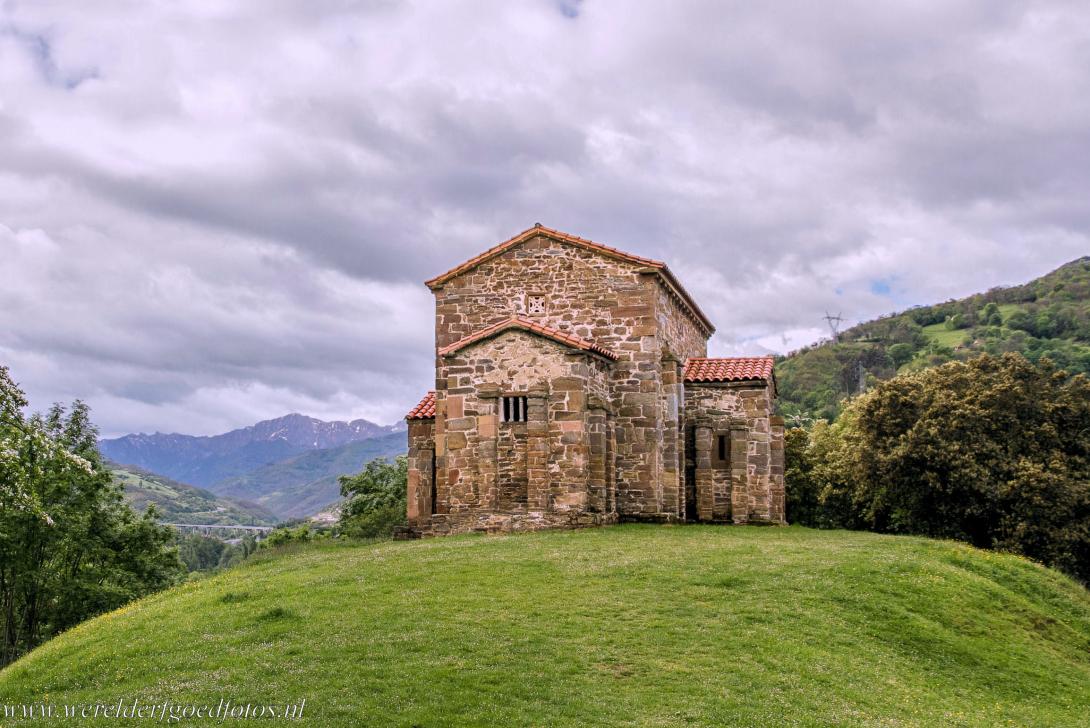
Monuments of Oviedo and the Kingdom of the Asturias: The Asturian pre-Romanesque Church of Santa Cristina de Lena is situated on a hilltop near the small village of Pola de Lena, about 33 kilometres south of Oviedo. The church was likely completed in 852 and features a Greek cross ground plan, which is rare for this region. Pola de Lena and this small church are situated along a section of the Route of Santiago de Compostela, the Camino de San Salvador. Santa Cristina de Lena is part of the UNESCO World Heritage Site: Monuments of Oviedo and the Kingdom of the Asturias.

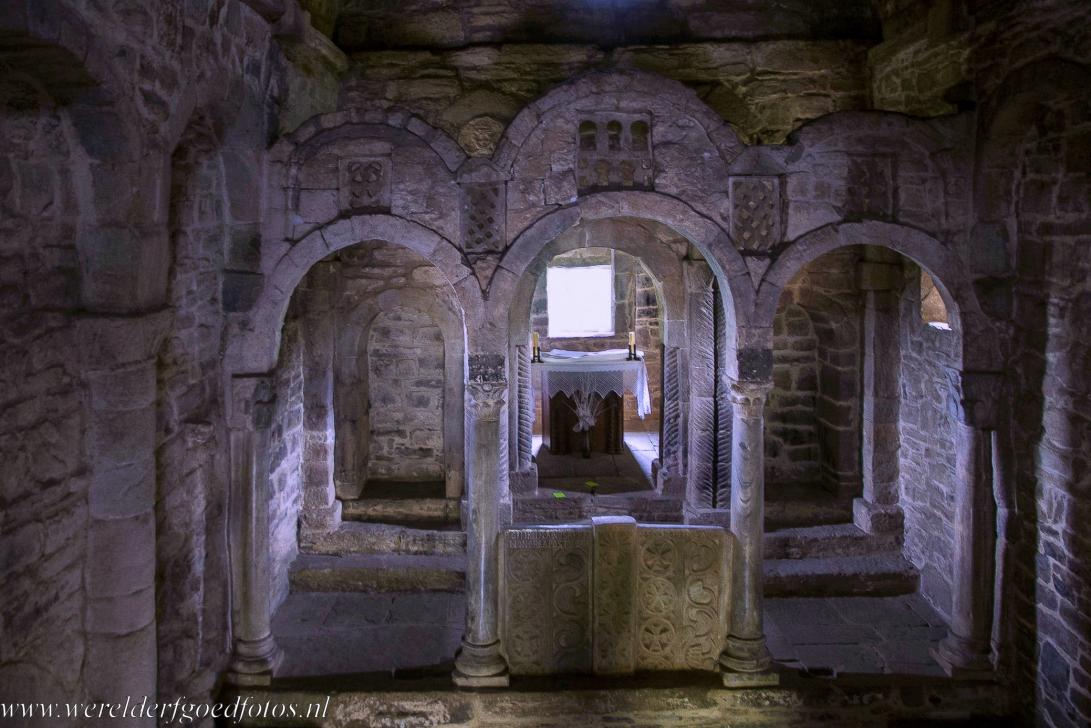
Monuments of Oviedo and the Kingdom of the Asturias: The Asturian pre-Romanesque Church of Santa Cristina de Lena was built in the Ramirense style, an architectural style from the reign of King Ramiro I of Asturias. The most outstanding feature of the church is the iconostasis, the choir screen, a triple archway supported by marble columns that separates the chancel from the congregation. The chancel itself is elevated above the floor level of the central nave. The stone grilles in the choir screen originate from a seventh-century Visigothic church.