Mostar – The Bridge City
Old Bridge Area of the Old City of Mostar: Mostar is situated in Bosnia and Herzegovina, about 40 km from the border between Croatia and Bosnia and Herzegovina. Mostar is renowned for the Old Bridge, the iconic Stari Most, after which the city is named. The Old Bridge of Mostar spans the Neretva River. The Old Bridge was built in 1557–1566 during the Ottoman Empire; the bridge was on completion the widest man-made arch in the world. The bridge was completely destroyed during the Bosnian War (1992–1995). After the war, the Old Bridge of Mostar was reconstructed with stones from the same quarry that supplied the original stones in the 16th century and using 16th century building techniques. The reconstruction was completed in 2004. The Stari Most is the symbol of the city of Mostar.
The Crooked Bridge, built around 1558, is situated near the Old Bridge of Mostar. In December 1999, the Crooked Bridge (Kriva Cuprija) collapsed during winter floods, but mainly because of the damage inflicted during the war. The reconstruction of the bridge was completed in 2001 and was financed by the Grand Duchy of Luxembourg. The Tabačica Mosque, built around 1600, and the 17th-century Koski Mehmed Pasha Mosque suffered severe damage during the Bosnian War (1992–1995). After the war, both mosques were restored. The Old City of Mostar is also well-known for its historic Turkish houses, built during the Ottoman period. The Old Bridge Area of the Old City of Mostar became a UNESCO World Heritage Site in 2005.
www.werelderfgoedfotos.nl © Copyright World Heritage Photos
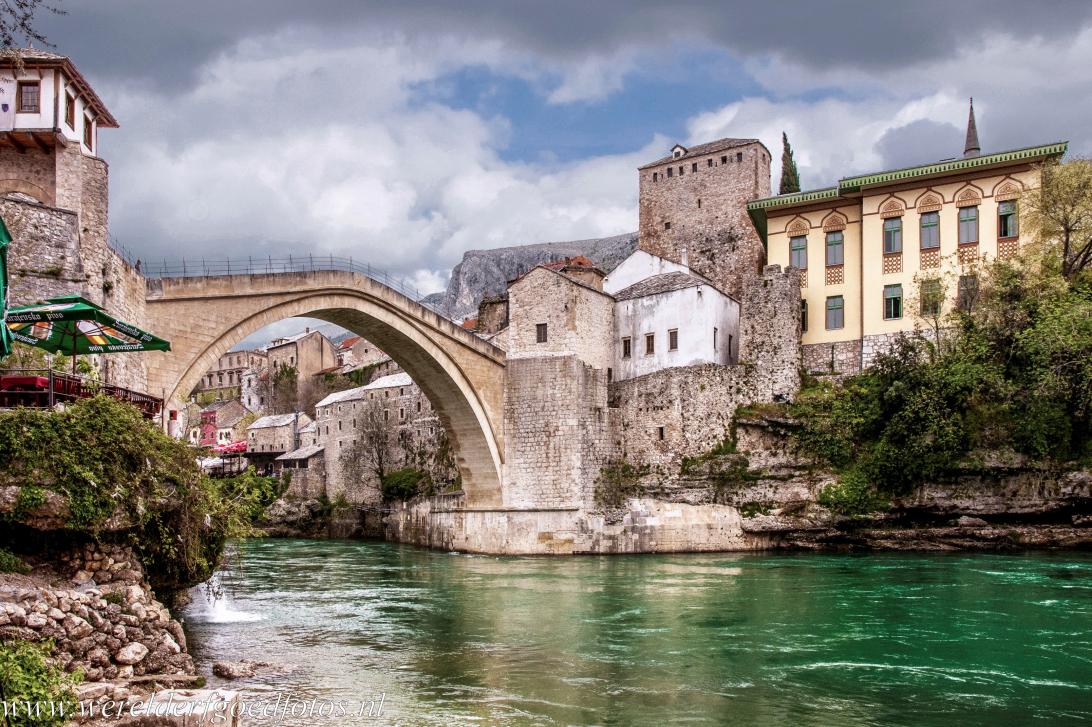
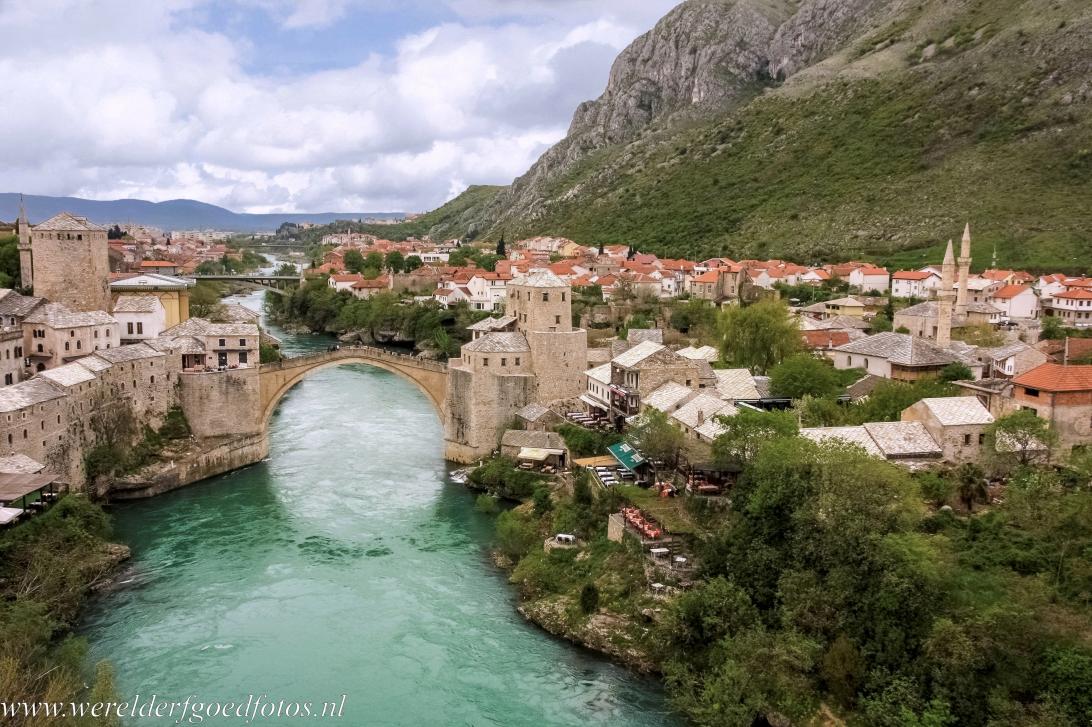
The green-tinted waters of the River Neretva flow beneath the Old Bridge of Mostar, the Stari Most. The bridge was originally built between 1557 and 1566 during the Ottoman period. The impressive single-arched stone bridge is a fine example of the Ottoman architecture. This monumental construction was on completion the widest man-made stone arch in the world. The Old Bridge Area of the Old City of Mostar became a UNESCO World Heritage Site in 2005.
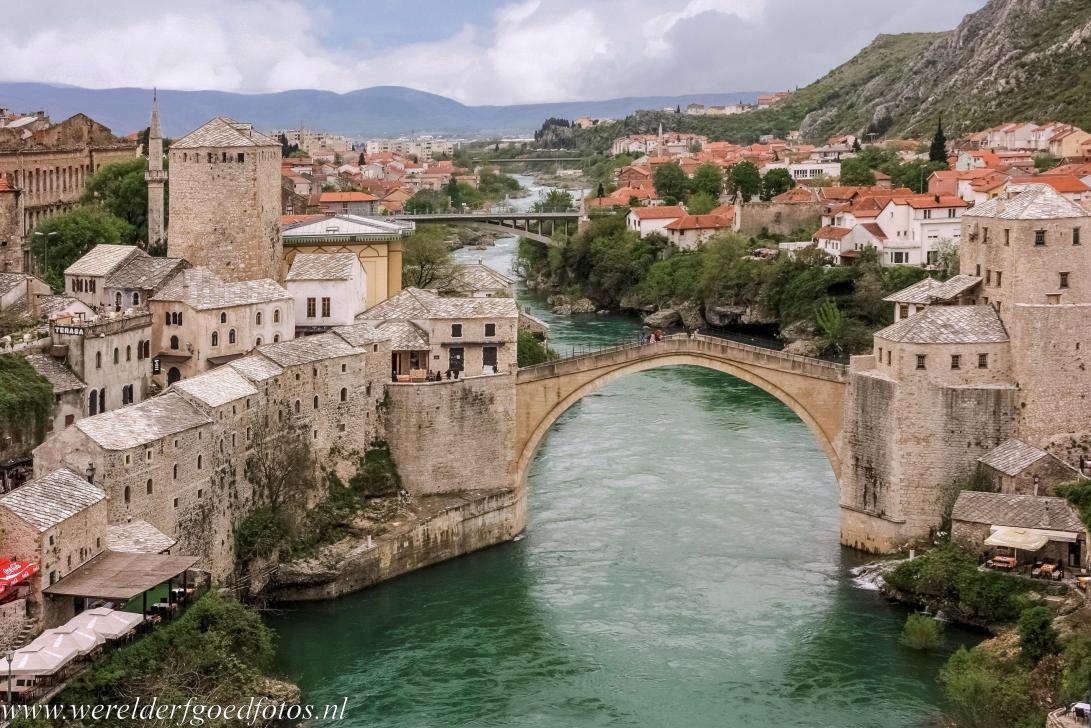
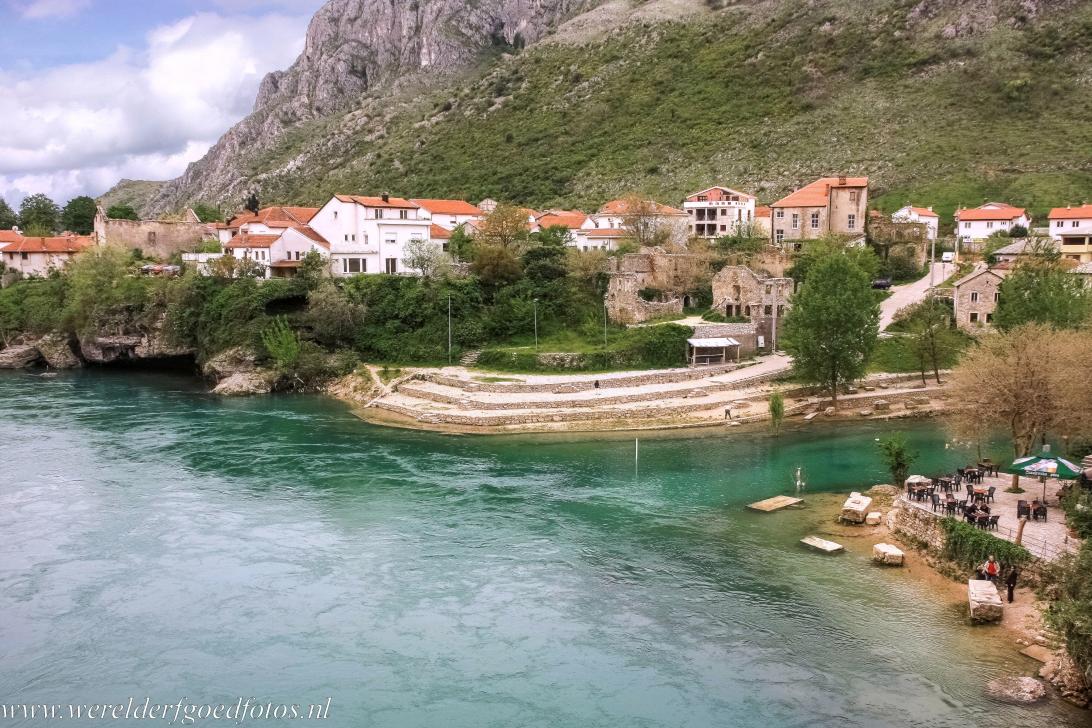
The green-tinted waters of the River Neretva flow beneath the Old Bridge of Mostar, the Stari Most. The bridge was originally built between 1557 and 1566 during the Ottoman period. The impressive single-arched stone bridge is a fine example of the Ottoman architecture. This monumental construction was on completion the widest man-made stone arch in the world. The Old Bridge Area of the Old City of Mostar became a UNESCO World Heritage Site in 2005.
The Old Bridge and its two fortified towers, called the Mostari. The Old Bridge of Mostar, the Stari Most, spans the Neretva; the amazing green-tinted water of this river flows through the centre of the town. The Stari Most was destroyed during the Bosnian War (1992–1995); the reconstruction cost nearly €13 million. The iconic Stari Most is the symbol of Mostar and now also the symbol of the unification of the once so divided country.

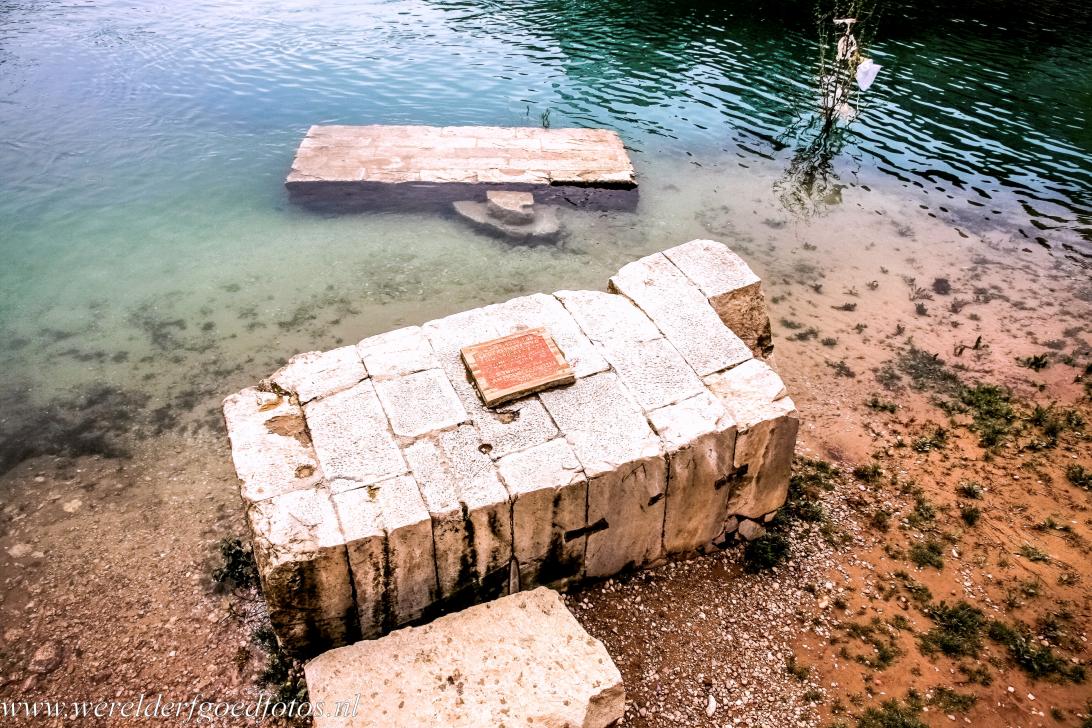
A few fragments of the original Old Bridge of Mostar still lie in the beautiful, green-hued waters of the River Neretva. During the Bosnian War, the original 16th-century Stari Most (Old Bridge of Mostar) was completely destroyed in 1993. After the war, the iconic bridge was reconstructed with 16th-century materials and building methods. The reconstruction of the historic bridge was completed in 2004. The remains of the old bridge are now silent witnesses to the war.

One of the remaining parts of the ancient Stari Most on the banks of the Neretva, the coldest river in the world. Nowadays, the remains of this bridge are an important memorial monument in Mostar. Other remaining parts of the old bridge can be found in a small park in the historic centre of the city. After ist reconstruction, the bridge is considered the heart of Mostar and is also the centre of the UNESCO World Heritage Site.

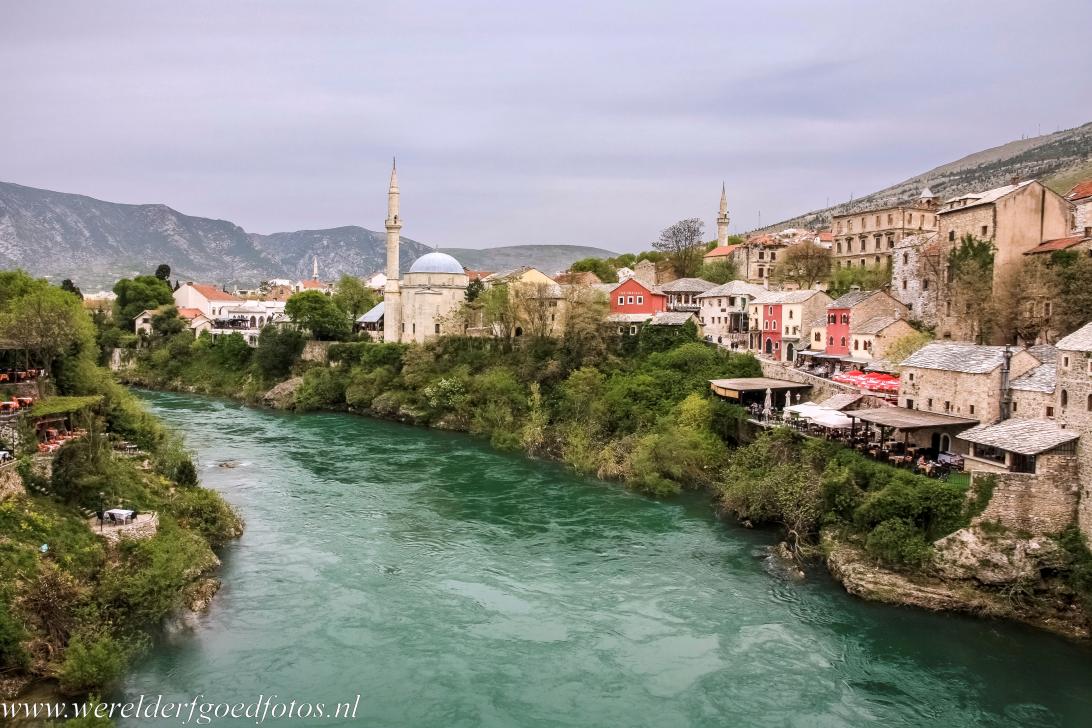
The Old Bridge and the historic city of Mostar seen from the minaret of the Koski Mehmed Pasha Mosque. After the war (1992–1995), the bridge became a symbol of hope and healing. It is an extreme sport for young men to jump from the bridge into the Neretva; a daring sport, due to the shallow waters of the river. This tradition dates back to the time of the construction of the bridge. The first recorded jump took place in 1664. A cliff diving competition has been held every summer since 1968.

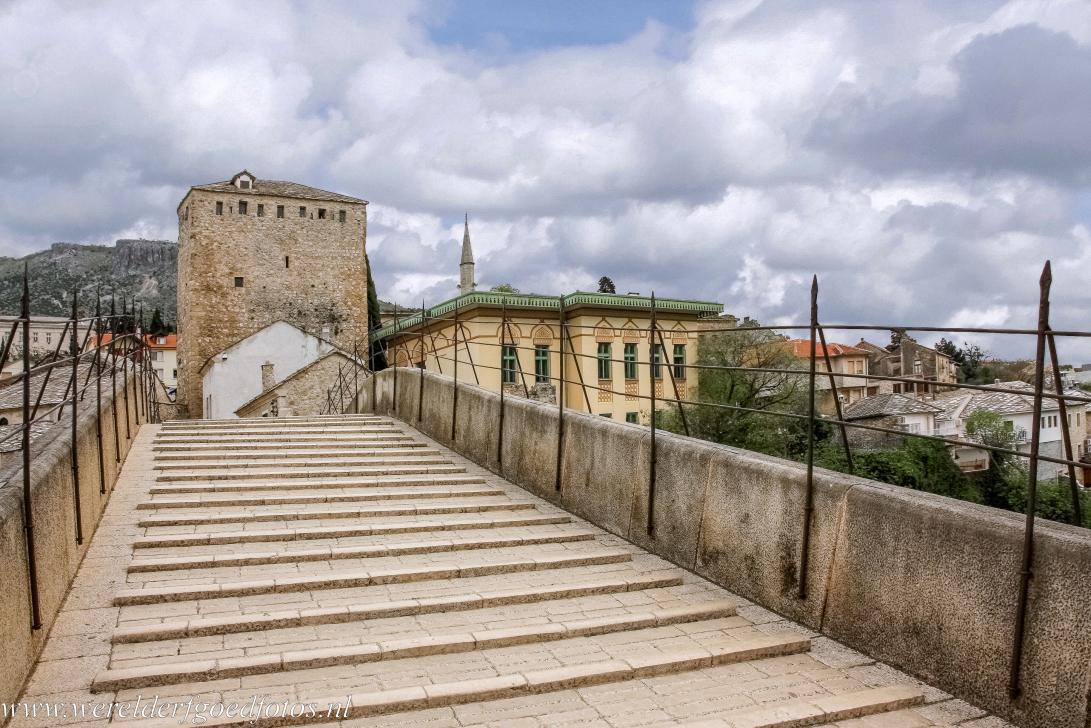
The Mostari Gates, the Halebija and the Tara Towers, are the entrances to the Old Bridge of Mostar. This bridge is for pedestrians only. The deck is made of local Tenelija limestone, a type of stone that becomes extremely smooth over time due to millions of footsteps. Without the raised stone ridges (visoki pragovi), it would be impossible to walk across the steep arch during rain or frost without slipping. Archduke Franz Ferdinand of Austria and his wife Sophie visited the bridge during their visit to Mostar, just four days before they were assassinated in Sarajevo.

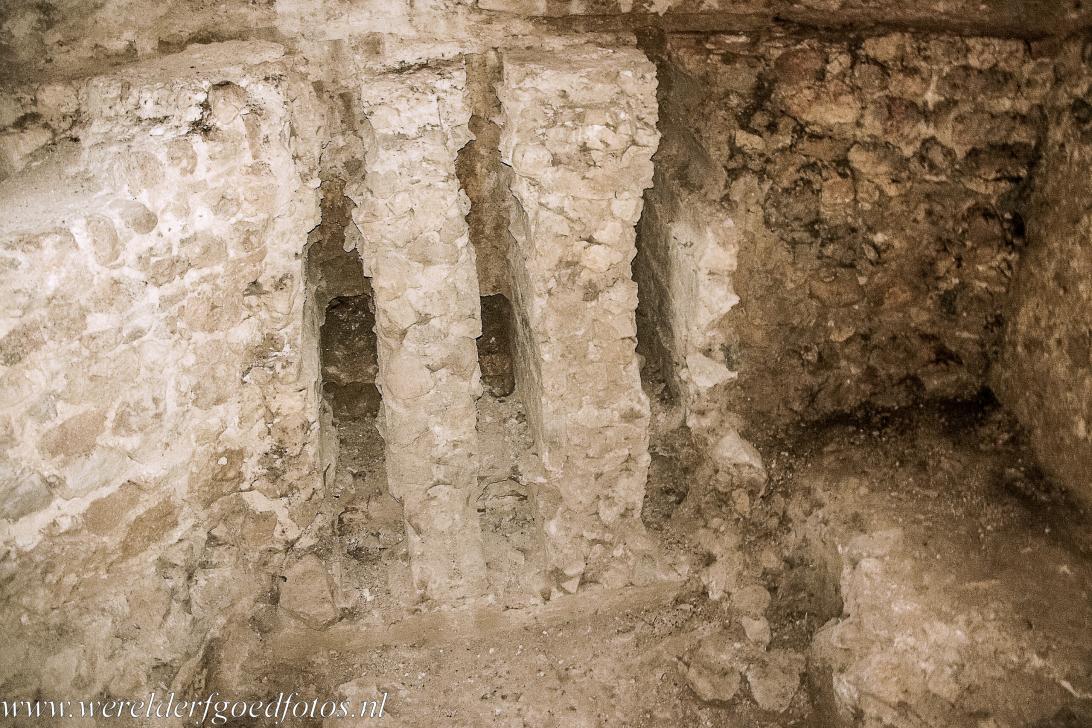
During the guided city tour in Mostar, the city guide showed us the important historic sights of Mostar; he also showed the original 16th-century foundations of the Tara Tower, one of the Mostari; the fortified towers that guard either end of the bridge. The walls of this tower are no less than three meters thick at the base. Although the Stari Most was destroyed during the Bosnian War, the foundations remained largely intact.

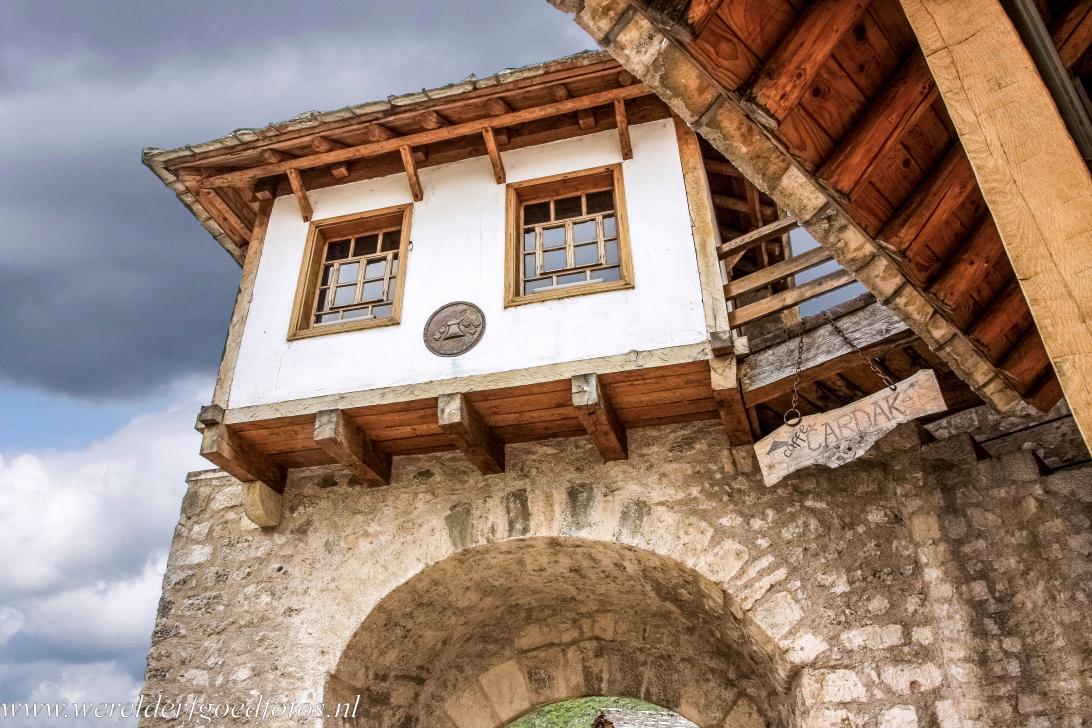
The Mostari are the two fortified towers of the Stari Most; a tower stands at each end of the bridge. The Mostari were built to protect this Old Bridge. The Tara Tower was built in 1676 on the east bank of the Neretva, more than a century after the bridge. In the Ottoman era, it served as an ammunition store and nowadays houses a museum dedicated to the history of the bridge, including photos of the Austrian heir to the throne Franz Ferdinand and his wife Sophie on the bridge during their visit to Mostar. The 17th-century Halebija Tower stands on the west side of the river and was used as a barracks and a prison; it now houses the Mostar Diving Club.

The Neretva, with its beautiful green-tinted water, meanders through the historic city of Mostar. The picturesquely situated Koski Mehmed Pasha Mosque, dating from around 1617, stands on the riverbank. The small Tabačica Mosque was built around 1600 in the historic centre. Unlike the large mosques with lead or copper domes, the Tabačica Mosque has a roof covered with slate tiles. Both mosques suffered severe damage during the Bosnian War (1992–1995). After the war, they were both restored. The Koski Mehmed Pasha Mosque is the second largest mosque in Mostar.

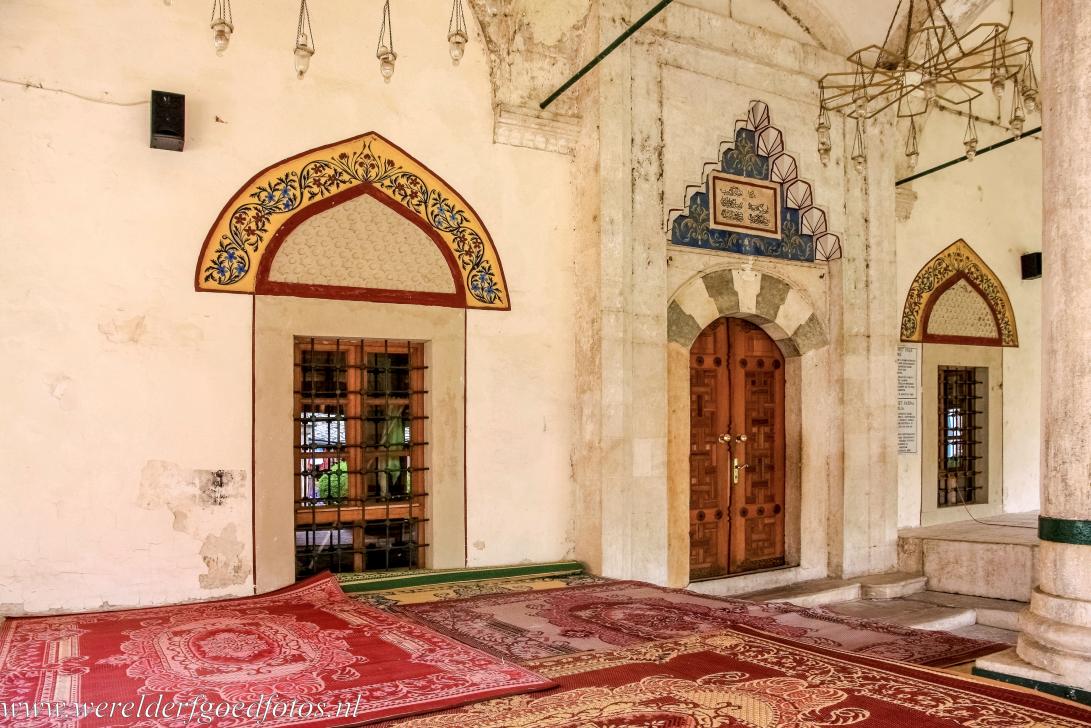
The entrance to the Koski Mehmed Pasha Mosque in Mostar. The most important feature in the mosque is the mihrab; a niche in the wall that indicates the direction of Mecca. The mosque was built in the 17th century in the classical Ottoman style and is well worth a visit. It is also allowed to climb the minaret; It is also permitted to climb the 30-metre-high minaret via a narrow spiral staircase; the balcony offers breathtaking panoramic views over the Old Bridge Area of Mostar. The mosque is situated on the banks of the River Neretva, close to the Old Bridge.

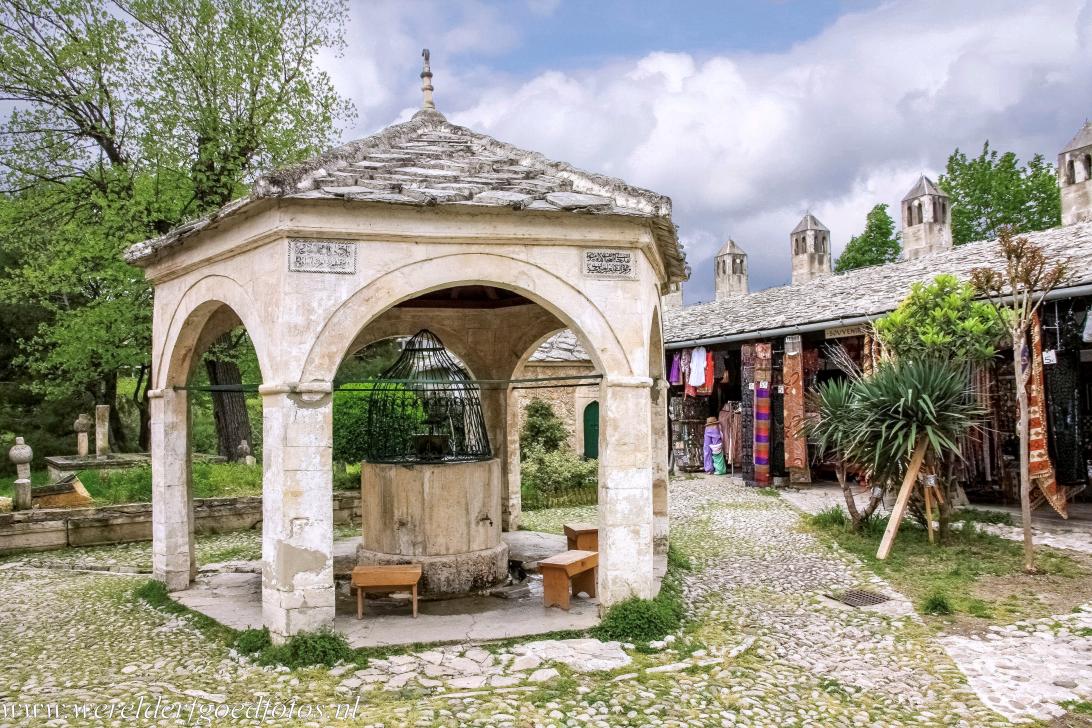
The authentic šadrvan is a fountain in the courtyard of the Koski Mehmed Pasha Mosque, the most renowned mosque in the centre of Mostar. The idea of building these ritual fountains comes from Persian culture; it was brought to Bosnia and Herzegovina during the Ottoman period. šadrvans were traditionally built in the courtyards of mosques and used by Muslims to wash their hands, face, and feet before entering the mosque to pray.

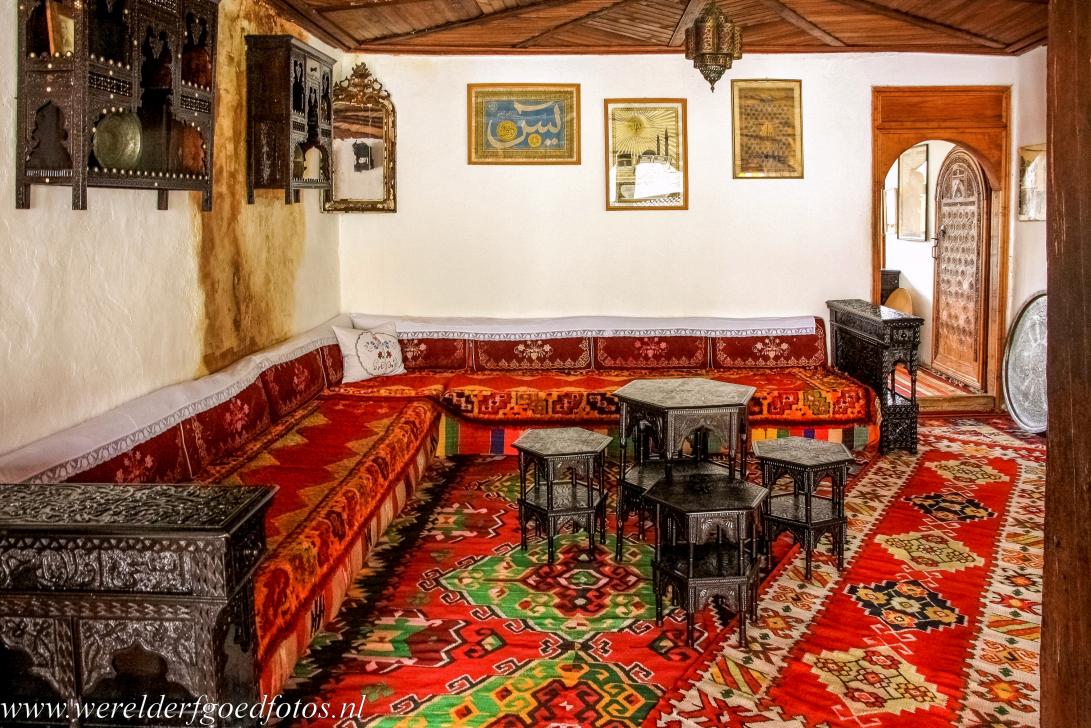
The living room in Biščevića Kuća, one of the historic Turkish houses in Mostar, is still furnished in the traditional Turkish style, including carved wooden furniture and colourful kilims. This 17th-century house is one of the finest preserved houses in Mostar from the Ottoman period and is known for its spectacular and photogenic location on the left bank of the Neretva. From the windows, you have a beautiful view of the river's green-hued water. The Turkish houses in the historic centre of Mostar are beautiful and authentic examples of Ottoman architecture.

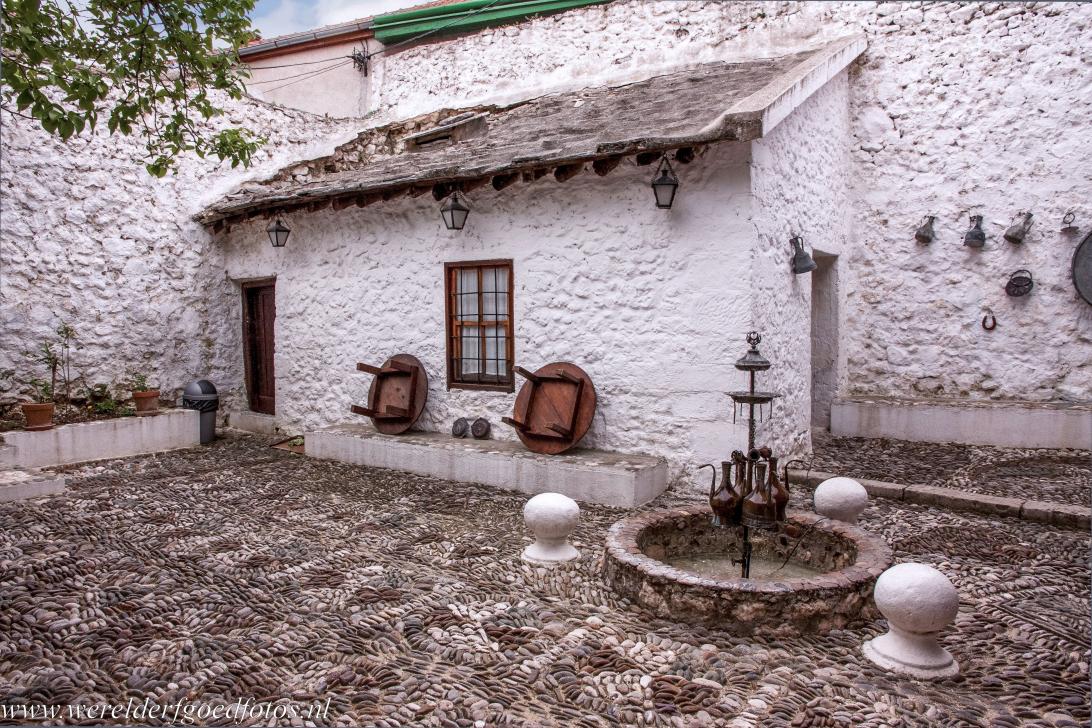
The charming courtyard of Biščevića Kuća, one of the ancient Turkish houses in Mostar, is paved in a beautiful pattern with river stones, while a gently rippling fountain provides natural cooling during hot summers. This splendid historic Turkish house was built in 1635; its courtyard is a beautiful example of the Ottoman style. The Old City of Mostar is not only known for the Stari Most, but also widely renowned for these unique Turkish houses, which were built between the 15th and 18th centuries when Mostar was an Ottoman border town.

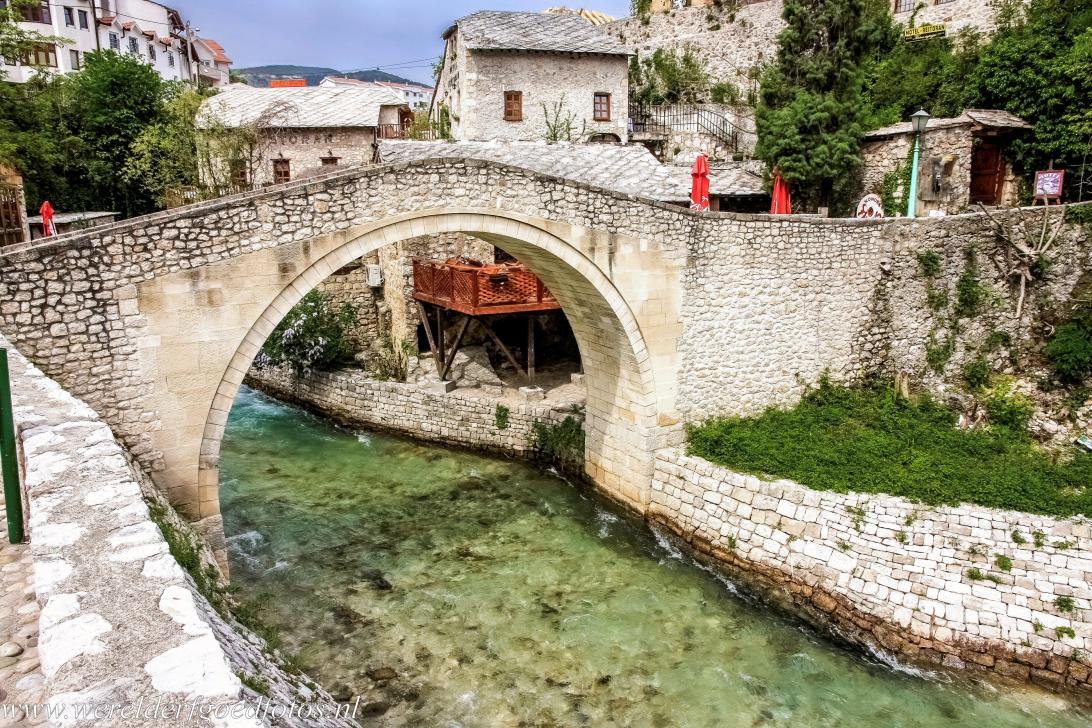
The Crooked Bridge (Kriva Ćuprija) is a tiny stone arch bridge and looks like a miniature version of the Old Bridge of Mostar. The bridge was built around 1558 and crosses the Radobolja; this tiny brook flows into the Neretva, close to the Old Bridge. This small pedestrian bridge collapsed on 31 December 1999 during severe winter floods, but mainly because of the damage inflicted during the Bosnian War (1992–1995). In 2001, the Crooked Bridge was reconstructed using 16th-century materials and building methods. The reconstruction was financed by the Grand Duchy of Luxembourg.

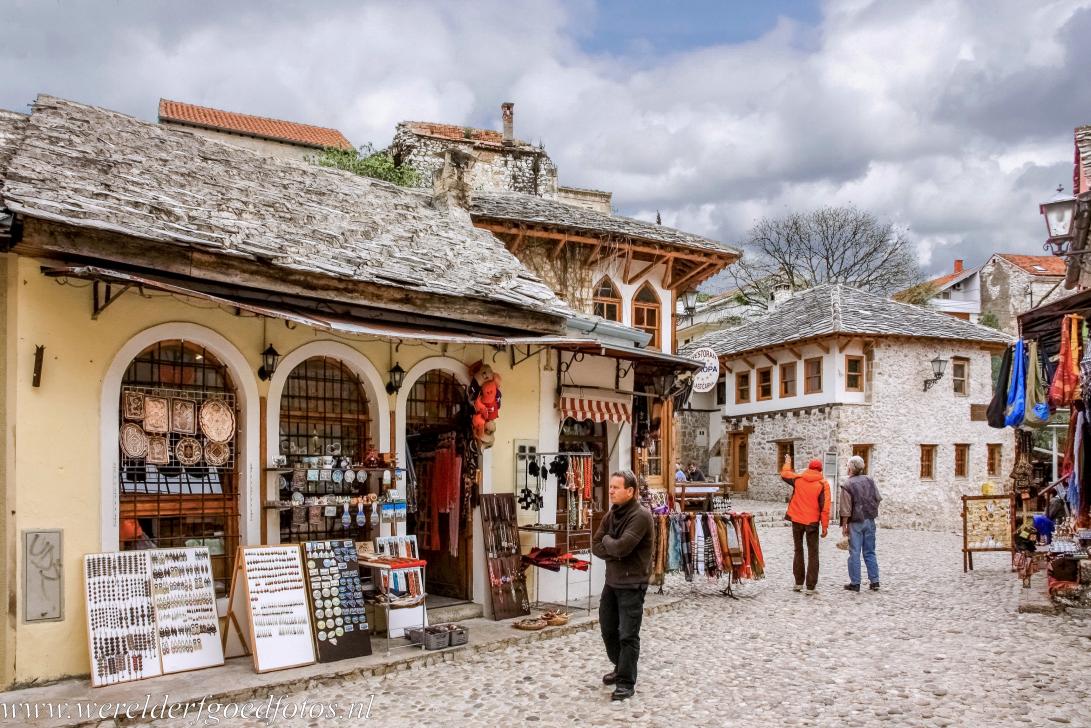
The Tepa Market in the Old Bridge Area of the Old City of Mostar. The streets in the historic city of Mostar are paved with cobblestones; along the streets are numerous souvenir shops. Mostar was founded in the 13th century. The city of Mostar is known for its Old Bridge (Stari Most), after which the city is named. The town is a popular destination for tourists; especially the Stari Most and the Old Bridge Area attract many visitors from all over the world.