Classical Weimar

Weimar beleefde eind 18de, begin 19de eeuw een bloeiperiode. Hertogin Anna-Amalia van Saksen-Weimar-Eisenach en haar zoon Karel-August trokken vooraanstaande componisten, kunstenaars en schrijvers naar Weimar, zoals Johann Wolfgang von Goethe, Friedrich von Schiller en Franz Liszt. Weimar werd hierdoor een cultureel centrum, niet alleen in Duitsland, maar in heel Europa. 

Werelderfgoed Classical Weimar bestaat uit een aantal gebouwen uit deze periode, o.a. het huis van Goethe, het tuinhuis van Goethe in het Park an der Ilm, het huis van Friedrich von Schiller, het huis van Franz Liszt, de Russisch-orthodoxe kapel met de graven van Goethe en Schiller, de Anna Amalia Bibliotheek, enkele paleizen, o.a. het Wittumspaleis, het Schloss op de Burgplatz en Slot Belvedere.

Voor een bezoek aan Classical Weimar kan men bij het eerste monument, wat men bezoekt, een entree-kaart kopen met toegang tot al de monumenten van Classical Weimar. De Classical Weimar toegangskaart blijft 24 uur geldig. Bahalve Werelderfgoed Classical Weimar heeft de stad Weimar, met de stad Dessau, nog een Werelderfgoedsite De Bauhauslocaties van Weimar en Dessau.

In Weimar en omgeving staan 12 bouwwerken sinds 1998 op de Werelderfgoedlijst van UNESCO als: Classical Weimar, ze vormen de Werelderfgoedsite Klassiek Weimar.

www.werelderfgoedfotos.nl     Classical Weimar     World Heritage Photos

  Classical Weimar :   Klassiek Weimar werd in 1998 een Werelderfgoed van UNESCO. 
  Classical Weimar became an UNESCO World Heritage Site in 1998.

Classical Weimar: Klassiek Weimar werd in 1998 een Werelderfgoed van UNESCO.

Classical Weimar became an UNESCO World Heritage Site in 1998.

  Classical Weimar :   Klassiek Weimar werd in 1998 een Werelderfgoed van UNESCO. 
  Classical Weimar became an UNESCO World Heritage Site in 1998.

Classical Weimar: Klassiek Weimar werd in 1998 een Werelderfgoed van UNESCO.

Classical Weimar became an UNESCO World Heritage Site in 1998.

  Classical Weimar :  Goethes Wohnhaus , het huis van Goethe en de erachter gelegen tuin. 
 Goethe woonde in dit huis in Weimar van 1782-1789 en van 1792 tot aan zijn dood 
 in 1832.  Goethes Wohnhaus  ligt aan het  Frauenplan .  Goethes Wohnhaus  is de 
 belangrijkste toeristische attractie in Weimar. Goethe bezat niet alleen dit huis in 
 Weimar, maar ook een huis in het  Park an der Ilm , wat zijn 'tuinhuis' wordt genoemd. 
     
  Classical Weimar: The Goethe House and the garden.  
  Goethe lived in this house in Weimar from 1782-1789 and   from 1792 until   
  his   death in   1832. Goethe possessed also the Goethe's garden house   in   the   
  Park an der Ilm in Weimar.

Classical Weimar: Goethes Wohnhaus, het huis van Goethe en de erachter gelegen tuin.

Goethe woonde in dit huis in Weimar van 1782-1789 en van 1792 tot aan zijn dood

in 1832. Goethes Wohnhaus ligt aan het Frauenplan. Goethes Wohnhaus is de

belangrijkste toeristische attractie in Weimar. Goethe bezat niet alleen dit huis in

Weimar, maar ook een huis in het Park an der Ilm, wat zijn 'tuinhuis' wordt genoemd.


Classical Weimar: The Goethe House and the garden.

Goethe lived in this house in Weimar from 1782-1789 and from 1792 until

his death in 1832. Goethe possessed also the Goethe's garden house in the

Park an der Ilm in Weimar.

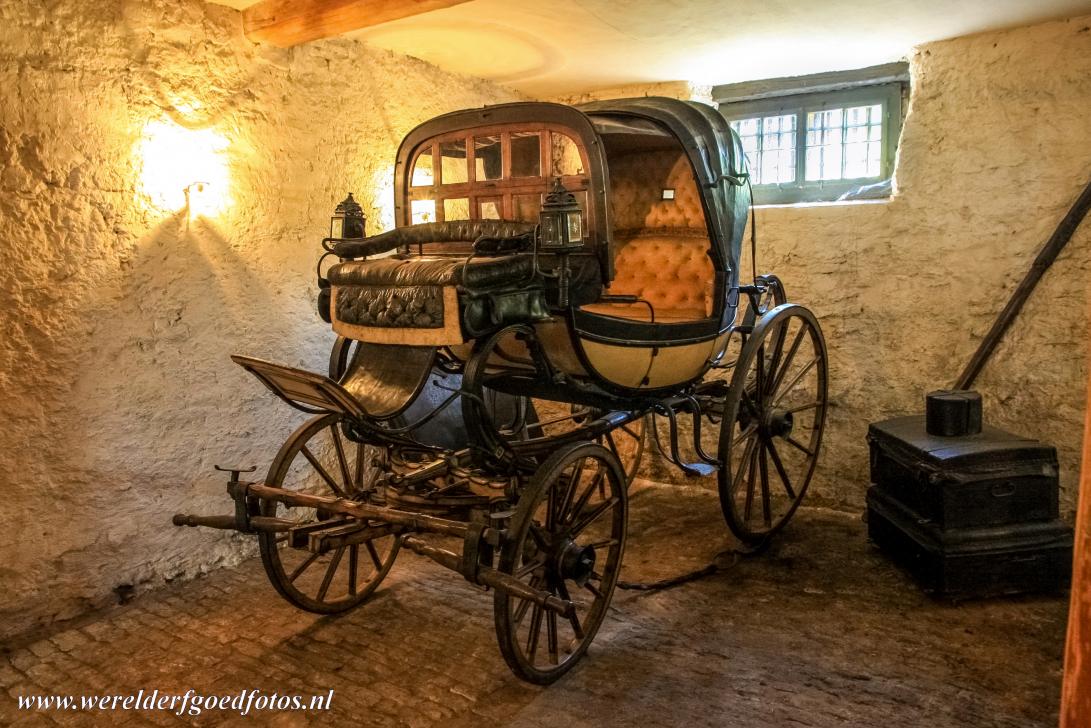
  Classical Weimar : In het huis van Goethe staat zijn reiswagen. Dit is niet 
 de reiswagen van zijn reizen naar Italië, Goethe gebruikte deze reiswagen voor 
 korte afstanden in Weimar en omgeving. 
     
  Classical Weimar: The Goethe House. The carriage of Goethe.  
  Goethe used this carriage for short trips in and around Weimar.

Classical Weimar: In het huis van Goethe staat zijn reiswagen. Dit is niet

de reiswagen van zijn reizen naar Italië, Goethe gebruikte deze reiswagen voor

korte afstanden in Weimar en omgeving.


Classical Weimar: The Goethe House. The carriage of Goethe.

Goethe used this carriage for short trips in and around Weimar.

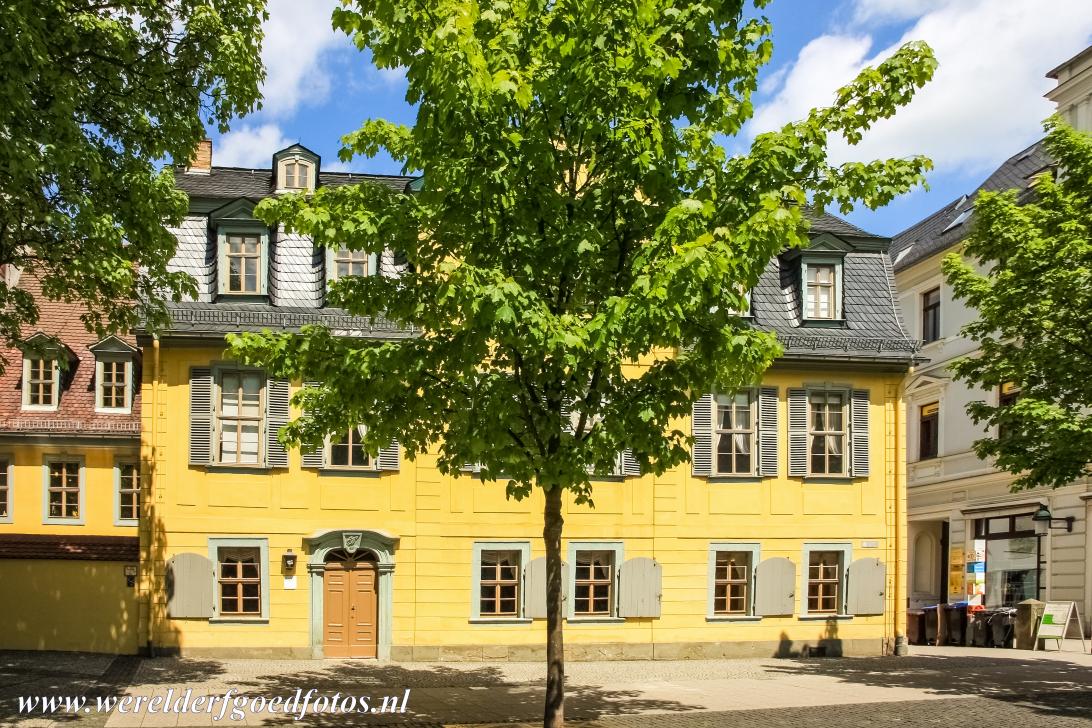
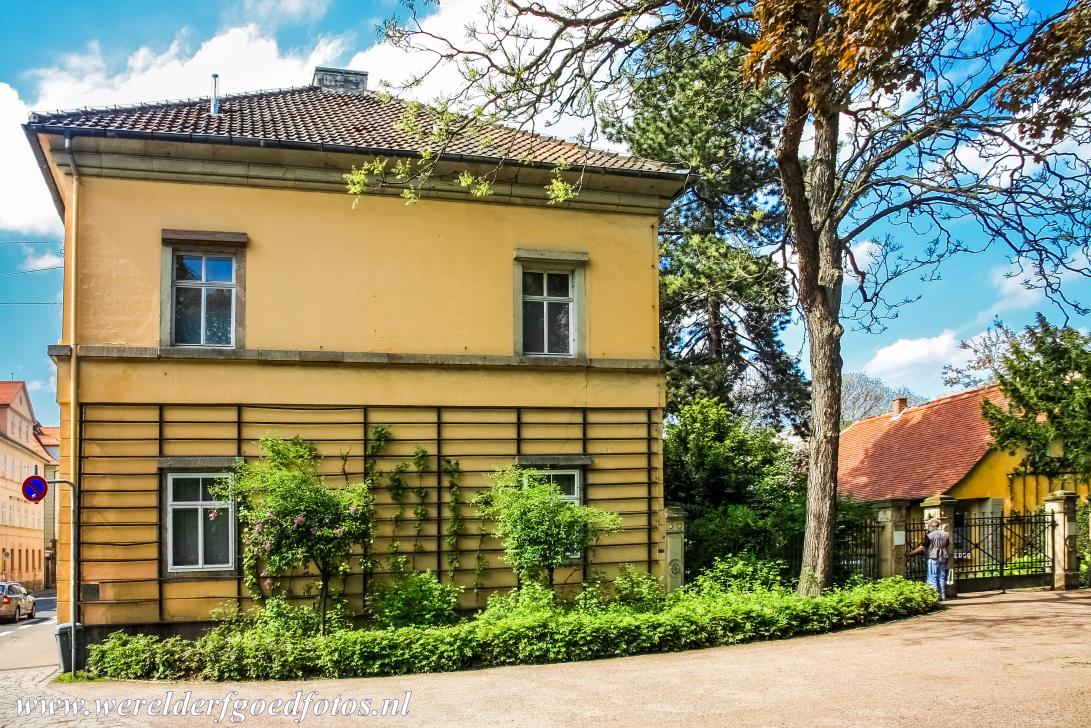
  Classical Weimar : Het huis van Schiller aan de  Schiller Strasse . 
 In dit huis schreef Schiller zijn theaterstuk  Wilhelm Tell . 
 Friedrich Schiller woonde hier van 1802 tot aan zijn dood in 1805. 
 Friedrich Schiller stierf op 45-jarige leeftijd in dit huis in Weimar. 
     
  Classical Weimar: Schiller House.   
  Freidrich Schiller lived in this house   during the   period 1802-1805.   
  Freidrich Schiller died here in 1805 at the age of 45.

Classical Weimar: Het huis van Schiller aan de Schiller Strasse.

In dit huis schreef Schiller zijn theaterstuk Wilhelm Tell.

Friedrich Schiller woonde hier van 1802 tot aan zijn dood in 1805.

Friedrich Schiller stierf op 45-jarige leeftijd in dit huis in Weimar.


Classical Weimar: Schiller House.

Freidrich Schiller lived in this house during the period 1802-1805.

Freidrich Schiller died here in 1805 at the age of 45.

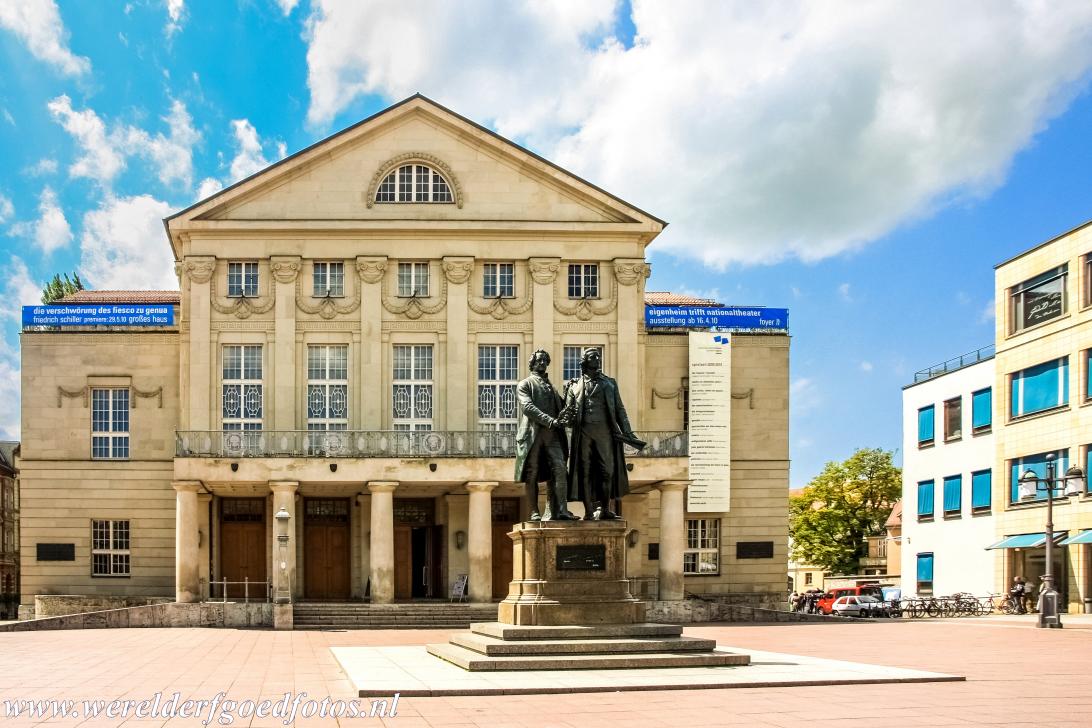
  Classical Weimar : Het Goethe en Schiller Monument staat voor het Nationaal Theater  
  (Deutsches Nationaltheater)  op de  Theatherplatz . 
 Goethe en Schiller hebben beide in Weimar gewoond. Ze hadden een opmerkelijke  
 vriendschap. Het Goethe en Schiller Monument bleef behouden tijdens een geallieerd 
 bombardement in 1942, het Nationaal Theater werd verwoest. 
 Het Nationaal Theater van Weimar werd herbouwd en heropend in 1948. 
 Het eerste muziekstuk wat werd uitgevoerd in het heropende 
 Nationaal Theater van Weimar was het bekendste werk van Goethe: Faust. 
   
  Classical Weimar: Goethe and Schiller Monument in front of   the National Theatre  
  (Deutsches Nationaltheater).  
  Goethe and Schiller have lived in Weimar. They had a remarkable friendship.  
  Goethe and Schiller Monument escaped damage from the Allied bombing of Weimar   
  in 1942, t  he National Theatre in Weimar was destroyed, the building was   
  reconstructed and reopened in 1948 with the performance of the most famous   
  work of Goethe: Faust.

Classical Weimar: Het Goethe en Schiller Monument staat voor het Nationaal Theater 

(Deutsches Nationaltheater) op de Theatherplatz.

Goethe en Schiller hebben beide in Weimar gewoond. Ze hadden een opmerkelijke 

vriendschap. Het Goethe en Schiller Monument bleef behouden tijdens een geallieerd

bombardement in 1942, het Nationaal Theater werd verwoest.

Het Nationaal Theater van Weimar werd herbouwd en heropend in 1948.

Het eerste muziekstuk wat werd uitgevoerd in het heropende

Nationaal Theater van Weimar was het bekendste werk van Goethe: Faust.


Classical Weimar: Goethe and Schiller Monument in front of the National Theatre

(Deutsches Nationaltheater).

Goethe and Schiller have lived in Weimar. They had a remarkable friendship.

Goethe and Schiller Monument escaped damage from the Allied bombing of Weimar

in 1942, the National Theatre in Weimar was destroyed, the building was

reconstructed and reopened in 1948 with the performance of the most famous

work of Goethe: Faust.

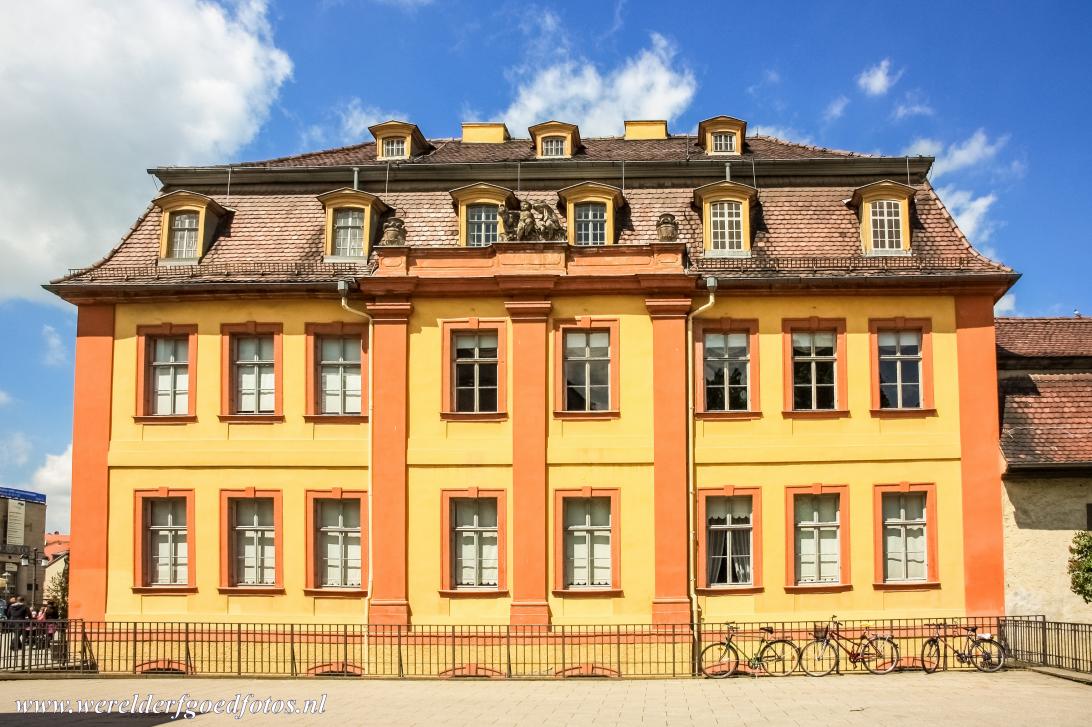
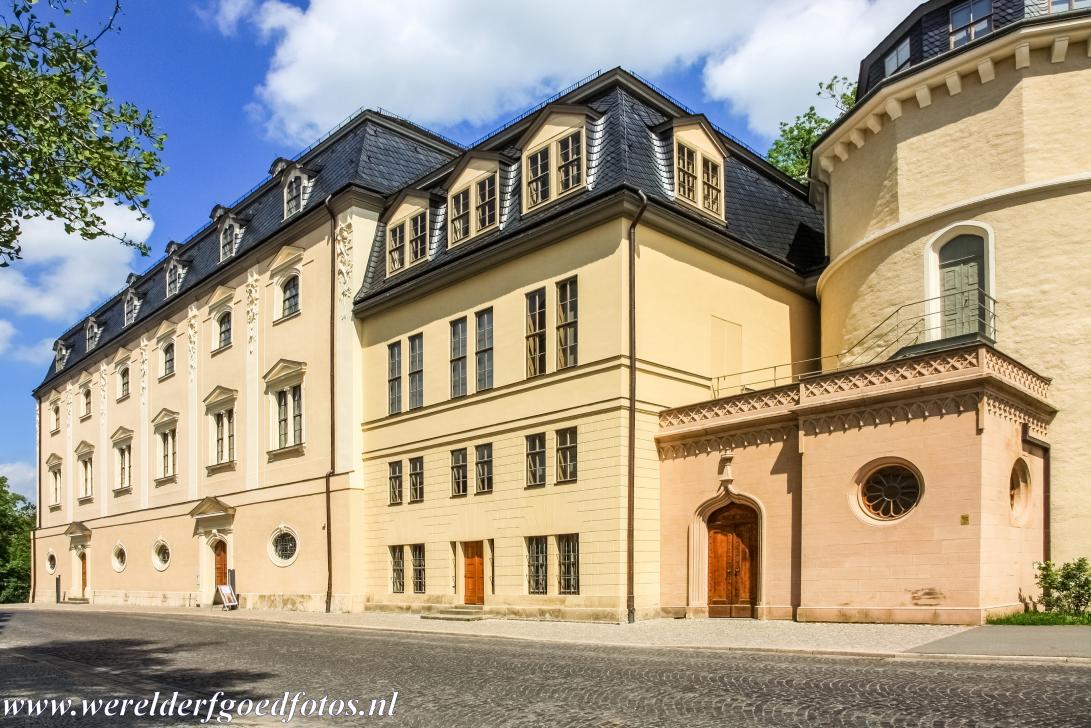
  Classical Weimar : Het  Wittumspalais , het Wittumspaleis. 
 Het Wittumspaleis werd gebouwd in 1767-1768. Hertogin Anna Amalia von 
 Sachsen-Weimar-Eisenach woonde de laatste jaren van haar leven tot aan haar 
 dood in 1807 in het Wittumspaleis. Het  Wittumspalais  ligt evenals het 
  Deutsches Nationaltheater  en het  Bauhaus-Museum  aan de  Theatherplatz  in Weimar. 
     
  Classical Weimar: The Wittums Palace.  
  The Wittums Palace  was built in 1767-1768.  Duchess Anna Amalia von   
  Sachsen-Weimar-Eisenach lived here until her death   in 1807.

Classical Weimar: Het Wittumspalais, het Wittumspaleis.

Het Wittumspaleis werd gebouwd in 1767-1768. Hertogin Anna Amalia von

Sachsen-Weimar-Eisenach woonde de laatste jaren van haar leven tot aan haar

dood in 1807 in het Wittumspaleis. Het Wittumspalais ligt evenals het

Deutsches Nationaltheater en het Bauhaus-Museum aan de Theatherplatz in Weimar.


Classical Weimar: The Wittums Palace.

The Wittums Palace was built in 1767-1768. Duchess Anna Amalia von

Sachsen-Weimar-Eisenach lived here until her death in 1807.

 Classical Weimar: De hertogin Anna Amalia Bibliotheek. 
 Hertogin Anna Amalia von Sachsen-Weimar-Eisenach liet het 16de eeuwse 
  Grünes Scloss , het 'Groene Paleis', verbouwen om de bibliotheek te huisvesten. 
 De hertogin Anna Amalia Bibliotheek was de eerste hertogelijke bibliotheek, die 
 toegankelijk was voor publiek. De bibliotheek huisvest boeken en documenten vanaf 
 de 9de tot 21ste eeuw, ca. 1 miljoen werken. De collectie werd deels verwoest 
 door een brand in 2004. Veel werken werden gered, waaronder de Luther Bijbel (1534). 
     
  Classical Weimar: The Duchess Anna Amalia Library.  
  Duchess Anna Amalia von Sachsen-Weimar-Eisenach had the 16the century   
  'Green Palace' rebuilt to house the library. The   Duchess Anna Amalia Library is one   
  of the first ducal libraries in Germany to be made   accessible   to the public. It houses   
  literary   documents and books from the 9th to the   21th centuries. The Duchess Anna   
  Amalia   Library houses more than 1 million articles.   Part of the collection was   
  destroyed   or severely damaged by a fire in 2004. Part of the collection was saved.  
  The famous Luther Bible (1534) was also saved.

Classical Weimar: De hertogin Anna Amalia Bibliotheek.

Hertogin Anna Amalia von Sachsen-Weimar-Eisenach liet het 16de eeuwse

Grünes Scloss, het 'Groene Paleis', verbouwen om de bibliotheek te huisvesten.

De hertogin Anna Amalia Bibliotheek was de eerste hertogelijke bibliotheek, die

toegankelijk was voor publiek. De bibliotheek huisvest boeken en documenten vanaf

de 9de tot 21ste eeuw, ca. 1 miljoen werken. De collectie werd deels verwoest

door een brand in 2004. Veel werken werden gered, waaronder de Luther Bijbel (1534).


Classical Weimar: The Duchess Anna Amalia Library.

Duchess Anna Amalia von Sachsen-Weimar-Eisenach had the 16the century

'Green Palace' rebuilt to house the library. The Duchess Anna Amalia Library is one

of the first ducal libraries in Germany to be made accessible to the public. It houses

literary documents and books from the 9th to the 21th centuries. The Duchess Anna

Amalia Library houses more than 1 million articles. Part of the collection was

destroyed or severely damaged by a fire in 2004. Part of the collection was saved.

The famous Luther Bible (1534) was also saved.

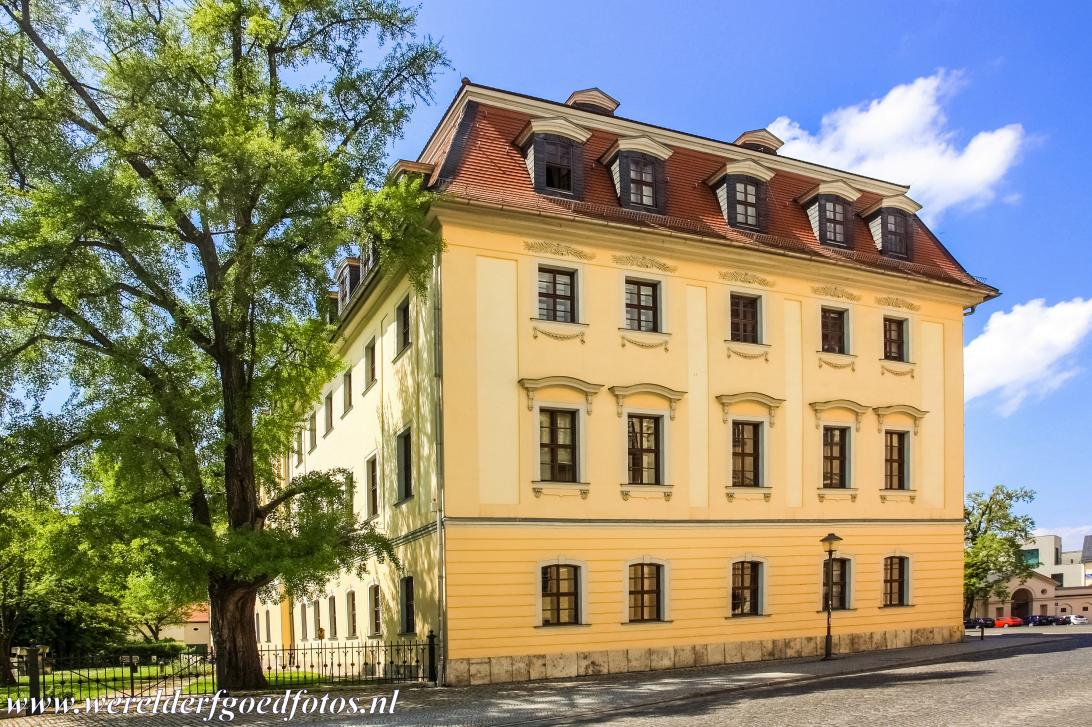
  Classical Weimar :  Prince's House . 
 Naast het Prinsenhuis staat de oudste Ginkgoboom van Weimar, waarschijnlijk 
 geplant in 1813. Goethe schreef een gedicht over de  Ginkgo biloba . 
     
  Classical Weimar: Prince's House and Weimar's oldest Ginkgo biloba tree, probably  
  planted   in 1813. Goethe was inspired by the Ginkgo and he wrote the poem  
  'Ginkgo biloba'.

Classical Weimar: Prince's House.

Naast het Prinsenhuis staat de oudste Ginkgoboom van Weimar, waarschijnlijk

geplant in 1813. Goethe schreef een gedicht over de Ginkgo biloba.


Classical Weimar: Prince's House and Weimar's oldest Ginkgo biloba tree, probably

planted in 1813. Goethe was inspired by the Ginkgo and he wrote the poem

'Ginkgo biloba'.

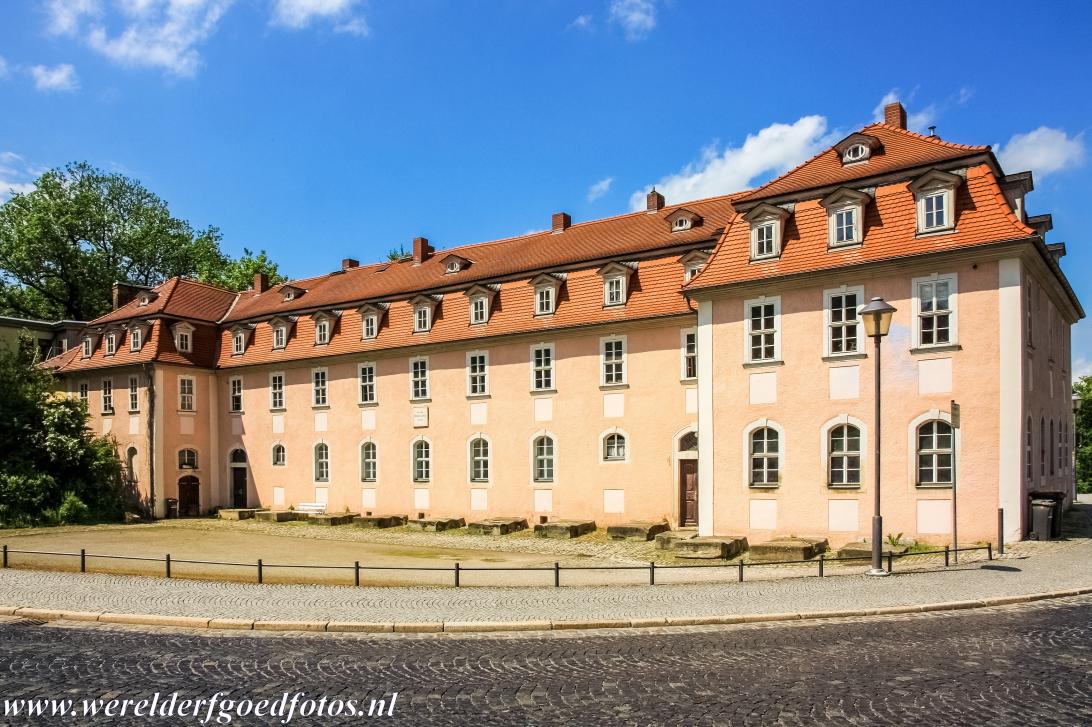
  Classical Weimar : Het huis van Charlotte von Stein. Charlotte von Stein was de 
 inspiratiebron van Goethe voor het schrijven van zijn vroege werk. 
     
  Classical Weimar: The House of Charlotte von Stein. Charlotte von Stein was the  
  writer's source of inspiration for Goethe's early work.

Classical Weimar: Het huis van Charlotte von Stein. Charlotte von Stein was de

inspiratiebron van Goethe voor het schrijven van zijn vroege werk.


Classical Weimar: The House of Charlotte von Stein. Charlotte von Stein was the

writer's source of inspiration for Goethe's early work.

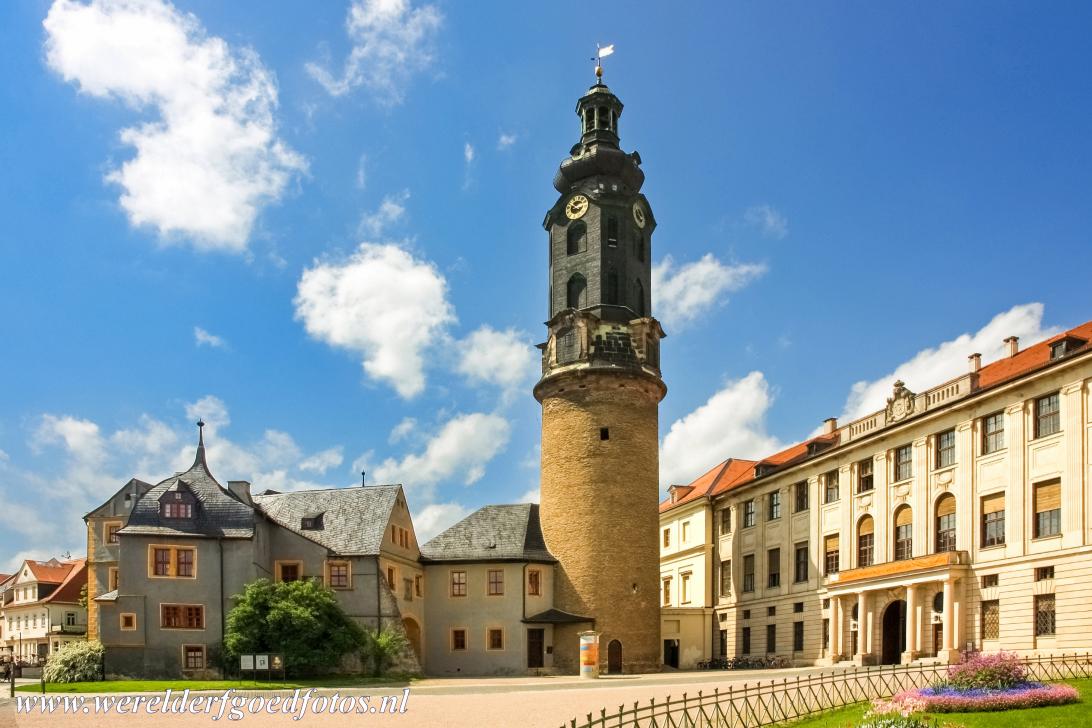
  Classical Weimar : Het  Schloss  op de  Burgplatz  met de hoge toren is het voormalige 
 hertogelijke paleis. Het  Schloss  op de  Burgplatz  is nu museum. Het heeft een 
 oorspronkelijk interieur, schilderijen van Cranach en Peter Paul Rubens. Er zijn vier 
 kamers, die gewijd zijn aan de schrijvers Goethe, Schiller, Herder en Wieland. 
     
  Classical Weimar: Town Palace and the Town Palace tower.   
  The Town Palace     is nowadays a museum,   it houses the Cranach gallery, Dutch art   
  and four writer's rooms, devoted to Goethe,   Schiller, Herder and Wieland.

Classical Weimar: Het Schloss op de Burgplatz met de hoge toren is het voormalige

hertogelijke paleis. Het Schloss op de Burgplatz is nu museum. Het heeft een

oorspronkelijk interieur, schilderijen van Cranach en Peter Paul Rubens. Er zijn vier

kamers, die gewijd zijn aan de schrijvers Goethe, Schiller, Herder en Wieland.


Classical Weimar: Town Palace and the Town Palace tower.

The Town Palace is nowadays a museum, it houses the Cranach gallery, Dutch art

and four writer's rooms, devoted to Goethe, Schiller, Herder and Wieland.

  Classical Weimar : De binnenplaats van het  Schloss  op de  Burgplatz . 
 De feestzaal van het  Schloss  op de  Burgplatz  is rijk gedecoreerd. 
 Het  Schloss  op de  Burgplatz  werd in 1774 door brand zwaar beschadigd, de restauratie 
 begon in 1789 en duurde enkele deccenia.  
     
  Classical Weimar: The Town Palace and Town Palace courtyard.  
  The Town Palace festive room is beautiful decorated.  
  The Town Palace was damaged by a fire in 1774, the reconstruction from 1789  
  took several decades.

Classical Weimar: De binnenplaats van het Schloss op de Burgplatz.

De feestzaal van het Schloss op de Burgplatz is rijk gedecoreerd.

Het Schloss op de Burgplatz werd in 1774 door brand zwaar beschadigd, de restauratie

begon in 1789 en duurde enkele deccenia. 


Classical Weimar: The Town Palace and Town Palace courtyard.

The Town Palace festive room is beautiful decorated.

The Town Palace was damaged by a fire in 1774, the reconstruction from 1789

took several decades.

   
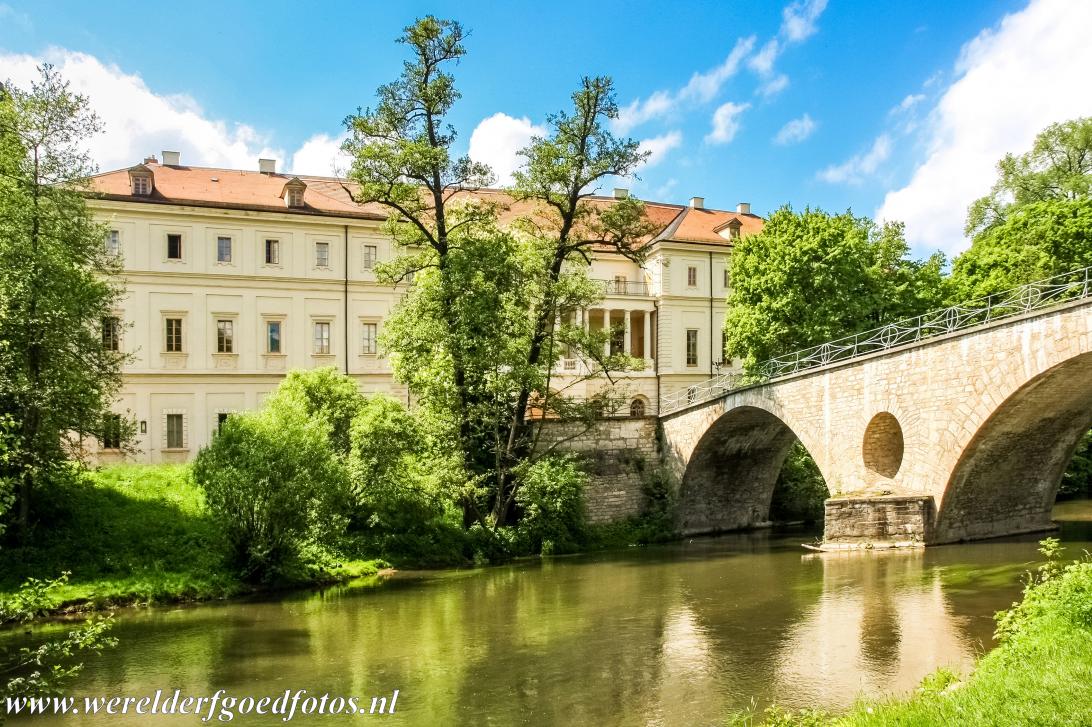
  Classical Weimar : De  Sternbrücke  en het  Schloss  op de  Burgplatz  gezien vanuit het 
  Park an der Ilm . De  Sternbrücke  is de oudste brug van Weimar. 
     
  Classical Weimar: The Sternbrücke and the Town Palace seen from the Park  
  an der Ilm. The Sternbrücke (Star Bridge) is the oldest bridge in Weimar.


Classical Weimar: De Sternbrücke en het Schloss op de Burgplatz gezien vanuit het

Park an der Ilm. De Sternbrücke is de oudste brug van Weimar.


Classical Weimar: The Sternbrücke and the Town Palace seen from the Park

an der Ilm. The Sternbrücke (Star Bridge) is the oldest bridge in Weimar.

 Klassiek Weimar:  Liszt Haus . 
 Franz Liszt woonde in Weimar van 1869 tot aan zijn dood in 1886, zijn werkkamer 
 in het  Liszt Haus  is bewaard gebleven. 
 Franz Liszt woonde elk jaar ook enige maanden in Rome en Budapest. 
     
  Classical Weimar: Liszt House.   
  Franz Liszt lived in Weimar from 1869 until his death   in 1886, he also spent   
  some months every year in Rome and Budapest.

Klassiek Weimar: Liszt Haus.

Franz Liszt woonde in Weimar van 1869 tot aan zijn dood in 1886, zijn werkkamer

in het Liszt Haus is bewaard gebleven.

Franz Liszt woonde elk jaar ook enige maanden in Rome en Budapest.


Classical Weimar: Liszt House.

Franz Liszt lived in Weimar from 1869 until his death in 1886, he also spent

some months every year in Rome and Budapest.

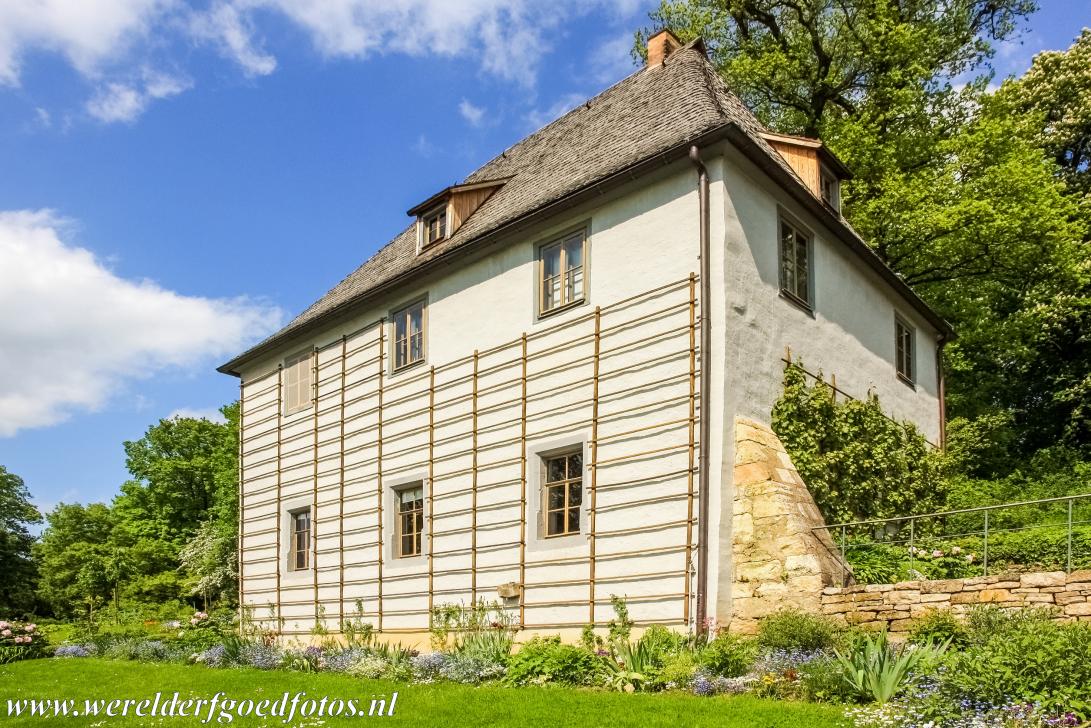
  Classical Weimar :  Goethes Gartenhaus , het tuinhuis van Goethe in het  Park an der Ilm . 
 Goethe woonde tot 1782 in dit tuinhuis, daarna kwam hij hier alleen terug om te werken 
 en te rusten. Het tuinhuis van Goethe in 'Klassiek Weimar' wordt druk bezocht. 
 Niet ver van het  Goethes Gartenhaus  ligt aan de rand van het  Park an der Ilm  het 
  Haus am Horn , eerste statement van de nieuwe bouwstijl het  Bauhaus .    
     
  Classical Weimar: Goethe's garden house in the Park an der Ilm. Goethe lived  
  in this garden house until 1782, afterwards he returned here to work   and rest.

Classical Weimar: Goethes Gartenhaus, het tuinhuis van Goethe in het Park an der Ilm.

Goethe woonde tot 1782 in dit tuinhuis, daarna kwam hij hier alleen terug om te werken

en te rusten. Het tuinhuis van Goethe in 'Klassiek Weimar' wordt druk bezocht.

Niet ver van het Goethes Gartenhaus ligt aan de rand van het Park an der Ilm het

Haus am Horn, eerste statement van de nieuwe bouwstijl het Bauhaus.


Classical Weimar: Goethe's garden house in the Park an der Ilm. Goethe lived

in this garden house until 1782, afterwards he returned here to work and rest.

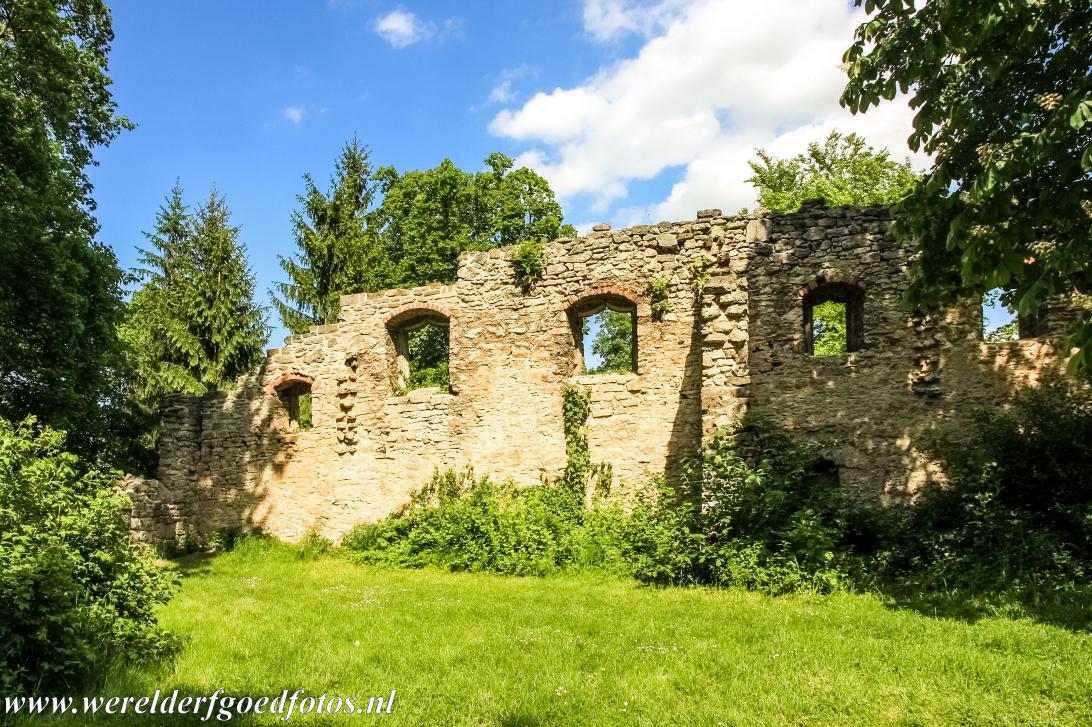
 Klassiek Weimar:  Park an der Ilm  maakt deel uit van Werelderfgoed:  Classical Weimar . 
 Het park grenst aan het historische centrum van Weimar. Het park ligt aan de 
 oevers van rivier de Ilm. Het  Park an der Ilm  is aangelegd in Engelse landschapsstijl 
 met namaak ruïnes en een grot. 
 Het  Park an der Ilm  grenst aan het historische centrum van Weimar, langs het park 
 liggen meerdere historische gebouwen, die behoren tot het UNESCO Werelderfgoed 
  Classical Weimar,  zoals de hertogin Anna Amalia Bibliotheek. 
 In het  Park an der Ilm  staan het tuinhuis van Goethe en het  Römische Haus . 
   
  Classical Weimar: Park an der Ilm is part of the World Heritage Site   Classical Weimar.

Klassiek Weimar: Park an der Ilm maakt deel uit van Werelderfgoed: Classical Weimar.

Het park grenst aan het historische centrum van Weimar. Het park ligt aan de

oevers van rivier de Ilm. Het Park an der Ilm is aangelegd in Engelse landschapsstijl

met namaak ruïnes en een grot.

Het Park an der Ilm grenst aan het historische centrum van Weimar, langs het park

liggen meerdere historische gebouwen, die behoren tot het UNESCO Werelderfgoed

Classical Weimar, zoals de hertogin Anna Amalia Bibliotheek.

In het Park an der Ilm staan het tuinhuis van Goethe en het Römische Haus.


Classical Weimar: Park an der Ilm is part of the World Heritage Site Classical Weimar.

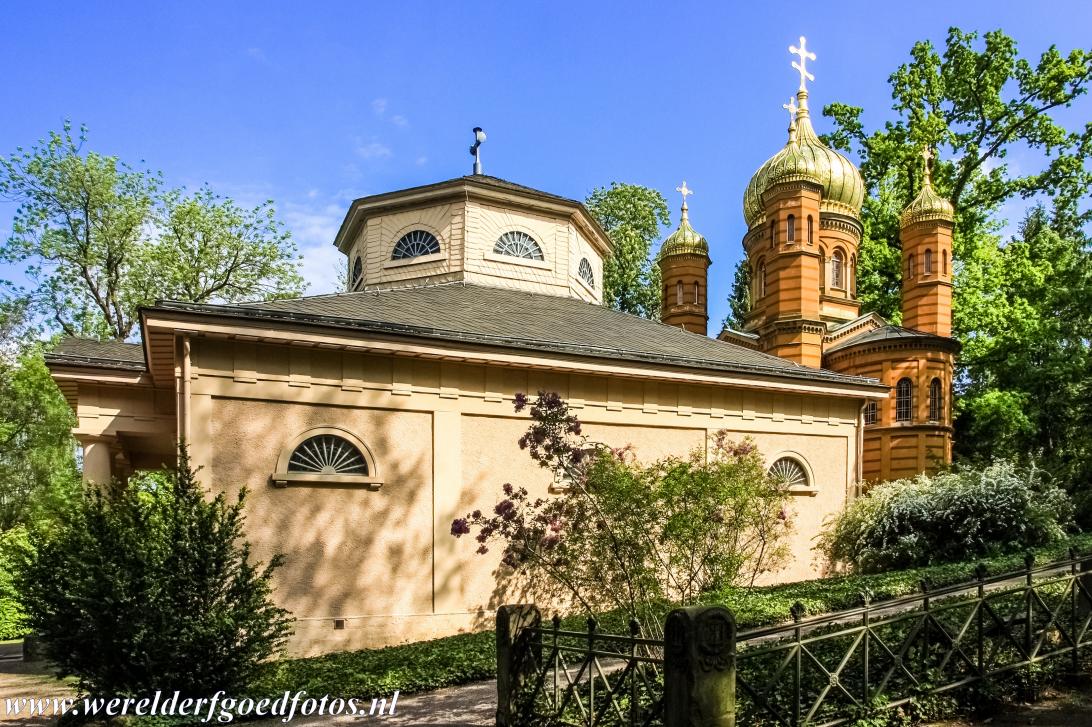
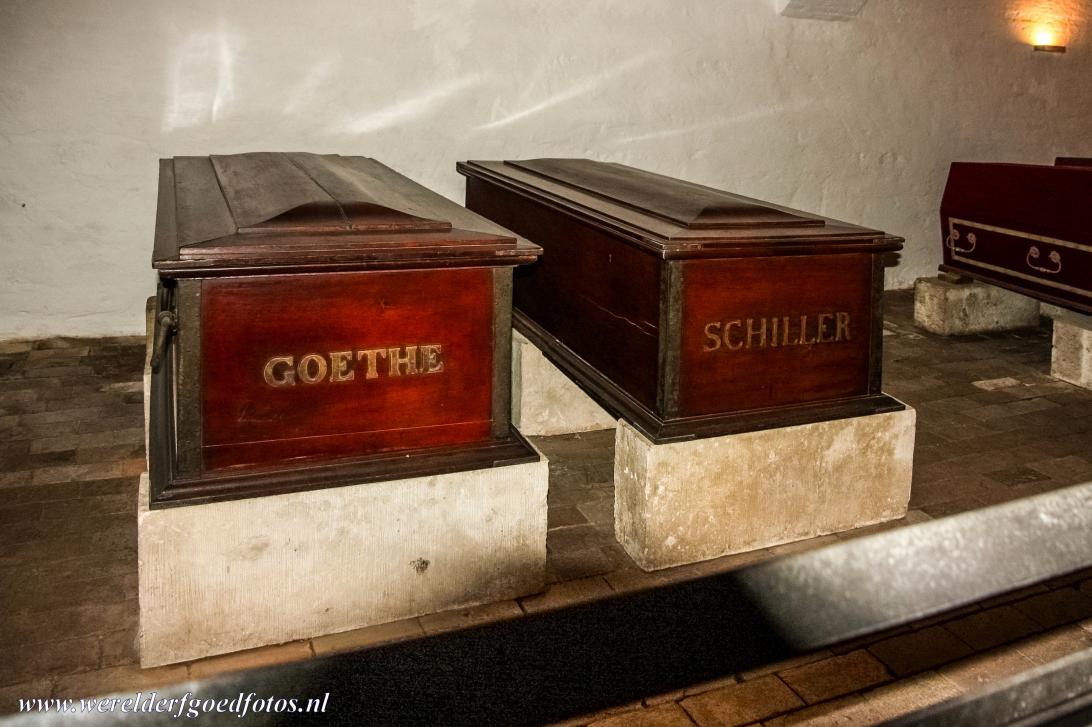
  Classical Weimar : De Russisch-orthodoxe kapel (rechts) en het mausoleum waar 
 Goethe ligt begraven. De kist van Schiller is leeg. DNA testen wezen uit, dat de 
 stoffelijke resten, die in de kist lagen, niet van Schiller waren. Zijn stoffelijke resten 
 zijn spoorloos, waarschijnlijk liggen ze in een massagraf op de Jacobs begraafplaats. 
     
  Classical Weimar: The Russian Orthodox chapel (on the right) en the Princes' crypt  
  (on the left). The Princes' crypt in Classical Weimar is the last resting place of Goethe.  
  The coffin of Schiller is empty. DNA testing of the remains proved they were not  
  Schiller's.   The remains of Schiller are probably somewhere in   the Jacobs Cemetry.

Classical Weimar: De Russisch-orthodoxe kapel (rechts) en het mausoleum waar

Goethe ligt begraven. De kist van Schiller is leeg. DNA testen wezen uit, dat de

stoffelijke resten, die in de kist lagen, niet van Schiller waren. Zijn stoffelijke resten

zijn spoorloos, waarschijnlijk liggen ze in een massagraf op de Jacobs begraafplaats.


Classical Weimar: The Russian Orthodox chapel (on the right) en the Princes' crypt

(on the left). The Princes' crypt in Classical Weimar is the last resting place of Goethe.

The coffin of Schiller is empty. DNA testing of the remains proved they were not

Schiller's. The remains of Schiller are probably somewhere in the Jacobs Cemetry.

 Klassiek Weimar: De Russisch-orthodoxe kapel in Weimar is de laatste 
 rustplaats van Goethe. De kist van Schiller is leeg. DNA testen wezen uit, dat de 
 stoffelijke resten in de kist, niet van Schiller waren. Zijn stoffelijke resten 
 zijn spoorloos, waarschijnlijk liggen ze in een massagraf op de Jacobs begraafplaats. 
     
  Classical Weimar:   The Princes' crypt in Classical Weimar is the last resting place of   
  Goethe.   The coffin of Schiller is empty. DNA testing of the remains proved they were   
  not Schiller's.   The remains of Schiller are probably somewhere in   the Jacobs Cemetry.

Klassiek Weimar: De Russisch-orthodoxe kapel in Weimar is de laatste

rustplaats van Goethe. De kist van Schiller is leeg. DNA testen wezen uit, dat de

stoffelijke resten in de kist, niet van Schiller waren. Zijn stoffelijke resten

zijn spoorloos, waarschijnlijk liggen ze in een massagraf op de Jacobs begraafplaats.


Classical Weimar: The Princes' crypt in Classical Weimar is the last resting place of

Goethe. The coffin of Schiller is empty. DNA testing of the remains proved they were

not Schiller's. The remains of Schiller are probably somewhere in the Jacobs Cemetry.

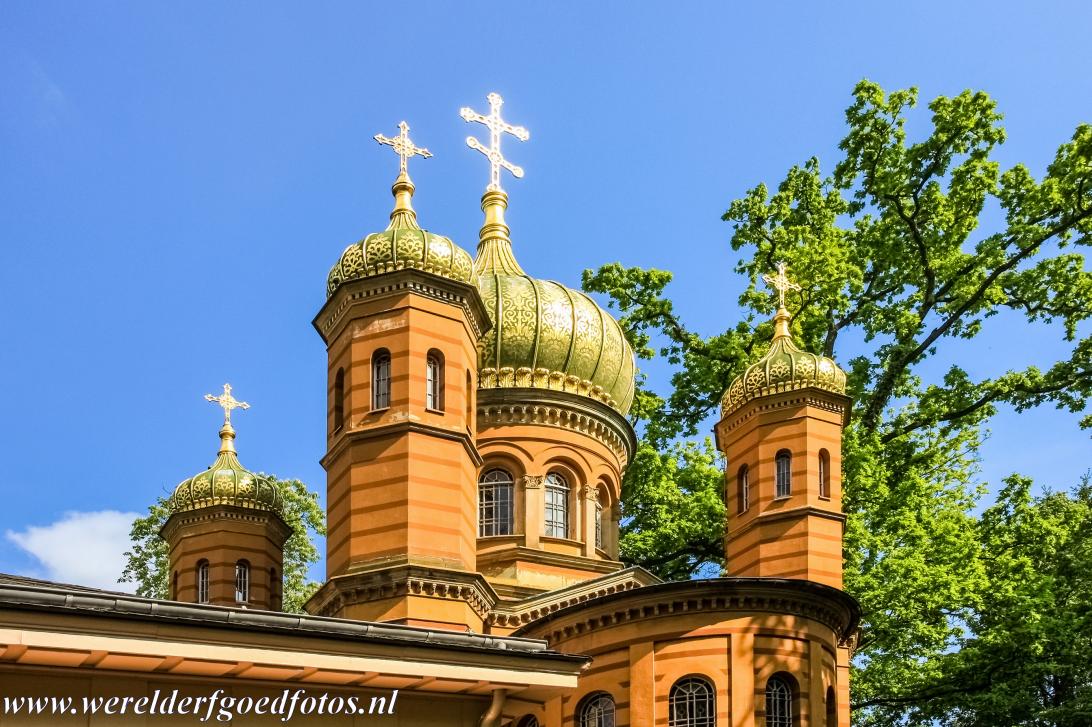
  Classical Weimar : De Russisch-orthodoxe kapel gezien vanaf de begraafplaats van Weimar. 
 De Russisch-orthodoxe kapel werd gebouwd in 1860-1862. De aarde waarop de kapel staat 
 komt uit Rusland. De kapel is de laatste rustplaats van de tsarendochter Maria Pavlovna.  
       
   Classical Weimar: The Russian Orthodox chapel seen from the cemetry of Weimar.    
  The Russian Orthodox chapel was built on Russian earth in 1860-1862.   
 
 
  The Russian   tsar's   daughter Grand Duchess Maria Pavlovna found her last   


  resting place in the   burial vault of the Russian Orthodox chapel in   Classical Weimar.

Classical Weimar: De Russisch-orthodoxe kapel gezien vanaf de begraafplaats van Weimar.

De Russisch-orthodoxe kapel werd gebouwd in 1860-1862. De aarde waarop de kapel staat

komt uit Rusland. De kapel is de laatste rustplaats van de tsarendochter Maria Pavlovna. 


Classical Weimar: The Russian Orthodox chapel seen from the cemetry of Weimar.

The Russian Orthodox chapel was built on Russian earth in 1860-1862.

The Russian tsar's daughter Grand Duchess Maria Pavlovna found her last

resting place in the burial vault of the Russian Orthodox chapel in Classical Weimar.

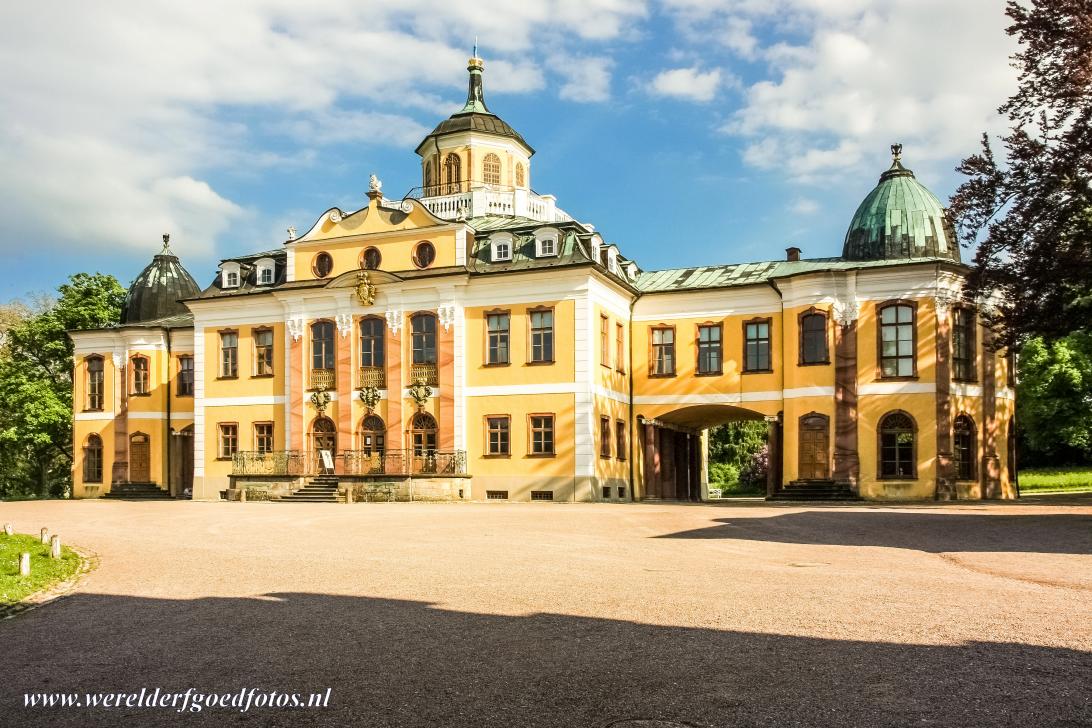
  Classical Weimar,   Schloss Belvedere : Klassiek Weimar, Slot Belvedere. 
  Schloss Belvedere  ligt in het  Schloss Belvedere Park , niet ver buiten Weimar.  
 Nadat Maria Pavlovna weduwe was geworden woonde ze op  Schloss Belvedere . 
  Schloss Belvedere  wordt gezien als het belangrijkste barokke bouwwerk in Weimar. 
  Schloss Belvedere  en het Schloss Belvedere park maken deel uit van de 
 Werelderfgoedsite:  Classical Weimar .  
     
  Classical Weimar: Belvedere Palace.  
   Belvedere Palace is located in Belvedere Palace park, outside Weimar.   
  Belvedere Palace was the widow seat of Maria Pavlovna, she died   here in 1859.   
 
  Belvedere Palace and orangery are regarded as the most important   baroque   
  buildings   in Weimar. Belvedere Palace originally served as a hunting lodge, it is  
 
  surrounded by stables and a pleasure garden.   Belvedere Palace   is now a museum.  
  Belvedere Palace and Belvedere Palace park are part of the World Heritage Site:  
  Classical Weimar.

Classical Weimar, Schloss Belvedere: Klassiek Weimar, Slot Belvedere.

Schloss Belvedere ligt in het Schloss Belvedere Park, niet ver buiten Weimar. 

Nadat Maria Pavlovna weduwe was geworden woonde ze op Schloss Belvedere.

Schloss Belvedere wordt gezien als het belangrijkste barokke bouwwerk in Weimar.

Schloss Belvedere en het Schloss Belvedere park maken deel uit van de

Werelderfgoedsite: Classical Weimar


Classical Weimar: Belvedere Palace.

Belvedere Palace is located in Belvedere Palace park, outside Weimar.

Belvedere Palace was the widow seat of Maria Pavlovna, she died here in 1859.

Belvedere Palace and orangery are regarded as the most important baroque

buildings in Weimar. Belvedere Palace originally served as a hunting lodge, it is

surrounded by stables and a pleasure garden. Belvedere Palace is now a museum.

Belvedere Palace and Belvedere Palace park are part of the World Heritage Site:

Classical Weimar.

  Classical Weimar :  Schloss Belvedere  detail. 
 Klassiek Weimar is sinds 1998 een Werelderfgoed en werd ingeschreven op de 
 Werelderfgoedlijst van UNESCO als:  Classical Weimar.  
     
  Classical Weimar: Belvedere Palace detail.  
  Classical Weimar was inscribed on the UNESCO World Heritage List in 1998.

Classical Weimar: Schloss Belvedere detail.

Klassiek Weimar is sinds 1998 een Werelderfgoed en werd ingeschreven op de

Werelderfgoedlijst van UNESCO als: Classical Weimar.


Classical Weimar: Belvedere Palace detail.

Classical Weimar was inscribed on the UNESCO World Heritage List in 1998.