Herrnhut – The Mother of the Moravian Church Settlements
This church community originated in Herrnhut, a villige in the German state of Saxony. Protestant Christians from Moravia and Bohemia, in the present-day Czech Republic, who were persecuted by the Catholic Church, fled to Germany. There they were given refuge on the estate of the young and deeply devout Count Nikolaus von Zinzendorf. They were allowed to build their own village, giving rise to the Moravian Church, also known as the Evangelical Brethren Congregation. The village was officially founded on 3 August 1722, and named Herrnhut, a name that literally means 'under the Lord's protection' (from the German 'Unter des Herrn Hut').
From Herrnhut, the brothers and sisters of this community travelled across the world as missionaries to places including Africa, the Americas, Greenland, and Suriname. The best-known settlements in Europe are Christiansfeld in Denmark and Gracehill in Northern Ireland, along with Bethlehem in the United States. Together with Herrnhut, these locations constitute a UNESCO World Heritage Site.
The village of Herrnhut is the mother settlement of this church community. The buildings were constructed in a simple, austere style that came to be known as Herrnhut Baroque. White and unadorned to reflect equality, the buildings were arranged along a symmetrical street plan. The church hall forms the heart of the village; situated on the town square, it is surrounded by the community buildings. Men and women lived in separate houses, and children attended the village boarding school from an early age.
In the Netherlands, this community is known as the 'Evangelische Broedergemeente' (Moravian Church), or simply as the 'Hernhutters'. They settled here in 1746 around Zeist Castle (Slot Zeist), which had been purchased by Count von Zinzendorf. The Het Hernhutter Huis museum features rotating exhibitions on the origins of the Moravian Church and their missionary work. Artisanal products are also sold, including Moravian Advent stars.
In 2015, the Moravian Church settlement at Christiansfeld in Denmark was the first of these settlements to be designated a World Heritage Site, as it was considered the best-preserved example of its kind. The other three settlements, including Herrnhut, became part a joint transnational heritage site in 2024. It was inscribed on the UNESCO World Heritage List as: Moravian Church Settlements.
www.werelderfgoedfotos.nl © Copyright World Heritage Photos Classic Car Road Trip
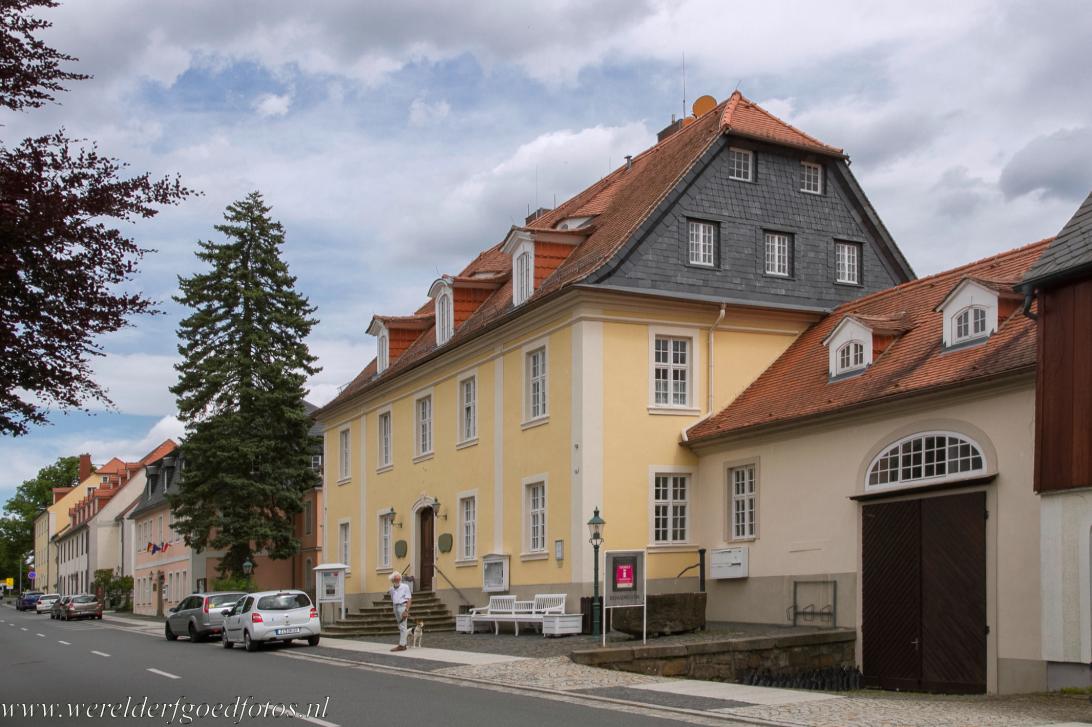
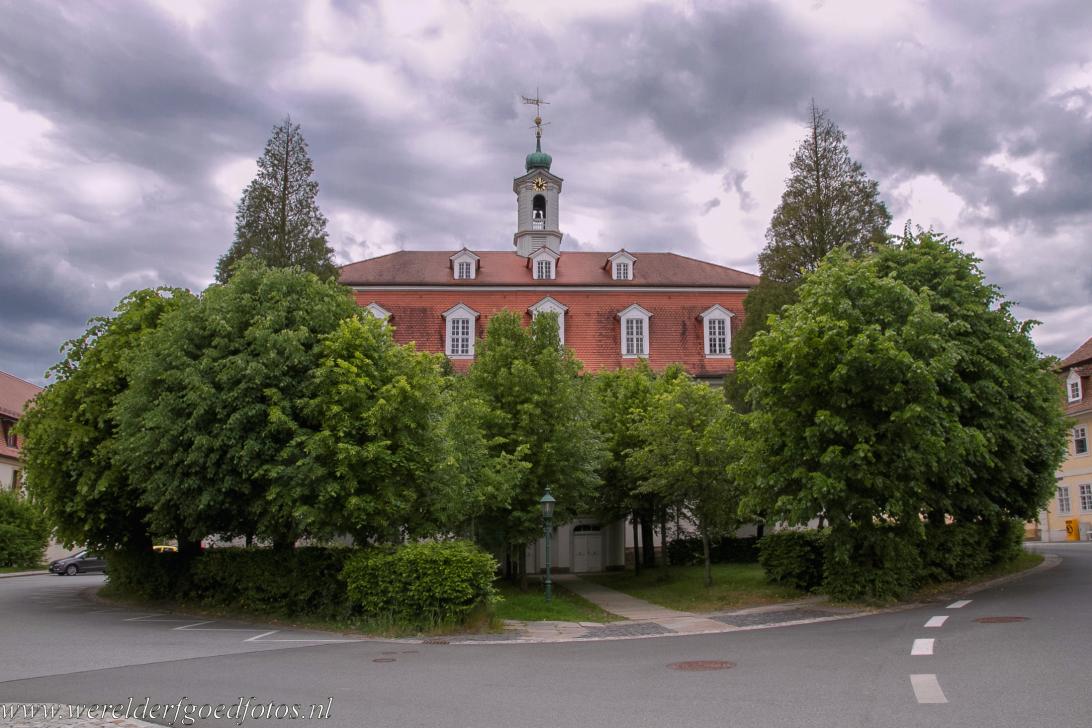
Herrnhut, a Moravian Church Settlement: This stately house with a mansard roof is known as the 'Kölbingsches Haus'. It was built for the Kölbing family, prominent members of the Moravian Church. Constructed in 1764, this iconic house features the distinctive Herrnhut Baroque style, characterised by subdued colours and an austere appearance. The space behind the huge dark wooden doors was originally used to stable horses and house carriages. Since 1962, the building has been home to the local history museum ('Heimatmuseum'), which features exhibitions on the origins of this community.
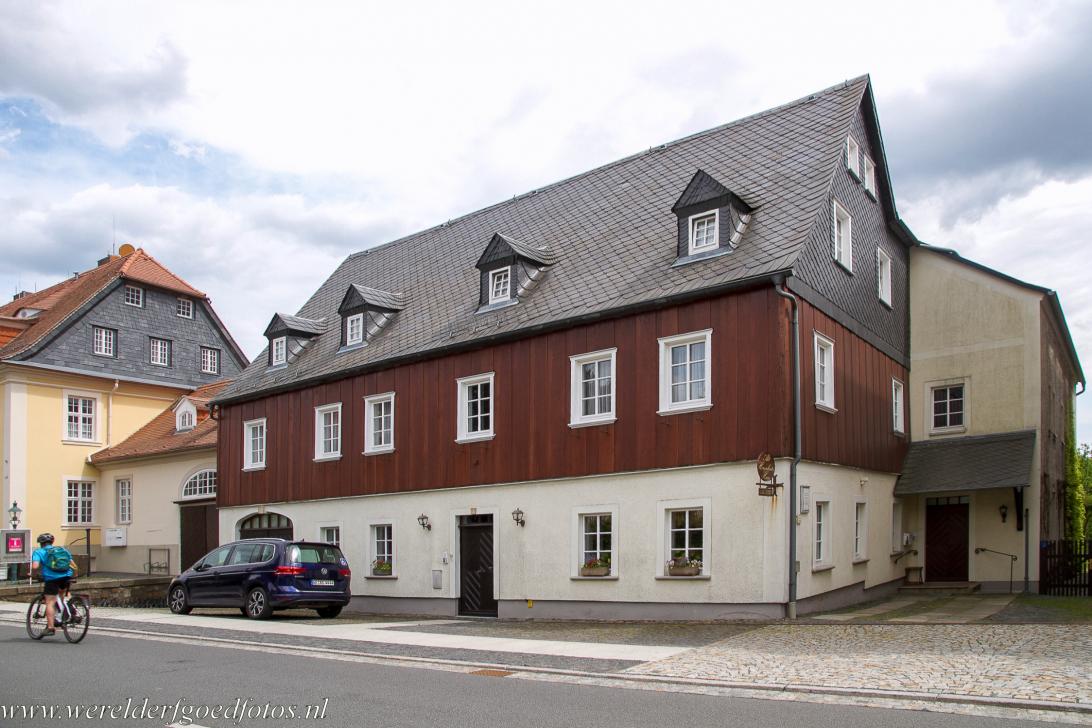
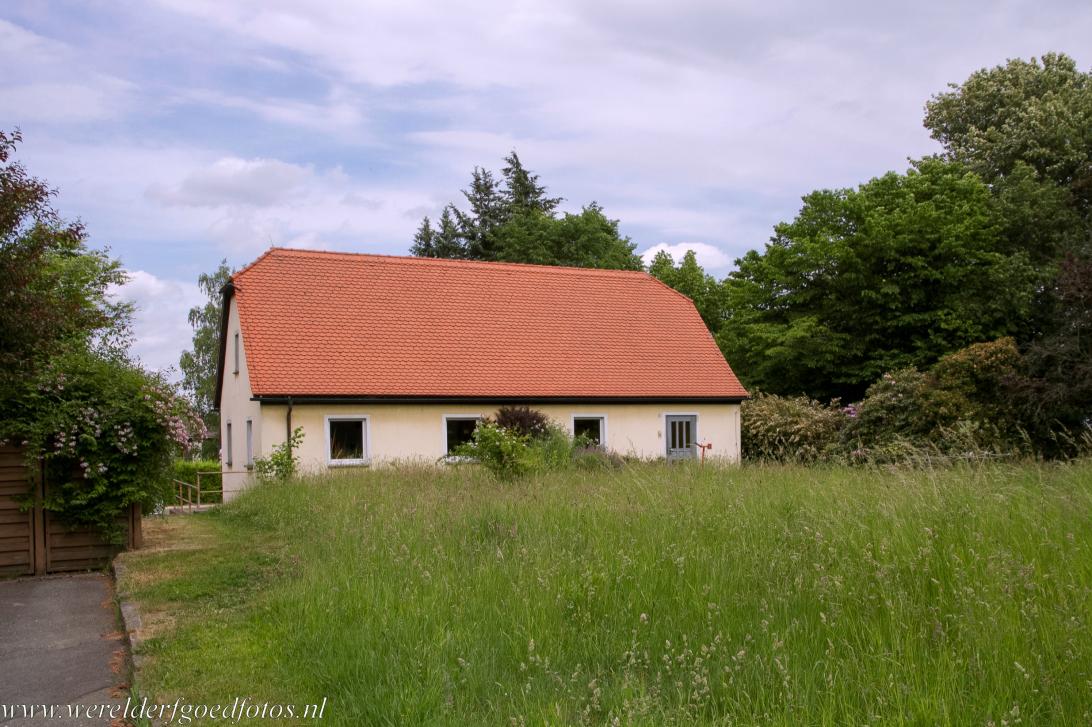
Herrnhut, a Moravian Church Settlement: This stately house with a mansard roof is known as the 'Kölbingsches Haus'. It was built for the Kölbing family, prominent members of the Moravian Church. Constructed in 1764, this iconic house features the distinctive Herrnhut Baroque style, characterised by subdued colours and an austere appearance. The space behind the huge dark wooden doors was originally used to stable horses and house carriages. Since 1962, the building has been home to the local history museum ('Heimatmuseum'), which features exhibitions on the origins of this community.
Herrnhut, one of the Moravian Church Settlements: This is the oldest building in Herrnhut, known as 'Alt Herrnhuter Haus'. Built in 1743, the house survived the fire started by the plundering Red Army in 1945, just one day after the end of the Second World War. Over the centuries, the building has served a variety of purposes. It once housed a Moravian mission bookshop, and after 1945, it became the surgery of Dr. Leporin, then known as Germany's oldest general practitioner. Even after its restoration in 1991–1992, the house still retains the unique atmosphere of the Moravian Church.

Herrnhut, one of the Moravian Church Settlements: This former timber workshop belonging to the Moravian Church features a so-called half-hipped roof. The Evangelical Brethren were highly regarded as skilled craftsmen. The remote wooded region of Saxony, with its vast, dense forests, provided an abundant supply of timber for their work. Between 1760 and 1790, the furniture-making and carpentry trades flourished here. Moravians across the region were celebrated for their high-quality furniture, toys, and art objects. Even today, this remote town remains known for its woodworking industry.

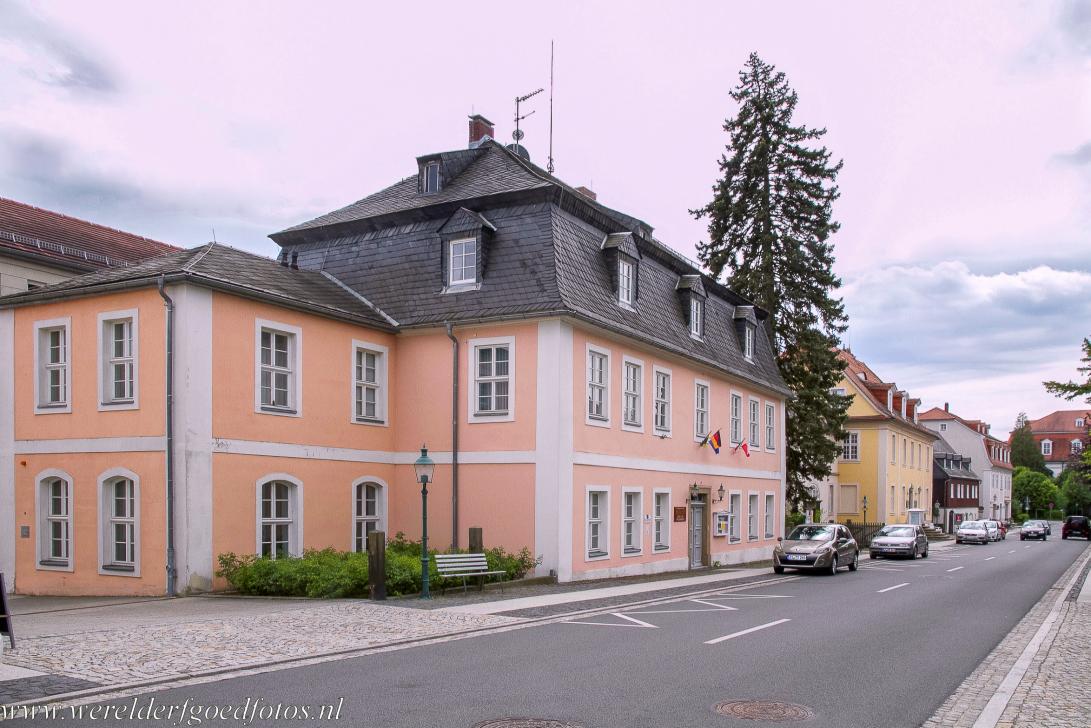
Herrnhut, one of the Moravian Church Settlements: The pink-coloured, Baroque main building of the Komenský guest and conference centre was built in the 18th century as a grand private residence. From 1945 onwards, it served for a long period as the Sisters' House for the Moravian Brethren. The historic building is named after Jan Amos Komenský (Comenius), a 17th-century Czech philosopher, theologian, and educator who believed that boys and girls, whether rich or poor, should have an equal right to education. Komenský was the last bishop of the Bohemian Brethren, the group from which the Moravian Brethren originated.

Herrnhut, one of the Moravian Church Settlements: The original Moravian church building was constructed from 1756 to 1757. At the end of the Second World War, on the night of 8 to 9 May 1945, a large part of Herrnhut's historic centre burned down. The church building, called the 'Kirchensaal', was also lost. The present hall was rebuilt between 1951 and 1953 and is an exact replica of the 1757 original. Moravian church buildings around the world share a similar appearance; they are simply furnished with white benches, the hall is devoid of ornamentation, and the atmosphere is one of great serenity.

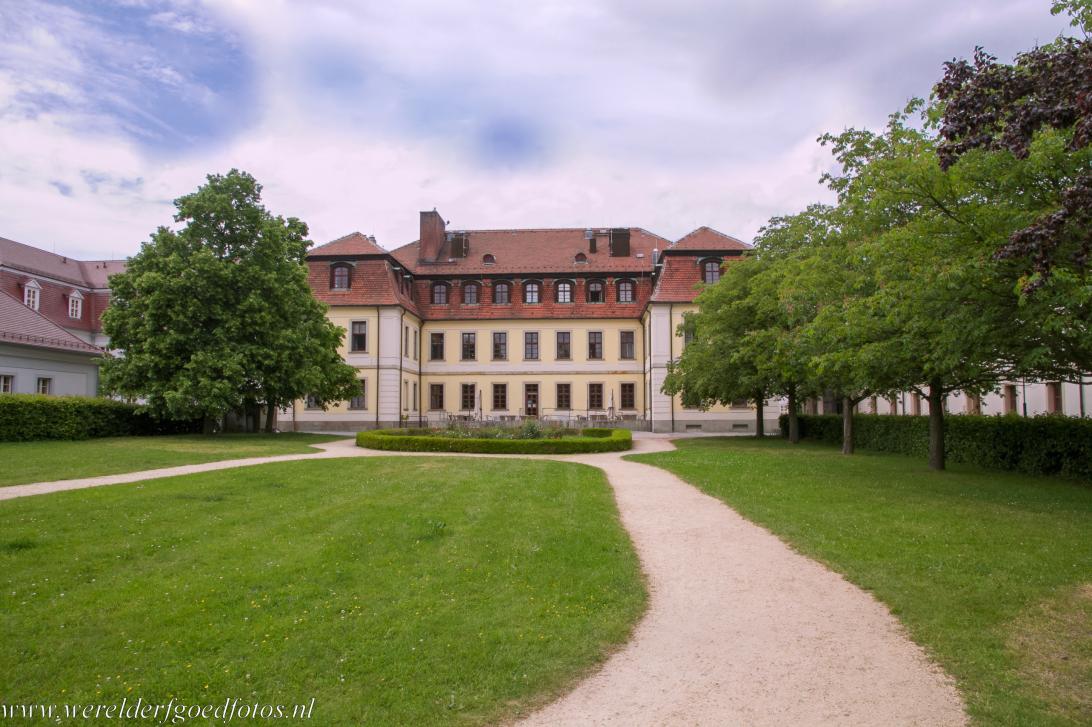
Herrnhut, one of the Moravian Church Settlements: Zinzendorf House was built between 1725 and 1727. This historic mansion stands on Zinzendorfplatz, the central square of Herrnhut. This photo shows the rear of the building and its garden, which directly adjoins the Baroque-style Herrschaftsgarten, a beautiful park perfect for strolling. This house was once owned by Count Nikolaus von Zinzendorf, the founder of the Moravian Church. Designed in the Baroque style, it features a distinctive mansard roof. Following the destruction during the Second World War, it was restored to its former glory.

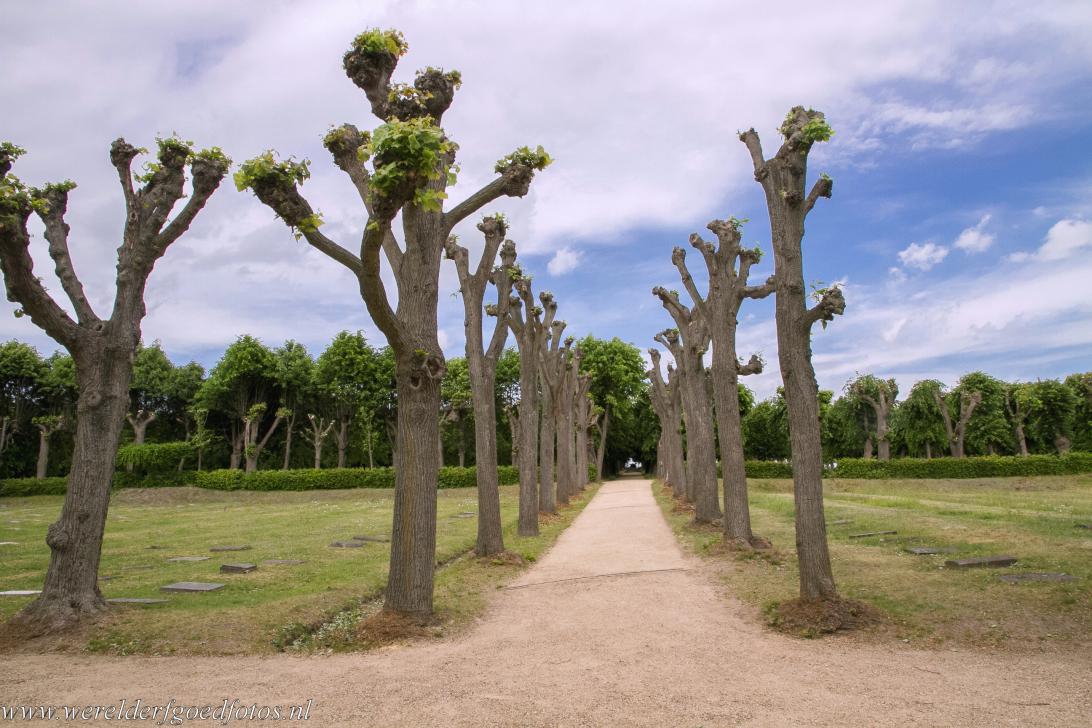
Herrnhut, a Moravian Church Settlement: Established in 1730, the 'Gottesacker' in Herrnhut is the original Moravian cemetery and served as the model for all other Moravian burial sites worldwide. Situated on the peaceful slopes of the Hutberg Hill, this sacred site offers a serene view over the town. The cemetery is famous for its simple, flat sandstone gravestones, which are all exactly the same. This clearly shows that all people are completely equal, both in life and in death. Members of the noble von Zinzendorf family are also buried here; they have been laid to rest on the central axis of the cemetery in raised stone graves.