Runic Stones of Jelling – The Birth Certificate of Denmark
Jelling Mounds, Runic Stones and Church: Jelling consists of two burial mounds, the largest mounds known from the Viking Age. In between these mounds stands a stone church and two runestones. The Jelling Church was built of travertine around 1100 directly over the remains of three earlier wooden churches. The eight-metre-high north mound contained a wooden grave chamber constructed around 958, which is widely believed to have been the original resting place of King Gorm the Old. When his son Harald Bluetooth converted to Christianity, Gorm's remains were moved and reburied beneath the floor of the first wooden church. The ten-metre-high south mound, built around 970, contained no burials at all.
The smaller and older of the two runestones was raised by King Gorm the Old. On this important runestone, for the first time on Danish ground, the name of Denmark is mentioned. Around 965, the larger runestone was erected by King Harald Bluetooth in memory of his parents, King Gorm the Old and Queen Thyra. This monumental stone also celebrates King Harald's Bluetooth's conquest of Denmark and Norway, as well as the conversion of the Danes to Christianity. There are different versions of the King's conversion to Christianity; medieval writers such as Widukind of Corvey and Adam of Bremen give conflicting accounts.
The Jelling Mounds are Royal Graves, which is why the Royal Standard is proudly raised here every Sunday during the summer. The Kongernes Jelling Museum, opposite the church, provides insight into the fascinating history of the Vikings. For travellers exploring Denmark's rich heritage, Jelling is located about 55 kilometres from the World Heritage Site in Christiansfeld. The Jelling Mounds, Runic Stones and Church became a UNESCO World Heritage Site in 1994.
www.werelderfgoedfotos.nl © Copyright World Heritage Photos
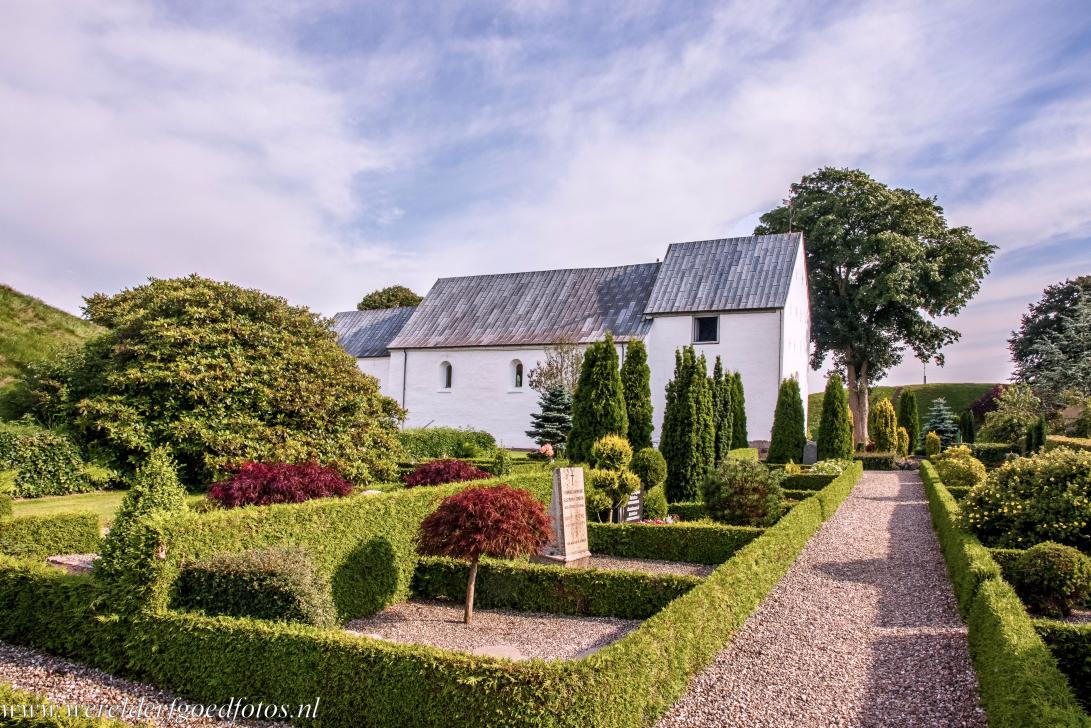
Jelling burial mounds, runestones, and church: Jelling is home to two burial mounds that are reputed to be the largest from the Viking Age. A small, white stone church stands between these monumental mounds. Next to it are the runestone of King Gorm the Old, which he erected in memory of his wife Thyra, the first queen of Denmark, and the runestone of their son King Harald Bluetooth. Together, these monuments form one of Denmark's most important historic sites; they were designated a UNESCO World Heritage Site in 1994.
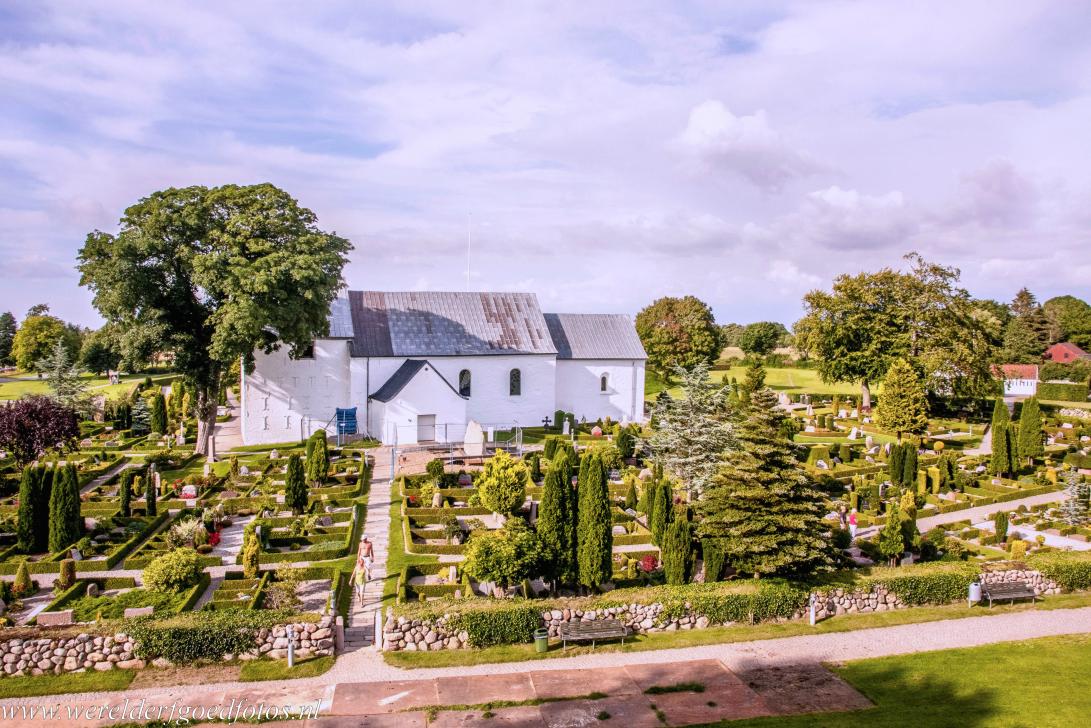
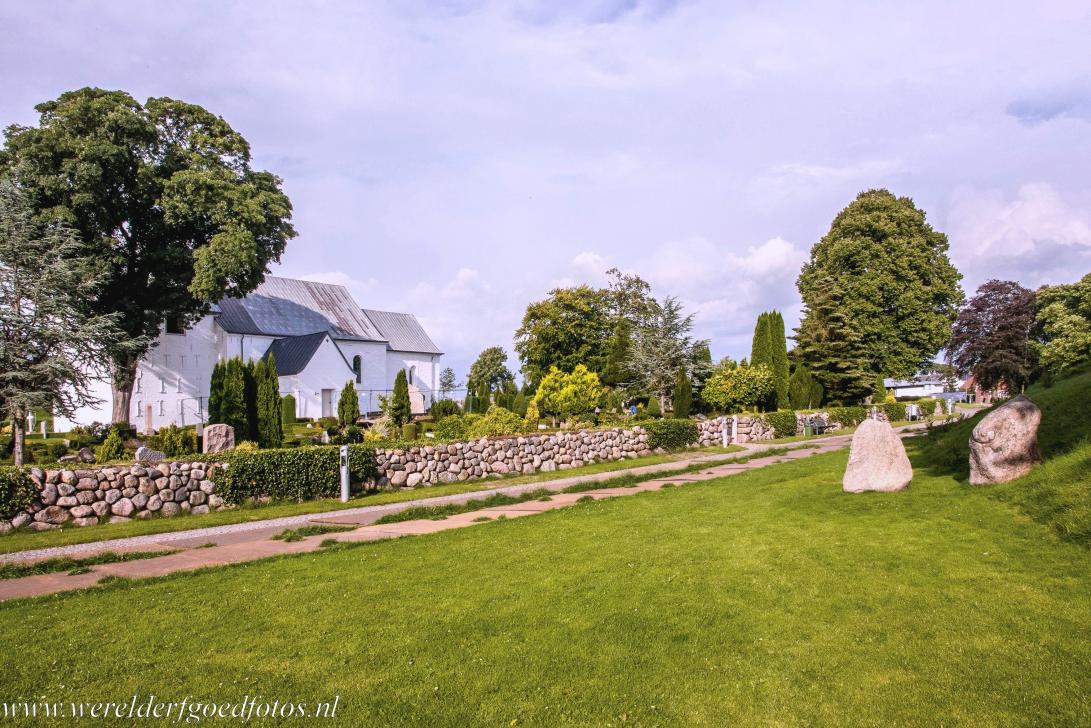
Jelling burial mounds, runestones, and church: Jelling is home to two burial mounds that are reputed to be the largest from the Viking Age. A small, white stone church stands between these monumental mounds. Next to it are the runestone of King Gorm the Old, which he erected in memory of his wife Thyra, the first queen of Denmark, and the runestone of their son King Harald Bluetooth. Together, these monuments form one of Denmark's most important historic sites; they were designated a UNESCO World Heritage Site in 1994.
Jelling Mounds, Runic Stones and Church: The remains of three wooden churches have been discovered underneath the present stone church in Jelling. These centuries-old churches were destroyed by fire. In 1978, the grave of a man was discovered underneath the floor of the oldest church. Numerous gold threads were found in the grave, which had been woven into a royal costume. Prolonged research revealed that it was the tomb of the legendary Viking King Gorm the Old of Denmark. He died in 958. Originally interred in one of the Jelling Mounds, he was reburied in the first wooden church.

Jelling Mounds, Runic Stones and Church: When King Harald Bluetooth, who lived from around 930 to 986, had accepted Christianity, he built the first wooden church in Jelling. King Harald raised the church as a mausoleum to his father Gorm the Old, who is widely considered the first king of Denmark. He had his father exhumed from the pagan North Mound in order to rebury him in this new Christian church. The present church was built of travertine in the Romanesque style around 1100.

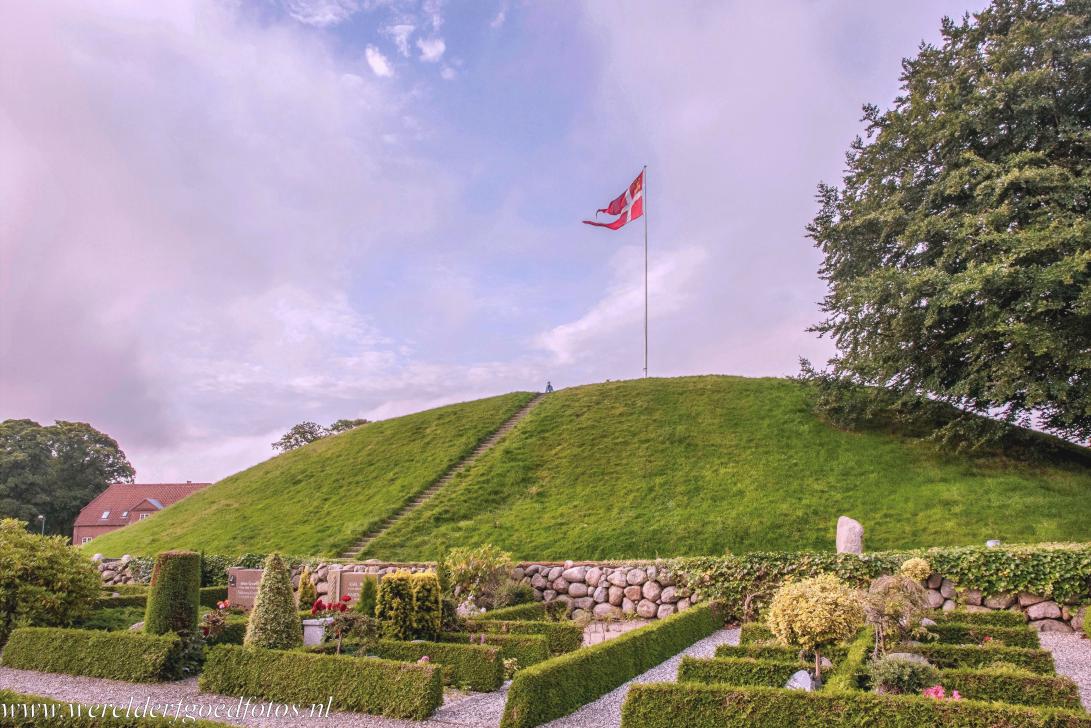
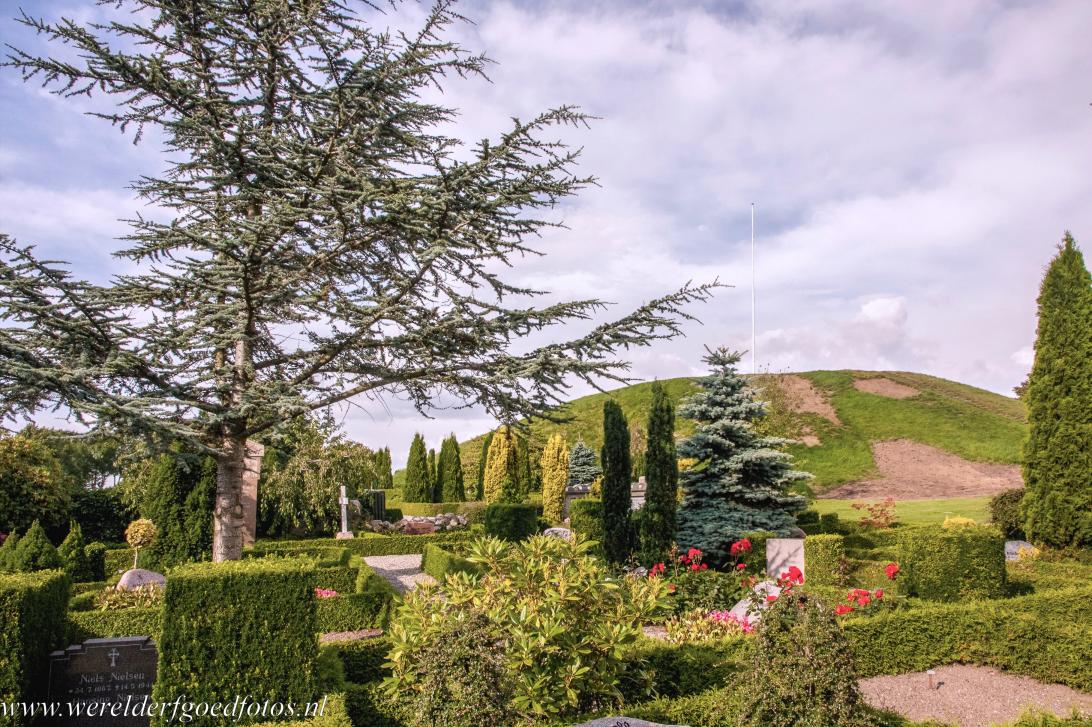
Jelling Mounds, Runic Stones and Church: The North Mound viewed from the surrounding Jelling Churchyard. The mound was built in the winter of 958–959. Although named after Queen Thyra, the burial chamber inside was constructed to inter her husband, King Gorm the Old. Their son, Harald Bluetooth, had the mound built from thousands of layers of turf. It rises about 8 metres high and has a diameter of 65 metres. Archaeological research revealed that a much older, smaller Bronze Age burial mound lies beneath it.

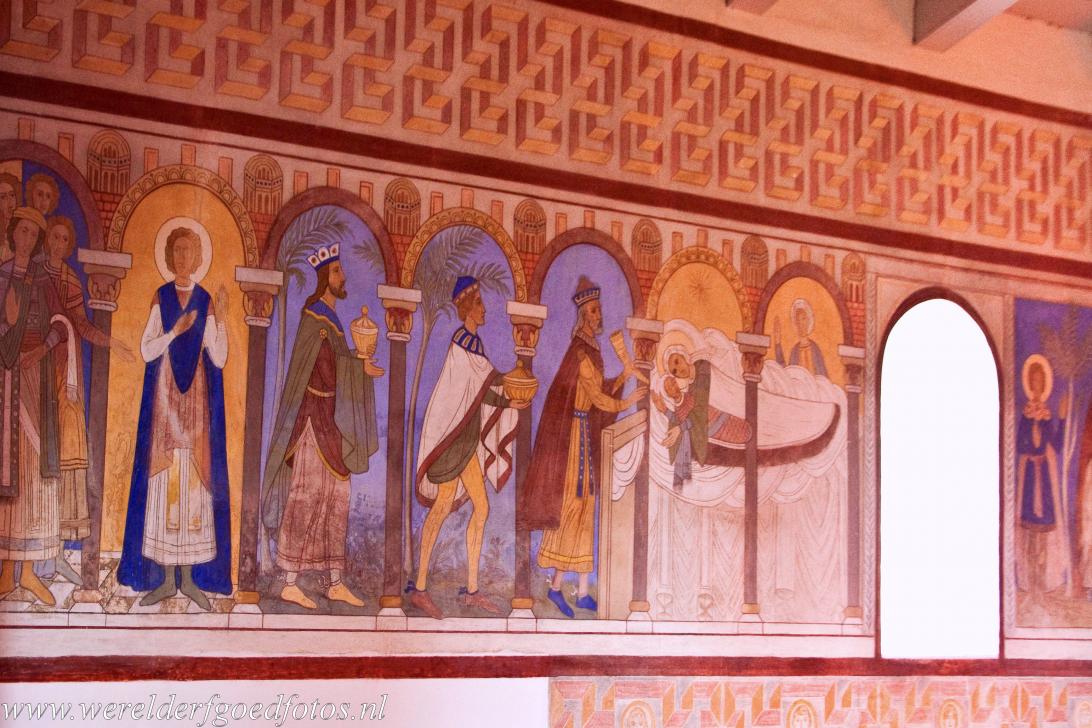
Jelling Mounds, Runic Stones and Church: The colourful frescoes in the chancel of Jelling Church, clearly inspired by Byzantine art. The frescoes depict the birth of Jesus Christ and the Adoration of the Three Magi. When the medieval originals were discovered in 1875, they were in such a poor state of preservation that they were removed and in the same year replaced by copies. The original frescoes were created in 1125; they are believed to be the first frescoes in Denmark. The church serves still in use as a parish church and visitors are free to enter.

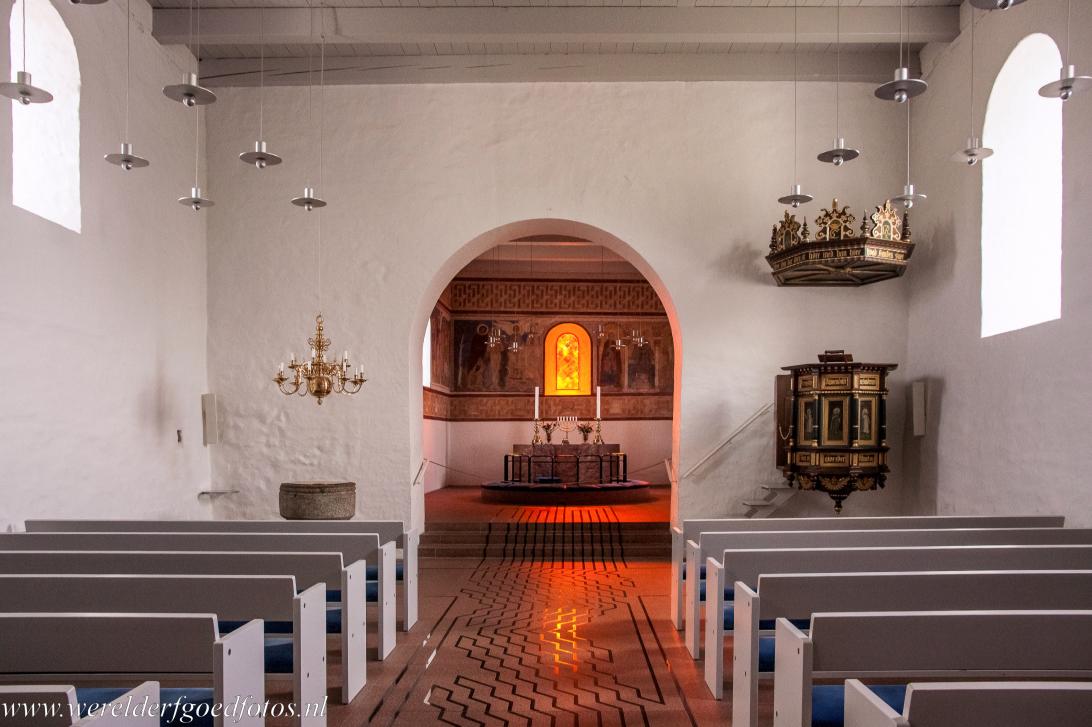
Jelling Mounds, Runic Stones and Church: The simply furnished interior of the Jelling Church; the frescoes are situated behind the altar in the chancel area. After years of extensive research by the National Museum of Denmark and the University of Copenhagen, the remains of King Gorm the Old were reburied in Jelling Church in 2000, an important event attended by members of the Danish royal family. King Gorm the Old's grave is marked by a silver line in the church floor. This Viking king reigned from his seat in Jelling from around 936 until his death in 958.

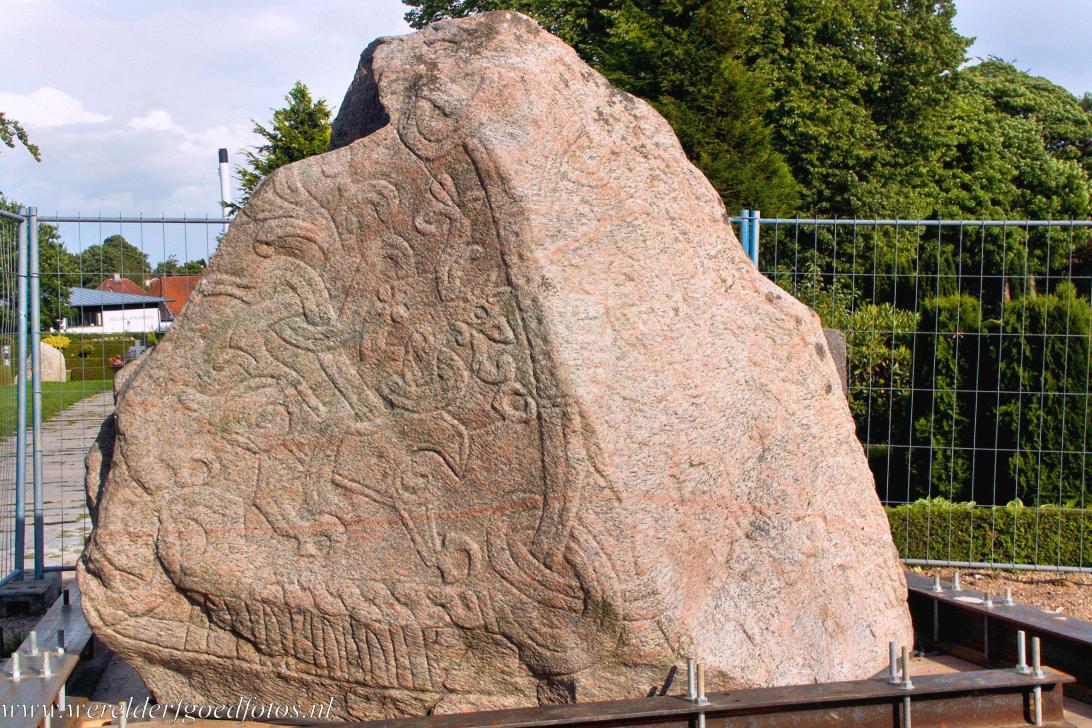
Jelling Mounds, Runic Stones and Church: The larger of the two runestones at Jelling before it was placed in its protective glass casing. Around 965, this historic stone was erected by the Danish King Harald Bluetooth in memory of his parents, King Gorm the Old and Queen Thyra, and also celebrated King Harald's conquest of Denmark and Norway, and the conversion of the Danes to Christianity. Therefore, King Harald Bluetooth's iconic runestone is widely is known as the 'baptism certificate of Denmark'.

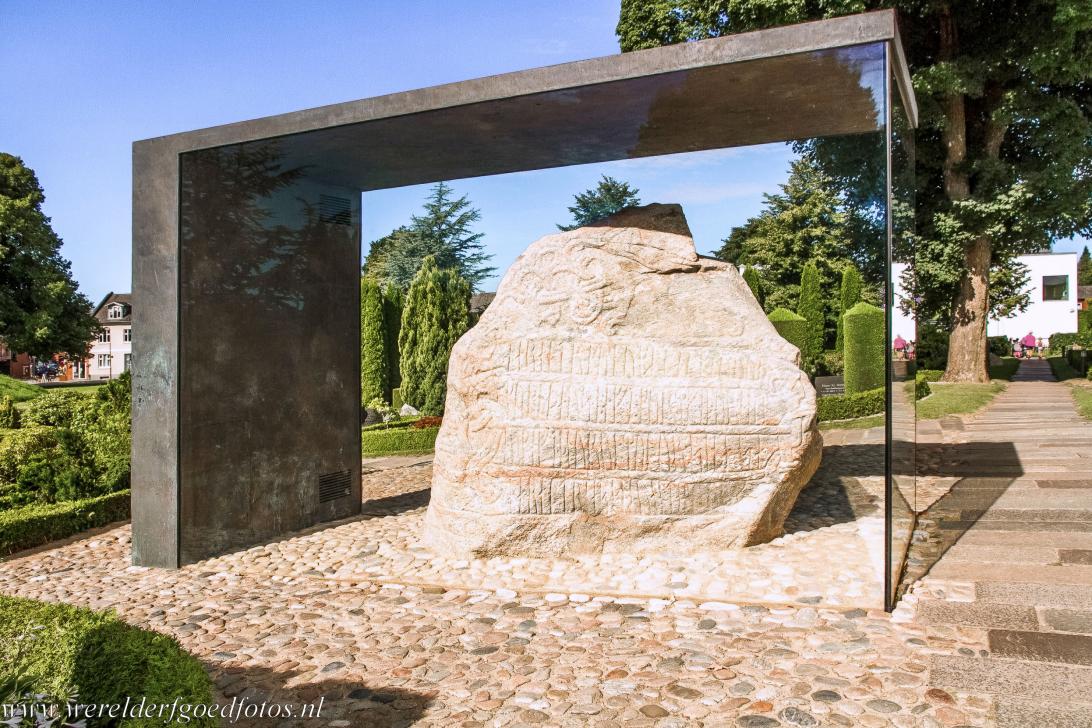
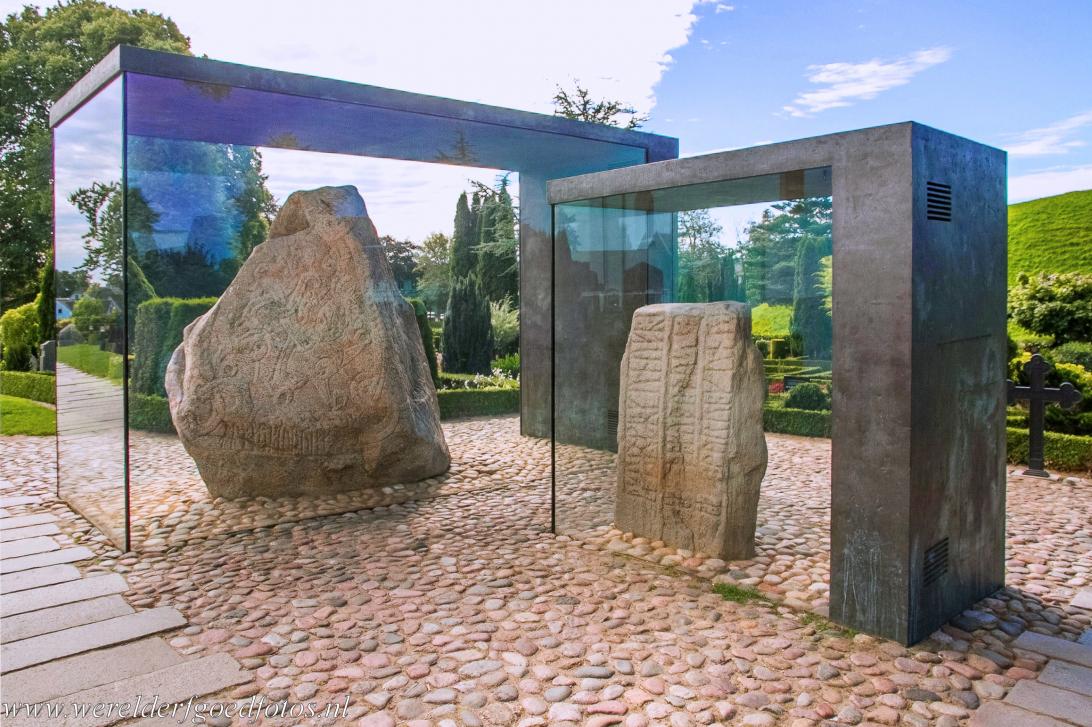
Jelling Mounds, Runic Stones and Church: King Harald Bluetooth's runestone is the larger of the two runestones at Jelling. This unique stone has a three-sided, pyramid-like shape. Each side recounts a significant part of Danish history. One of the sides features the oldest depiction of Christ in Scandinavia. The inscriptions on the Jelling stones are the most renowned in Denmark. Since 2012, the two runestones have been housed in a huge glass enclosure to prevent further weathering.

Jelling Mounds, Runic Stones and Church: The smaller and older runestone was raised by King Gorm the Old in memory of his wife Queen Thyra, called Denmark's Adornment. This stone weighs around 4 tonnes (4,000 kilograms), stands about 1.45 metres tall, and measures just 1 meter across at the base. On the stone, the name Denmark appears for the first time on Danish soil. The larger stone was erected by King Harald Bluetooth; it weighs an impressive 10 tonnes (10,000 kilograms) and stands about 2.5 meters tall. At the base, it measures nearly 3 metres across. These two runestones are among the most important monuments in Danish history.

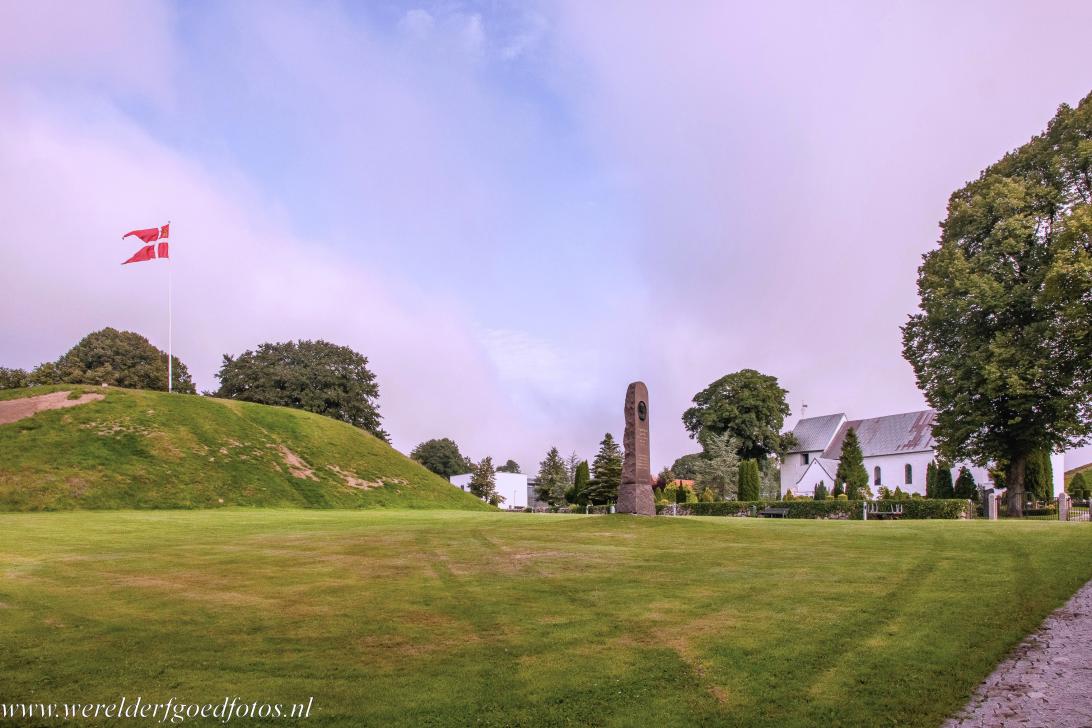
Jelling Mounds, Runic Stones and Church: The Royal Standard of Denmark is raised on the Jelling Mounds every summer Sunday. The 10-metre-high South Mound was constructed around 970. Archaeological excavations of the mound revealed stones that are likely the remains of a stone ship. The North Mound formed the center of this ship (Skibssætningen). This monumental formation, consisting of hundreds of stones arranged in the shape of a ship, measured no less than 354 metres in length and is the largest stone ship from the Viking world ever discovered.

Jelling Mounds, Runic Stones and Church: The Royal Standard of Denmark is raised on the Jelling Mounds every summer Sunday because the mounds are royal graves. Around 1000, Jelling was the residence of the Danish kings. The village of Jelling is situated in central Jutland in Denmark. The Jelling Mounds, the Runic Stones, and Jelling Church symbolise the transition of Denmark from Viking paganism to Christianity. These monuments were inscribed on the UNESCO World Heritage List in 1994.

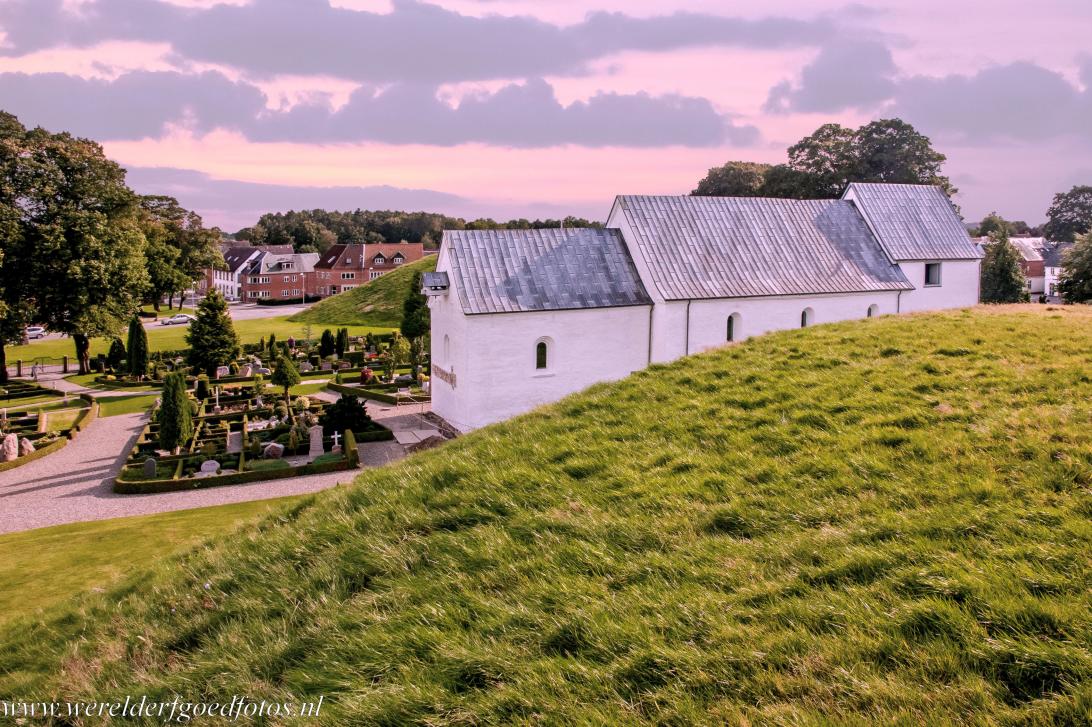
Jelling Mounds, Runic Stones and Church: The Jelling Church seen from the South Mound during sunset. The Kongernes Jelling Museum is situated opposite the Jelling Church; it provides insight into the Jelling monuments and their importance in Danish royal history. A family tree shows the direct line of descent from the legendary Viking King Gorm the Old to the present monarch of Denmark. A replica of the Jelling Cup (Jellingbægeret), found in the original grave of King Gorm the Old, is also on display.