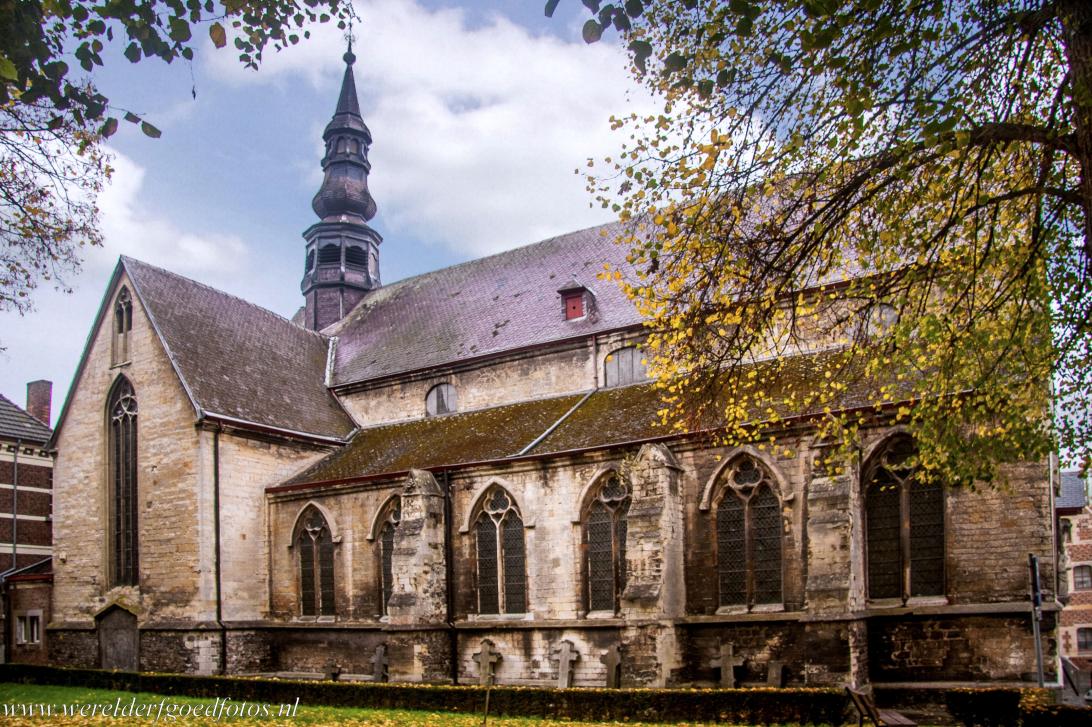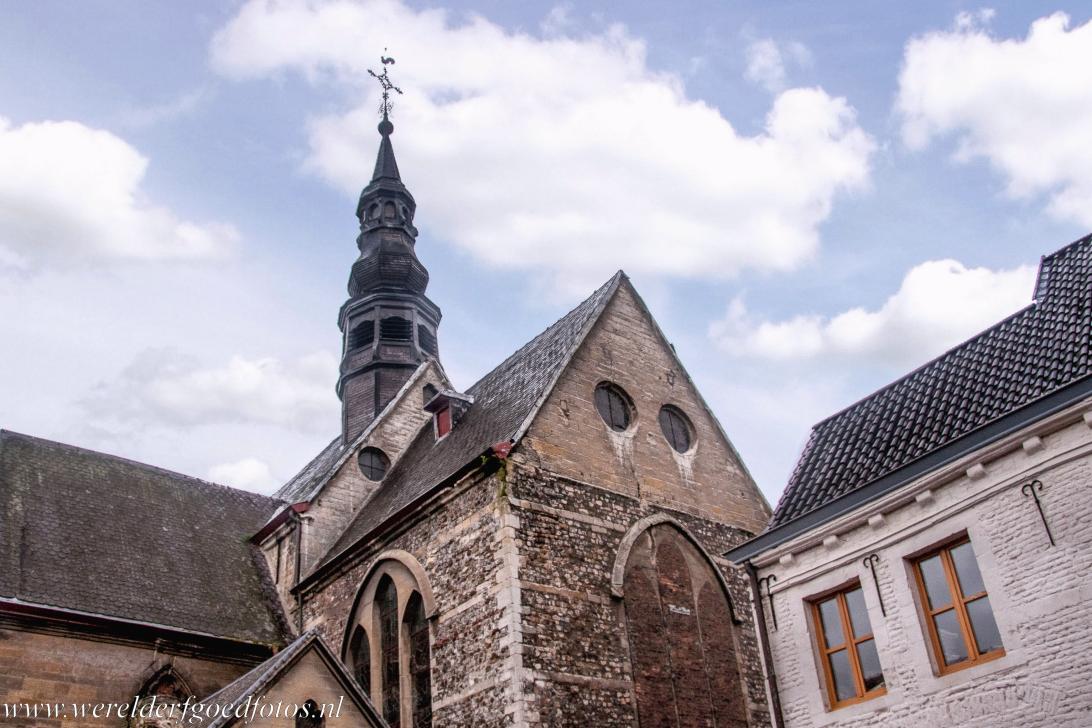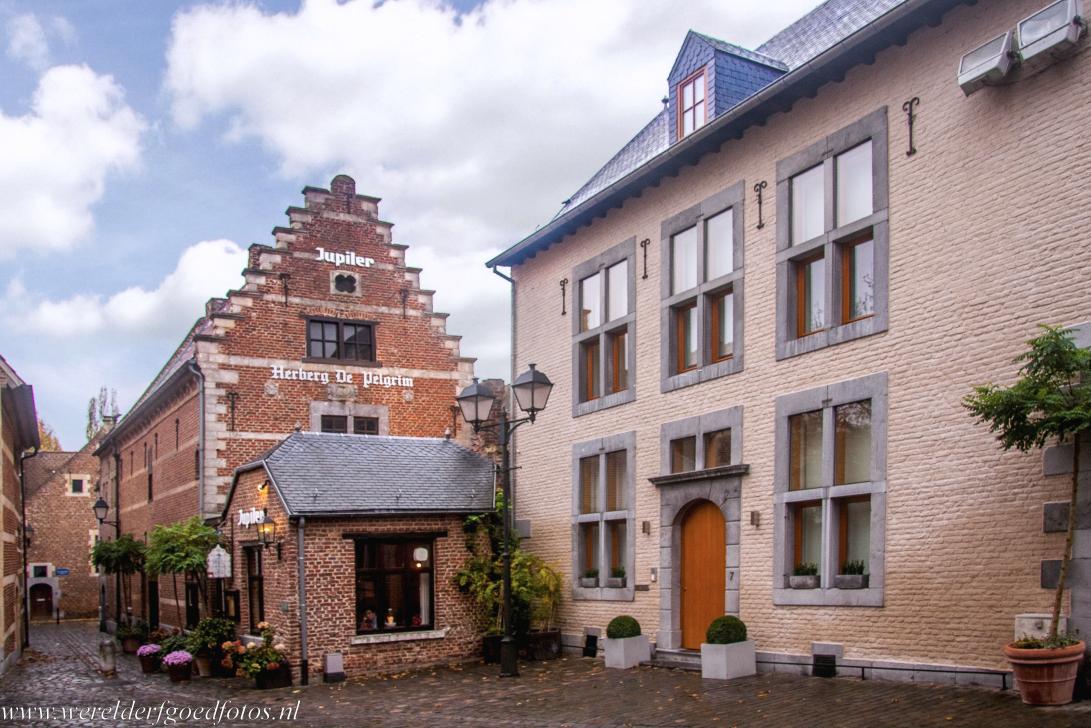
Flemish Béguinage in Tongeren, Belgium: Béguinages were founded in the 13th century in the Netherlands and Flanders. At that time, Flanders was a region of the Netherlands. A béguinage consists of a group of small houses built around a church or a chapel, enclosed by a wall with an entrance gate. Béguines lived in a béguinage. Béguines were women who dedicated their lives to God without retiring from the world. Just like nuns, they lived a religious life, but béguines did not take vows. The Flemish Béguinage in Tongeren was founded in 1257. It survived the Great Fire of 1677 because the earlier wooden houses had been replaced by houses of red brick. The Flemish Béguinage in Tongeren is located behind the Moeren Gate. The Church of St. Catherine was built in 1294; this Gothic church stands in the centre of the Flemish Béguinage in Tongeren. Thirteen Flemish Béguinages were declared a UNESCO World Heritage Site in 1998. The Flemish Béguinage in Tongeren is part of this World Heritage Site. Some other Flemish Béguinages are the Béguinage in Sint-Truiden and the Béguinage in Diest. The town of Tongeren consists of two UNESCO World Heritage Sites: the Belfries of Belgium and France and the Flemish Béguinages.
www.werelderfgoedfotos.nl © Copyright World Heritage Photos
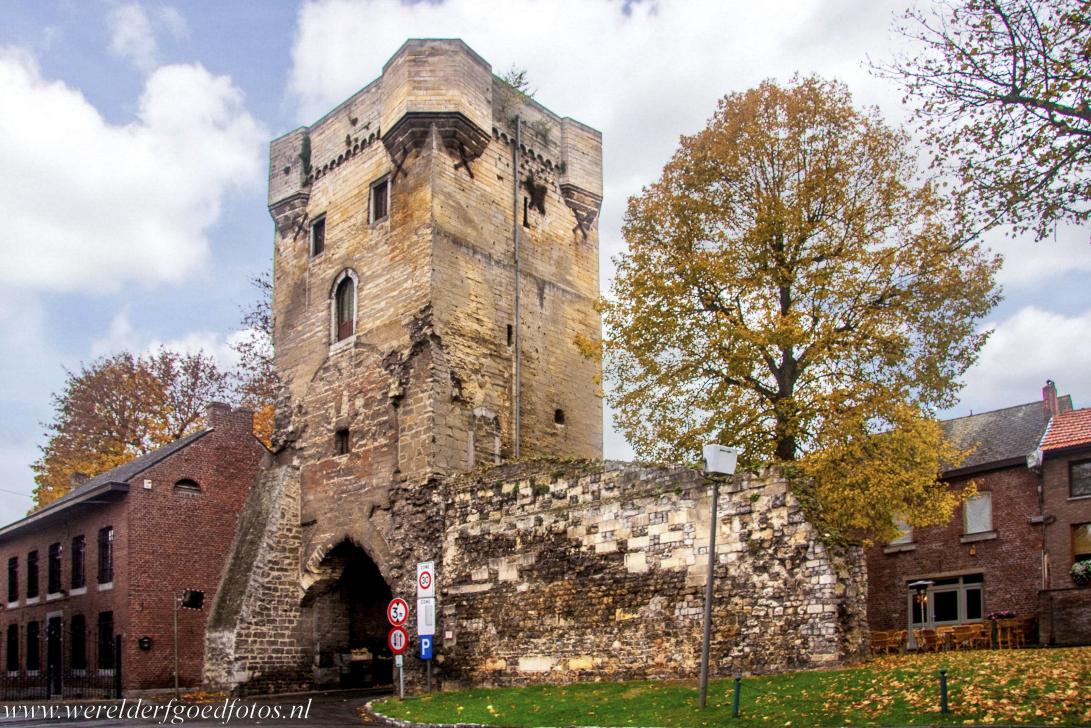
The Flemish Béguinage of St. Catherine in Tongeren is located behind the impressive Moeren Gate; the gate is also known as the Moeren Tower. This gate was built between 1257 and 1264 on the remains of a Roman wall dating back to the 2nd century. Tongeren is the oldest town in Belgium. In the Middle Ages, the town of Tongeren had six gates. The Moeren Gate is the only surviving gate. Thirteen Flemish Béguinages gained UNESCO World Heritage status in 1998. The Flemish Béguinage of Tongeren is part of this World Heritage Site.
The Flemish Béguinage of St. Catherine in Tongeren is located behind the impressive Moeren Gate; the gate is also known as the Moeren Tower. This gate was built between 1257 and 1264 on the remains of a Roman wall dating back to the 2nd century. Tongeren is the oldest town in Belgium. In the Middle Ages, the town of Tongeren had six gates. The Moeren Gate is the only surviving gate. Thirteen Flemish Béguinages gained UNESCO World Heritage status in 1998. The Flemish Béguinage of Tongeren is part of this World Heritage Site.
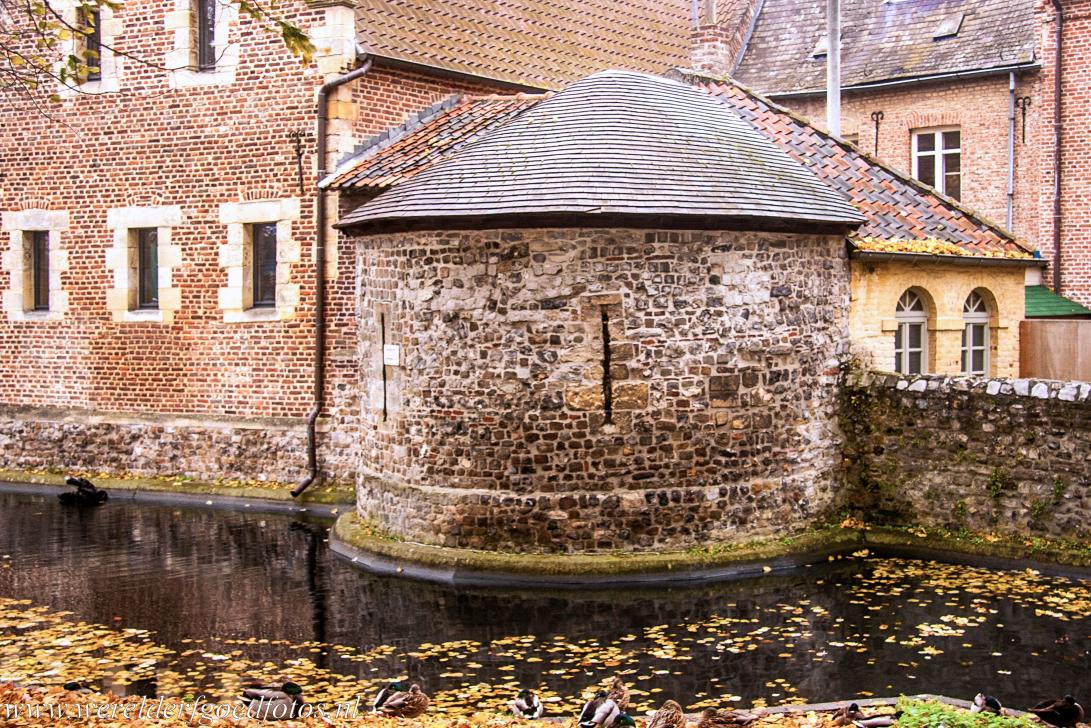
The Clothmaker's Tower (Lakenmakerstoren) on the wall of the Flemish Béguinage in Tongeren. This béguinage is one of the oldest of the béguinages in Flanders. Béguines were women who dedicated their lives to God without retiring from the world. They lived in a béguinage. Much like nuns, béguines lived a religious life, but did not take vows. The béguines, the inhabitants of the béguinages, were protected by the Church and the local bishop.

Flemish Béguinage in Tongeren: The town wall, the River Jeker and the Clothmaker's Tower. The 13th-century tower is part of the medieval defensive town wall along the Jeker. Every medieval tower was protected by one of the town guilds, which explains why it is called the Clothmaker's Tower. The Béguinage in Tongeren is situated behind the medieval defensive town wall and the Clothmaker's Tower. This béguinage is also known as the Béguinage of St. Catherine.

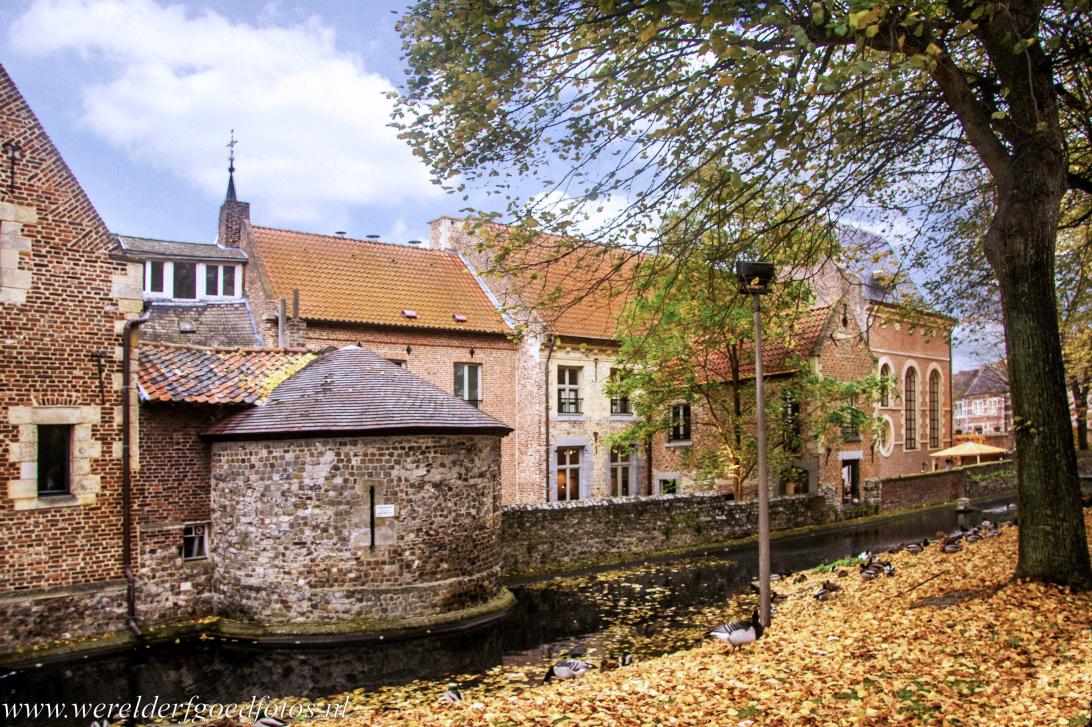
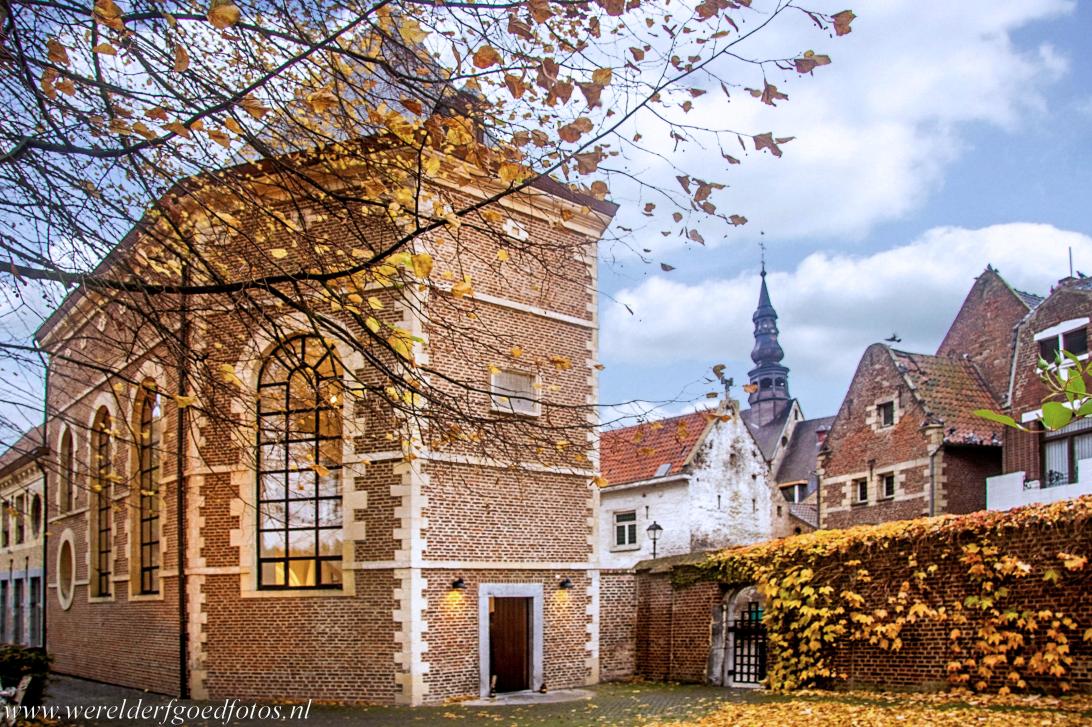
Flemish Béguinages: The St. Ursula Chapel in the Flemish Béguinage of Tongeren in Belgium. In the 13th century, an infirmary was built where elderly and ill béguines were taken care of. Next to the infirmary a chapel was built, dedicated to St. Ursula. The current infirmary was completed in 1659. The chapel was replaced in the 18th century. Nowadays, the chapel is used as a space for cultural events, such as exhibitions and concerts.

Flemish Béguinages: The St. Ursula Chapel in the Flemish Béguinage is located behind the town wall of Tongeren. The chapel is situated on the banks of the River Jeker. The chapel was built on the site of an earlier chapel. The 18th-century St. Ursula Chapel has a characteristic Dutch gable. When the Flemish Béguinages were built, the provinces of Flanders were a region of the Low Countries (the Netherlands). The Flemish Béguinage of Tongeren is World Heritage Site.

Flemish Béguinage of Tongeren: The Church of St. Catherine was completed in 1294; the church is also known as the Béguinage Church or the Friars' Church. This is one of the oldest churches in the town of Tongeren. The stone church stands in the centre of the Flemish Béguinage, which was founded in 1257. The Church of St. Catherine, the stone Moeren Gate and the town walls survived the Great Fire of 1677.

Flemish Béguinages: The Church of St. Catherine is situated in the centre of the Béguinage in Tongeren. The interior of the church is decorated with paintings and woodcarvings. The statue 'The Suffering Christ' was donated by one of the béguines. The historic 13th-century church is the spiritual heart of the Flemish Béguinage of Tongeren. The church is dedicated to the patron saint of the béguinage, Saint Catherine.

Flemish Béguinages: Some of the oldest stone houses of the Flemish Béguinage in Tongeren line the square 'Onder de Linde'. One of them houses the Museum Beghina. The museum is situated in an authentic béguine house dating from 1660. Thirteen Flemish Béguinages gained status as a UNESCO World Heritage Site in 1998. The Flemish Béguinage of Tongeren is part of this World Heritage Site.
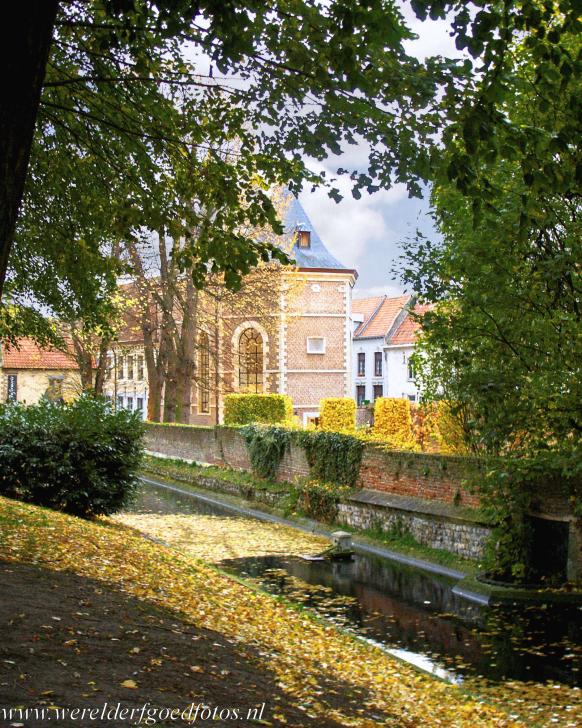
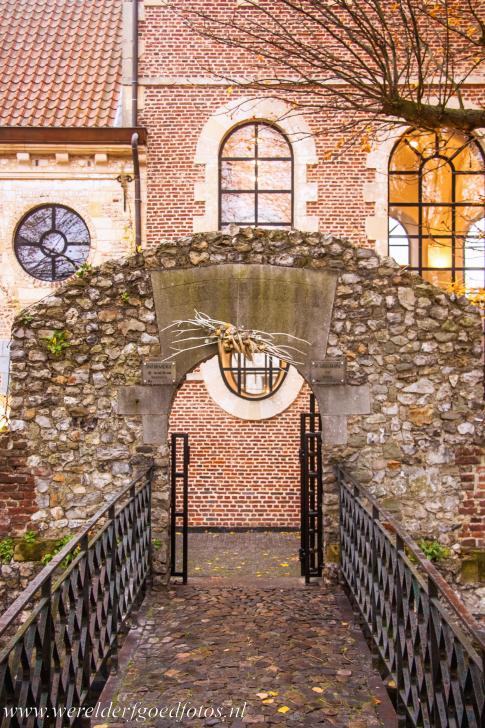
Flemish Béguinage of Tongeren: A small bridge over the River Jeker; the St. Ursula Chapel lies behind the gate. In the 13th century, many béguinages were founded in the Netherlands and Flanders, then part of the Low Countries. A béguinage consists of a group of small houses built around a church or chapel, enclosed by a wall with an entrance gate. Tongeren contains two UNESCO World Heritage Sites: the Flemish Béguinages and the Belfries of Belgium and France.

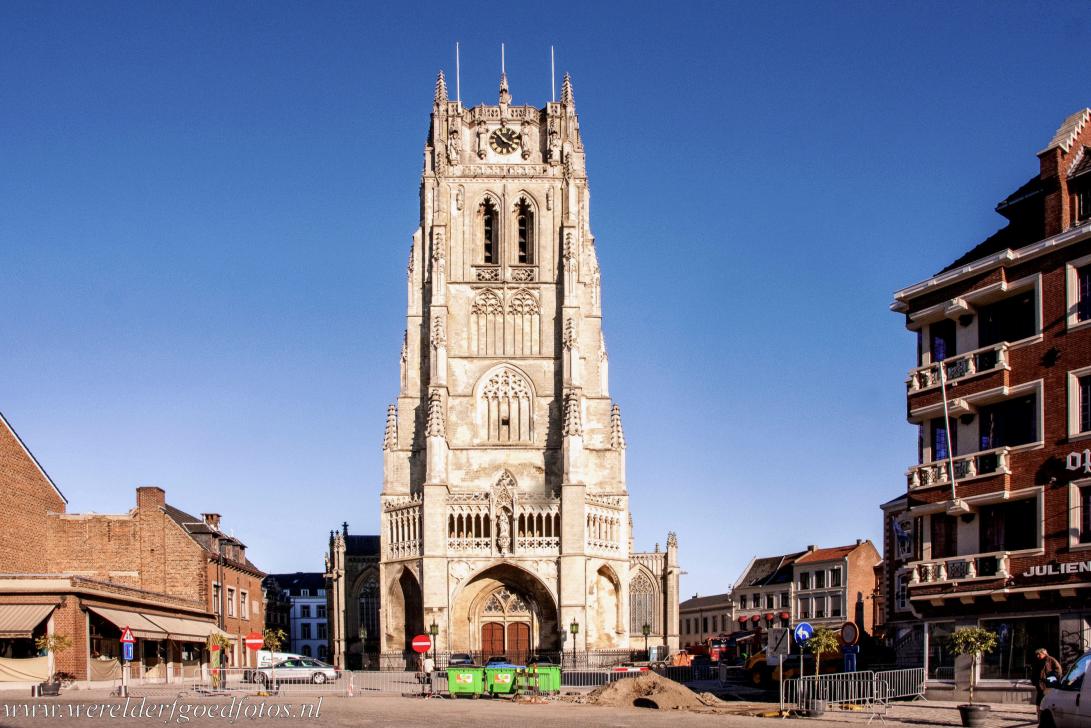
The Belfry of the Basilica of Our Lady in Tongeren; the original Romanesque belfry was replaced by the present 64-metre-tall Gothic belfry between 1442 and 1544. The interior of the basilica is home to several religious treasures, among them the statue of 'Our Lady of Tongeren, Cause of Our Joy'. This walnut statue was sculpted around 1479. The basilica is part of the UNESCO World Heritage Site: Belfries of Belgium and France.