The Belfries of Belgium and France were built between the 11th and 19th centuries. Belfries were used as fortified watchtowers or alarm bell towers. Most of the belfries are adjoined to a town hall or market hall; only a few of them are free standing-towers. Towers of religious buildings were also used as belfries. Belfries were typical of the medieval cities of Flanders, the northern part of France, and southern part of the Netherlands.
Belfries were also symbols of freedom and wealth of a city. Thirty-two belfries in Belgium gained status as a UNESCO World Heritage Site in 1999. The UNESCO World Heritage Site was extended in 2005 to include twenty-three belfries in France and another one in Belgium.
The oldest belfry in Belgium stands in Tournai, not far from the city's Notre-Dame Cathedral. A number of Flemish towns have both a belfry and a béguinage, including the UNESCO World Heritage Sites in Tongeren and Sint-Truiden.
www.werelderfgoedfotos.nl © Copyright World Heritage Photos
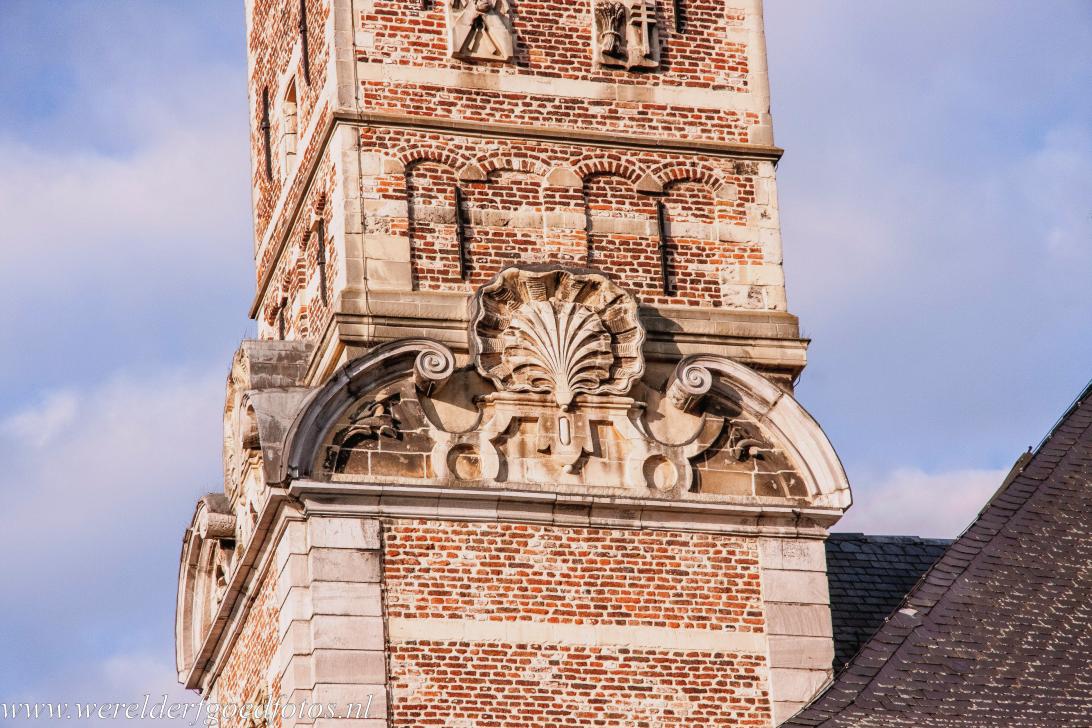
Belfries of Belgium and France: A detail of the impressive Belfry of Sint-Truiden. Belfries were used as watchtowers or an alarm bell towers. The UNESCO World Heritage Belfries of Belgium and France consists of a large group of historic buildings situated in Belgium and the north of France. Built between the 11th and 19th centuries, the belfries represent different architectural styles such as Romanesque, Gothic, Renaissance, and Baroque. Together, the belfries form a unique heritage site.

Belfries of Belgium and France: A detail of the impressive Belfry of Sint-Truiden. Belfries were used as watchtowers or an alarm bell towers. The UNESCO World Heritage Belfries of Belgium and France consists of a large group of historic buildings situated in Belgium and the north of France. Built between the 11th and 19th centuries, the belfries represent different architectural styles such as Romanesque, Gothic, Renaissance, and Baroque. Together, the belfries form a unique heritage site.

Belfries of Belgium and France: The Belfry of the town of Sint-Truiden in Belgium. The tower of the Sint-Truiden Town Hall functioned as the town's belfry. The 18th-century Town Hall was built around the medieval belfry. The lower part of this belfry was built in the 13th century; the upper part of the tower dates from 1608. This iconic tower is the symbol of the town. Since 1999, the Sint-Truiden Town Hall with its slender belfry has been part of the UNESCO World Heritage Site: Belfries of Belgium and France.

Belfries of Belgium and France: The Belfry of Sint-Truiden in Belgium. The slender tower of the town hall functioned as the town's belfry; it is finely decorated with the town's coat of arms and sculpted scallop shells. The belfry houses a historic 50-bell carillon, which was restored in 2012. The belfry is located on the market square, one of the largest market squares in Belgium. To the right stands the 12th-century Gothic Church of Our Dear Lady; in Dutch (andFlemish): Onze-Lieve-Vrouwekerk.

Belfries of Belgium and France: The Belfry of the town of Tienen. The tower of the St. Germanus Church in Tienen functioned as a belfry. Through the centuries, belfries served not only as a bell tower to announce the time and various warnings, but also as a fortified watchtower. Since the 13th century, belfries have been a substantial feature of European architecture. The 12th-St. Germanus Church with its belfry has been part of the UNESCO World Heritage Site: Belfries of Belgium and France.

Belfries of Belgium and France: The tower of the St. Germanus Church serves as the belfry of the city of Tienen; the tower houses a historic carillon. In the Apostelenhof (Apostles' Court) next to the church stands the cracked bass bell of a former carillon, a Witlockx bell dating from 1716. In 1723, the city government of Tienen bought a new carillon of 37 bells from the prominent bell founder Willem Witlockx. This was later expanded to 54 bells, making it the third-largest carillon in Belgium. The heaviest bell is the bass bell; it weighs 1,500 kilograms, the lightest bell weighs eight kilograms. The total weight of all the bells is seven tons.

Belfries of Belgium and France: The Belfry of the St. Leonard's Church in the town of Zoutleeuw. The construction of the church started in 1231 and continued into the 16th century; the oldest parts are Romanesque. The church has three different towers; the belfry and the west tower are connected by an aerial walkway. The central tower contains a carillon with 24 bells. The church survived the iconoclasm during the Protestant Reformation and the French Revolution intact. Belfries are mainly found in Belgium and in the north of France.

Belfries of Belgium and France: The central tower of the St. Leonard's Church in the picturesque town of Zoutleeuw contains a carillon. Seven bells of this carillon were cast in 1531; they are the oldest carillon bells in the world. One of the other towers of the church functioned as the Belfry of Zoutleeuw. These belfries were typical of the medieval cities of Flanders, the southern part of the Netherlands and the northern part of France; the towers were the symbols of freedom and wealth.

Belfries of Belgium and France: Several crows flying around the slender central tower of the St. Leonard's Church in Zoutleeuw. The two towers flanking the west façade are connected to each other by an aerial walkway over the nave. The construction of the St. Leonard's Church started in 1231 and continued into the 16th century. The St. Leonard's Church with its three different towers is part of the UNESCO World Heritage Site: Belfries of Belgium and France.

Belfries of Belgium and France: The three towers of the St. Leonard's Church at Zoutleeuw. To the right side stands the impressive Belfry of Zoutleeuw. The construction of the church started in 1231; the oldest parts of the church are Romanesque. The church is often called the Reliquary of Brabant because it houses numerous religious works of art, such as the eighteen-metre-high nine-level sacrament tower, which was created in 1552, and a six-metre-high brass candelabra dating from 1483.

Belfries of Belgium and France: The St. Barbara Tower of the St. Leonard's Church is the Belfry of the Belgian town of Zoutleeuw. The robust square belfry is situated on the west façade of the church. The UNESCO World Heritage Site Belfries of Belgium and France is a group of 56 historic buildings. UNESCO inscribed 32 belfries of Flanders and Wallonia on the World Heritage List in 1999. In 2005, the belfry at the town of Gembloux in Belgium and 23 belfries in northern France were also inscribed on the UNESCO World Heritage List.

Belfries of Belgium and France: The belfry of the Basilica of Our Lady in the city of Tongeren, the 64 metres tall Gothic belfry was built from 1442 to 1544. It took over 300 years to complete the basilica, the 12th century cloister is one of the few remaining Romanesque cloisters in Belgium. The basilica houses several religious treasures, the most renowned is the walnut statue of Our Lady of Tongeren Cause of Our Joy, which dates from around 1479.

Belfries of Belgium and France: The Belfry of Tournai (in Flemish: Doornik) is the oldest belfry of Belgium. The medieval belfry is a freestanding bell tower. The 72-metre-high tower was built in the 12th century. The belfry is situated on the Grand Place (main square) of Tournai in Belgium. The imposing belfries were typical of the medieval cities of Flanders and are closely associated with the history of Flanders, Wallonia, the northern part of France and the southern part of the Netherlands.
