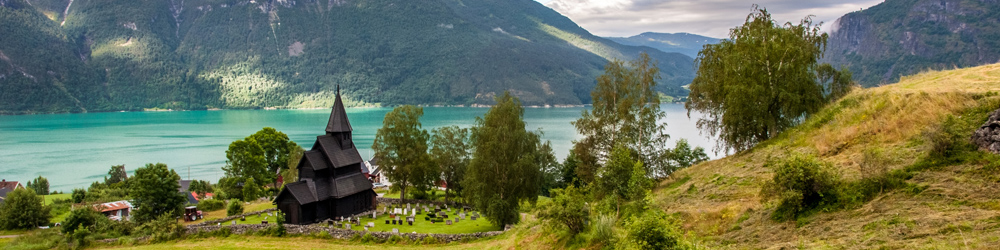
The Four Lifts on the Canal du Centre and their Environs, La Louvière and Le Roeulx (Hainaut): On a short stretch of the Canal du Centre, the water level rises by 66.2 metres. To overcome this difference, four hydraulic boat lifts on the Canal du Centre were built between 1888 and 1917. Of the eight hydraulic boat lifts built in this period, only four of them remain. These four hydraulic lifts are the only ones in the world that still exist in working order.
Boat Lift No. 1 at Houdeng-Goegnies is the oldest of the four lifts and was built in 1888. The Canal du Centre played an important role in the transportation coal from the nearby mines. Since 2002, the operation of the lifts has been limited to recreational use. One of the engine rooms of these lifts is occasionally open to visitors, and it is also possible to take a boat trip along the canal. The four boat lifts on the Canal du Centre are located about 50 kilometres from Brussels and 60 kilometres from Tournai in Belgium.
The boat lifts were designed by the English civil engineer Edwin Clark. His major achievement was the Anderton Boat Lift near the town of Northwich in Cheshire, England. Clark designed boat lifts and bridges across Europe; he also designed the first bridge – a swing bridge – over the River IJssel at the village of Westervoort in the Netherlands, which has since been replaced by a modern bridge. The Four Lifts on the Canal du Centre and their Environs, La Louvière and Le Roeulx (Hainaut) gained status as a UNESCO World Heritage Site in 1998.
www.werelderfgoedfotos.nl © Copyright World Heritage Photos

The Four Lifts on the Canal du Centre: Boat lift No. 3 and the red-brick engine house are set close to the small village of Strépy-Bracquegnies. The boat lifts on the Canal du Centre are the only hydraulic boat lifts in the world which still exist in working condition. These imposing four boat lifts are major industrial monuments. The Four Boat Lifts on the Canal du Centre and their Environs, La Louvière and Le Roeulx (Hainaut) became a UNESCO World Heritage Site in 1998.

The Four Lifts on the Canal du Centre: Boat lift No. 3 and the red-brick engine house are set close to the small village of Strépy-Bracquegnies. The boat lifts on the Canal du Centre are the only hydraulic boat lifts in the world which still exist in working condition. These imposing four boat lifts are major industrial monuments. The Four Boat Lifts on the Canal du Centre and their Environs, La Louvière and Le Roeulx (Hainaut) became a UNESCO World Heritage Site in 1998.
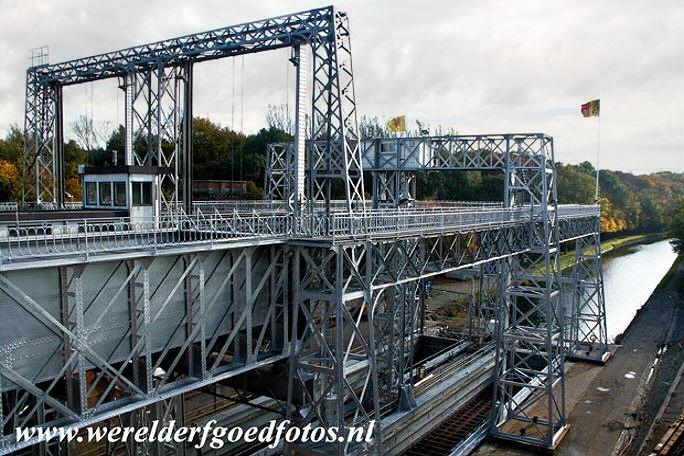
The Four Lifts on the Canal du Centre: Lift No. 1 at Houdeng-Goegnies. On a short stretch of the Canal du Centre, the water level rises 66.2 metres. To overcome this difference, four hydraulic boat lifts were built between 1888 and 1917. These four boat lifts are the only ones in the world that still exist in their original working condition. From the eight hydraulic boat lifts built in this period, only these four boat lifts on the Canal du Centre remain.

The Four Lifts on the Canal du Centre and their Environs, La Louvière and Le Roeulx (Hainaut): Boat lift No. 1 was built in 1888. The lift at Houdeng-Goegnies is the oldest of the four lifts on the Canal du Centre. Construction of the boat lift was delayed during the First World War; the last lift built was put into service 29 years later than the first. These boat lifts are widely considered important industrial monuments; they represent the development of hydraulic engineering.

The Four Lifts on the Canal du Centre: Lift 1 at Houdeng-Goegnies. The boat lifts were designed by the English civil engineer Edwin Clark, a specialist in hydraulics, who also designed boat lifts and bridges in several other countries in Europe. His major achievement was the Anderton Boat Lift near Northwich in Cheshire, England. He also designed the first bridge over the river IJssel at the village of Westervoort in the Netherlands; now replaced by a modern bridge.

The Four Lifts on the Canal du Centre and their Environs, La Louvière and Le Roeulx (Hainaut): Boat lift No. 1 at the village of Houdeng-Goegnies is the oldest of the four boat lifts on the Canal du Centre. The Canal du Centre, together with the Charleroi-Brussels Canal and Bergen-Condé Canal, connects the Meuse and the Scheldt rivers, the main waterways in Belgium. The Canal du Centre has a total length of 20.9 kilometres.

The Four Lifts on the Canal du Centre: The hydraulic boat lift No. 2 at Houdeng-Aimeries. Since 2002, operation of the boat lifts has been limited to recreational use. The four boat lifts on the Canal du Centre are located about 50 kilometres south of Brussels in Belgium. Today, the four boat lifts on the Canal du Centre are a major tourist attraction. It is possible to embark at the village of Houdeng-Goegnies and enjoy a pleasure boat trip on the Canal du Centre.

The Four Lifts on the Canal du Centre and their Environs, La Louvière and Le Roeulx (Hainaut): The engine house at the village of Strépy-Bracquegnies. The Canal du Centre was connected to the industrial centres of the region, such as the major mining sites of Wallonia in Belgium. The Canal du Centre connected the great waterways in Belgium and was used to transport the raw materials to the Port of Antwerp, a vital sea harbour for maritime trade.

The Four Lifts on the Canal du Centre: Lift No. 2 at Houdeng-Aimeries. The boat lifts are double, consisting of two mobile caissons, each supported in the centre by an iron column. The two iron columns are hydraulically linked in such a way that one caisson rises as the other descends. The weight of one caisson is counterbalancing the other one. Each caisson can hold a boat. The four lifts are considered the peak of canal construction technology at the time of their construction.

The Four Lifts on the Canal du Centre: Boat lift No. 3 near the village of Strépy-Bracquegnies was built thirteen years after the first boat lift at Houdeng-Goegnies. The four boat lifts are situated along a seven kilometres stretch of the Canal du Centre; the boat lifts were built on the Canal du Centre for the transport of coal from the Borinage, among other things. A paved towpath runs along one side of the canal; the path offers amazing views over the canal and the four boat lifts.

Four Lifts on the Canal du Centre: Boat lift No. 3 at the village of Strépy-Bracquegnies. In the 1960s, the Canal du Centre was modernised. The plan of the government was to demolish the historic boat lifts, but local people fought to maintain the four boat lifts on the Canal du Centre and won the long battle. The Four Lifts on the Canal du Centre are classified as Wallonia's Major Heritage and gained status as a UNESCO World Heritage Site in 1998.

The Four Lifts on the Canal du Centre and their Environs, La Louvière and Le Roeulx (Hainaut): Lift No. 3 on the Canal du Centre and the engine house near Strépy-Bracquegnies. The Bois-du-Luc was a coal mine in Houdeng-Aimeries, close to the town of La Louvière; it is one of the four major Walloon mining sites listed by UNESCO as a World Heritage Site. The former mine is now a museum. The Canal du Centre played an important role in the transportation of coal.

The Four Lifts on the Canal du Centre: The engine room of boat lifts No. 2 and No. 3. The engine house is situated near boat lift No. 3 at Strépy-Bracquegnies in the Belgian province of Hainaut. This engine room powers the boat lifts No. 2 and No. 3; it houses ingenious mechanisms which power the boat lifts using no other energy than water. This engine house is not always open to visitors; it is only open a few days a month.

The Four Lifts on the Canal du Centre in Belgium: The historic boat lift No. 4 at Thieu. The only hydraulic boat lifts in the world which still exist in working condition are the Four Boat Lifts on the Canal du Centre. The four boat lifts on the Canal du Centre bear witness to the remarkable hydraulic engineering developments at the end of the 19th century and the beginning of the 20th century. These boat lifts are constructed from iron and steel.

The Four Lifts on the Canal du Centre: The historic boat lift No. 4 at Thieu. The modern boat lift at the village of Strépy-Thieu, one of the largest modern boat lifts in the world, is situated close to the historic boat lift No. 4 at Thieu. The modern lift was built to replace the four historic boat lifts. The construction of the modern boat lift lasted twenty years; it started operation in 2002. This modern cable boat lift handles about 100,000 passing ships per year.

The Four Lifts on the Canal du Centre: The historic boat lift No. 4 at Thieu. Today, the modern boat lift of Strépy-Thieu on a branch of the Canal du Centre replaces the four historic boat lifts, the construction of the modern boat lift of Strépy-Thieu started in 1982; this huge boat lift was completed in 2002. The modern boat lift of Strépy-Thieu is 150 metres high and overcomes a 73.15-metres height difference. Boat lifts generally lift or lower a boat faster than locks.
