D-Day, 6 June 1944, was the first day of Operation Overlord, the Allied code name for the Battle of Normandy. It was the successful Western Allied invasion of Normandy during the Second World War and the beginning of the liberation of Nazi-occupied Europe. Today, D-Day remains known as the largest amphibious invasion in military history, during which the Allied troops crossed the English Channel and landed on the beaches of Normandy, France.
There are five D-Day landing beaches, which were given the code names they are still known by today: Utah, Omaha, Gold, Juno and Sword. The American troops landed on Utah and Omaha, the British troops on Gold and Sword, and the Canadian troops on Juno. 156,000 Allied troops landed on the coast of Normandy, while 5,000 landing craft and assault craft, 289 escort vessels and 277 minesweepers took part in the operation. On the night of 5 June and in the early hours of 6 June, Dakotas dropped paratroopers behind enemy lines. These troops played a crucial role in securing strategic positions such as bridges and crossroads. Within the 24-hour period known as D-Day, nearly 5,000 Allied soldiers were killed on the landing beaches.
Today, many memorials, cemeteries and museums along the coast of Normandy commemorate D-Day and the Battle of Normandy. While D-Day commemorations take place every year, major ceremonies are held every five years across Normandy to pay tribute to the soldiers who fought here in 1944. The historic landing beaches are located in northwestern France. The beaches of the D-Day landings, Normandy, 1944, gained status as a UNESCO World Heritage Site in 2026
www.werelderfgoedfotos.nl © Copyright World Heritage Photos Classic Car Road Trip
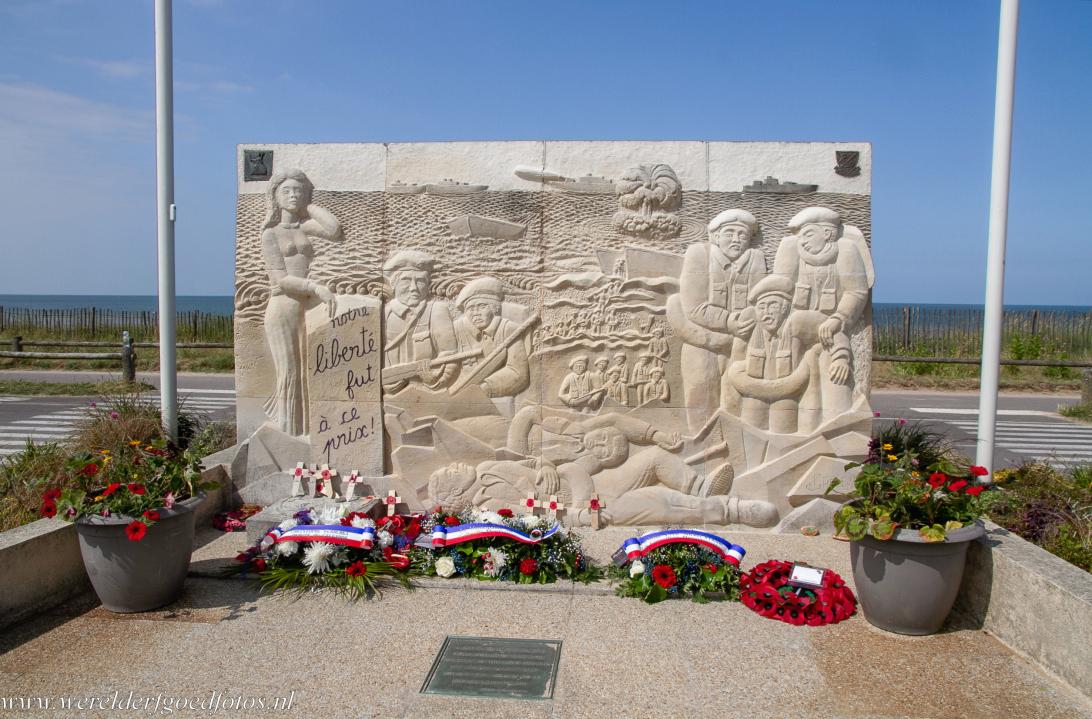
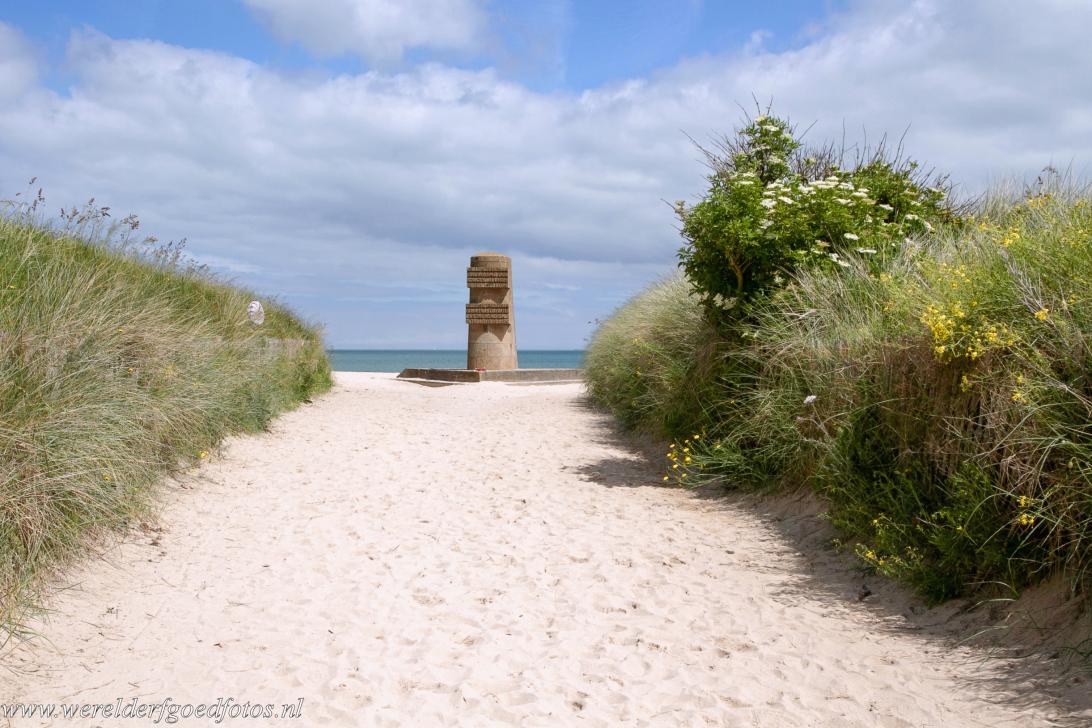
D-Day Landing Beaches 1944, Normandy, Monument French Forces: This monument stands at Sword Beach in Colleville-Montgomery. It honours the French commandos who landed here in the early morning of D-Day, 6 June 1944, to liberate their homeland. These commandos were among the first to go ashore and stormed the heavily defended German positions at the nearby village of Ouistreham. During the Battle of Normandy, 21 of the 177 men who landed here on D-Day under the command of Philippe Kieffer were killed, and 93 were wounded.
D-Day Landing Beaches 1944, Normandy, Monument French Forces: This monument stands at Sword Beach in Colleville-Montgomery. It honours the French commandos who landed here in the early morning of D-Day, 6 June 1944, to liberate their homeland. These commandos were among the first to go ashore and stormed the heavily defended German positions at the nearby village of Ouistreham. During the Battle of Normandy, 21 of the 177 men who landed here on D-Day under the command of Philippe Kieffer were killed, and 93 were wounded.
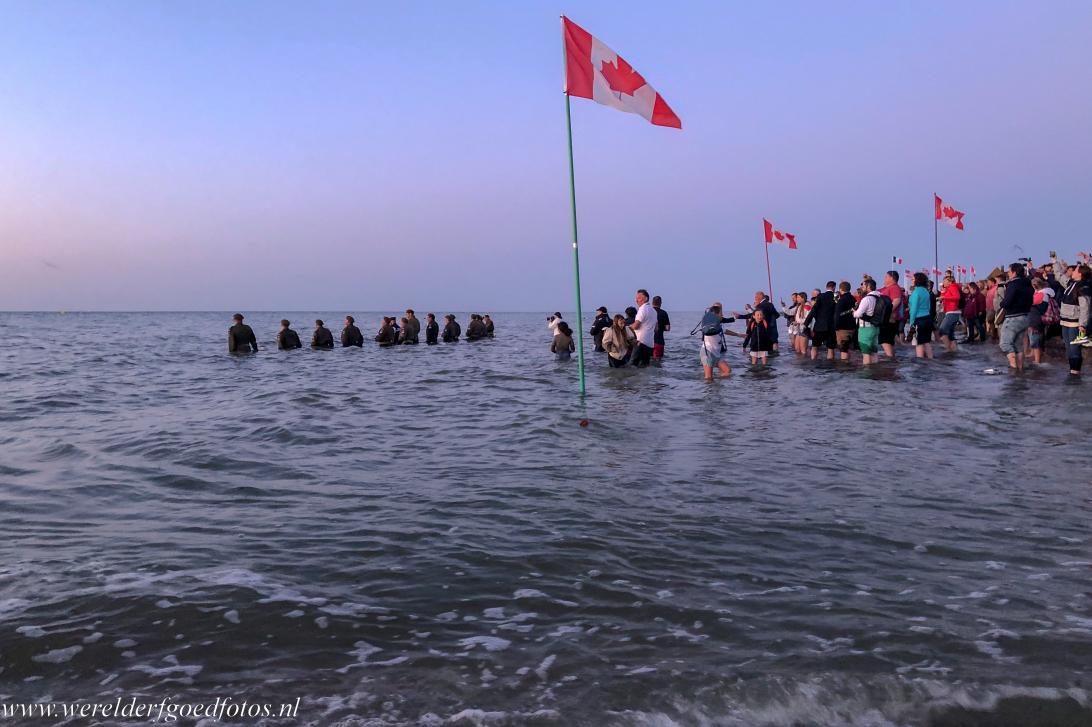
Beaches of the D-Day landings, Normandy, 1944: On 6 June 2024, 80 years after D-Day, a deeply moving commemoration took place at Canada House in Bernières-sur-Mer. This house iconic house serves every year as an important location for D-Day commemorations. As the sun set over the waves, soldiers and locals waded into the sea up to their waists and saluted to honour the memory of the Canadians who stormed Juno Beach on D-Day, 6 June 1944. While bagpipes played, flowers were cast into the water to commemorate the lives lost on that historic day.

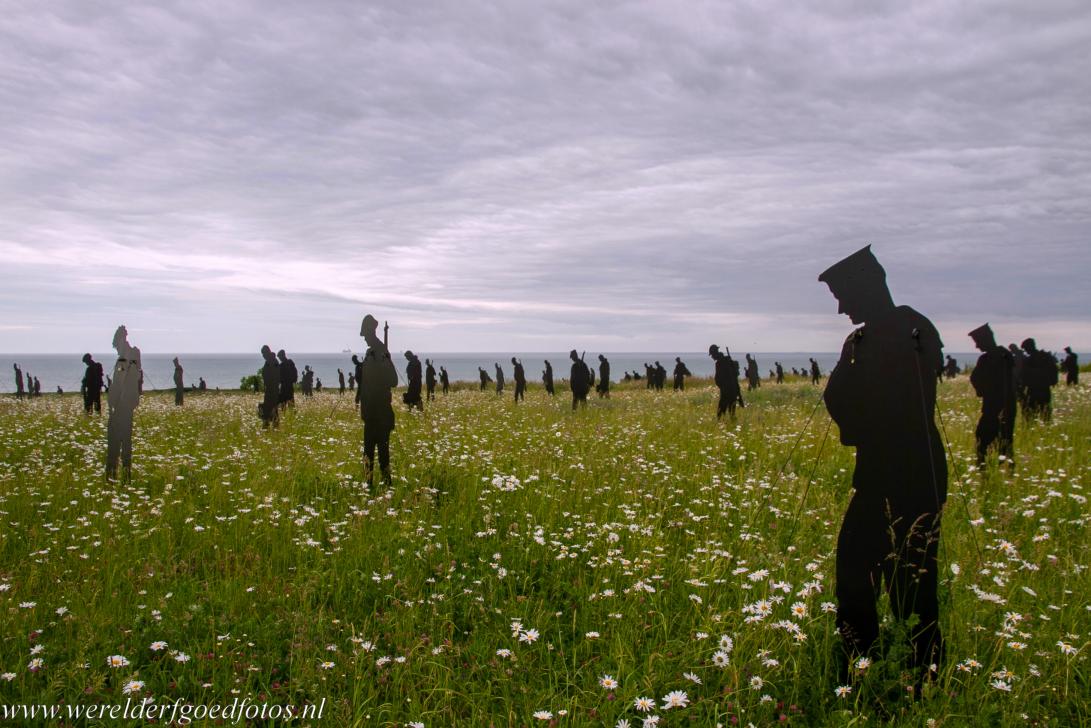
Beaches of the D-Day landings, Normandy, 1944: For the 80th anniversary of D-Day, the British artist Dan Barton and a team of volunteers created this art installation 'For Your Tomorrow'. The almost two-metre-tall metal silhouettes commemorate the 1,475 British soldiers who lost their lives on the landing beaches of D-Day, the first day of the Allied landings. This unique work was originally on display until the end of August 2024 at the British Normandy Memorial in Ver-sur-Mer. This memorial monument is located at Gold Beach.

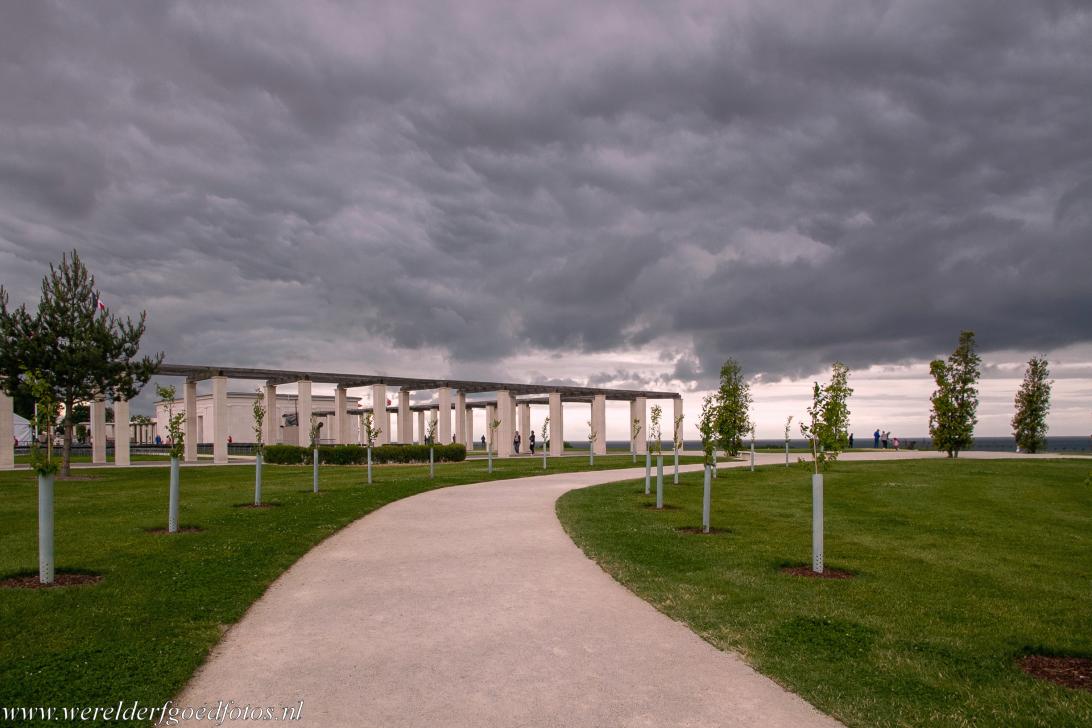
Beaches of the D-Day landings, Normandy 1944: The British Normandy Memorial at dawn. This imposing monument records the names of over 22,500 people from more than 30 countries under British command who were killed in Normandy during the Battle of Normandy, from 6 June to 30 August 1944. Their names are engraved on the columns of this solemn structure. The British Normandy Memorial was opened on 6 June 2021 and is situated just outside Ver-sur-Mer, overlooking Gold Beach. The monument is freely accessible all year round.

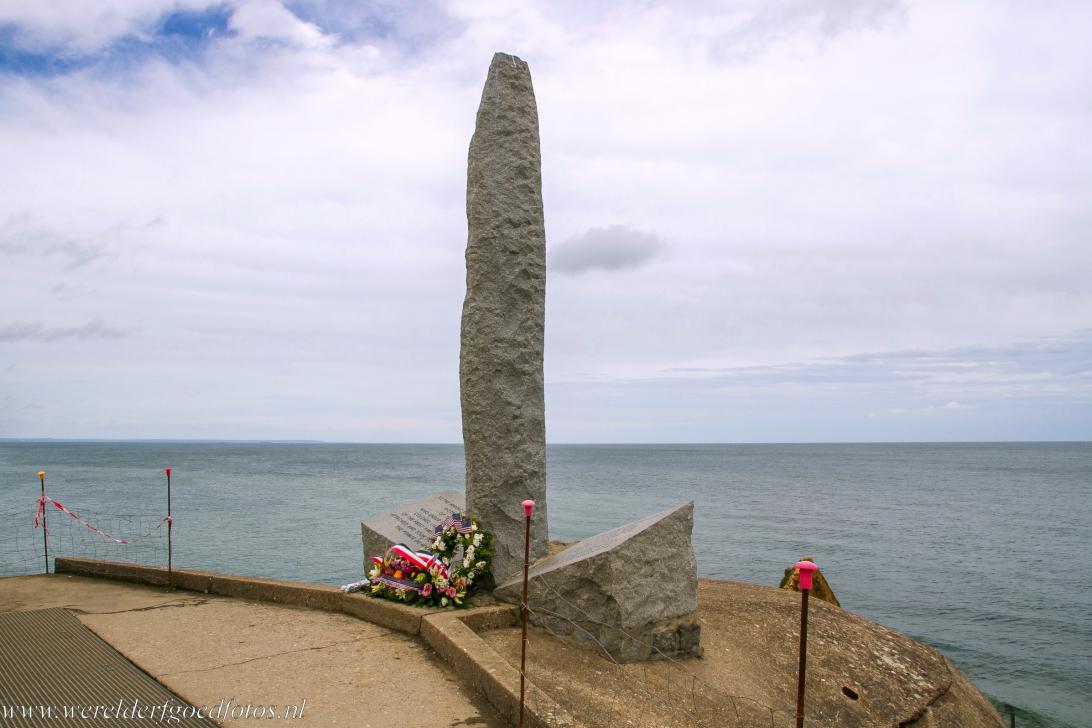
Beaches of the D-Day landings, Normandy 1944: WWII Pointe du Hoc Ranger Monument. Pointe du Hoc is one of the most imposing locations of the Atlantic Wall. This impressive 30-metre-high cliff overlooks Omaha Beach and Utah Beach. The US Army Rangers suffered heavy losses on 6 June during the D-Day landings; out of the 225 Rangers who left the Allied landing ships in the first wave to attack Pointe du Hoc, only 90 Rangers were still able to fight when the relief force finally arrived on 8 June.

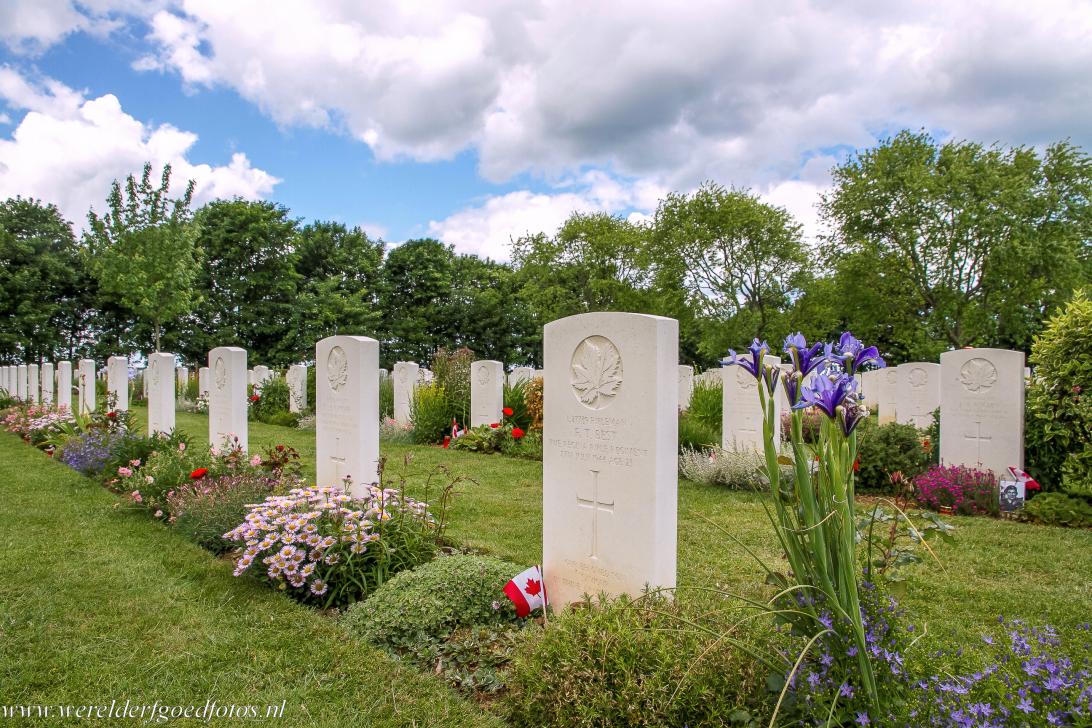
Beaches of the D-Day landings, Normandy 1944: The Bény-sur-Mer Canadian War Cemetery is the last resting place of 2,049 soldiers – largely Canadian – who fell on the landing beaches and during the Battle of Normandy. Nine pairs of brothers and 19 unknown soldiers are buried here. The cemetery also contains the graves of 20 victims of mass executions carried out by the SS at the Ardenne Abbey, as well as that of the Canadian army chaplain Walter Leslie Brown, who was murdered in cold blood by the SS.

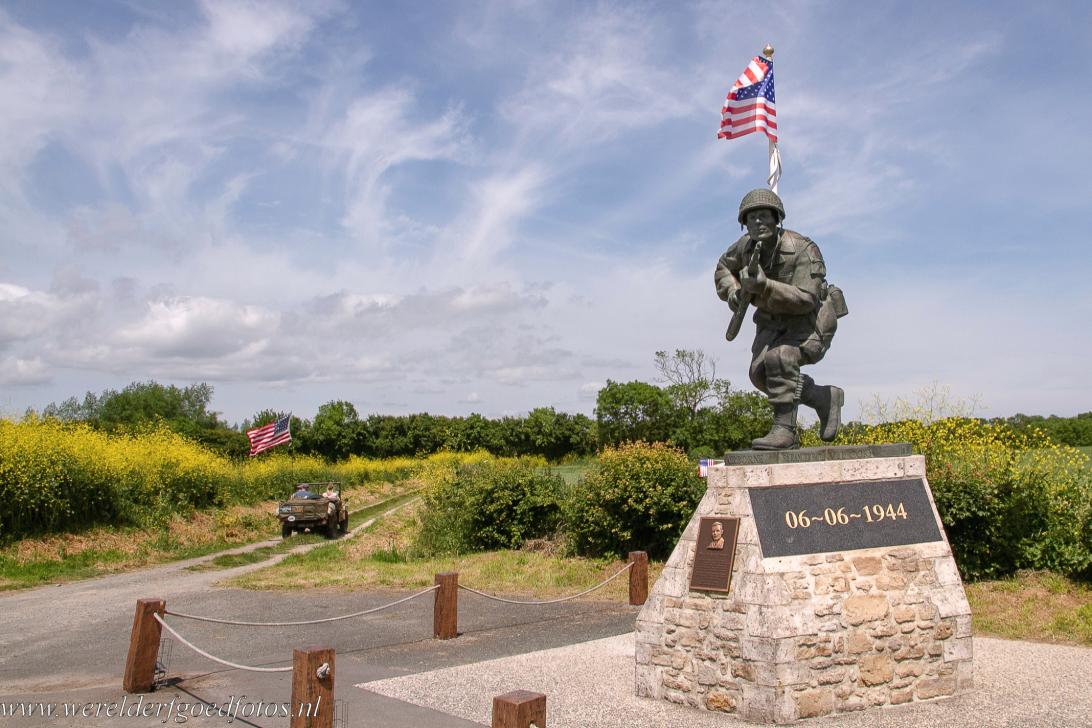
Beaches of the D-Day landings, Normandy 1944: The Major Richard Winters Leadership Monument, situated along the road from Sainte-Marie-du-Mont to Utah Beach. During WWII, Dick Winters served in the US Army as a paratrooper. This monument was erected in memory of Dick Winters and the men of Easy Company. They dropped behind enemy lines in the early morning of 6 June 1944 and neutralized the crucial German artillery near Brécourt Manor behind Utah Beach. This brave soldier became immortalized through the book and TV series 'Band of Brothers'.

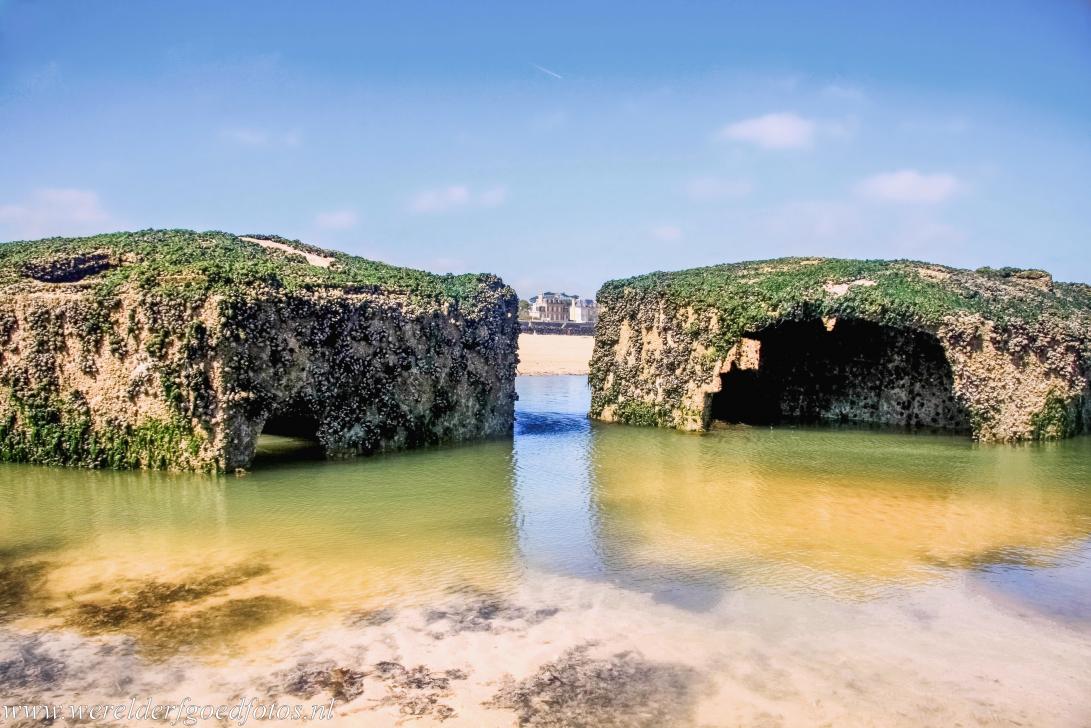
Beaches of the D-Day landings, Normandy 1944: The remains of the temporary Mulberry Harbour B on Gold Beach at Arromanches-les-Bains. The floating artificial harbours were designed and constructed by British military engineers during WWII. This harbour was used to supply the Allied troops. In the first ten months after D-Day, more than 2.5 million men, 500,000 vehicles and 4 million tonnes of supplies were landed here. The Mulberry Harbour A at Omaha Beach was destroyed during a severe storm in late June 1944 and became unusable.

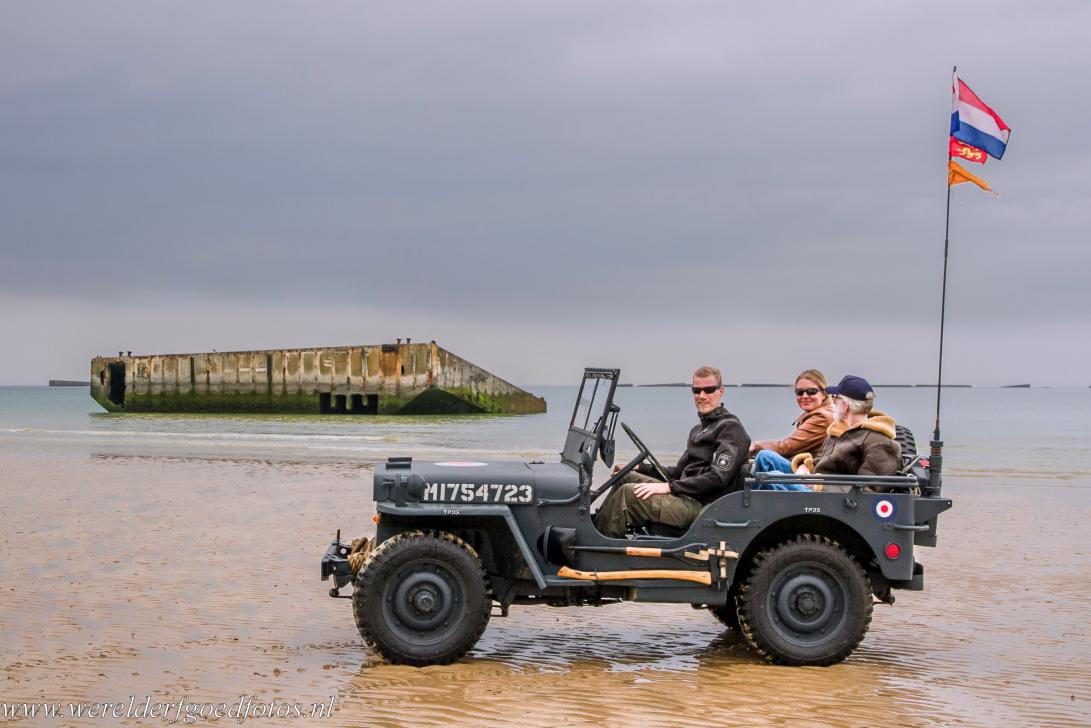
Beaches of the D-Day landings, Normandy: A 1942 Ford GPW RAF Jeep on Gold Beach at Arromanches-les-Bains, with the remains of the Mulberry Harbour B in the background. British troops from the 50th Infantry Division and the 8th Armoured Brigade landed on this beach on 6 June 1944, D-Day. On the same day, they liberated Arromanches and secured the beach to build the harbour. During the landings, there were about 1,100 casualties, including 350 killed and the remainder wounded and missing. The Dutch Prinses Irene Brigade also landed on this beach on 8 August 1944: this unit was deployed to the front line near the River Orne.

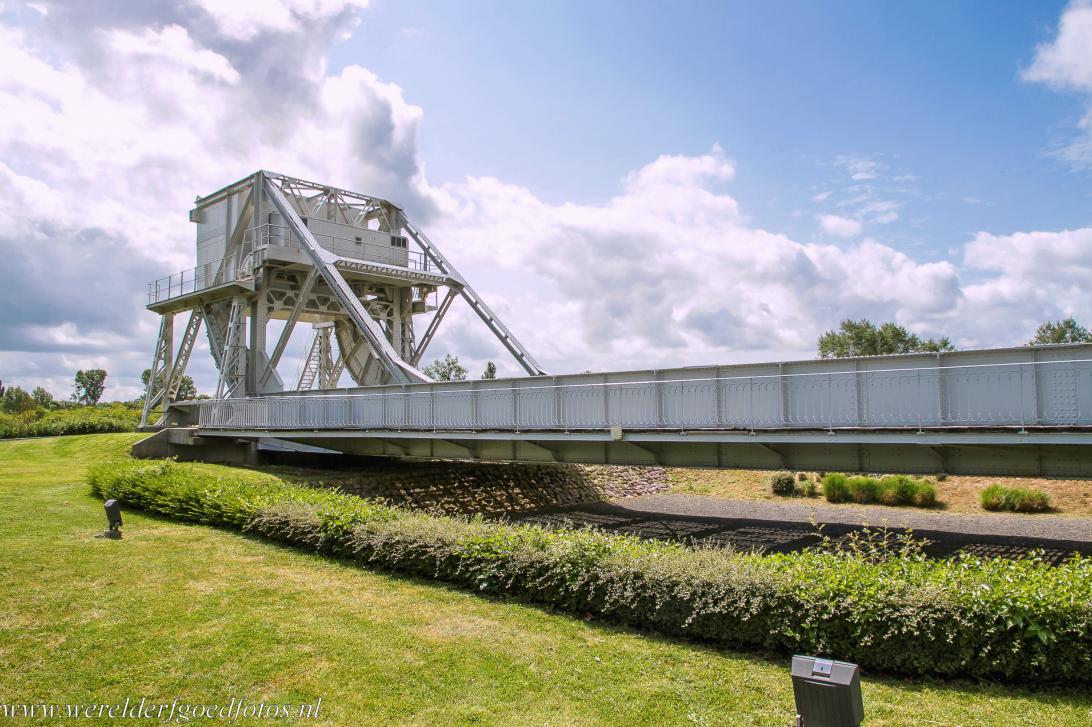
Beaches of the D-Day landings, Normandy 1944: The original Pegasus Bridge, on display at the Pegasus Memorial Museum in Ranville. This museum is dedicated to the 6th Airborne Division, called the Red Berets. In the early hours of D-Day, men of this division landed by glider between Bénouville and Ranville and within ten minutes they captured the bridge. Major John Howard had orders to 'hold the bridge until relieved' by Allied troops moving inland from Sword Beach. On 26 June 1944, after the liberation of the area, the bridge was officially renamed Pegasus Bridge, after the emblem of the British airborne troops.

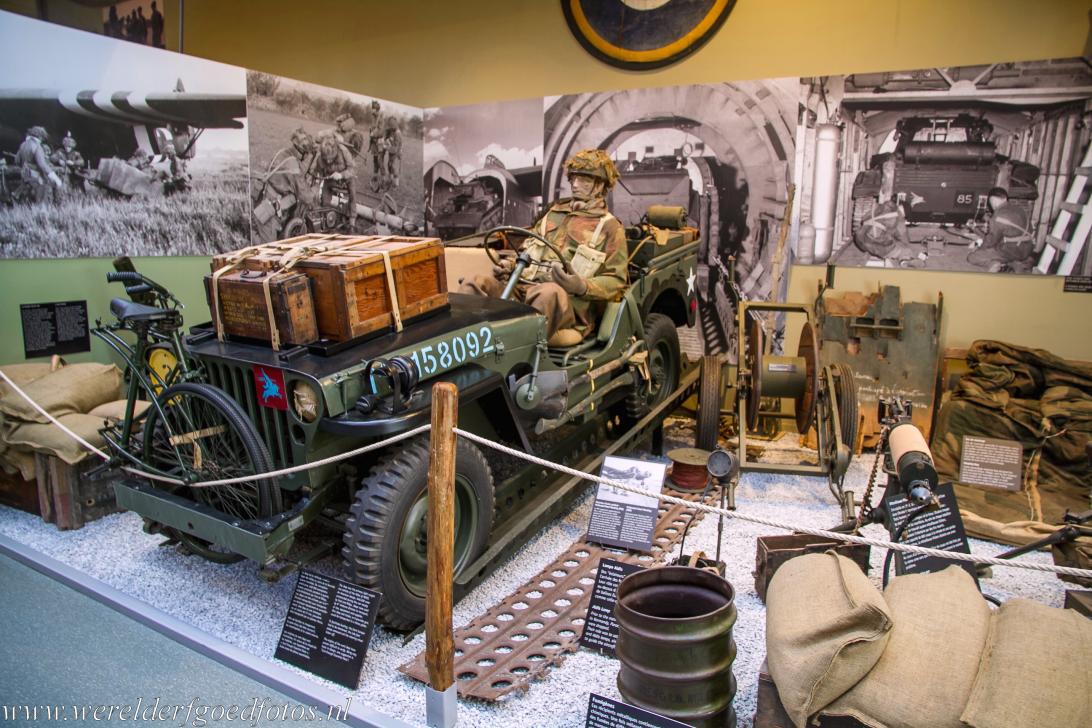
Beaches of the D-Day landings, Normandy 1944: The Pegasus Memorial Museum in Ranville is dedicated to the men of the 6th Airborne Division. One of the objects inside the museum is an Airborne Jeep. These Jeeps were modified to fit in a Horsa glider. The changes included, among others, cutting down the front bumper, removing the grab handles, stowing the spare wheel in front of the grille to protect the radiator from shrapnel, removing the windscreen and adding a removable steering wheel. These Airborne Jeeps were used in Normandy, during the Rhine crossing in Germany and during Operation Market Garden. This Jeep is painted in the popular 'Mickey Mouse' camouflage pattern.

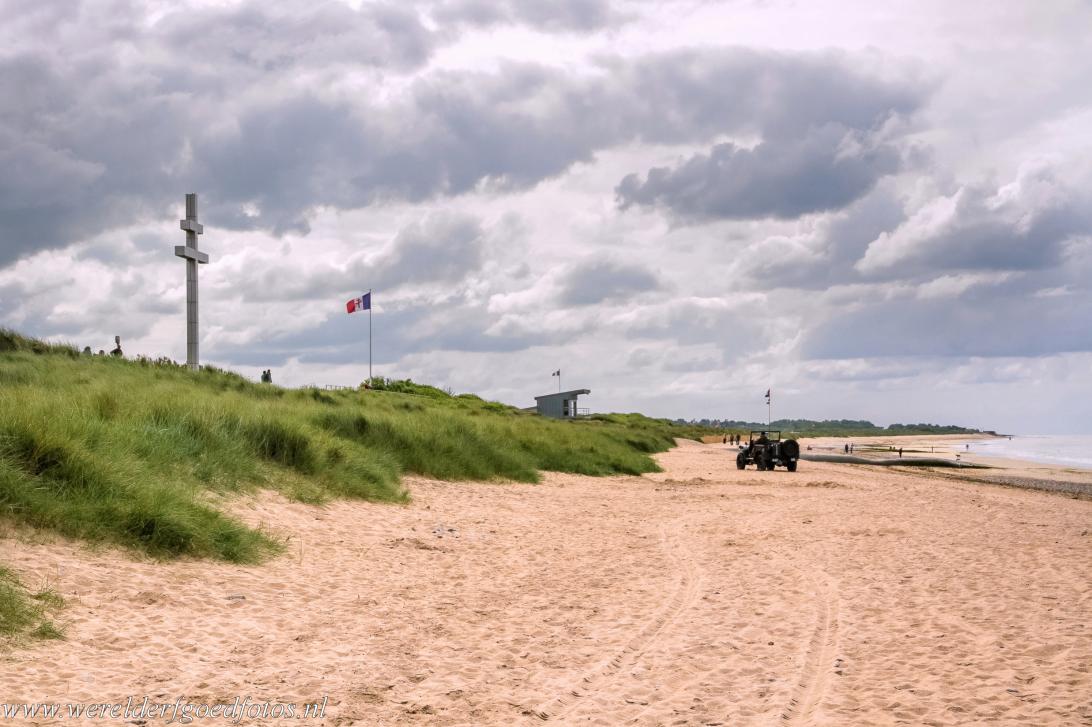
Beaches of the D-Day landings, Normandy 1944: The Cross of Lorraine was erected in 1990 on Juno Beach to commemorate the return of General Charles de Gaulle, who set foot on French soil again on 14 June 1944, after four years of exile. De Gaulle – the later President of France – was the leader of the Free French Forces during WWII; the Cross of Lorraine is their symbol. By returning quickly, de Gaulle prevented the Americans and British from establishing a military administration over France, known as AMG (Allied Military Government).

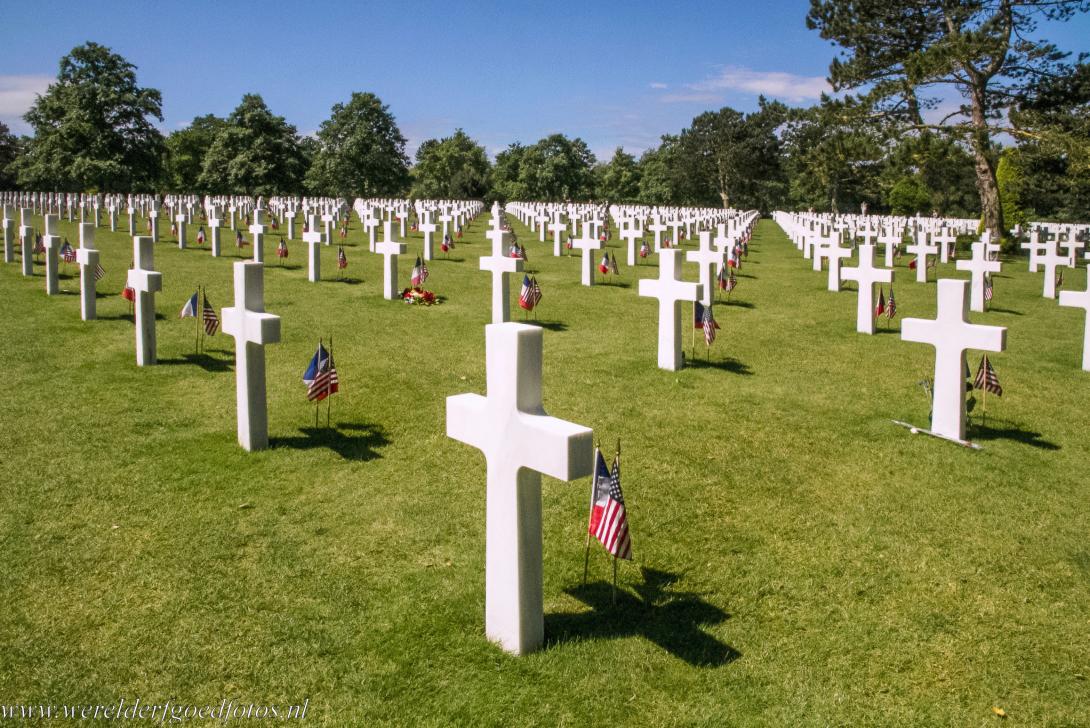
Beaches of the D-Day landings, Normandy 1944: The Normandy American Cemetery and Memorial at Omaha Beach in Colleville-sur-Mer is the largest American military cemetery in the region. This cemetry contains the graves of 9,387 American soldiers who fell during the Battle of Normandy. In the 'Garden of the Missing', the names of 1,557 missing or unidentified soldiers are engraved on a semicircular wall. The cemetery is located on a steep, high cliff overlooking the sea and the bloodiest of all the landing beaches, Omaha. On this beach, the US divisions suffered more than 2,400 casualties on that single day, 6 June 1944.

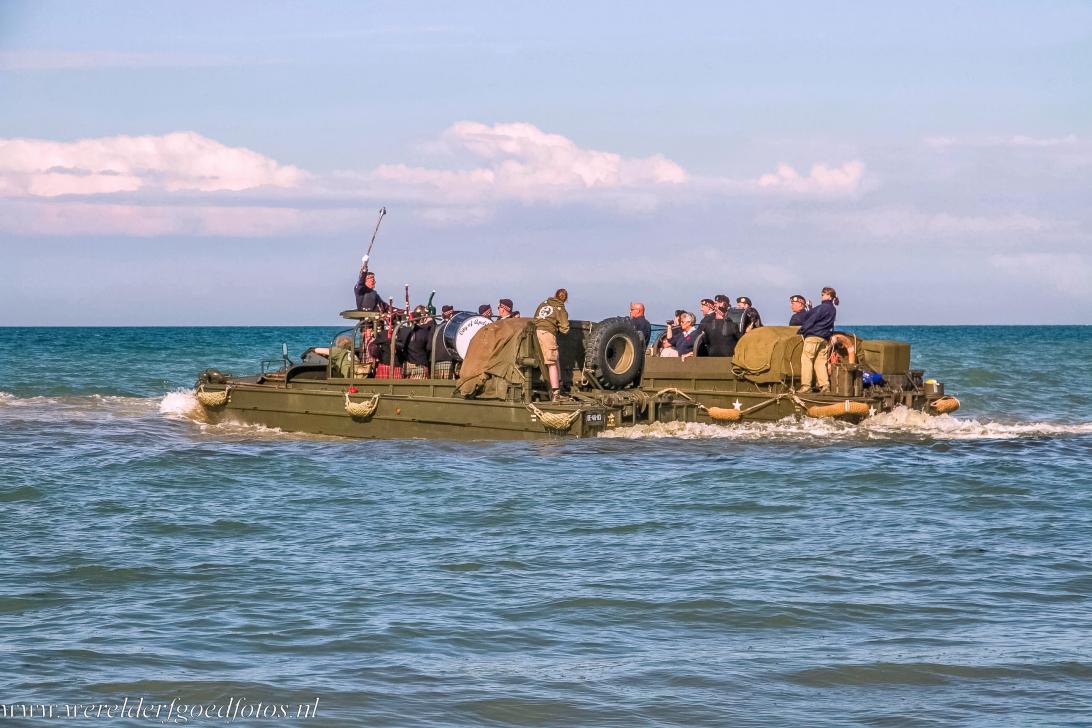
Beaches of the D-Day landings, Normandy 1944: During the Battle of Normandy, Juno Beach was the landing zone for the Canadian 3rd Infantry Division and 2nd Armoured Brigade. To commemorate the hundreds of soldiers who fell on this beach, several DUKWs took to the sea off this beach in Courseulles-sur-Mer 70 years after D-Day. From these rugged amphibious vehicles, wreaths were cast into the sea to pay tribute to the fallen. During World War II, Juno was the Allied codename for one of the five landing beaches along the Normandy coast.

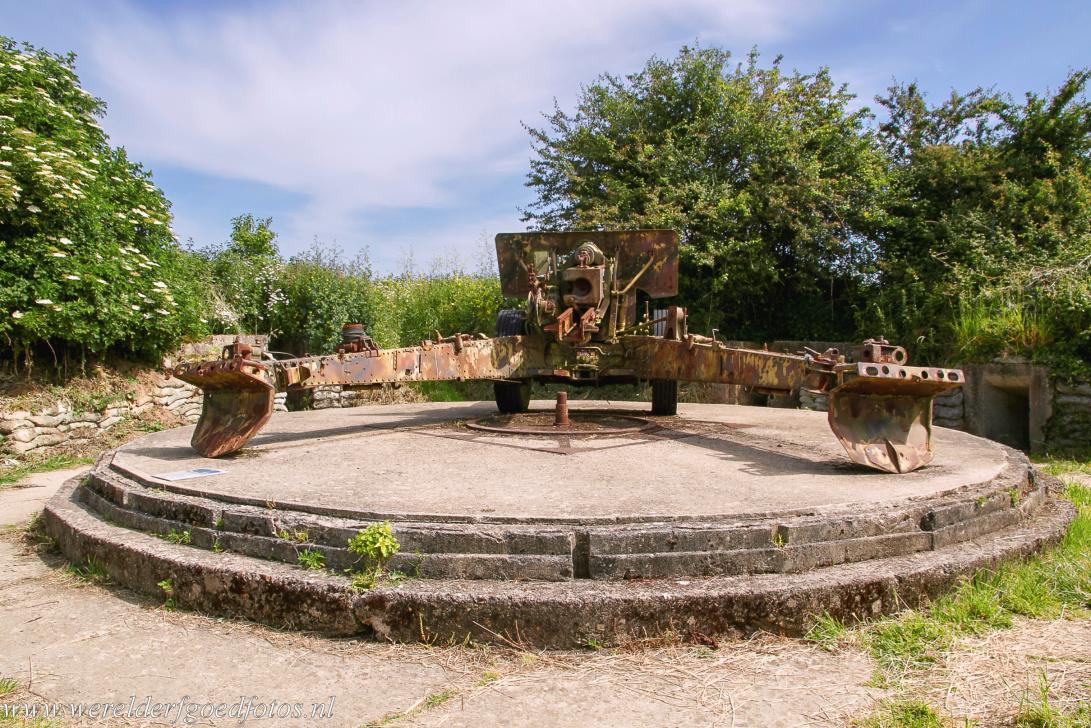
Beaches of the D-Day landings, Normandy 1944: The powerful German Maisy Battery was part of the Atlantic Wall and was considered to be the fifth most dangerous target on D-Day. Its four 155 mm guns could reach both Omaha Beach and Utah Beach. The battery comprises about two km of shelters, ammunition stores, a hospital bunker, a water well, gun emplacements and trenches. After WWII, this battery became overgrown. In 2006, the remains of a German officer were found during restoration work. Although his dog tags were found, his identity remains unknown. In 2009, 65 years after D-Day, he was buried at the La Cambe German War Cemetery.

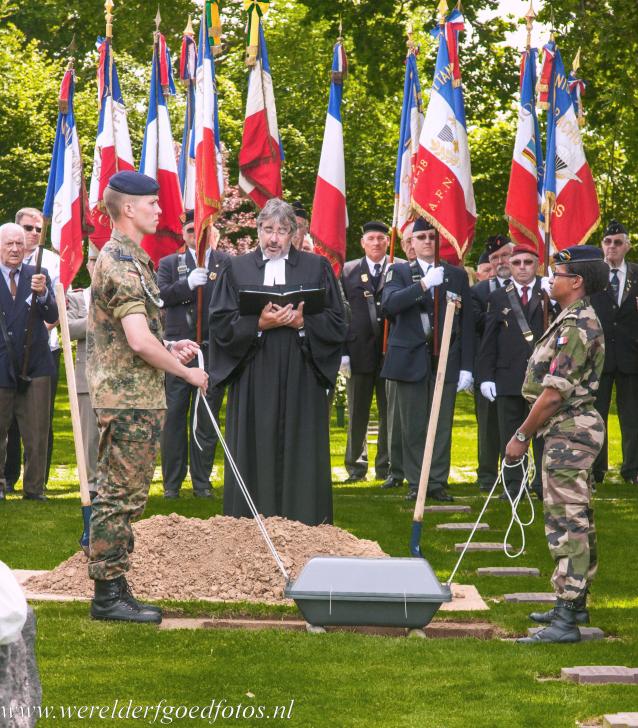
Beaches of the D-Day landings, Normandy 1944: At the La Cambe German War Cemetery, a moving burial ceremony took place on 5 June 2009, marking the 65th anniversary of D-Day. An unknown soldier from the Battle of Normandy received a full military burial. His remains were discovered in 2006 near the German Maisy Battery. He was presumably killed on 9 June 1944 when the US Army Rangers attacked these fortifications. A German soldier and a French soldier are lowering the coffin containing his remains into the ground together as a gesture of reconciliation.

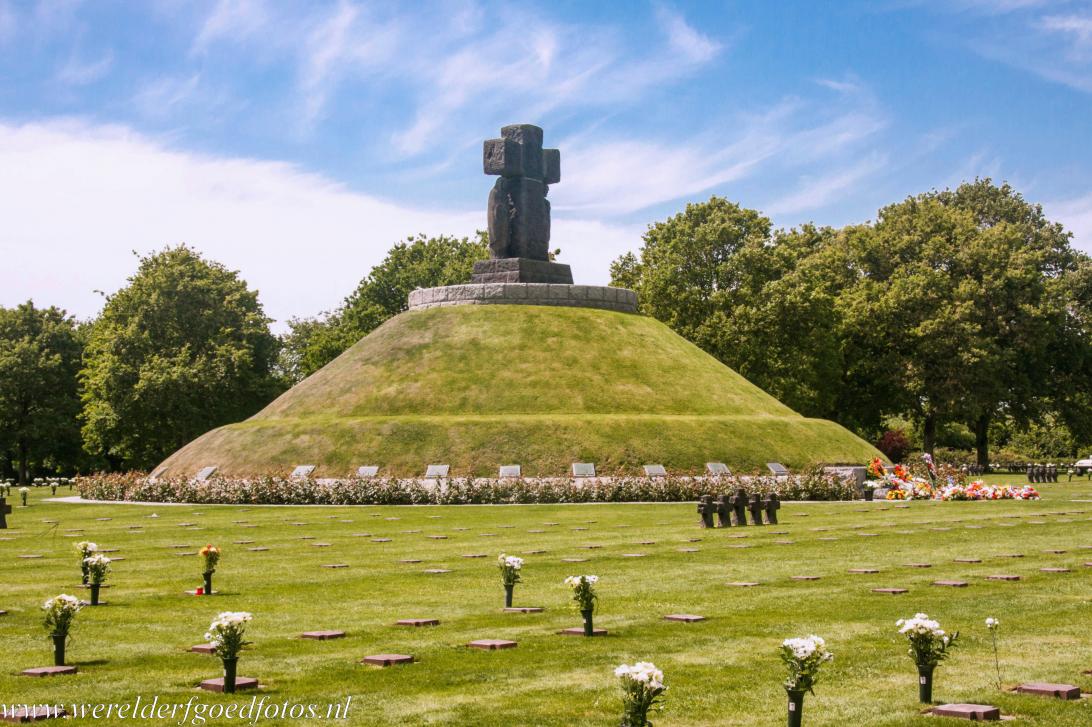
Beaches of the D-Day landings, Normandy 1944: The tumulus is the burial mound at La Cambe German Military Cemetery. This cemetery is the final resting place of 21,222 German soldiers who fell during the Battle of Normandy. The huge tumulus holds the remains of 207 unknown and 88 identified soldiers. The graves are marked by a simple flat headstone, with each grave containing two or three soldiers. The most famous burial site in this austere cemetery is the grave of the German Waffen-SS officer Michael Wittmann, who fell on 8 August 1944. La Cambe is the largest German cemetery in Normandy. For the 65th anniversary of D-Day, flowers were placed at each grave and at the foot of the Tumulus.

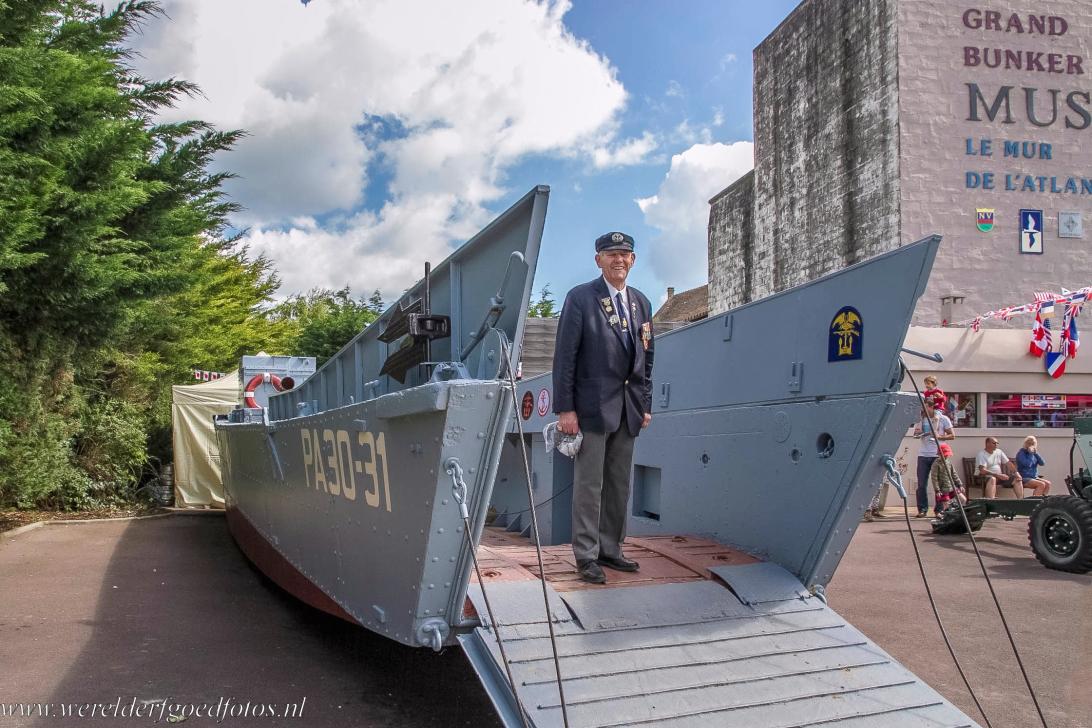
Beaches of the D-Day landings, Normandy 1944: During the 70th anniversary commemoration of D-Day in 2014, this Royal Navy veteran stood aboard the landing craft at the Grand Bunker Museum in Ouistreham. Wearing the traditional dark blue naval cap, he had actually served on a landing craft during the D-Day landings. The landing craft in the photo is a replica used in Steven Spielberg's film 'Saving Private Ryan'. It was saved from the scrapyard by D-Day veteran Alan Reid and Pacific veteran Arthur Smith.

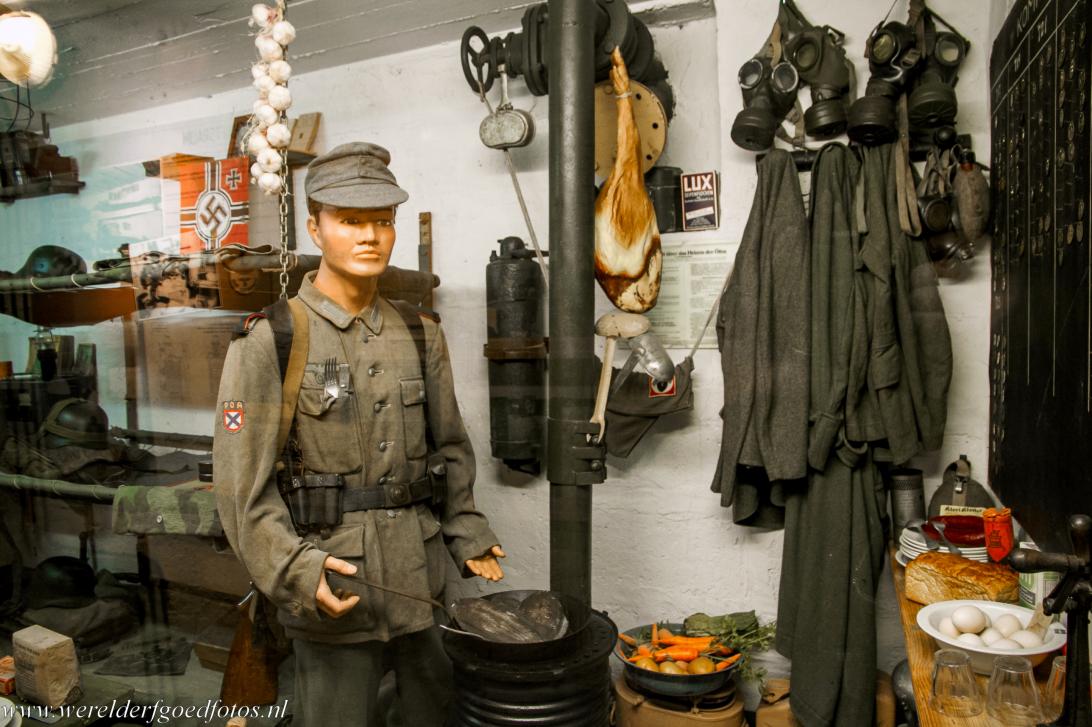
Beaches of the D-Day landings, Normandy 1944: This diorama inside the Grand Bunker Museum shows the kitchen. This huge German bunker was part of the Atlantic Wall. It consisted of a sick bay, a dormitory, an artillery command post, a bombproof shelter, an ammunition store, an observation post, a radio transmission room and a generator room. Just three days after the Allies landed on Sword Beach during D-Day, the bunker was captured by the British Royal Engineers. No soldiers were killed during the assault. However, the capture of the surrounding Port of Ouistreham and its beachfront did result in numerous casualties on both sides.

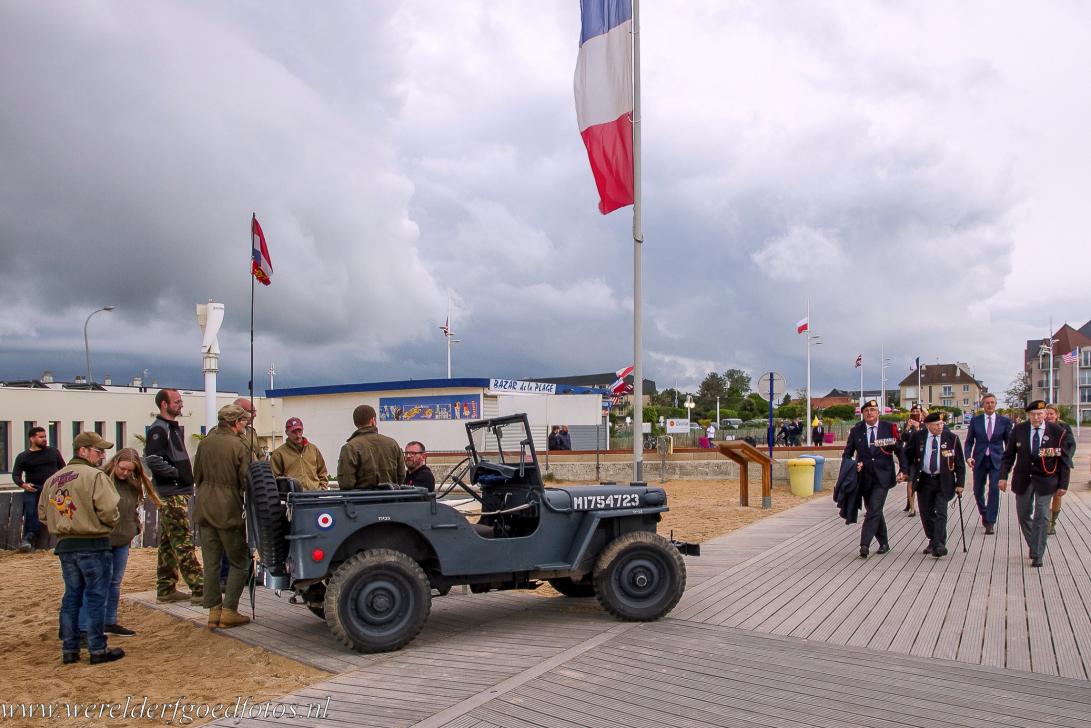
Beaches of the D-Day landings, Normandy 1944: The Liberty Concert Normandy 2019 was held on Sword Beach during the 75th anniversary commemorations. Here, three distinguished guests arrive: veterans Rudi Hemmes, Karel Zwart, and Max Wolff. These three men fought with the Royal Netherlands Brigade 'Princess Irene' during the Battle of Normandy to drive out the German occupiers. The brigade landed at Arromanches in August 1944, was immediately deployed to the front line near the River Orne, and subsequently advanced through Belgium into the Netherlands, where it liberated several cities. These veterans were among the last of this brigade and, by now, all three have passed away in their late nineties.

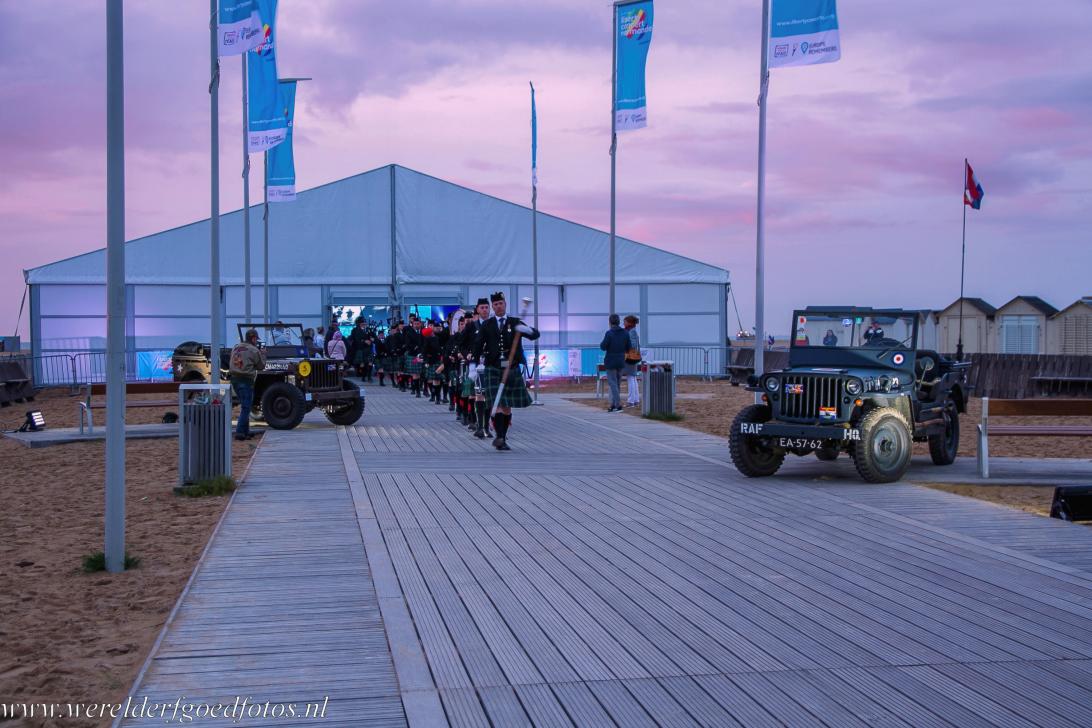
Beaches of the D-Day landings, Normandy 1944: Set against a beautiful sunset, an RAF-blue Ford Jeep stands on display at Sword Beach, in front of the huge festival tent that hosted the Liberty Concert Normandy 2019. Originally, a large open-air concert was planned for this beach, where hundreds of soldiers had lost their lives during the D-Day landings, 6 June 1944. However, following protests from British and Dutch veterans who considered a major festival on this site inappropriate, the organisers abandoned the idea. Instead, a more subdued concert was held at a quiet spot on Sword Beach where no soldiers had perished.

Beaches of the D-Day landings, Normandy 1944: The Signal Monument on Juno Beach was erected in honour of the Canadian soldiers of the 3rd Infantry Division who stormed the beach here on 6 June 1944 – D-Day – to drive out the German occupiers and liberate Europe. The monument resembles a ship's bow and stands on a concrete base in the shape of the 'V' for Victory. This monument is part of a series of ten Signal monuments spread along the Normandy coast; in addition to Juno Beach, they can be found at all other landing beaches, at Pegasus Bridge, and in the village of Sainte-Mère-Église, among other locations.

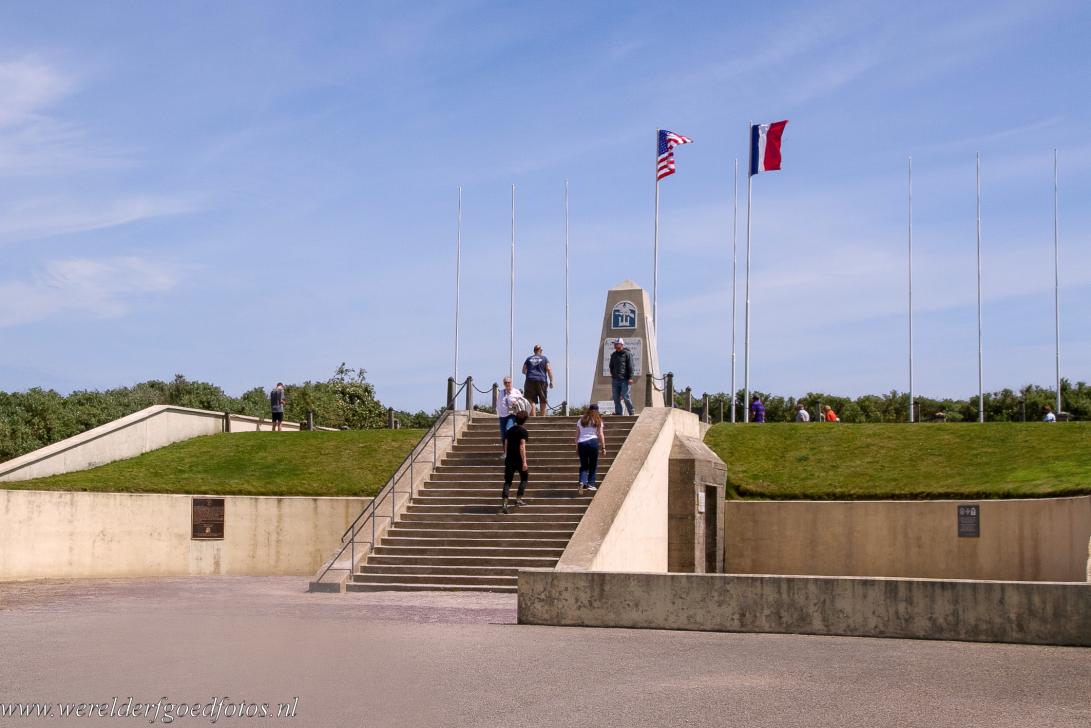
Beaches of the D-Day landings, Normandy 1944: The Utah Beach American Memorial was erected in honour of the American troops of the VII Corps who stormed Utah Beach here in the early morning of 6 June 1944 to liberate the Cotentin Peninsula. They subsequently captured Cherbourg; this port was vital for the supply of troops, military vehicles, fuel, and other military equipment. The memorial was inaugurated during the 40th-anniversary commemorations of D-Day. The Utah Beach Landing Museum is located right next to it.