Struve Geodetic Arc – Triangulation Points in Lithuania
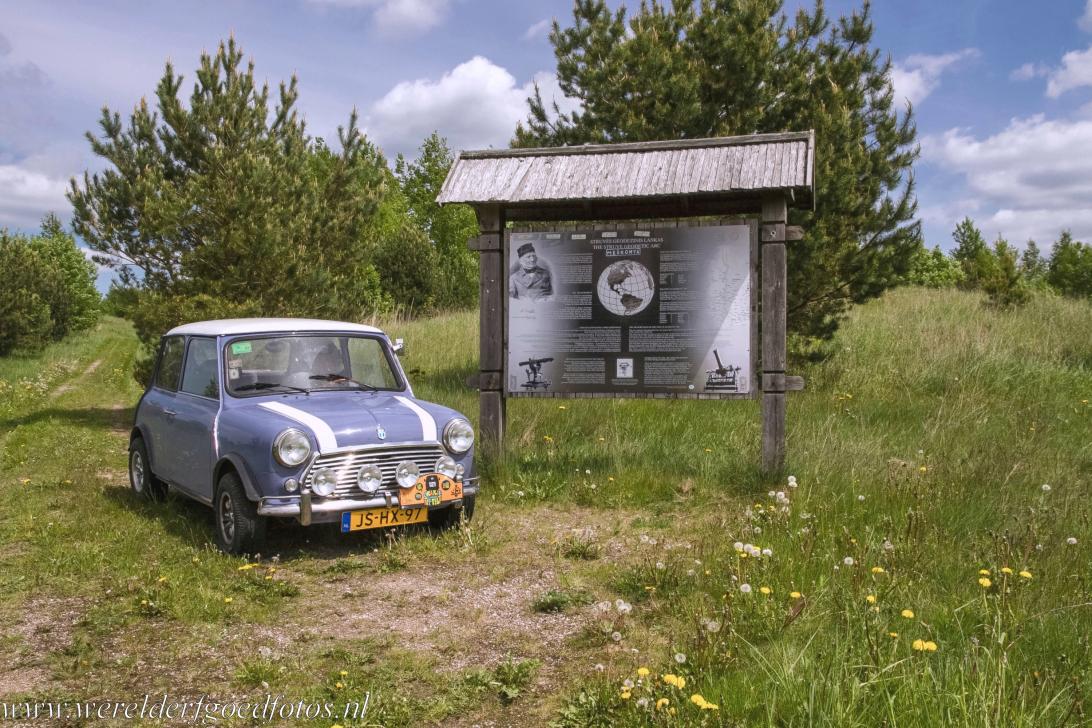
The Struve Geodetic Arc consists of a chain of 265 triangulation survey stations. The chain was established and used by the astronomer Friedrich von Struve to determine the exact shape and size of the Earth. The Struve Geodetic Arc stretches from Hammerfest in Norway to a station point close to the Black Sea in Ukraine. The Struve Geodetic Arc is an exceptional example of scientific collaboration between different countries; it passes through ten countries and stretches over 2,820 kilometres.
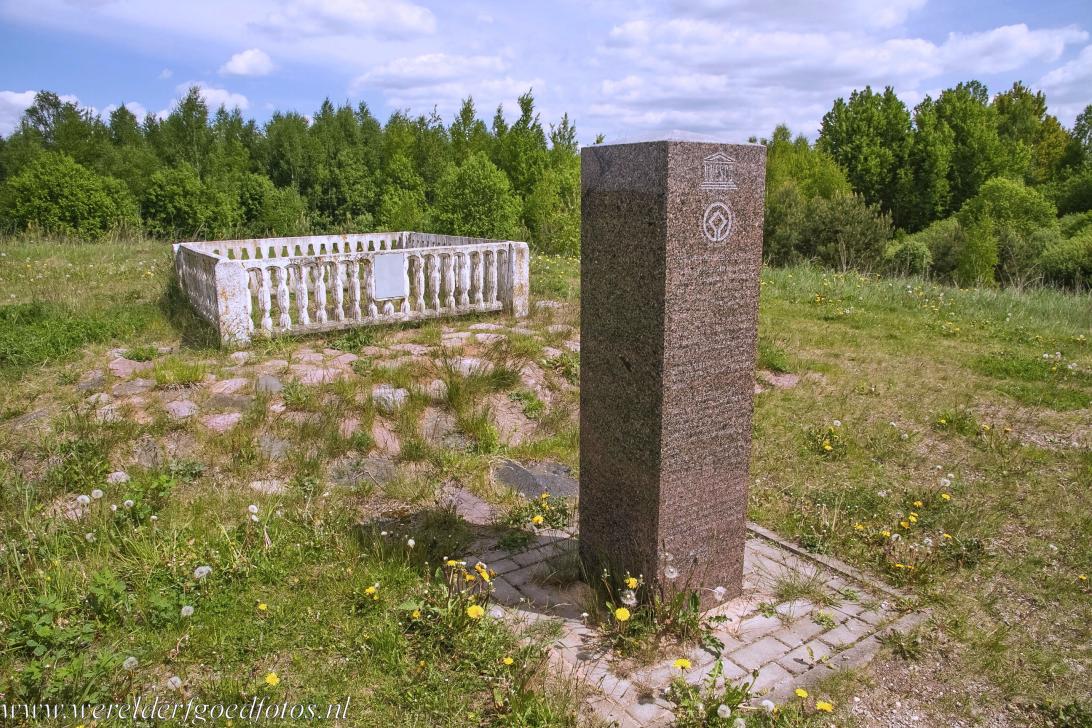
Friedrich von Struve carried out his triangulation measurements between 1816 and 1855. The Tartu Old Observatory in Estonia and the Alatornio Church in Finland are the only buildings that were used for the measurements; both have remained unchanged since that time. One of the few remaining station points of the Struve Geodetic Arc in Lithuania is located near Meškonys, a tiny village close to Vilnius.
The UNESCO World Heritage Site includes 34 of the station points, with different markings, such as drilled holes in a rock, iron or stone crosses, obelisks, cairns and buildings. These 34 station points of the Struve Geodetic Arc were inscribed on the UNESCO World Heritage List in 2005.
Visual artwork from the World Heritage Art series: Friedrich von Struve
www.werelderfgoedfotos.nl © Copyright World Heritage Photos Classic Car Road Trip
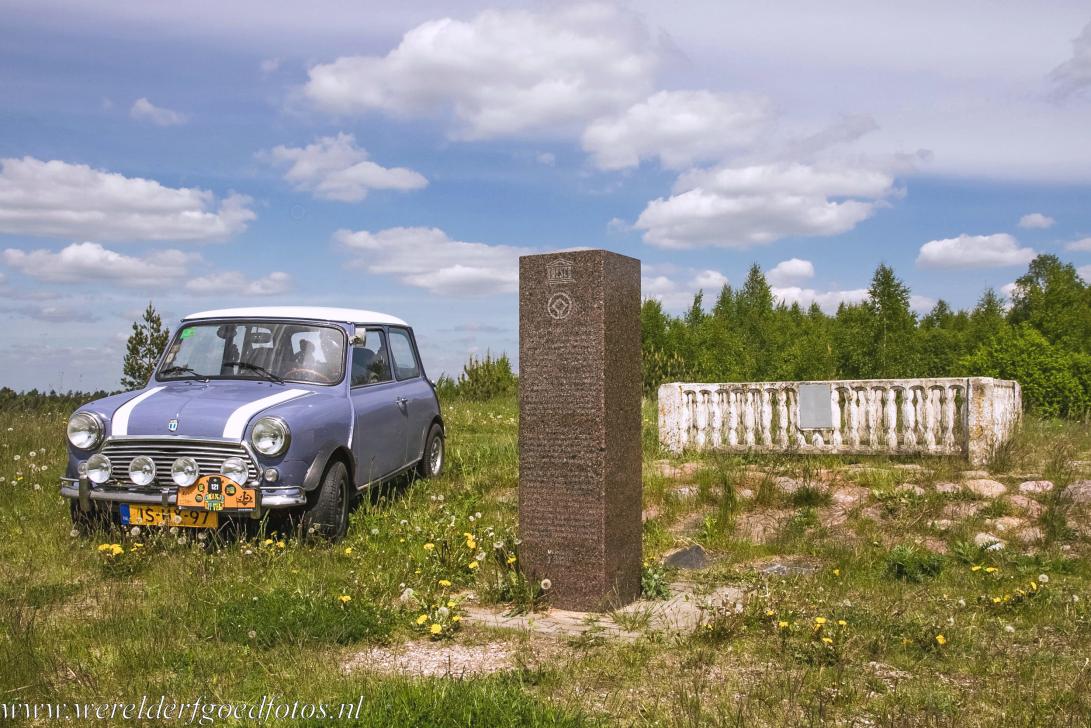
One of the station points of the Struve Geodetic Arc in Lithuania. This measurement point is situated close to Meškonys, a village near Vilnius. On our way to the IMM (International Mini Meeting), we briefly parked our classic 1974 Mini next to this survey point of the Struve Geodetic Arc. The size and shape of the Earth were calculated using triangulation based on survey points from the Geodetic Arc. The measurements were carried out between 1816 and 1855. Many of the survey points have since disappeared or been severely damaged. In 2005, 34 survey points of the Struve Geodetic Arc were designated a UNESCO World Heritage Site.