Verla – Deeply Nestled in the Vast Finnish Woods
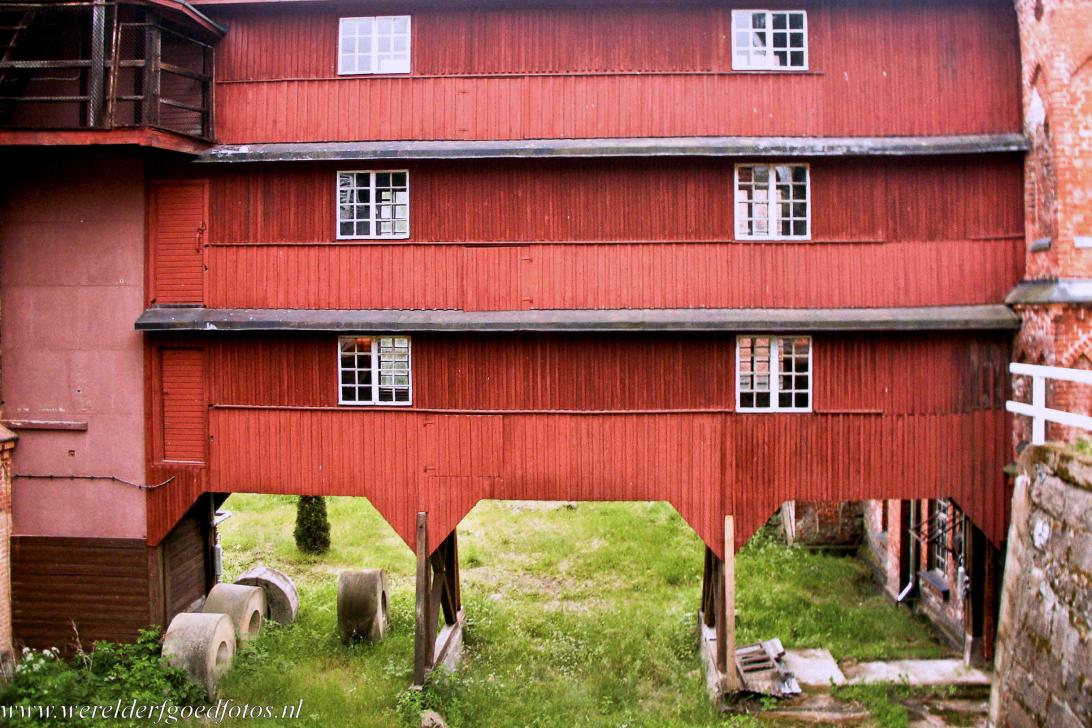
The Verla Groundwood and Board Mill is an important monument of the early days of the forest industry in Finland. This factory is located in the municipality of Kouvola, about 136 kilometres northeast of Helsinki. The mill was founded in 1872. Four years later, the wooden buildings burned down, after which the new mill was erected from wood again. After the drying loft was destroyed by a subsequent fire in 1892, the wooden buildings were replaced by the present red-brick buildings. Only an old, Falu-red painted covered footbridge connecting two of the buildings is still made of wood.
The main product of the Verla Mill was white pulp board, mainly used for book covers and boxes. The factory continued to operate until 1964. Nowadays, it is a industrial monument and a museum. The buildings and machines of the Verla Mill were left intact and remain in working order. The Verla Groundwood and Board Mill is a remarkable well-preserved example of a rural board and paper mill in northern Europe.
The Verla Groundwood and Board Mill can only be visited by guided tours. Some prehistoric rock paintings dating back to around 7,000 BCE are located close to the Verla factory. Created on a granite rock by the River Kymijoki, these paintings are now difficult to reach. The Verla Groundwood and Board Mill became a UNESCO World Heritage Site in 1996.
www.werelderfgoedfotos.nl © Copyright World Heritage Photos
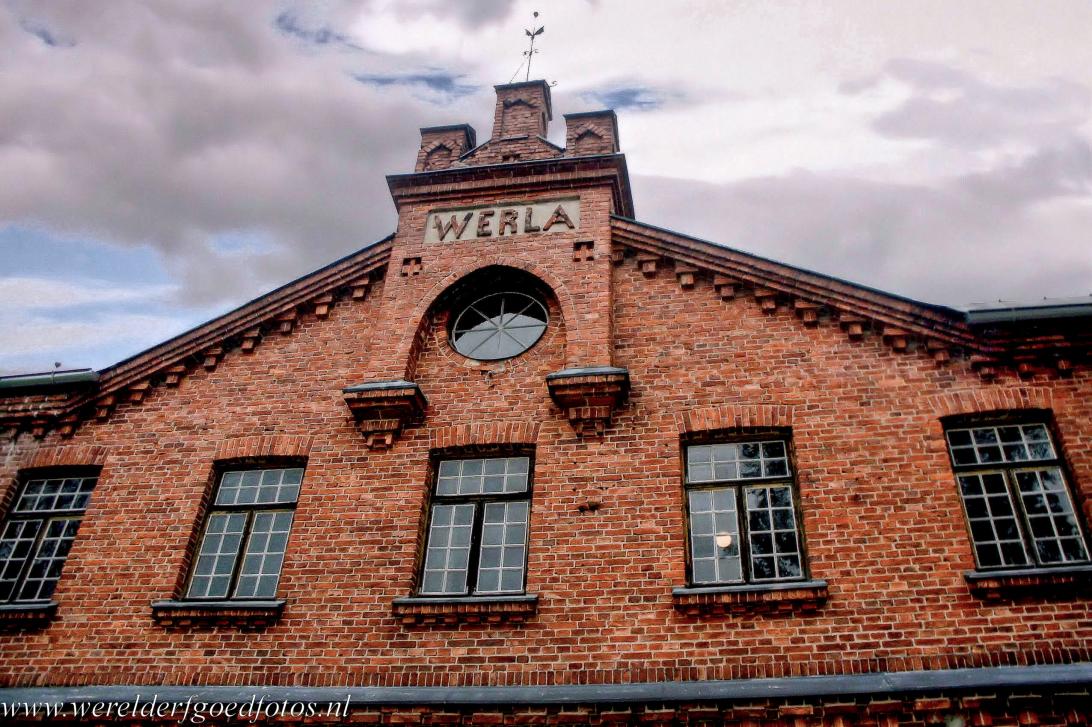
The iconic red-brick facade of the Verla Groundwood and Board Mill. This factory is a unique part of the Finnish industrial history. Verla was a small factory dating from the early years of the wood processing industry in Finland. This mill complex is an outstanding and remarkably well-preserved example of a rural board and paper mill in northern Europe. The Verla Groundwood and Board Mill was inscribed on the UNESCO World Heritage List in 1996.
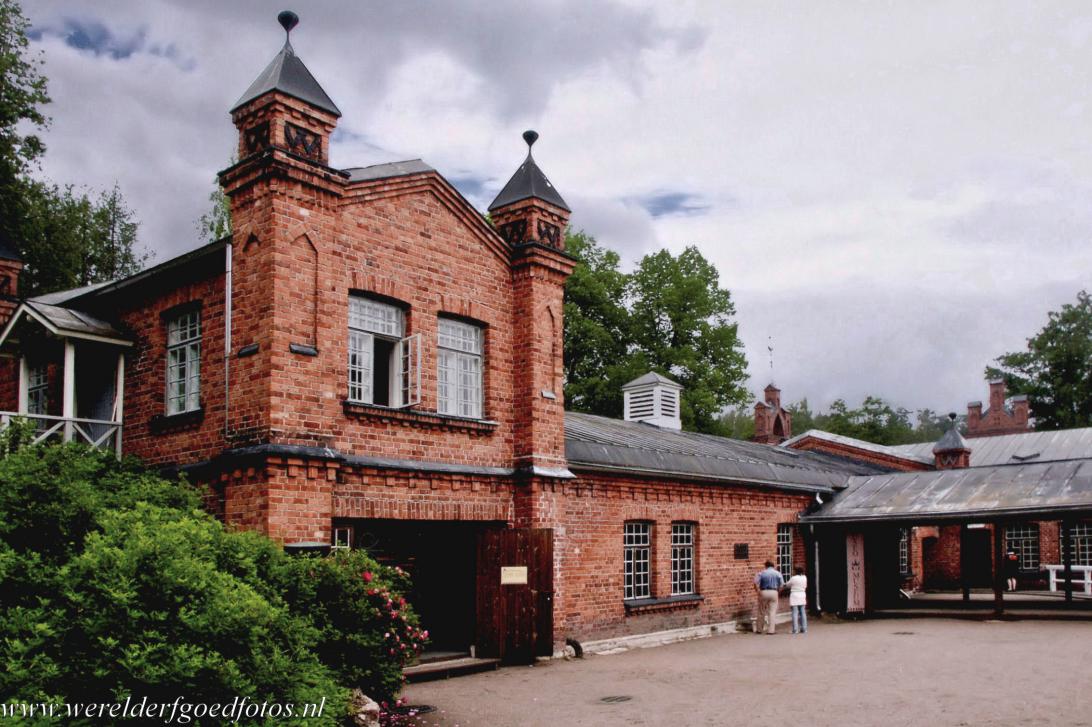
The iconic red-brick facade of the Verla Groundwood and Board Mill. This factory is a unique part of the Finnish industrial history. Verla was a small factory dating from the early years of the wood processing industry in Finland. This mill complex is an outstanding and remarkably well-preserved example of a rural board and paper mill in northern Europe. The Verla Groundwood and Board Mill was inscribed on the UNESCO World Heritage List in 1996.
The Verla Groundwood and Board Mill was founded in 1872 by the Finnish civil engineer Hugo Neuman. After earlier wooden factory buildings were destroyed by fire in 1876, and the drying loft in 1892, the distinctive, richly decorated red-brick buildings were erected at the end of the 19th century. These buildings were built in the Neo-Gothic style, designed by architect Eduard Dippell. As a result of modernisation, architects turned back to historical styles, known as historicism or neo-styles.

Verla Groundwood and Board Mill: All that remains from the original board factory is this historic, covered wooden skybridge connecting two brick buildings. This iconic structure is the only part of the factory that survived the major fires of the late 19th century. The Verla Mill is located in the forested Kymi Valley in the southeastern part of Finland. Admission to the Verla Groundwood and Board Mill is by guided tour only; the tour lasts about one hour.

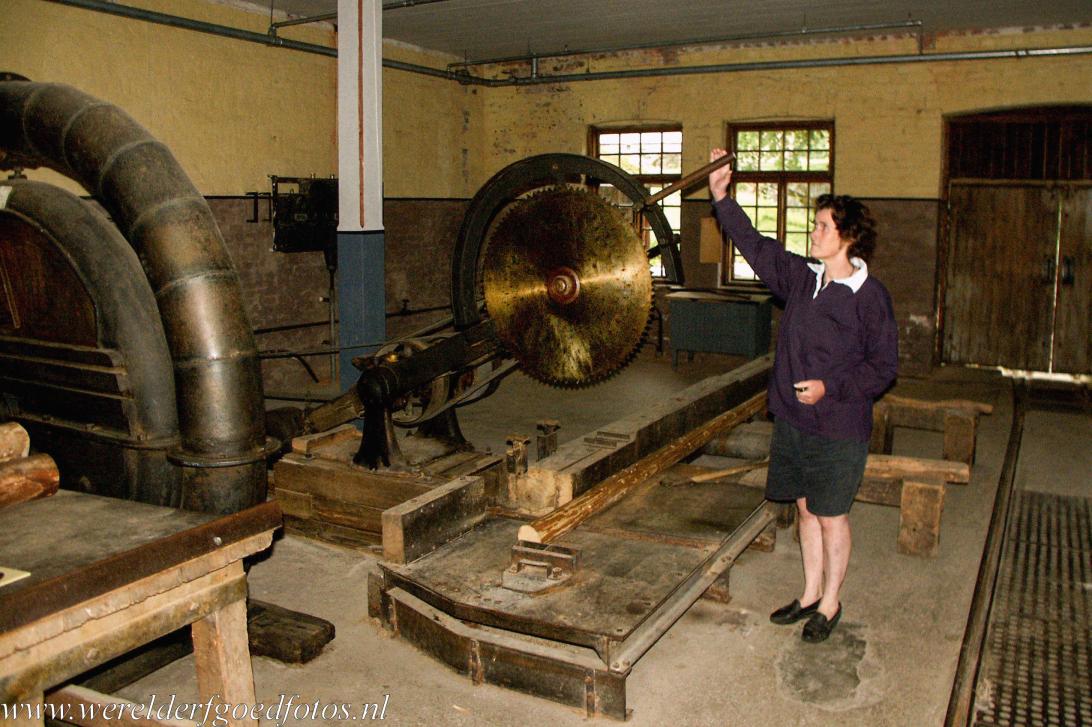
Verla Groundwood and Board Mill: This enormous circular saw dating from the early 20th century stood at the very beginning of the production line. The factory used wood as the raw material for making cardboard. Huge circular saws first cut the tree trunks into small blocks, after which the bark was removed. At the Verla Mill, this task was performed by hand by female workers. Subsequently, large grindstones and the addition of water were used to turn the wood into groundwood pulp. Spruce was widely used as the primary source for the pulp.

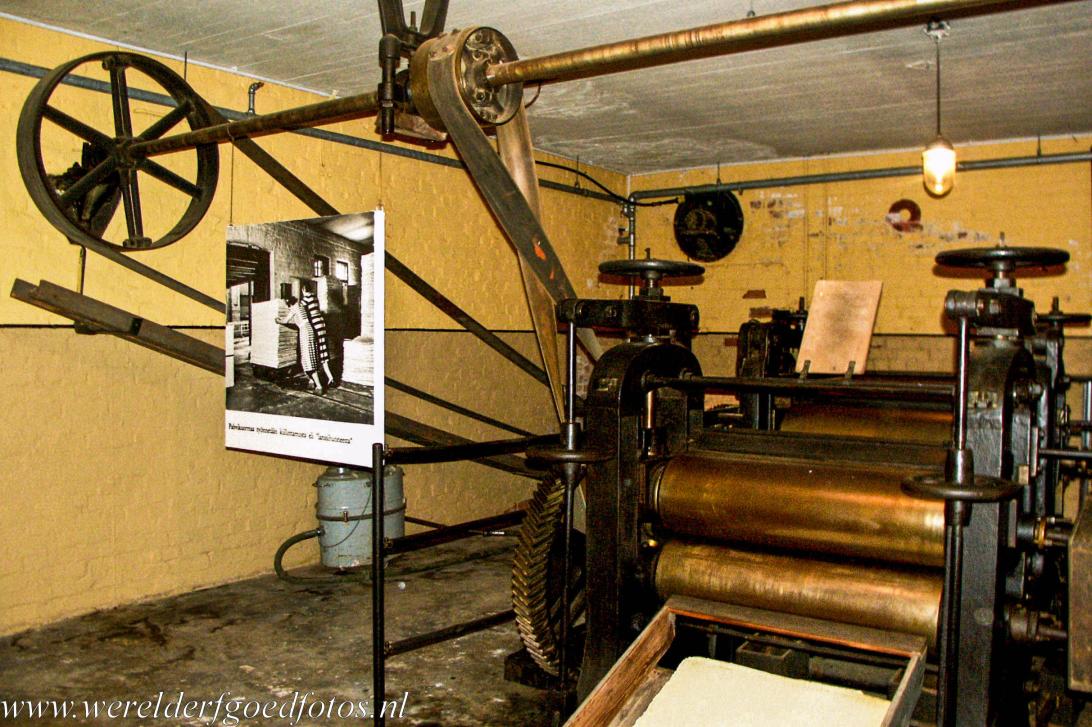
Verla Groundwood and Board Mill: This board calender was used to press the wet layers of wood pulp together. By passing the sheets through copper-coloured rollers, the excess water was forcefully squeezed out. Afterward, the sheets were hung in drying lofts. The machine was connected to a central shaft by means of drive belts. At the peak of production, the Verla Mill employed about 160 workers, most of whom were women working as machine operators and packers. After its closure, the Verla Mill became an industrial monument.

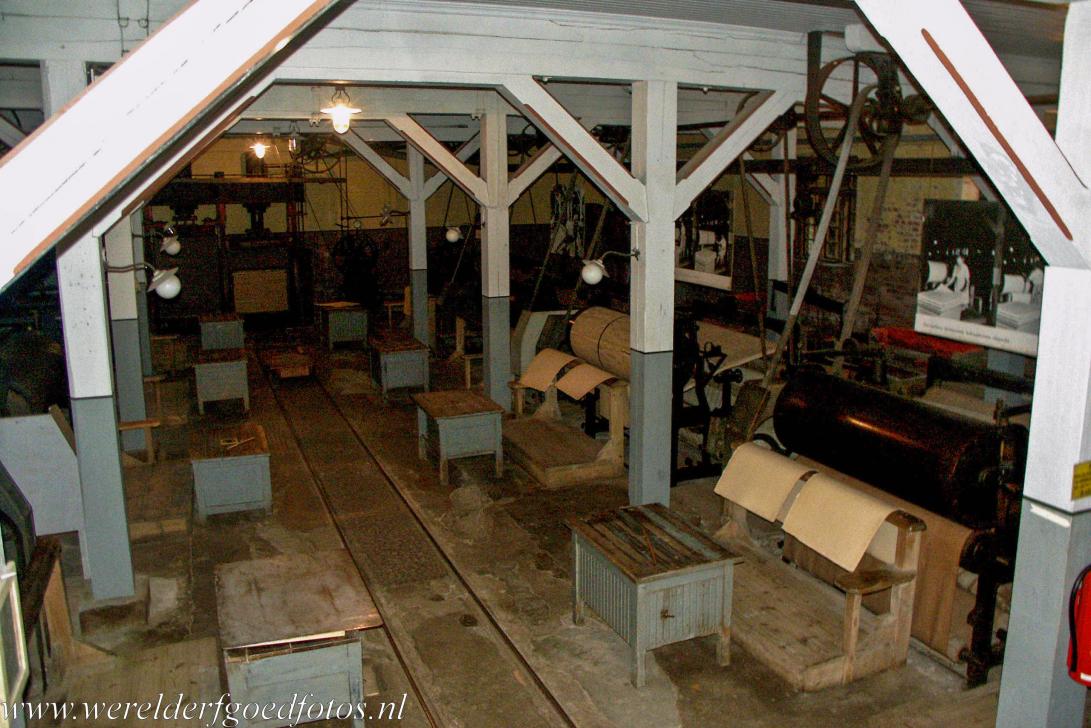
Verla Groundwood and Board Mill: The factory was powered by the force of the adjacent river rapids. Through a system of shafts, large wheels and leather belts, this harnessed energy was transmitted to the machines on the factory floor. The main product of the Verla Mill was white pulp board; it was mainly used for book covers and boxes. The pulp board was exported all over Europe, Russia and the United States. The Verla Mill was among the smallest groundwood and board mills in Finland, but had an excellent reputation.

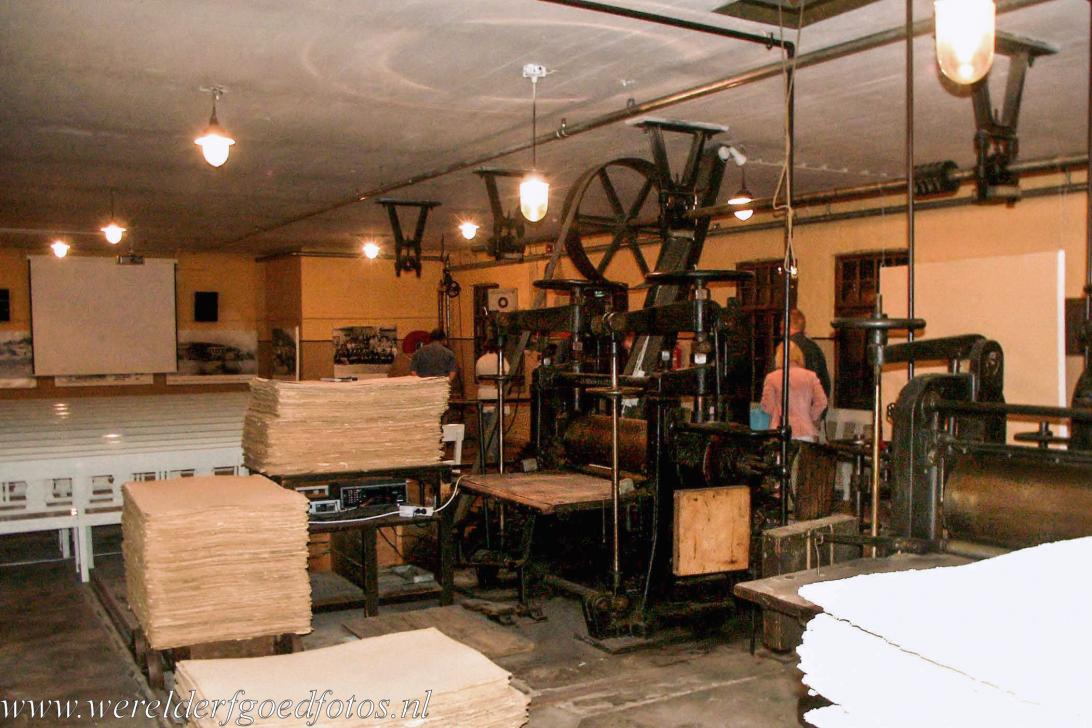
Verla Groundwood and Board Mill: The dried cardboard sheets were inspected in the sorting and quality control room. The women checked the sheets for irregularities and tears and weighed them to sort them by thickness and weight. The mill continued to operate until 1964. When the last workers reached the retirement age, the machines were switched off and the mill was closed. The factory became an industrial museum in 1972. The historic machinery was left intact and is still in working order.

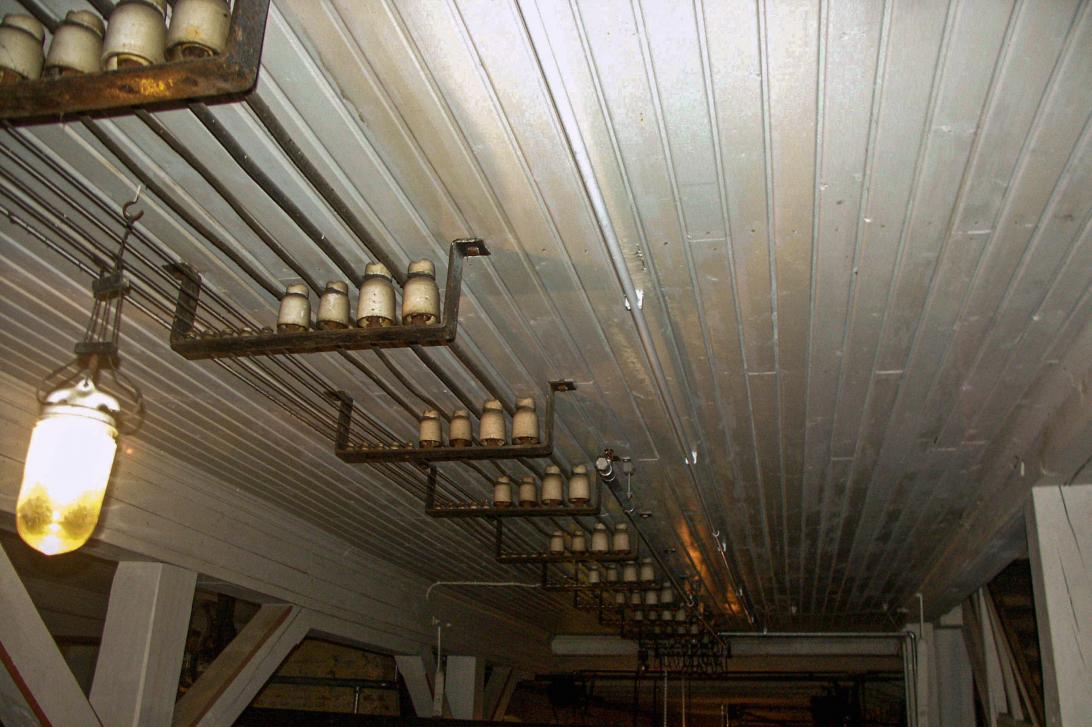
Verla Groundwood and Board Mill: These original knob-and-tube insulators were one of the earliest systems for electrical wiring in the factory buildings. This electric wiring system of the Verla Mill dates back to the 1920s and was very modern at the time. This wiring carried the generated electricity directly to the light bulbs, such as the vintage pendant lamp visible on the left, and the very first electric auxiliary motors. The Verla Mill produced about 150,000 tonnes of board throughout its existence. The Verla Mill became a UNESCO World Heritage Site in 1996.