Wadden Sea – Endless salt marshes and unspoiled nature
The German section of the Wadden Sea stretches along the country's northern coast. This exceptional transboundary sea is sheltered from the North Sea by a long string of Wadden Islands. Germany is home to 14 inhabited Wadden Islands, with Borkum, Norderney, and Sylt being the most well-known. These islands are major tourist attractions thanks to their golden-yellow beaches. They also have a long history of being home to numerous health resorts. The car-free island of Juist remains an exception; this serene island is a true paradise for walkers.
The Wadden Sea and the Wadden region extend from the coast near Den Helder in the Netherlands, along the coastline of Germany – including the national parks of Lower Saxony and Schleswig-Holstein – as far as Esbjerg in Denmark, crossing the estuaries of the rivers in the northwest of Germany. This shallow sea features a relatively flat coastal area with wetlands, estuaries, beaches, dunes, salt marshes and mud and sand flats – the Wadden. Marine mammals, including seals, inhabit these mudflats and sandbanks. The Wadden Sea is never the same; its currents make it a treacherous body of water. The mudflats, which can build up above sea level through the accumulation of silt to become salt marshes, are regularly submerged and provide an ideal habitat for salt-tolerant plants. These vibrant marshes are home to about 2,300 species of flora and fauna. Animals like seals live in the Wadden Sea and give birth to their pups on the sandflats, while the wider region serves as a popular breeding and staging ground for millions of migratory birds.
The Westerheversand Lighthouse is the most famous landmark on the Eiderstedt peninsula in the German state of Schleswig-Holstein, where thousands of migratory birds come to alight each year. The UNESCO World Heritage Site comprises the Dutch Wadden Sea Conservation Area, the German Wadden Sea National Parks of Lower Saxony and Schleswig-Holstein and most of the Wadden Sea in Denmark. The Dutch and German sections gained World Heritage Status in 2009, with the Vadehavet National Park in Denmark being added to the site in 2014. The entire Wadden Sea is celebrated as a natural World Heritage Site.
www.werelderfgoedfotos.nl © Copyright World Heritage Photos
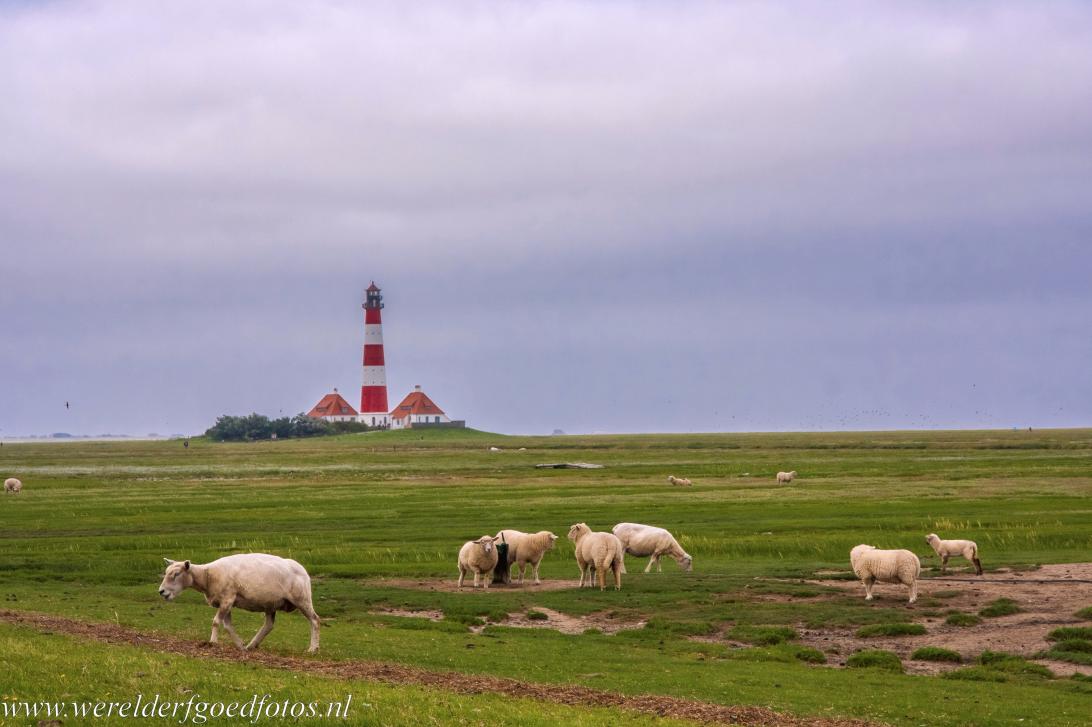
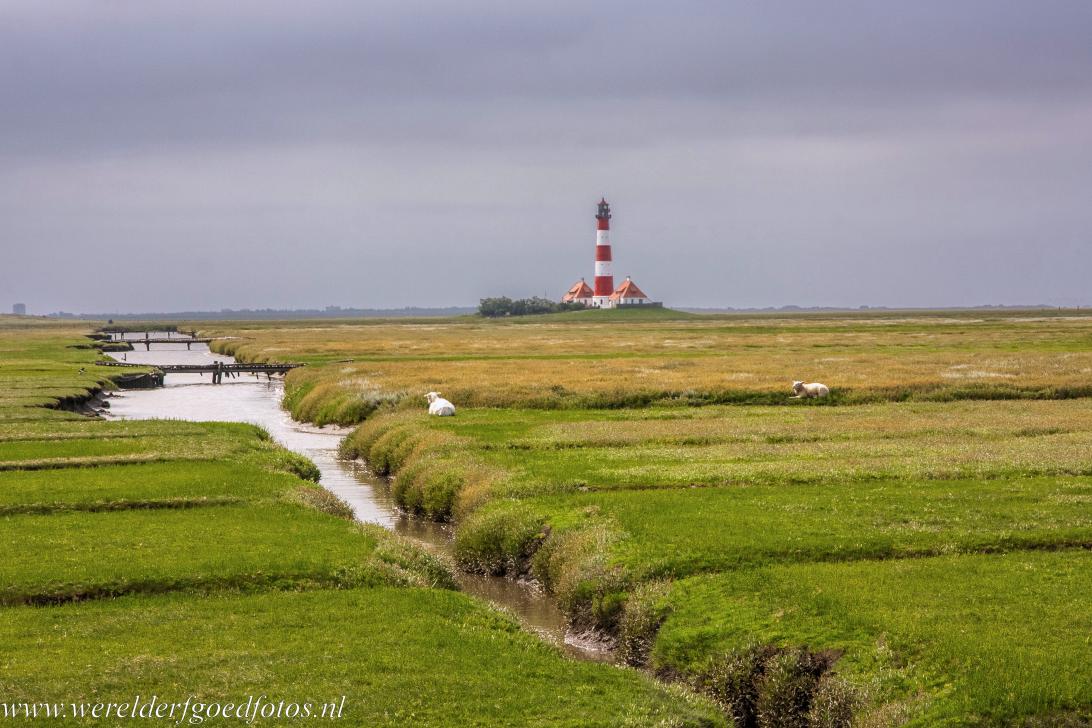
Wadden Sea: The Westerheversand Lighthouse is one of the most famous lighthouses in the northern part of Germany. This characteristic lighthouse is made of cast iron and stands about forty metres tall. The lighthouse is surrounded by the immense salt marshes of the Schleswig-Holstein Wadden Sea National Park, the largest national park in Germany. In 2009, the Dutch and German parts of the Wadden Sea were declared a UNESCO World Heritage Site.
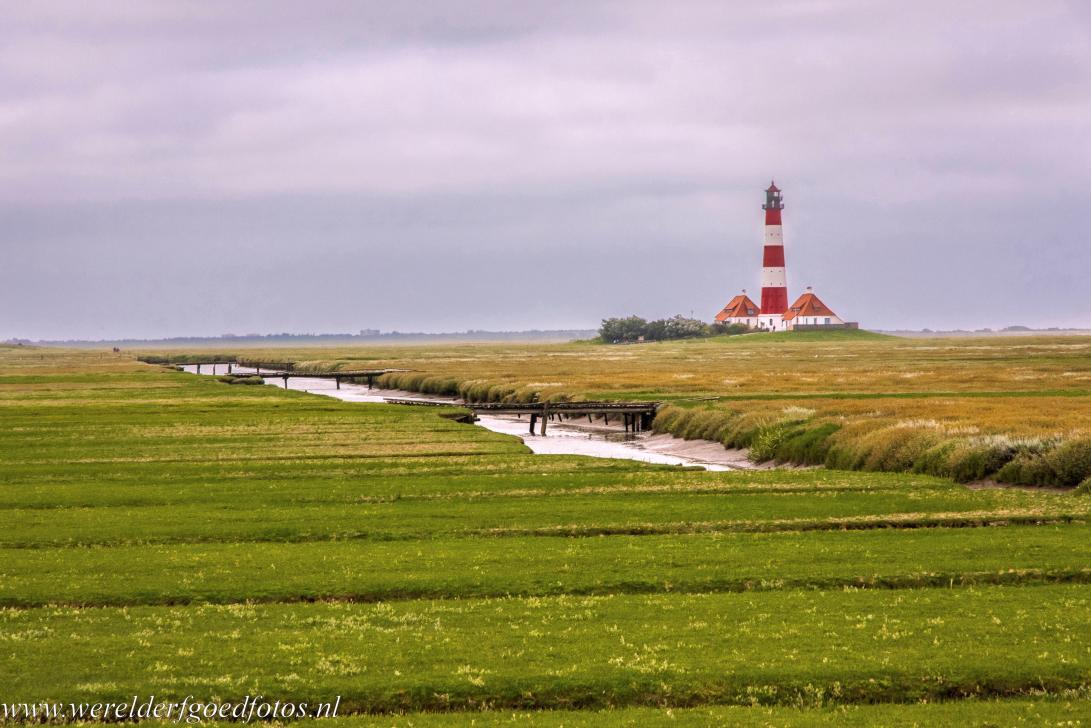
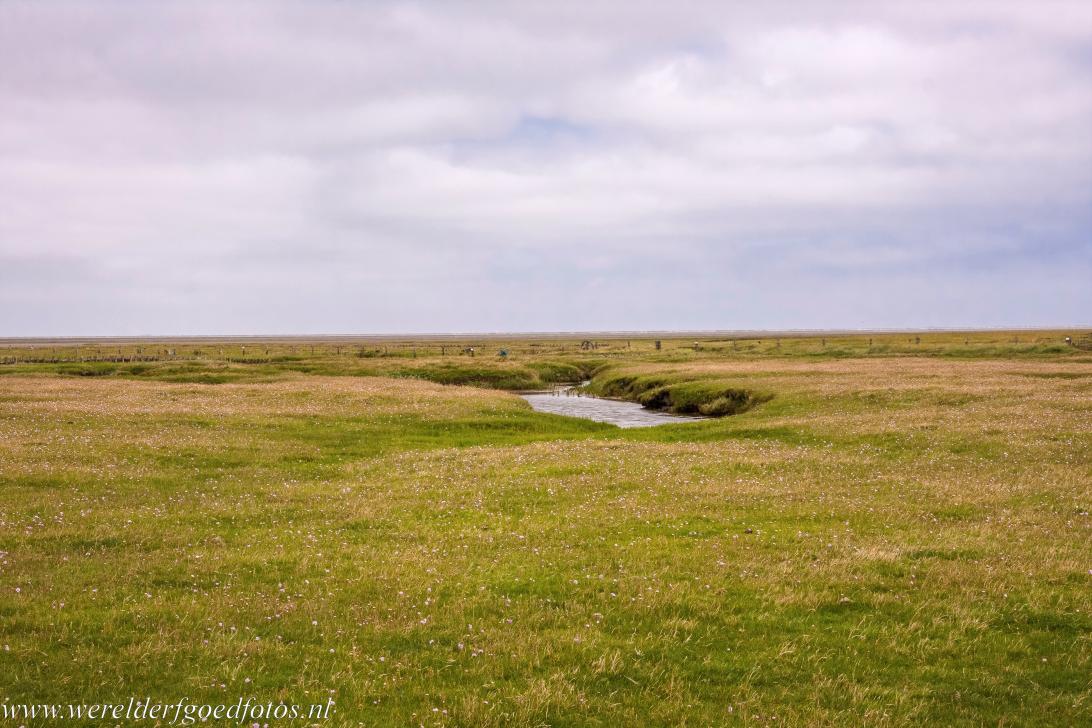
Wadden Sea: The Westerheversand Lighthouse is one of the most famous lighthouses in the northern part of Germany. This characteristic lighthouse is made of cast iron and stands about forty metres tall. The lighthouse is surrounded by the immense salt marshes of the Schleswig-Holstein Wadden Sea National Park, the largest national park in Germany. In 2009, the Dutch and German parts of the Wadden Sea were declared a UNESCO World Heritage Site.
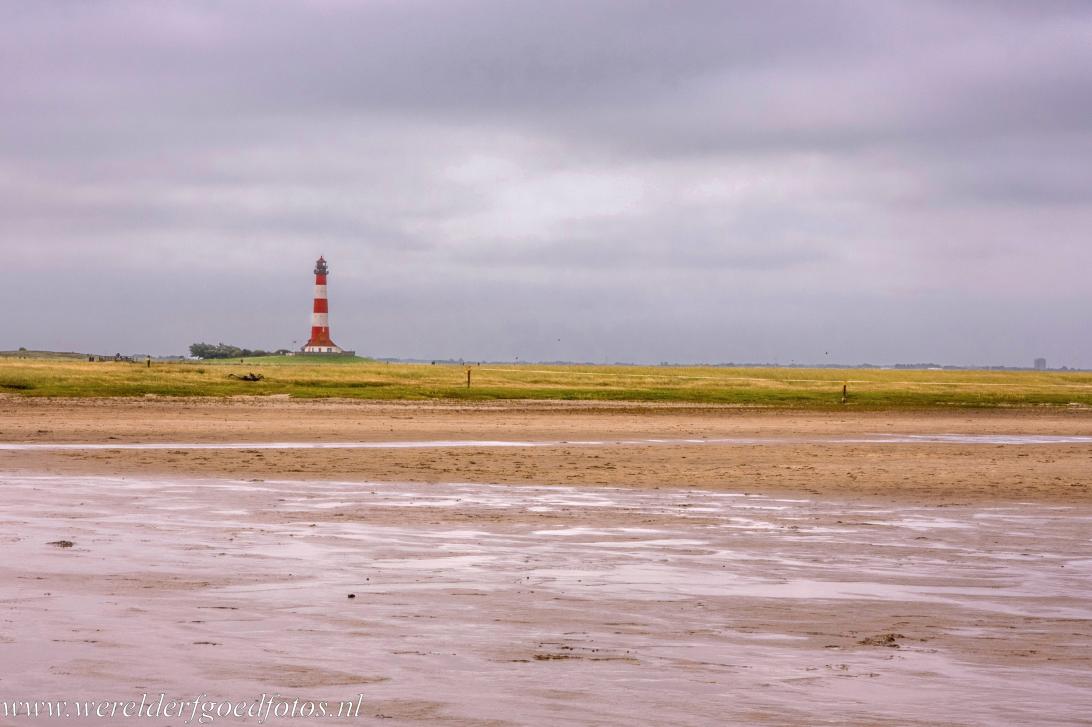
The German part of the Wadden Sea: The Westerheversand Lighthouse was built on a dwelling mound in 1907. The buildings of the lighthouse accommodate the Wadden Sea laboratory and an exhibition including fish tanks, shells, driftwood and many other treasures from the driftline of the Wadden Sea. The lighthouse is situated within a salt marsh on the Eiderstedt peninsula in the Schleswig-Holstein Wadden Sea National Park in Germany.

Wadden Sea: About 2,300 species of flora and fauna can be found in the vast salt marshes of the Wadden Sea. The sea provides a special and extreme environment for animals and plants, and it is an important breeding area for birds such as the common tern, Eurasian spoonbill and Kentish plover. The Wadden Sea is a vital staging area for migrating birds, visited twice a year by 12 million birds. The Wadden Sea is the largest unbroken system of intertidal sands and mudflats in the world and one of the most intriguing natural.

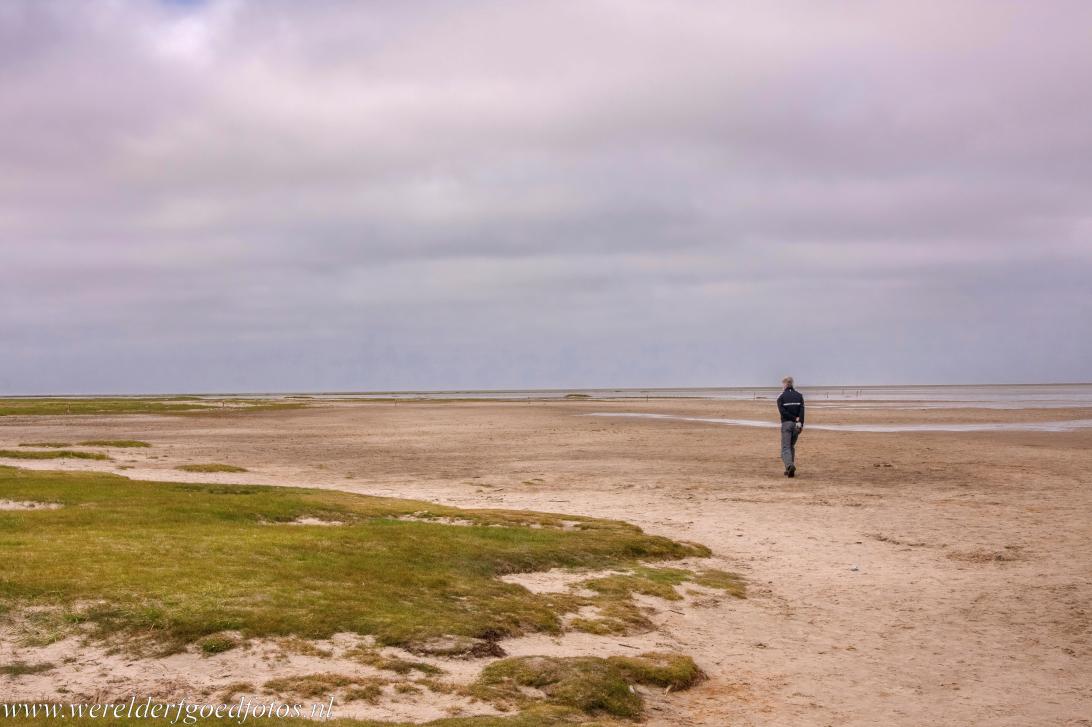
A lone mudflat walker crosses the mudflats in the Wadden Sea. It is an extremely treacherous sea. Mudflat walking without a licensed guide is highly dangerous, as the sea is continuously changing and forming new mudflats and vast sandbanks. The Wadden Sea stretches from Den Helder in the Netherlands in the southwest to its northern boundaries near Esbjerg in Denmark, crossing the great river estuaries in the northwest of Germany.

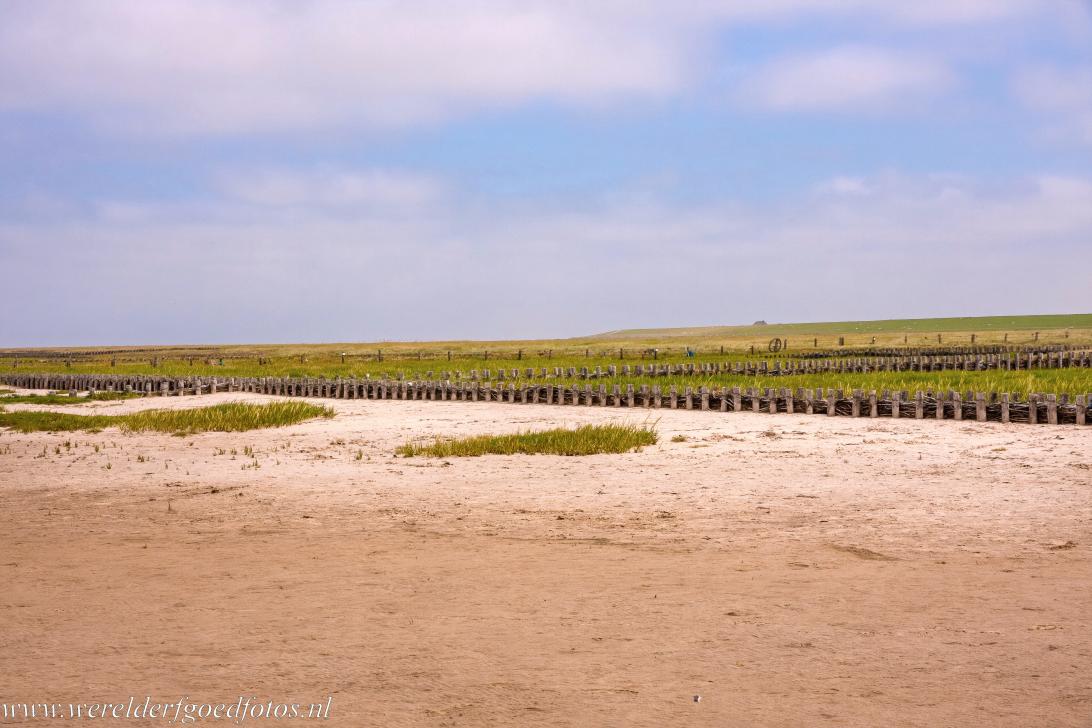
Wadden Sea: A tidal area outside the dykes featuring salt marshes and tidal flats. The Wadden Sea is the largest unbroken system of intertidal sands and mudflats in the world. At low tide, the mudflats and sandflats are exposed and give birds easy access to snails, insects, worms and small fish. At high tide, the birds seek shelter behind the sea dykes. The sands and dunes of the Wadden Sea are popular resting places for seals.

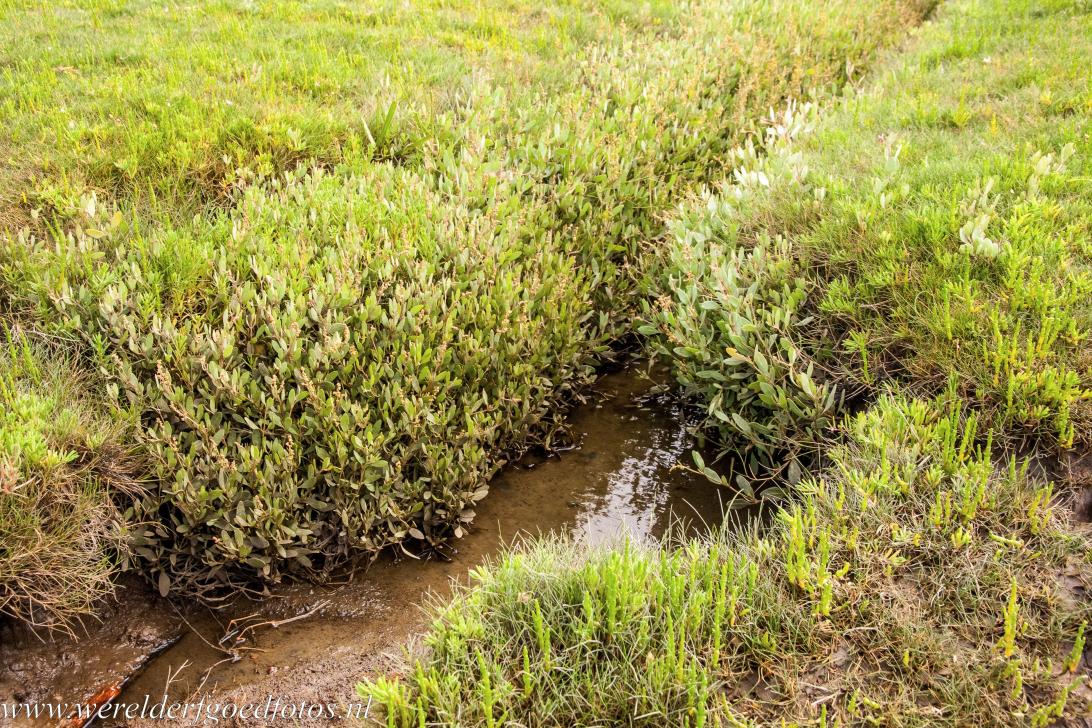
Wadden Sea: Sea purslane is a salt-tolerant plant. The salt marshes are situated between the land and the sea; low salt marshes are covered with water at high tide and exposed at low tide. The salt marshes are overgrown by salt-tolerant herbs and grasses. The Wadden Sea provides a special habitat for seals. The Schleswig-Holstein Wadden Sea is home to about 8,500 common seals and 280 grey seals. They give birth to their pups on the sandflats of this area.

Wadden Sea: The Westerheversand Lighthouse is a major landmark on the German Eiderstedt peninsula. The iconic structure is surrounded by the sandflats and salt marshes of the Wadden Sea. Thousands of migrating birds pass the lighthouse each year. In spring and autumn, brent and barnacle geese gather on the salt marshes in Schleswig-Holstein to graze during their long journey between the breeding grounds and wintering areas.

Wadden Sea: The Westerheversand and its iconic Lighthouse. The Wadden Sea comprises the Dutch Wadden Sea Conservation Area, the German Lower Saxony Wadden Sea National Park, the German Schleswig-Holstein Wadden Sea National Park, and the Vadehavet National Park in Denmark. The Dutch and the German parts of the Wadden Sea were inscribed on the UNESCO World Heritage List in 2009. The Danish part of the Wadden Sea was added in 2014.