Palaces and Parks of Potsdam and Berlin: Sanssouci Palace is the most famous of the palaces of Potsdam and Berlin. Sanssouci Palace and its park are situated just outside Potsdam. Potsdam is located about 24 km from Berlin, the capital of Germany. Sanssouci Palace was built for King Frederick the Great between 1745 and 1747. The design of the palace was based on sketches made by King Frederick the Great himself. Sanssouci is often considered the German rival to Versailles, but it is far smaller. The palace is only one storey high and has twelve rooms. The Marmorsaal is loosely based on the Pantheon in Rome. Sanssouci was the summer residence and favourite palace of King Frederick the Great. Over the years, several other buildings were built in Sanssouci Park, such as the New Palace and the Chinese House. The park surrounding Sanssouci contains many statues, follies and fountains, such as the Great Fountain in front of the palace. King Frederick the Great died in Sanssouci Palace in 1786. The king desired to be buried in a grave on the vineyard terrace near Sanssouci Palace. Even in death, he wanted to be near his beloved Sanssouci. His final wish was finally fulfilled in 1991. Besides the Palaces and Parks of Potsdam and Berlin, there are another two UNESCO World Heritage Monuments in Berlin: Berlin Modernism Housing Estates and Museumsinsel (Museum Island), Berlin. The Palaces and Parks of Potsdam and Berlin were declared a UNESCO World Heritage Site in 1990.
www.werelderfgoedfotos.nl © Copyright World Heritage Photos Classic Car Road Trip

The design of Sanssouci was based on sketches created by King Frederick the Great. Sanssouci Palace is often considered the German rival to Versailles, but it is far smaller. The palace is only one storey high and has only twelve rooms. Sanssouci was the favourite palace of Frederick the Great. Sanssouci was designated a UNESCO World Heritage Site in 1990 as part of the: Palaces and Parks of Potsdam and Berlin.
The design of Sanssouci was based on sketches created by King Frederick the Great. Sanssouci Palace is often considered the German rival to Versailles, but it is far smaller. The palace is only one storey high and has only twelve rooms. Sanssouci was the favourite palace of Frederick the Great. Sanssouci was designated a UNESCO World Heritage Site in 1990 as part of the: Palaces and Parks of Potsdam and Berlin.
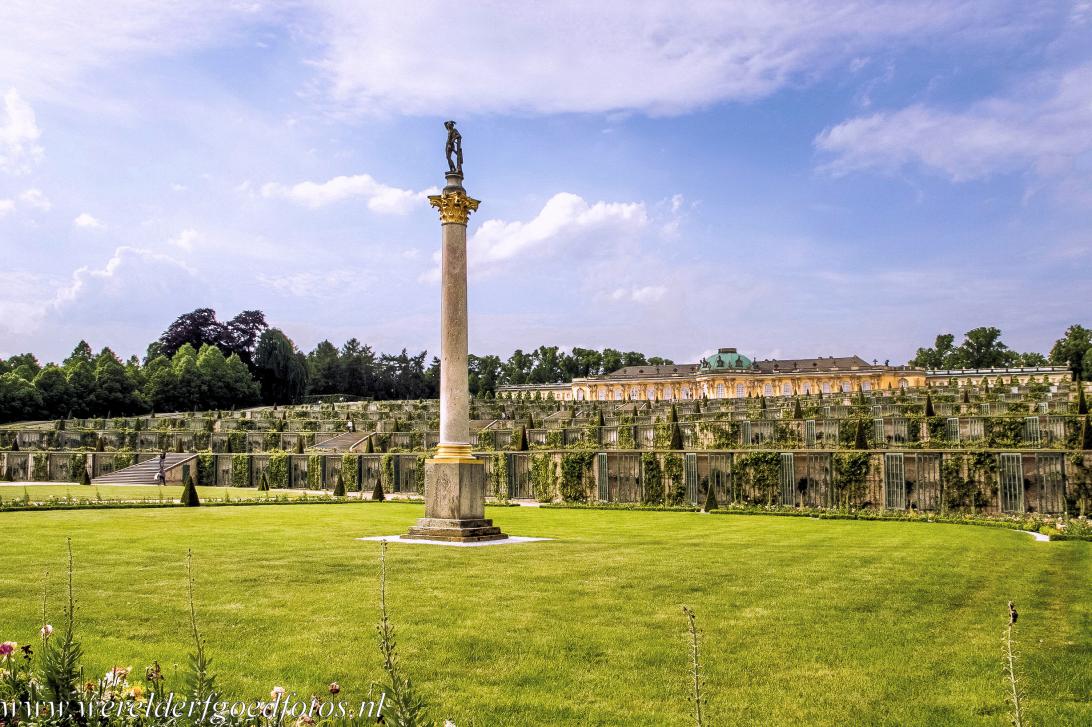
Palaces and Parks of Potsdam and Berlin: A column topped with a statue in front of Sanssouci Palace and its terraced gardens. This Rococo palace is located in Sanssouci Park in Potsdam. The park is an ensemble of palaces and gardens built during the 18th century for King Frederick II of Prussia. Sanssouci is the centrepiece of the palaces and parks of Potsdam and Berlin and served as the summer residence of King Frederick II, who was also known as Frederick the Great.

Palaces and Parks of Potsdam and Berlin: The Great Fountain in front of Sanssouci Palace. The fountain was built in 1748 and rises to a height of 38 metres. Sanssouci is a small palace located in Potsdam. It was built for King Frederick the Great between 1745 and 1747. It is renowned for its fine blend of French and Italian Rococo styles. Sanssouci Palace is part of the UNESCO World Heritage Site: Palaces and Parks of Potsdam and Berlin.

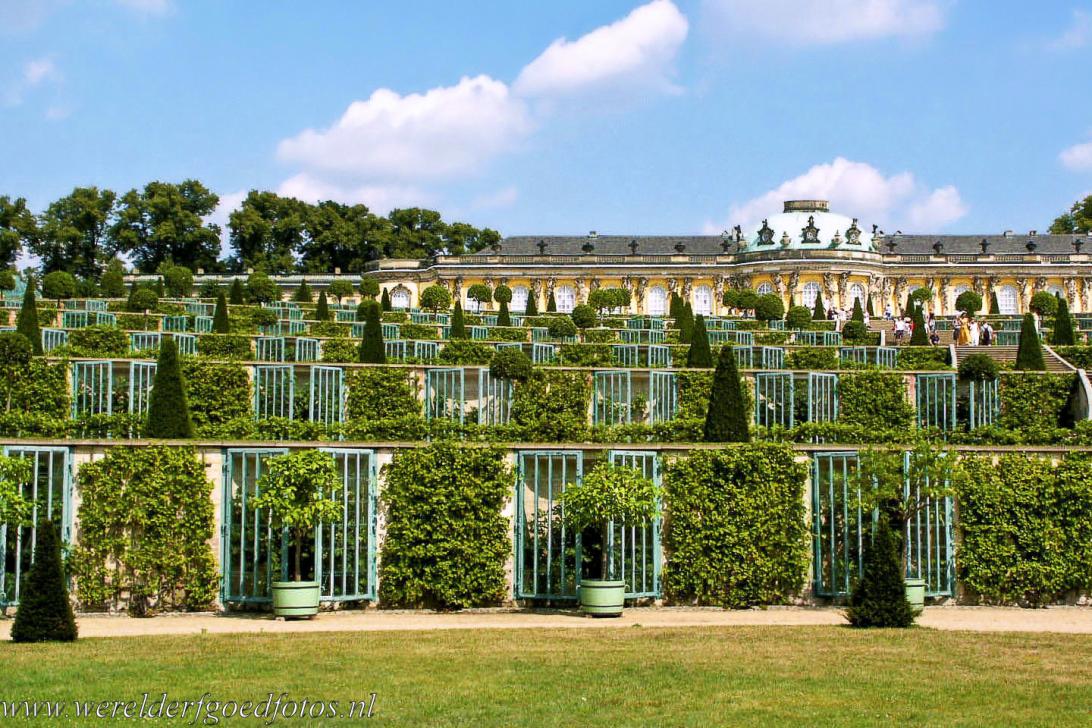
Palaces and Parks of Potsdam and Berlin: The vineyard terraces in front of Sanssouci Palace in Potsdam. Frederick the Great ordered the establishment of a vegetable and fruit garden. The gardens and the greenhouses were planted with more than 3,000 fruit trees, including bananas, oranges and peaches. Frederick the Great called Sanssouci 'mein Weinberghäuschen' (my little vineyard house). The park surrounding Sanssouci contains many statues, follies and fountains.

Palaces and Parks of Potsdam and Berlin: Frederick the Great died in this armchair in the study of his beloved Sanssouci Palace in Potsdam. Sanssouci was his favourite palace and his private refuge. The design of Sanssouci was based on sketches made by Frederick the Great himself; he did not accept any suggestions for changing his plans. The king wanted a small residence that he could enter directly from the gardens. After World War II, Sanssouci Palace became a popular tourist attraction.

Palaces and Parks of Potsdam and Berlin: The final resting place of King Frederick the Great in the forecourt of Sanssouci Palace in Potsdam. King Frederick the Great wished to be buried in a tomb next to the palace, alongside his favourite dogs. To this day, visitors leave potatoes on his grave. During a famine, Frederick the Great offered free potatoes to his farmers and he ordered a national cultivation programme; he recognised the potato's potential to feed his nation.

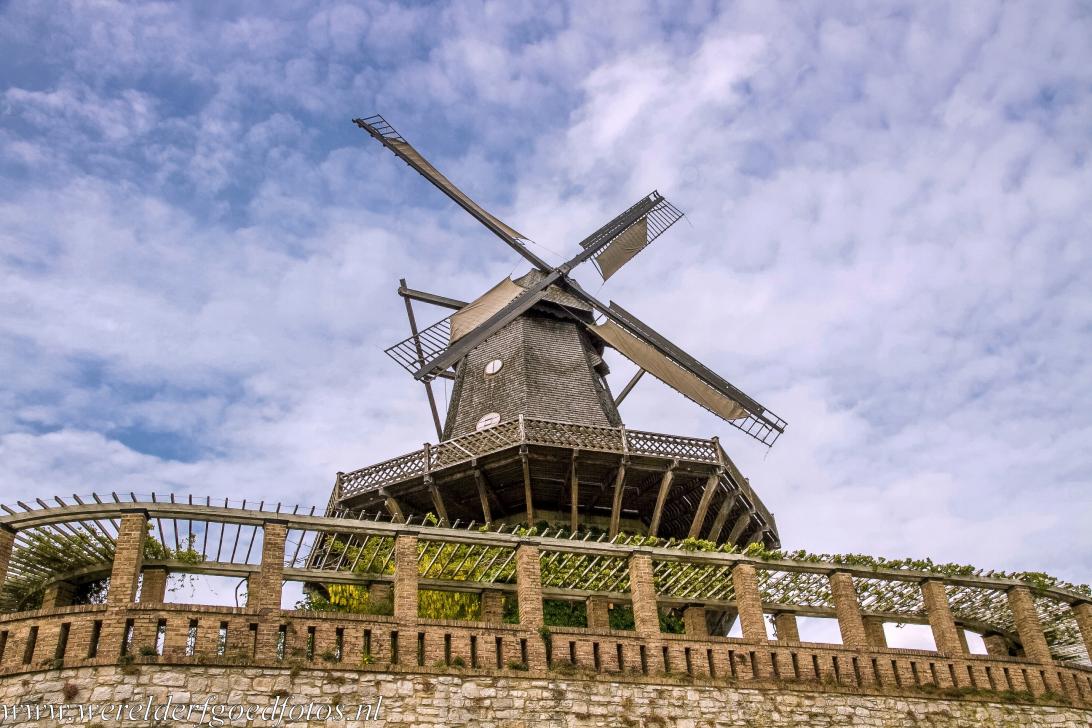
Palaces and Parks of Potsdam and Berlin: The historic windmill at Sanssouci Palace is part of the parkland in Potsdam. The original windmill was built between 1787 and 1791. On 27 April 1945, shortly before the end of the Second World War, it burnt down completely during heavy fighting around the palace. The iconic windmill was rebuilt between 1991 and 1993 to commemorate Potsdam's 1,000th anniversary.

Palaces and Parks of Potsdam and Berlin: The grave of Frederick the Great on the uppermost vineyard terrace in Sanssouci Park in Potsdam. Frederick the Great wished to be buried next to his dogs and Sanssouci Palace. His successors did not fulfil his final wish; he was instead buried next to his father in the Potsdam Garrison Church. His wish was finally fulfilled in 1991, over 205 years after his death (1786), when the King's sarcophagus was interred in the upper terrace of his beloved and favourite palace.

Palaces and Parks of Potsdam and Berlin: A trellis gazebo next to Sanssouci Palace. There are two free-standing trellised gazebos, embellished with gilded ornaments. The palaces in Potsdam with their beautiful parks were the favourite residences of the German Imperial family until the fall of the Hohenzollern dynasty in 1918, immediately after the First World War. Wilhelm II, the last German Emperor, fled to the Netherlands, where he spent the last years of his life in exile.

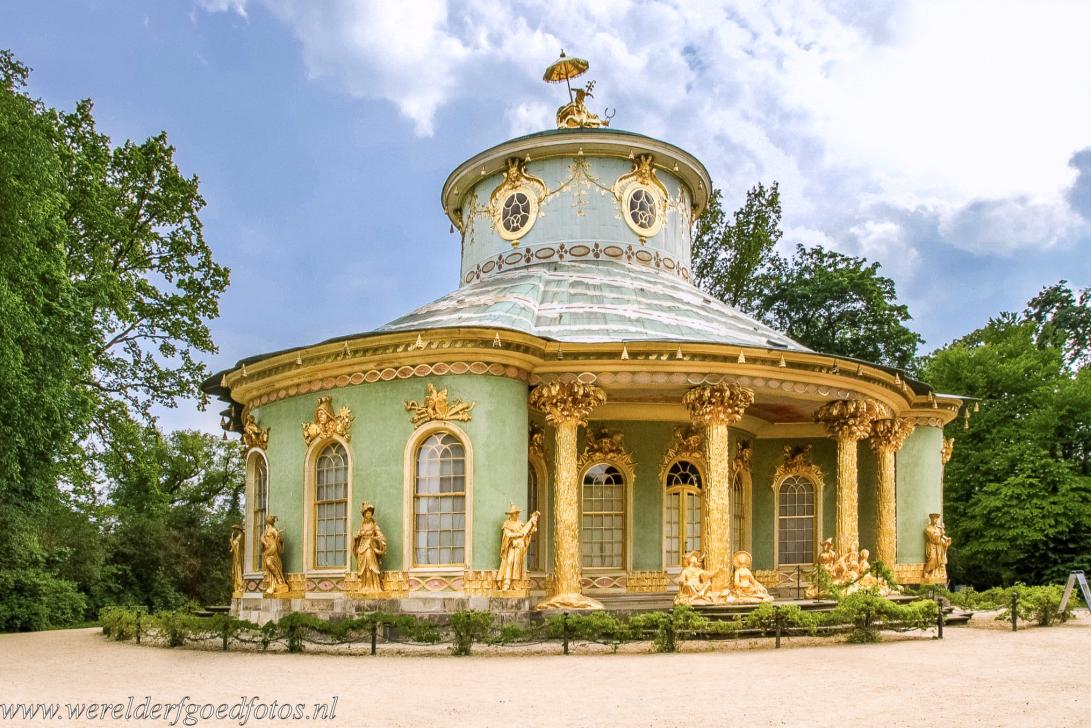
Palaces and Parks of Potsdam and Berlin: The Chinese House is a garden pavilion in Potsdam; it was built between 1754 and 1757. The pavilion is an outstanding example of the 18th-century Chinoiserie; this style blends Western and Oriental architecture. The Chinese House is situated in Sanssouci Park not far from Sanssouci Palace and the Neues Palais. It houses a collection of Meissen and Asian porcelain. The Chinese House is part of the UNESCO World Heritage Site: Palaces and Parks of Potsdam and Berlin.