Paleizen van Potsdam en Berlijn

Palaces and Parks of Potsdam and Berlin: Enkele parken en paleizen van Berlijn en Potsdam zijn Werelderfgoed van UNESCO. Middelpunt van de paleizen in Potsdam is Schloss Sanssouci. Sanssouci werd in 1745-1747 gebouwd in opdracht van de Pruisische koning Frederik de Grote. Frederik de Grote overleed in 1786 op Sanssouci. Hij ligt in Park Sanssouci voor Slot Sanssouci begraven. Werelderfgoedfoto's: Slot Sanssouci 

Behalve Slot Sanssouci staan in Park Sanssouci o.a. de Friedenskirche, een Chinees Paviljoen en het Neues Palais. Het Neues Palais uit 1763-1769 is het laatste paleis wat Frederik de Grote liet bouwen. Overleden vorsten en hun kinderen zijn bijgezet in de Friedenskirche. Het mausoleum van keizer Frederik III (1831-1888) en keizerin Victoria is imposant. De Friedenskirche werd gebouwd in 1845-1854. Buiten Park Sanssouci liggen meerdere paleizen. Slot Cecilienhof is het laatst gebouwde paleis in Potsdam. Het in Engelse landhuisstijl gebouwde Slot Cecilienhof stamt uit 1914-1917. In 1945 werd de Conferentie van Potsdam in Slot Cecilienhof gehouden, de kamers, die gebruikt zijn door Churchill, Stalin en Truman zijn in originele staat. De Russische kolonie Alexandrowka in Potsdam werd gebouwd in 1826-1827. In Alexandrowka staat de Russisch-orthodoxe Alexander Newski kerk. De Alexander Newski kerk heeft dezelfde architect als het Altes Museum in Berlijn. Alexandrowka was het onderkomen voor Russische zangers van het 1ste Pruisische Garderegiment. 

De paleizen van Potsdam en Berlijn in Duitsland werden in 1990 een UNESCO Werelderfgoed en staan op de Werelderfgoedlijst van UNESCO als: Palaces and Parks of Potsdam and Berlin

www.werelderfgoedfotos.nl   Palaces and Parks of Potsdam and Berlin   World Heritage Photos

  Neues Palais : Het Nieuwe Paleis in Potsdam.   Neues Palais:   The New Palace in Potsdam.  
  Palaces and Parks of Potsdam and Berlin   became a World Heritage Site in 1999.

Neues Palais: Het Nieuwe Paleis in Potsdam.  Neues Palais: The New Palace in Potsdam.

Palaces and Parks of Potsdam and Berlin became a World Heritage Site in 1999.

  Neues Palais : Het Nieuwe Paleis in Potsdam.   Neues Palais:   The New Palace in Potsdam.  
  Palaces and Parks of Potsdam and Berlin   became a World Heritage Site in 1999.

Neues Palais: Het Nieuwe Paleis in Potsdam.  Neues Palais: The New Palace in Potsdam.

Palaces and Parks of Potsdam and Berlin became a World Heritage Site in 1999.

                             
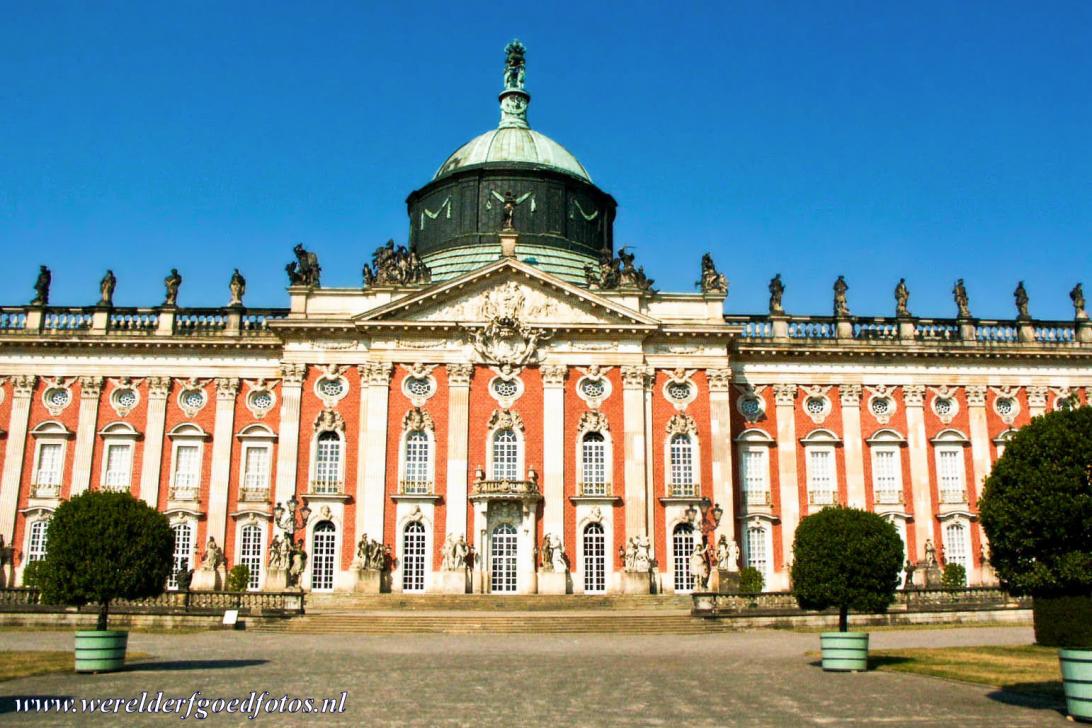
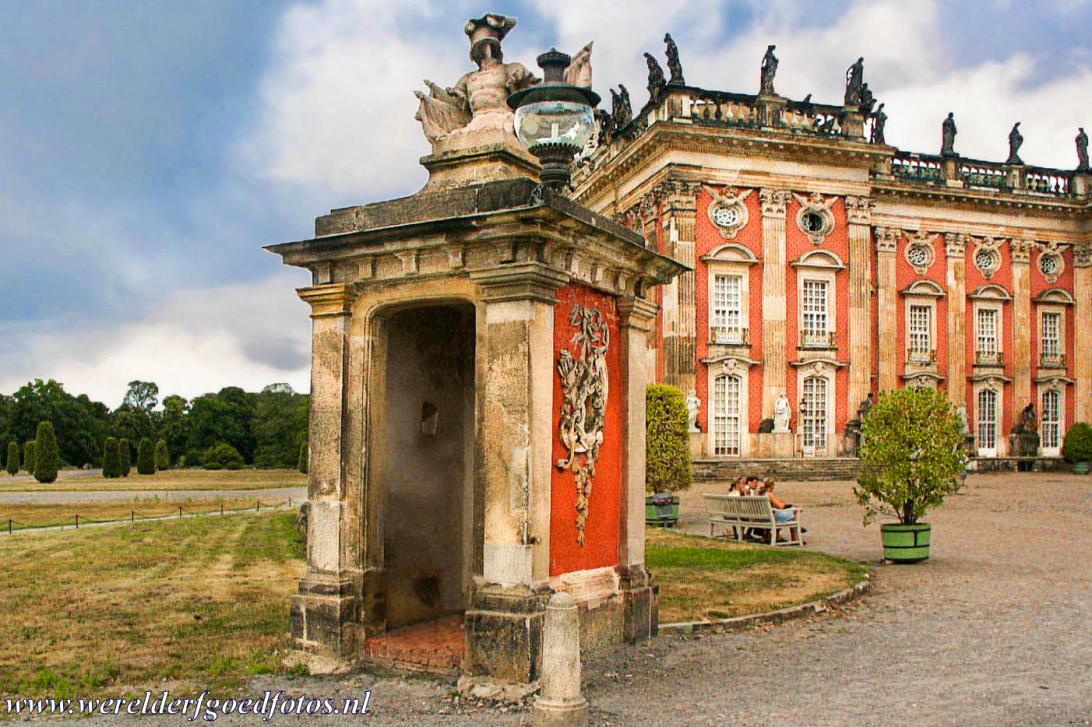
 Potsdam: Het  Neues Palais , het Nieuwe Paleis. 
 Het  Neues Palais  werd in opdracht van koning Frederik de Grote gebouwd in 1763-1769. 
 Het paleis ligt in  Park Sanssouci  in Potsdam. Frederik de Grote gebruikte het  Neues Palais  
 uitsluitend voor ontvangst van koninklijke gasten en belangrijke personen. Zelf verbleef 
 hij het liefst op het iets verderop gelegen  Slot Sanssouci . Later werd het  Neues Palais  de 
 residentie van de laatste keizer van Duitsland Wilhelm II.   
 Het  Neues Palais  in Potsdam maakt deel uit van de UNESCO Werelderfgoedsite: 
 Paleizen en parken van Potsdam en Berlijn. 
 De paleizen en parken van Potsdam en Berlijn werden in 1990 Werelderfgoed van 
 UNESCO en ingeschreven op de Werelderfgoedlijst van UNESCO als: 
   Palaces and Parks of Potsdam and Berlin.   
                              
  Potsdam: The Neues Palais, the New Palace.  
  The Neues Palais was built under King Frederick the Great in 1763-1769.   For the king   
  the Neues Palais was not his principal residence, he used the palace   for the reception   
  of important royals and dignitaries, Frederick the Great lived in   Sanssouci Palace,   
  his favorite palace.  The Neues Palais in Potsdam is   located near Sanssouci Palace.  
  The Neues Palais was also the residence of Wilhelm II, the last German Emperor.  
  The Neues Palais in Potsdam is part of the UNESCO  World Heritage Site:    
   Palaces and Parks of Potsdam and Berlin.   
  Palaces and Parks of Potsdam and Berlin were inscribed on the  
  UNESCO World Heritage List in 1990.


Potsdam: Het Neues Palais, het Nieuwe Paleis.

Het Neues Palais werd in opdracht van koning Frederik de Grote gebouwd in 1763-1769.

Het paleis ligt in Park Sanssouci in Potsdam. Frederik de Grote gebruikte het Neues Palais

uitsluitend voor ontvangst van koninklijke gasten en belangrijke personen. Zelf verbleef

hij het liefst op het iets verderop gelegen Slot Sanssouci. Later werd het Neues Palais de

residentie van de laatste keizer van Duitsland Wilhelm II.  

Het Neues Palais in Potsdam maakt deel uit van de UNESCO Werelderfgoedsite:

Paleizen en parken van Potsdam en Berlijn.
De paleizen en parken van Potsdam en Berlijn werden in 1990 Werelderfgoed van

UNESCO en ingeschreven op de Werelderfgoedlijst van UNESCO als:

Palaces and Parks of Potsdam and Berlin.


Potsdam: The Neues Palais, the New Palace.

The Neues Palais was built under King Frederick the Great in 1763-1769. For the king

the Neues Palais was not his principal residence, he used the palace for the reception

of important royals and dignitaries, Frederick the Great lived in Sanssouci Palace,

his favorite palace. The Neues Palais in Potsdam is located near Sanssouci Palace.

The Neues Palais was also the residence of Wilhelm II, the last German Emperor.

The Neues Palais in Potsdam is part of the UNESCO World Heritage Site:

Palaces and Parks of Potsdam and Berlin.

Palaces and Parks of Potsdam and Berlin were inscribed on the

UNESCO World Heritage List in 1990.

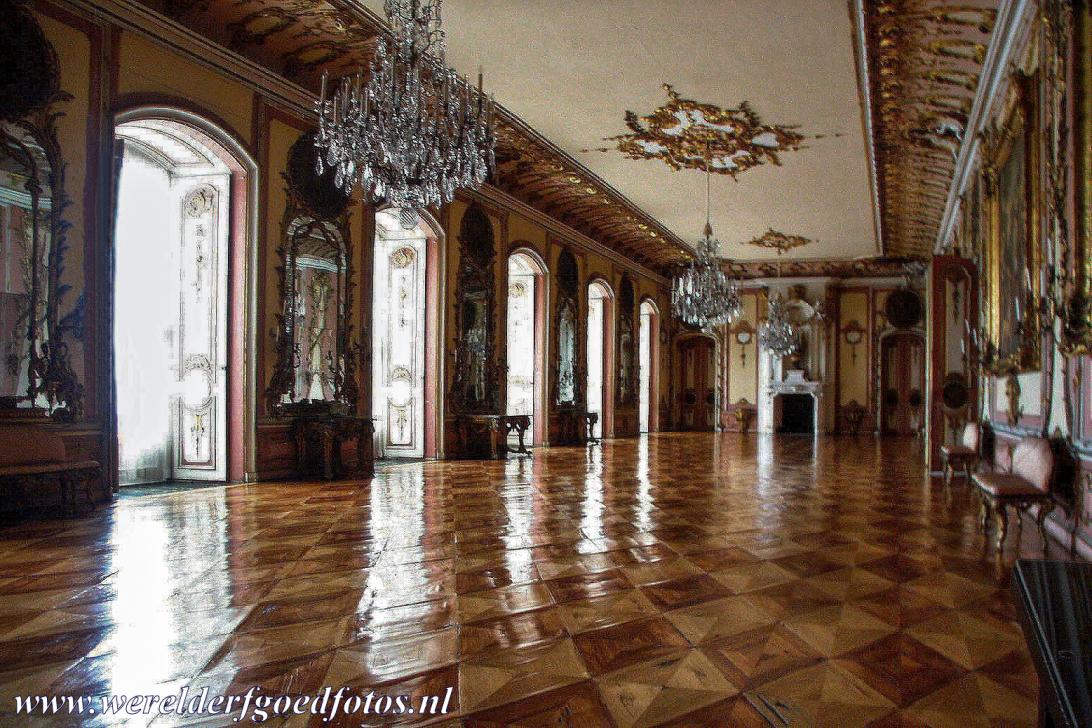
 Potsdam: De balzaal van het  Neues Palais . 
 Na zijn troonsafstand in 1918 kreeg keizer Wilhelm II asiel in Nederland. Hij nam de 
 meeste meubels uit het  Neues Palais  mee naar Huis Doorn. De overige meubels werden 
 in WO II geroofd door Sovjetsoldaten. In 1970 ontdekte men in Nederland het grootste 
 deel van de nog in kratten opgeslagen meubels. Ze werden teruggezonden naar Potsdam 
 en staan nu in het  Neues Palais , daarom ziet het  Neues Palais  er weer uit zoals in 1918. 
    
  Palaces and Parks of Potsdam and Berlin: The Neues Palais ball room.  
  After the abdication of Wilhelm II in 1918 he fled to exile in the Netherlands. Most of  
  the Neues Palais furniture was taken to the residence of Wilhelm II at House Doorn in  
  the Netherlands. Some of the furniture was looted by the Soviet   Army in WW II.  
  The majority of the furniture was discovered by the Dutch in 1970, still in the   
  packing   crates, the furniture was returned to Potsdam. Because of this, the   
  Neues Palais   looks as it did in 1918.

Potsdam: De balzaal van het Neues Palais.

Na zijn troonsafstand in 1918 kreeg keizer Wilhelm II asiel in Nederland. Hij nam de

meeste meubels uit het Neues Palais mee naar Huis Doorn. De overige meubels werden

in WO II geroofd door Sovjetsoldaten. In 1970 ontdekte men in Nederland het grootste

deel van de nog in kratten opgeslagen meubels. Ze werden teruggezonden naar Potsdam

en staan nu in het Neues Palais, daarom ziet het Neues Palais er weer uit zoals in 1918.


Palaces and Parks of Potsdam and Berlin: The Neues Palais ball room.

After the abdication of Wilhelm II in 1918 he fled to exile in the Netherlands. Most of

the Neues Palais furniture was taken to the residence of Wilhelm II at House Doorn in

the Netherlands. Some of the furniture was looted by the Soviet Army in WW II.

The majority of the furniture was discovered by the Dutch in 1970, still in the

packing crates, the furniture was returned to Potsdam. Because of this, the

Neues Palais looks as it did in 1918.

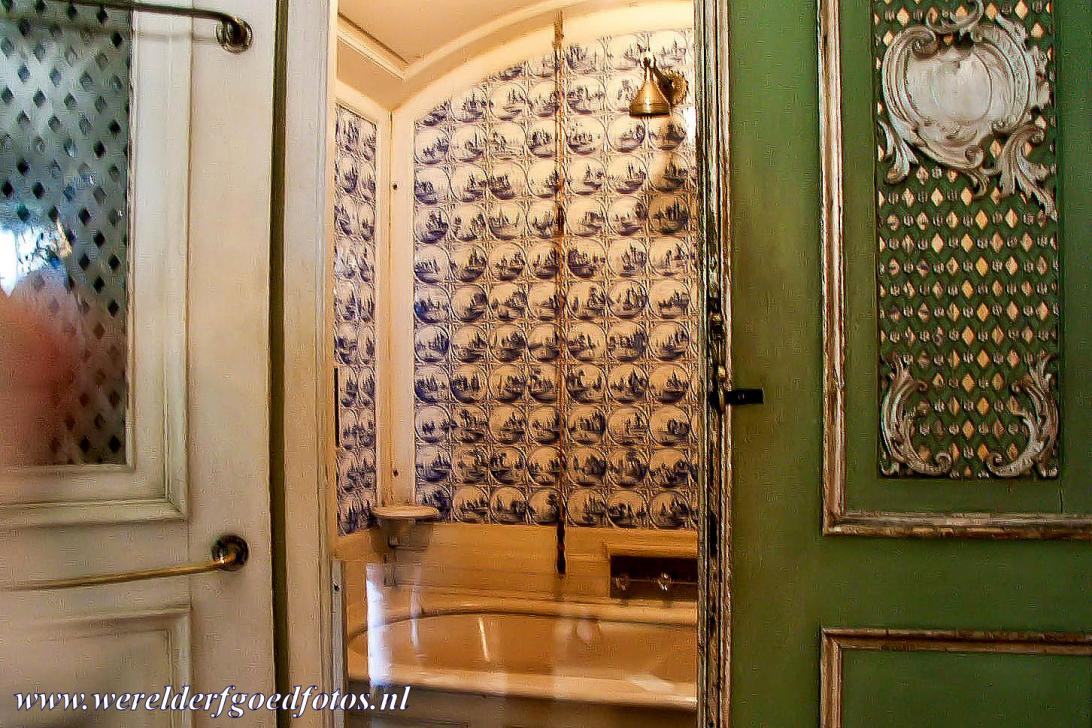
 Potsdam: Een badkamer met tegels van Delfts blauw in het  Neues Palais . 
              
  Palaces and Parks of Potsdam and Berlin:  
  The   New Palace, a bathroom decorated with Delft Blue tiles.

Potsdam: Een badkamer met tegels van Delfts blauw in het Neues Palais.


Palaces and Parks of Potsdam and Berlin:

The New Palace, a bathroom decorated with Delft Blue tiles.

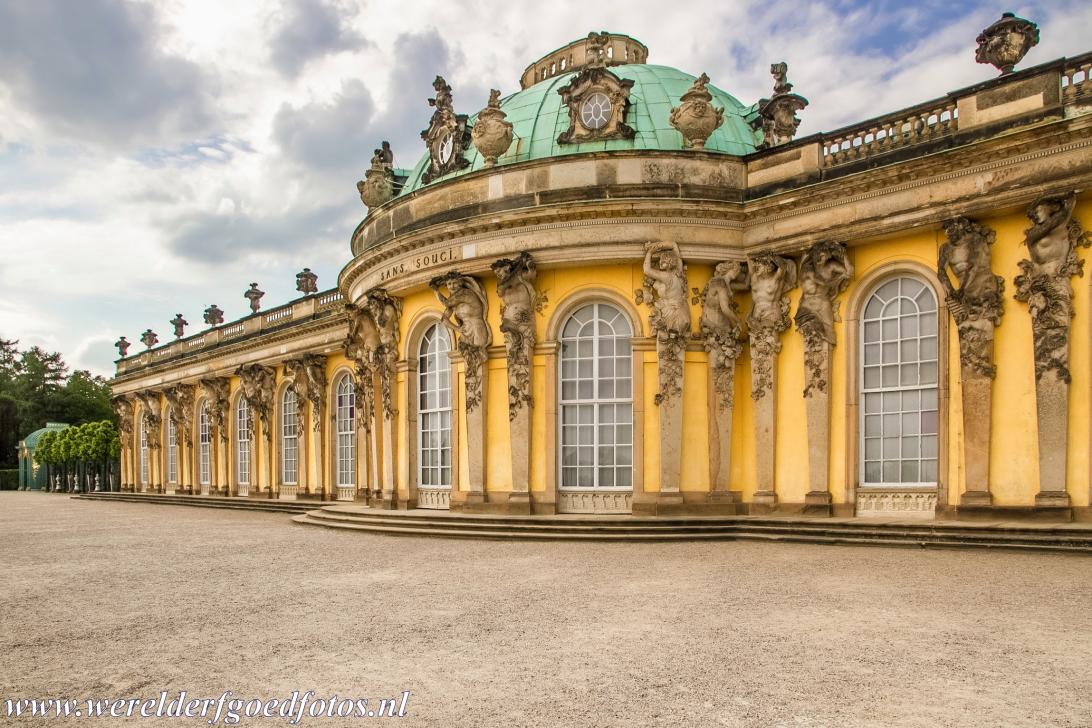
 Potsdam:  Slot Sanssouci  werd gebouwd in opdracht van Frederik de Grote.  Sanssouci  was 
 het paleis waar Frederik de Grote het liefst verbleef. Frederik de Grote is op  Sanssouci  
 overleden.  Slot Sanssouci  in Potsdam maakt deel uit van de UNESCO Werelderfgoedsite: 
 Paleizen en parken van Potsdam en Berlijn. 
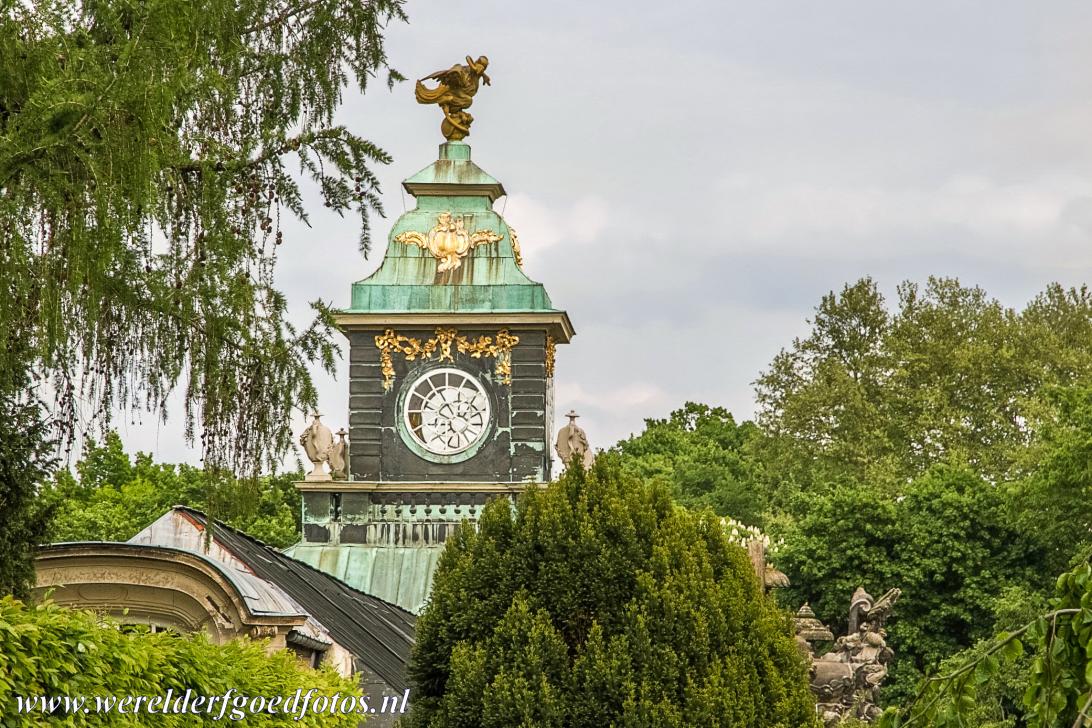
 Meer foto's van  Slot Sanssouci : Werelderfgoedfoto's  Sanssouci  in Potsdam. 
         
  Palaces and Parks of Potsdam and Berlin:   
  Sanssouci Palace was built for Frederick the Great in 1745-1747.   
  Sanssouci Palace   was the favourite palace of Frederick the Great.  
  Sanssouci Palace in Potsdam is part of the UNESCO  World Heritage Site:    
   Palaces and Parks of Potsdam and Berlin.

Potsdam: Slot Sanssouci werd gebouwd in opdracht van Frederik de Grote. Sanssouci was

het paleis waar Frederik de Grote het liefst verbleef. Frederik de Grote is op Sanssouci

overleden. Slot Sanssouci in Potsdam maakt deel uit van de UNESCO Werelderfgoedsite:

Paleizen en parken van Potsdam en Berlijn.
Meer foto's van Slot Sanssouci: Werelderfgoedfoto's Sanssouci in Potsdam.


Palaces and Parks of Potsdam and Berlin:

Sanssouci Palace was built for Frederick the Great in 1745-1747.

Sanssouci Palace was the favourite palace of Frederick the Great.

Sanssouci Palace in Potsdam is part of the UNESCO World Heritage Site:

Palaces and Parks of Potsdam and Berlin.

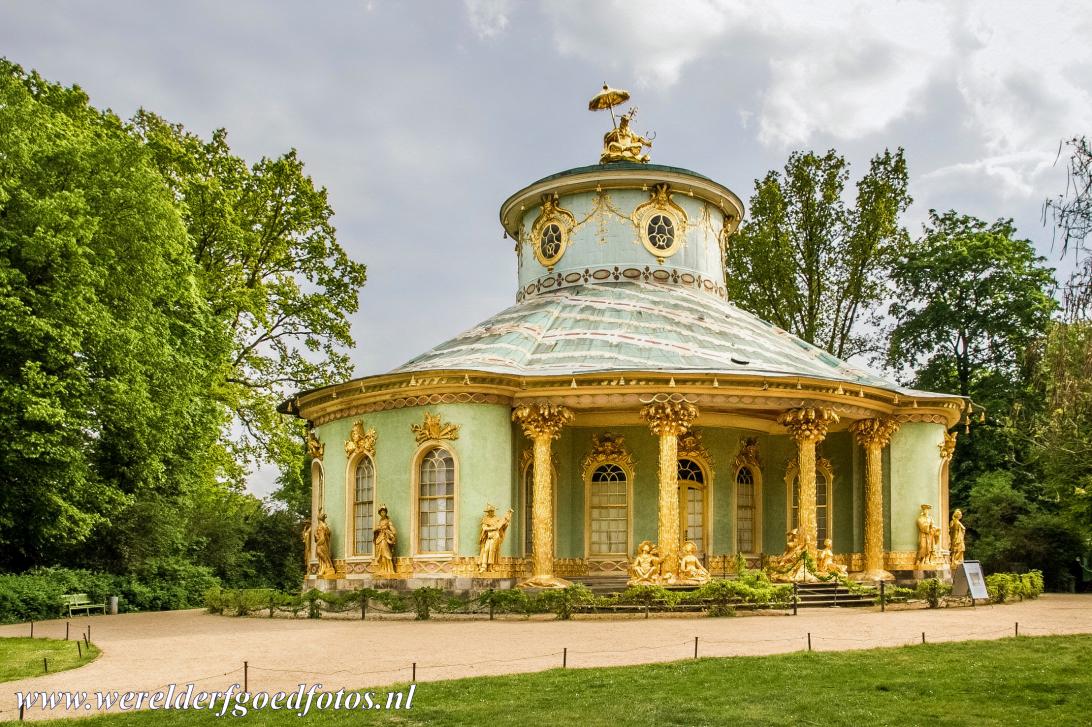
 Potsdam: Het Chinese Paviljoen in  Park Sanssouci  werd gebouwd in 1754-1757. 
 Het Chinese Paviljoen ligt dichtbij  Slot Sanssouci  en het  Neues Palais  in  Park Sanssouci . 
 Het Chinese Paviljoen en  Park Sanssouci  in Potsdam maken deel uit van de 
 UNESCO Werelderfgoedsite: Paleizen en parken van Potsdam en Berlijn. 
   
  Palaces and Parks of Potsdam and Berlin:  
  The Chinese House is a garden pavilion in Sanssouci Park. It was built in  
  1754-1757.   The Chinese House   is   located near Sanssouci Palace and the Neues Palais.  
  The Chinese House and Sanssouci Park in Potsdam are part of the   
  UNESCO World Heritage Site:   Palaces and Parks of Potsdam and Berlin.

Potsdam: Het Chinese Paviljoen in Park Sanssouci werd gebouwd in 1754-1757.

Het Chinese Paviljoen ligt dichtbij Slot Sanssouci en het Neues Palais in Park Sanssouci.

Het Chinese Paviljoen en Park Sanssouci in Potsdam maken deel uit van de

UNESCO Werelderfgoedsite: Paleizen en parken van Potsdam en Berlijn.
 

Palaces and Parks of Potsdam and Berlin:

The Chinese House is a garden pavilion in Sanssouci Park. It was built in

1754-1757. The Chinese House is located near Sanssouci Palace and the Neues Palais.

The Chinese House and Sanssouci Park in Potsdam are part of the

UNESCO World Heritage Site: Palaces and Parks of Potsdam and Berlin.

   
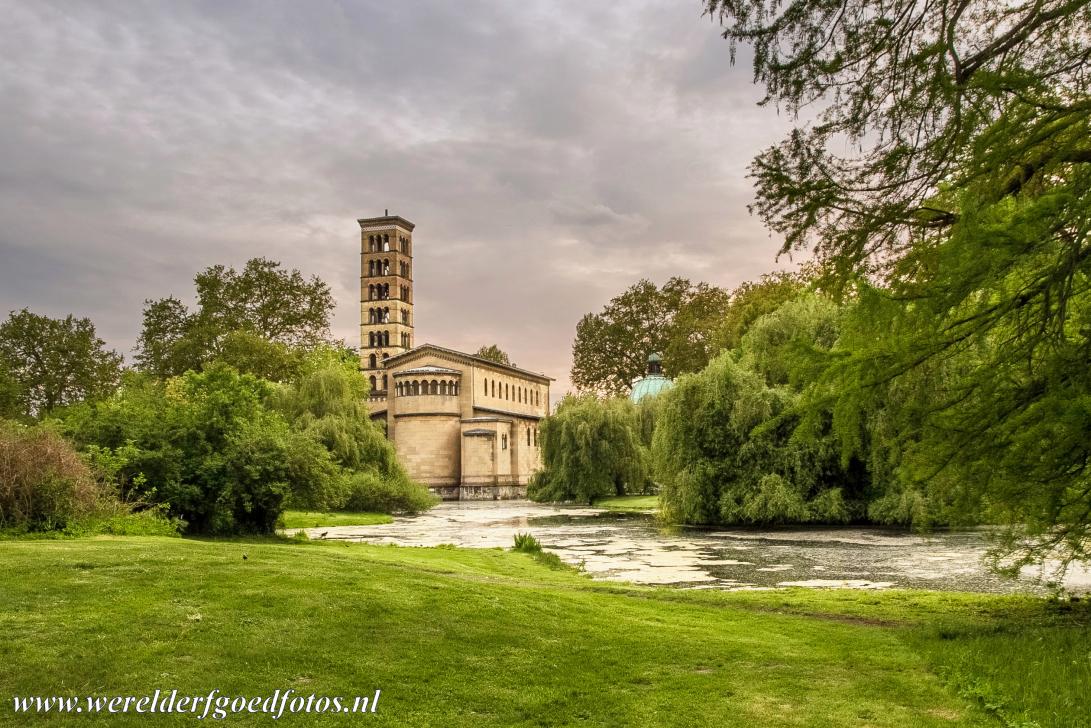
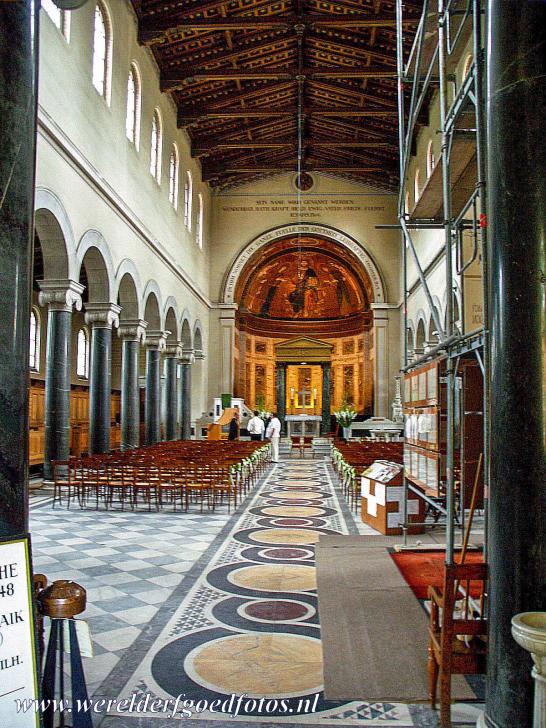
 Potsdam:  Friedenskirche , de Vredeskerk, heeft een binnenhof met arcades. 
 De Vredeskerk werd gebouwd in 1845-1854 naar Italiaans voorbeeld. 
 De Vredeskerk in Potsdam maakt deel uit van de Werelderfgoedsite: 
 Paleizen en parken van Potsdam en Berlijn. 
                             
  Palaces and Parks of Potsdam and Berlin: Church of Peace.   
  The Church of Peace was built from 1845-1854. An arcade surrounds the   
  Church of Peace courtyard. The Church of Peace was based   on Italian models.   
  The Potsdam Church of Peace is located in   the Marly Gardens on the Green Fence  
  in   Park Sanccouci. T  he Church of Peace in Potsdam is part of the   
  World Heritage Site: Palaces   and Parks of Potsdam and Berlin.


Potsdam: Friedenskirche, de Vredeskerk, heeft een binnenhof met arcades.

De Vredeskerk werd gebouwd in 1845-1854 naar Italiaans voorbeeld.

De Vredeskerk in Potsdam maakt deel uit van de Werelderfgoedsite:

Paleizen en parken van Potsdam en Berlijn.
                           

Palaces and Parks of Potsdam and Berlin: Church of Peace.

The Church of Peace was built from 1845-1854. An arcade surrounds the

Church of Peace courtyard. The Church of Peace was based on Italian models.

The Potsdam Church of Peace is located in the Marly Gardens on the Green Fence

in Park Sanccouci. The Church of Peace in Potsdam is part of the

World Heritage Site: Palaces and Parks of Potsdam and Berlin.

   
 Potsdam: De  Friedenskirche  werd gebouwd in de periode 1845-1848. De vrijstaande 
 toren is 42 meter hoog. De toren heeft zeven open verdiepingen en vier klokken. 
                                
  Potsdam: The Church of Peace was built in the period 1845-1848. The   free-standing   
  belltower has 7 open floors and 4 bells. The Church of Peace belltower is 42 m. high.


Potsdam: De Friedenskirche werd gebouwd in de periode 1845-1848. De vrijstaande

toren is 42 meter hoog. De toren heeft zeven open verdiepingen en vier klokken.


Potsdam: The Church of Peace was built in the period 1845-1848. The free-standing

belltower has 7 open floors and 4 bells. The Church of Peace belltower is 42 m. high.

   
 Potsdam: De  Friedenskirche , de Vredeskerk, staat in de  Marly Gardens  bij de 
  'Grüne Gitter' , het groene hek  (Green Fence)  in  Park Sanccouci . Een Italiaans klooster 
 diende als inspiratiebron voor deze in Potsdam gelegen Vredeskerk, de  Friedenskirche .  
                             
  Palaces and Parks of Potsdam and Berlin: The Church of Peace is located in   the   
  Marly Gardens on the Green Fence   in   Park Sanccouci.   
  The Church of Peace is a   columned basilica and resembles an   Italian monastery.


Potsdam: De Friedenskirche, de Vredeskerk, staat in de Marly Gardens bij de

'Grüne Gitter', het groene hek (Green Fence) in Park Sanccouci. Een Italiaans klooster

diende als inspiratiebron voor deze in Potsdam gelegen Vredeskerk, de Friedenskirche


Palaces and Parks of Potsdam and Berlin: The Church of Peace is located in the

Marly Gardens on the Green Fence in Park Sanccouci.

The Church of Peace is a columned basilica and resembles an Italian monastery.

   
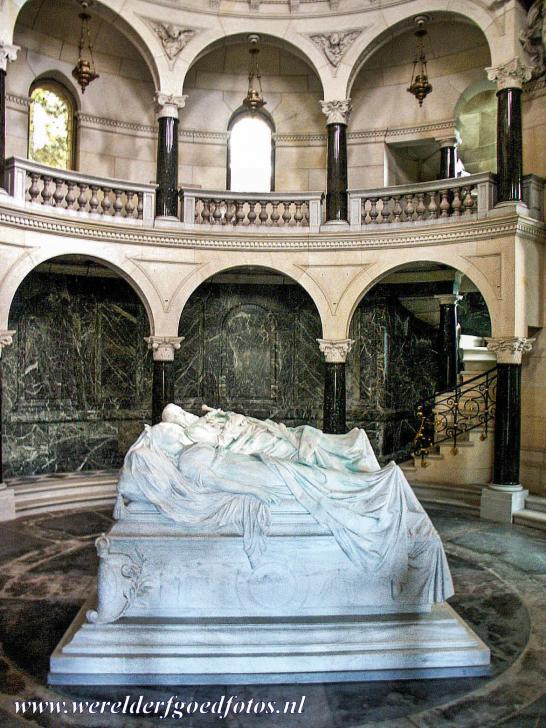
 Potsdam: In de  Friedenskirche  staat het mausoleum van keizer Friedrich III en zijn vrouw 
 keizerin Victoria. De tombe van keizer Friedrich III en keizerin Victoria staat in het midden 
 van het mausoleum, twee van hun jong overleden kinderen zijn bijgezet in dit mausoleum. 
                 
  Potsdam: Church of Peace, Mausoleum of Kaiser Friedrich III and Kaiserin Victoria.  
  In the   middle of the mausoleum stands the marble sarcophagus of Emperor III of   
  Germany   and his wife Victoria.


Potsdam: In de Friedenskirche staat het mausoleum van keizer Friedrich III en zijn vrouw

keizerin Victoria. De tombe van keizer Friedrich III en keizerin Victoria staat in het midden

van het mausoleum, twee van hun jong overleden kinderen zijn bijgezet in dit mausoleum.


Potsdam: Church of Peace, Mausoleum of Kaiser Friedrich III and Kaiserin Victoria.

In the middle of the mausoleum stands the marble sarcophagus of Emperor III of

Germany and his wife Victoria.

   
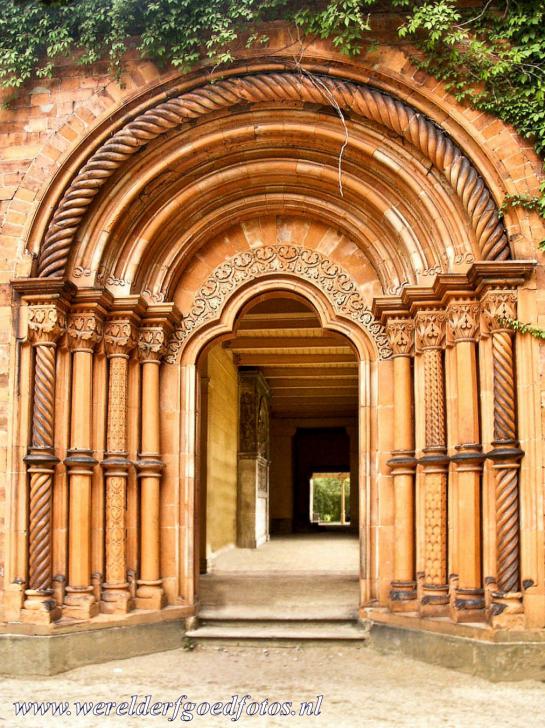
 Potsdam: Het  Heilbronner Portaal  van de  Friedenskirche  is een replica, gemaakt naar 
 een Romaanse poort. Het  Heilbronner Portaal  is gemaakt van rood terracotta. 
                             
  Potsdam: Church of Peace, t  he Heilsbronn Porch is a replica of a Roman porch.  
  The Heilsbronn Porch is made of red terracotta.


Potsdam: Het Heilbronner Portaal van de Friedenskirche is een replica, gemaakt naar

een Romaanse poort. Het Heilbronner Portaal is gemaakt van rood terracotta.


Potsdam: Church of Peace, the Heilsbronn Porch is a replica of a Roman porch.

The Heilsbronn Porch is made of red terracotta.

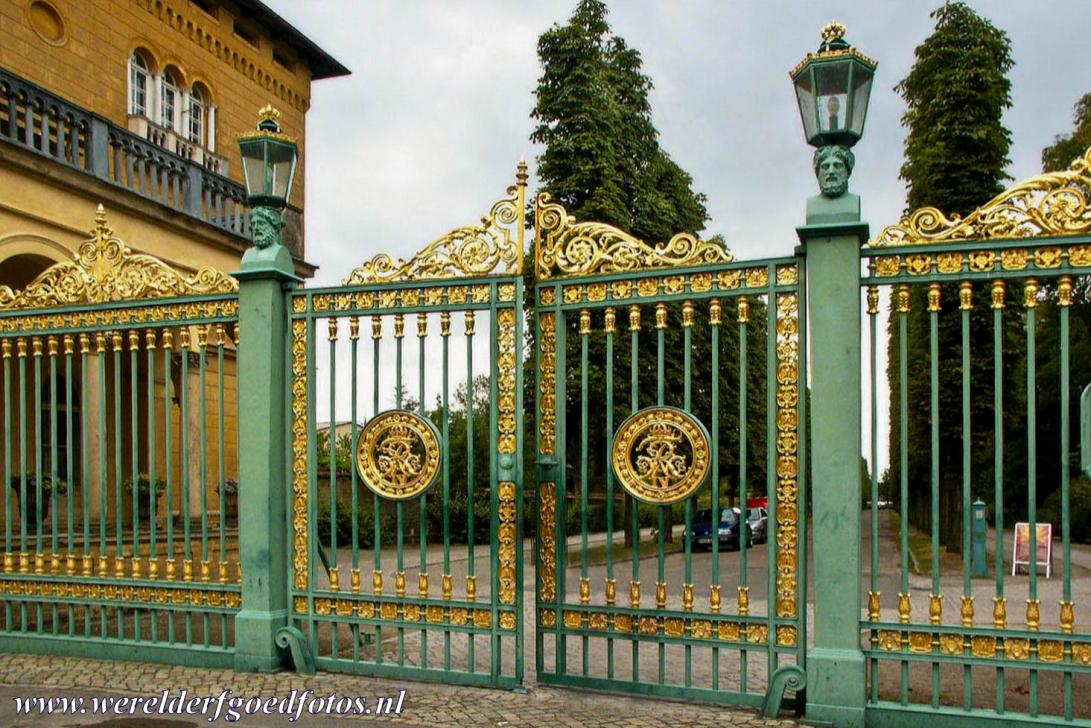
 Potsdam: De  'Grüne Gitter' , het groene hek, bij de  Friedenskirche  van Potsdam in 
  Park Sanssouci . In  Park Sanssouci  staan meerdere paleizen. Ze werden gebouwd in 
 de 18de eeuw in opdracht van Frederik de Grote.  Slot Sanssouci  is het middelpunt. 
  Slot Sanssouci  was de zomerresidentie en het favorite paleis van Frederik de Grote. 
                   
  Potsdam: The 'Green Fence' near the Church of Peace in Sanssouci Park  .  
  Sanssouci Park is an ensemble of palaces and gardens, built under   Frederick the   
  Great   during the 18th century. Sanssouci Palace is the main focus.   Sanssouci Palace   
  was the summer residence and favourite palace of Frederick the Great.

Potsdam: De 'Grüne Gitter', het groene hek, bij de Friedenskirche van Potsdam in

Park Sanssouci. In Park Sanssouci staan meerdere paleizen. Ze werden gebouwd in

de 18de eeuw in opdracht van Frederik de Grote. Slot Sanssouci is het middelpunt.

Slot Sanssouci was de zomerresidentie en het favorite paleis van Frederik de Grote.


Potsdam: The 'Green Fence' near the Church of Peace in Sanssouci Park.

Sanssouci Park is an ensemble of palaces and gardens, built under Frederick the

Great during the 18th century. Sanssouci Palace is the main focus. Sanssouci Palace

was the summer residence and favourite palace of Frederick the Great.

 Het laatst gebouwde paleis in Potsdam is  Slot Cecilienhof , een paleis in Engelse 
 landhuisstijl uit de periode 1914-1917. In  Slot Cecilienhof  werd in 1945 de Conferentie 
 van Potsdam gehouden. De kamers, die zijn gebruikt tijdens de conferentie door de 
 wereldleiders Churchill, Stalin en Truman zijn nog in originele staat. De rode ster van 
 bloemen in de binnenhof van  Slot Cecilienhof  werd in 1945 door Sovjetsoldaten aangelegd. 
  Slot Cecilienhof  maakt deel uit van de UNESCO Werelderfgoedsite: 
 Paleizen en parken van Potsdam en Berlijn. 
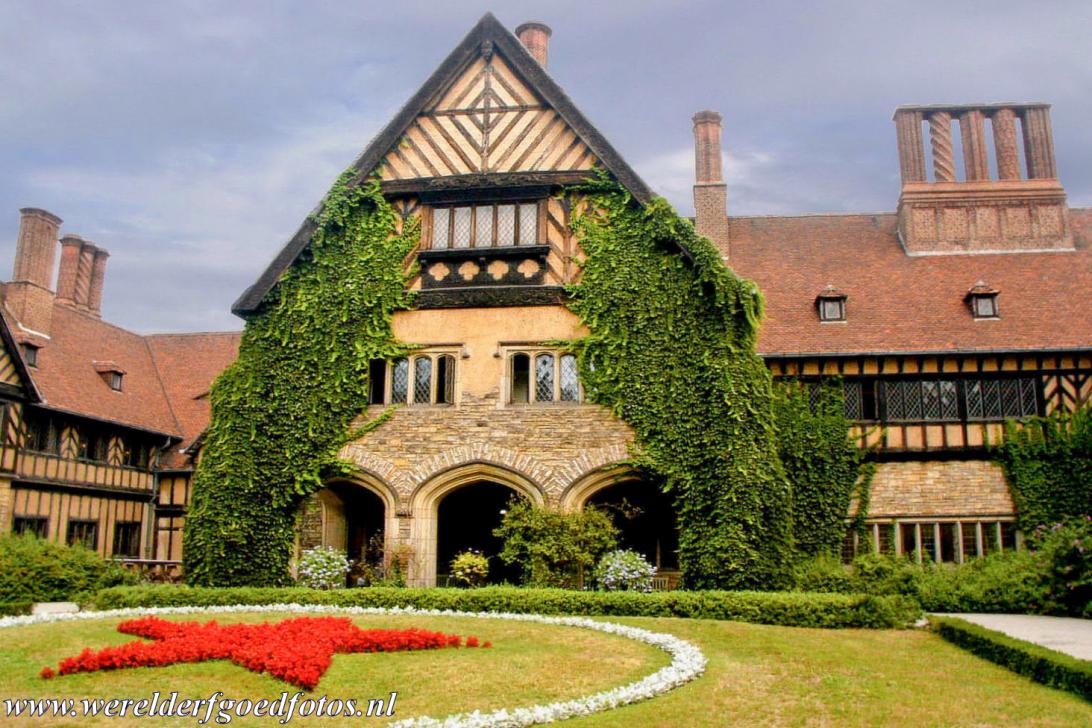
     
  Potsdam: Cecilienhof Palace was built in the period 1914-1917.    Cecilienhof Palace   
  was created in the style of an English country house. It was the   residence of   
  Crown Prince William and his wife Cecilie.  
  Cecilienhof Palace   was used for the Potsdam Conference in 1945.  
  In the Courtyard the red flower star was   planted by Soviet army forces in 1945.  
  Cecilienhof Palace in Potsdam is part of the UNESCO World Heritage Site:   
  Palaces and Parks of Potsdam and Berlin.

Het laatst gebouwde paleis in Potsdam is Slot Cecilienhof, een paleis in Engelse

landhuisstijl uit de periode 1914-1917. In Slot Cecilienhof werd in 1945 de Conferentie

van Potsdam gehouden. De kamers, die zijn gebruikt tijdens de conferentie door de

wereldleiders Churchill, Stalin en Truman zijn nog in originele staat. De rode ster van

bloemen in de binnenhof van Slot Cecilienhof werd in 1945 door Sovjetsoldaten aangelegd.

Slot Cecilienhof maakt deel uit van de UNESCO Werelderfgoedsite:

Paleizen en parken van Potsdam en Berlijn.
 

Potsdam: Cecilienhof Palace was built in the period 1914-1917.  Cecilienhof Palace

was created in the style of an English country house. It was the residence of

Crown Prince William and his wife Cecilie.

Cecilienhof Palace was used for the Potsdam Conference in 1945.

In the Courtyard the red flower star was planted by Soviet army forces in 1945.

Cecilienhof Palace in Potsdam is part of the UNESCO World Heritage Site:

Palaces and Parks of Potsdam and Berlin.

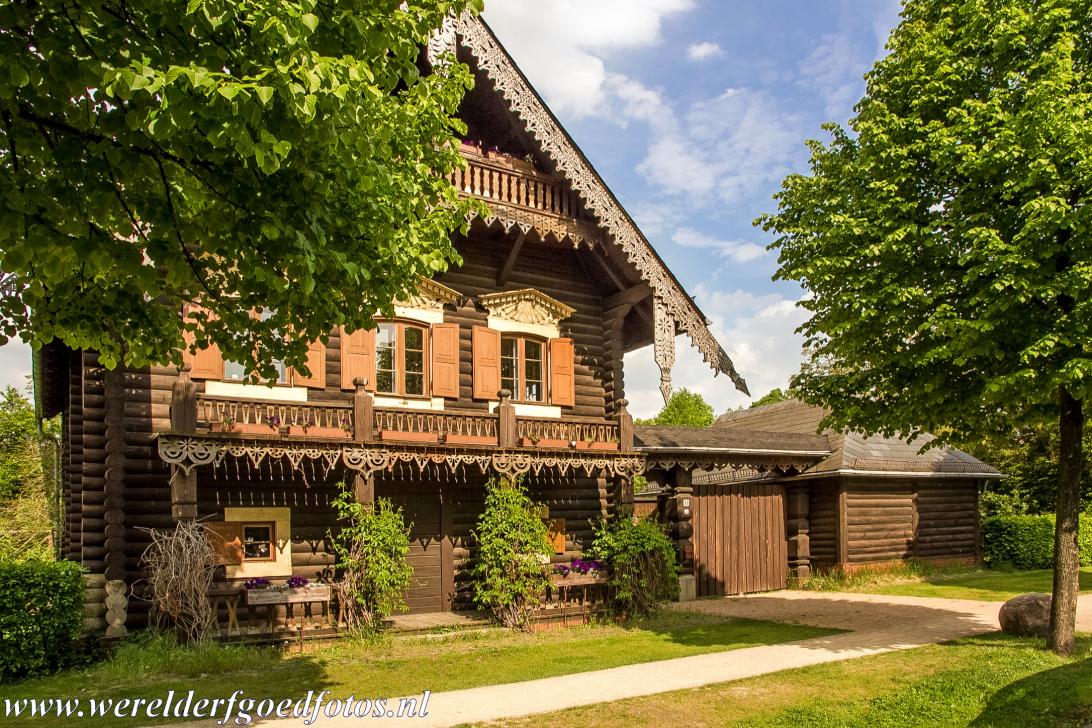
 Potsdam: Een huis in de Russische wijk  Alexandrowka . De Russische wijk  Alexandrowka  
 werd in 1826-1827 gebouwd op verzoek van koning Friedrich Wilhelm III als kolonie voor 
 Russische muzikanten, krijgsgevangen gemaakt door Pruisische troepen. In de 
  Alexandrowka  kolonie wonen nog altijd nazaten van deze Russische muzikanten en 
 zangers. De Russische wijk  Alexandrowka  maakt deel uit van de 
 UNESCO Werelderfgoedsite: Paleizen en parken van Potsdam en Berlijn. 
         
  Potsdam: A house in the Russian Colony Alexandrowka. The Russian Colony   
  Alexandrowka   was built in 1826-1827. The Russian Colony Alexandrowka was the   
  home of Russian   singers   (prisoners of war).  
  The Russian Colony Alexandrowka in Potsdam is part of the   
  UNESCO World Heritage Site:   Palaces and Parks of Potsdam and Berlin.

Potsdam: Een huis in de Russische wijk Alexandrowka. De Russische wijk Alexandrowka

werd in 1826-1827 gebouwd op verzoek van koning Friedrich Wilhelm III als kolonie voor

Russische muzikanten, krijgsgevangen gemaakt door Pruisische troepen. In de

Alexandrowka kolonie wonen nog altijd nazaten van deze Russische muzikanten en

zangers. De Russische wijk Alexandrowka maakt deel uit van de

UNESCO Werelderfgoedsite: Paleizen en parken van Potsdam en Berlijn.
       

Potsdam: A house in the Russian Colony Alexandrowka. The Russian Colony

Alexandrowka was built in 1826-1827. The Russian Colony Alexandrowka was the

home of Russian singers (prisoners of war).

The Russian Colony Alexandrowka in Potsdam is part of the

UNESCO World Heritage Site: Palaces and Parks of Potsdam and Berlin.

   
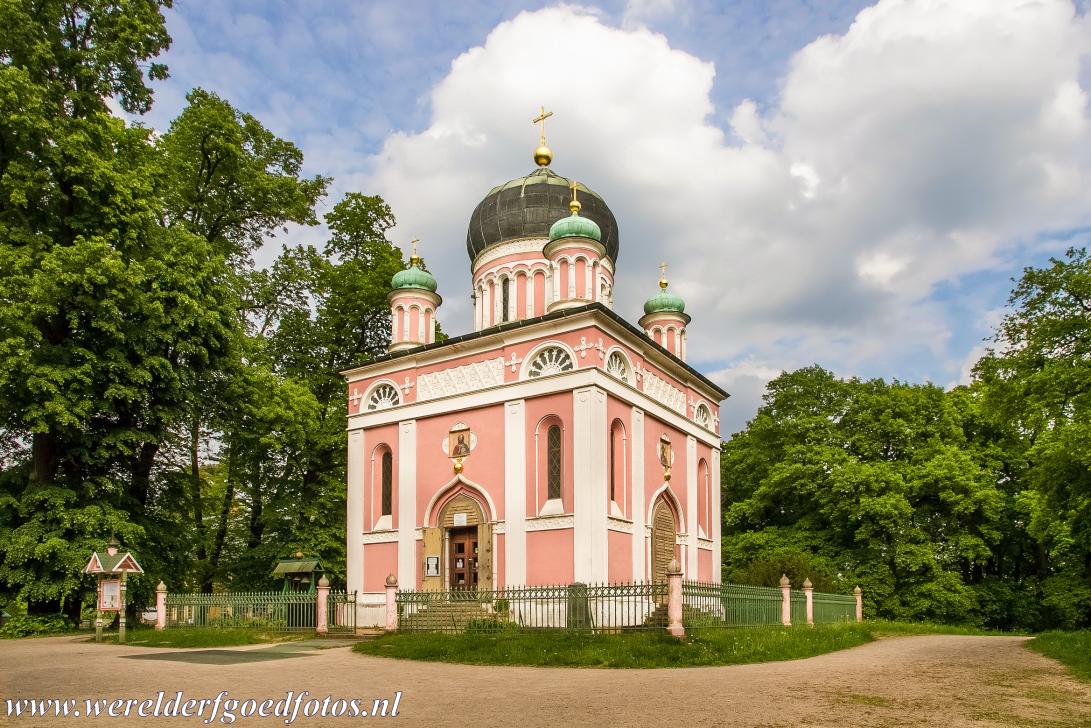
 Potsdam: De Russisch-orthodoxe  Alexander Nevski  kerk in de Russische kolonie 
  Alexandrowka . De Russisch-orthodoxe  Alexander Nevski  kerk werd in 1826-1829 
 speciaal voor de Russische kolonisten van de kolonie  Alexandrowka  gebouwd. 
 De Russisch-orthodoxe  Alexander Nevski  kerk heeft, zoals veel Russisch-orthodoxe 
 kerken, uivormige torens. Tijdens iedere Russisch-orthodoxe kerkdienst branden er 
 kaarsen, deze uivormige torens beelden kaarsvlammen uit, die gezangen en 
 gebeden naar de hemel begeleiden. (kapotte Sandisk, daardoor een halve foto)  
     
  Potsdam: The Russian Orthodox Alexander Nevski Church in the   
  Russian Colony Alexandrowka. The Russian Orthodox Alexander Nevski Church   
  was   especially built for the Russian colonists in the period 1826-1829.


Potsdam: De Russisch-orthodoxe Alexander Nevski kerk in de Russische kolonie

Alexandrowka. De Russisch-orthodoxe Alexander Nevski kerk werd in 1826-1829

speciaal voor de Russische kolonisten van de kolonie Alexandrowka gebouwd.

De Russisch-orthodoxe Alexander Nevski kerk heeft, zoals veel Russisch-orthodoxe

kerken, uivormige torens. Tijdens iedere Russisch-orthodoxe kerkdienst branden er

kaarsen, deze uivormige torens beelden kaarsvlammen uit, die gezangen en

gebeden naar de hemel begeleiden. (kapotte Sandisk, daardoor een halve foto) 


Potsdam: The Russian Orthodox Alexander Nevski Church in the

Russian Colony Alexandrowka. The Russian Orthodox Alexander Nevski Church

was especially built for the Russian colonists in the period 1826-1829.