Old City of Dubrovnik

Old City of Dubrovnik: Dubrovnik werd in de 7de eeuw gesticht. Het stond achtereenvolgens onder bestuur van het Byzantijnse Rijk, Venetië en het Hongaars-Kroatisch Koninkrijk. In de 14de eeuw werd het een onafhankelijke staat. Dubrovnik hoort nu bij Kroatië en ligt in het zuidelijke deel, dat door Bosnië-Herzegovina van het noorden van Kroatië wordt gescheiden. Dubrovnik ligt, evenals Split en Trogir, op een schiereiland in de Adriatische Zee. Door de oorlog (1991-1995) heeft Dubrovnik zware schade geleden. In samenwerking met UNESCO is Dubrovnik gerestaureerd en verdient weer de naam: Dubrovnik "Parel van de Adriatische Zee". 

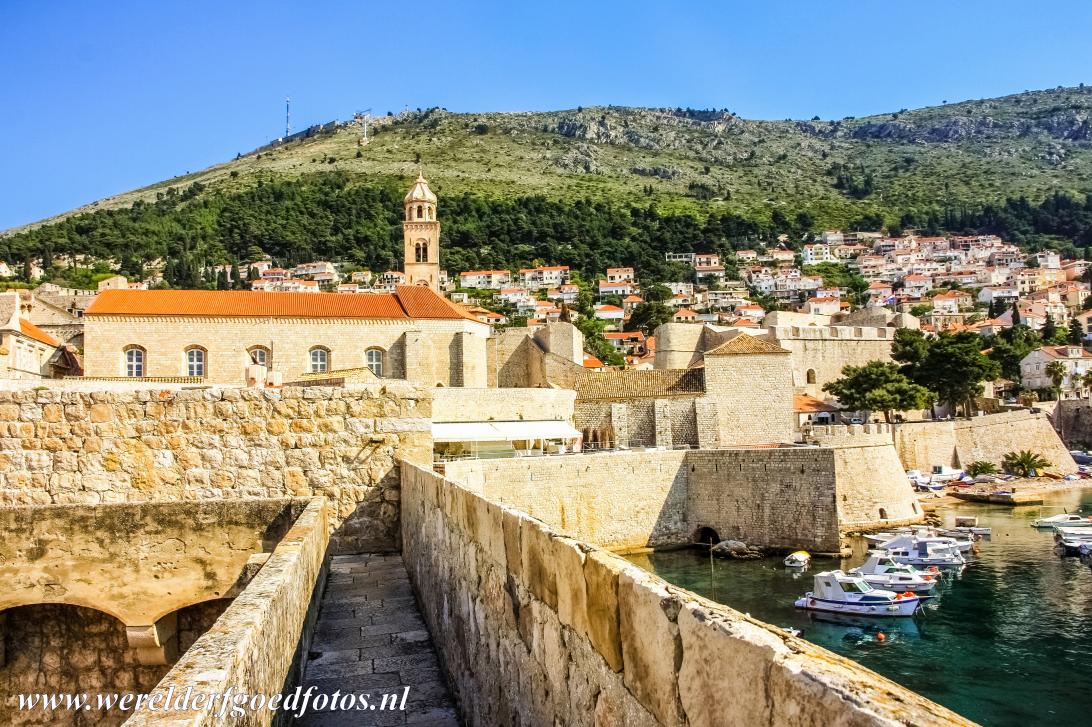
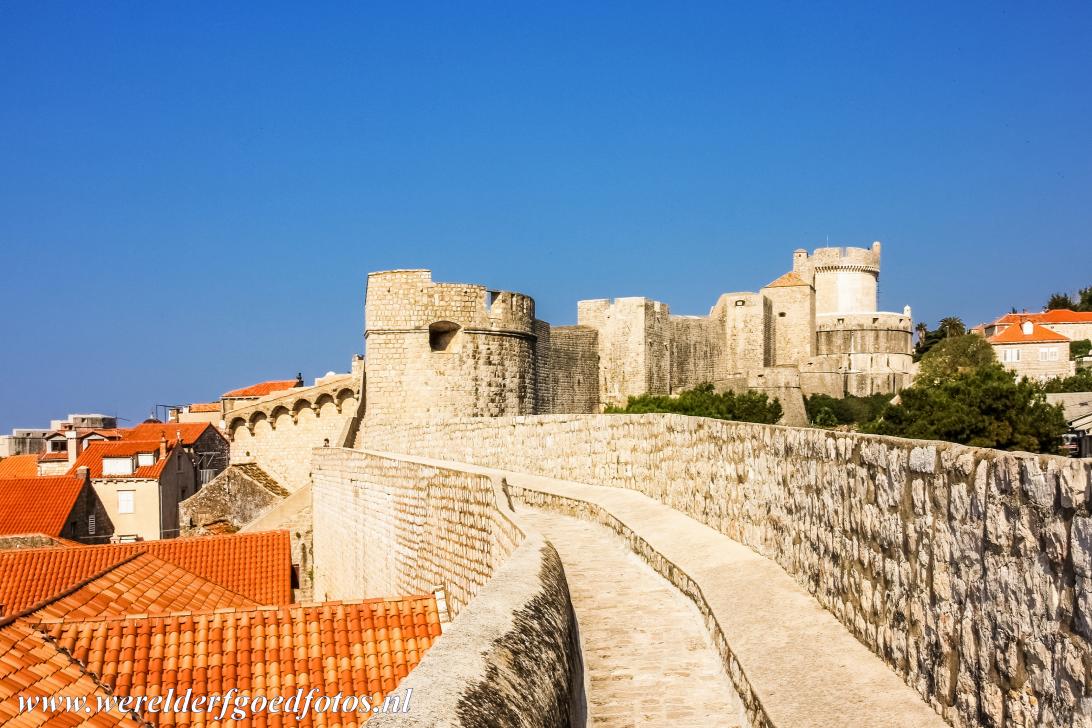
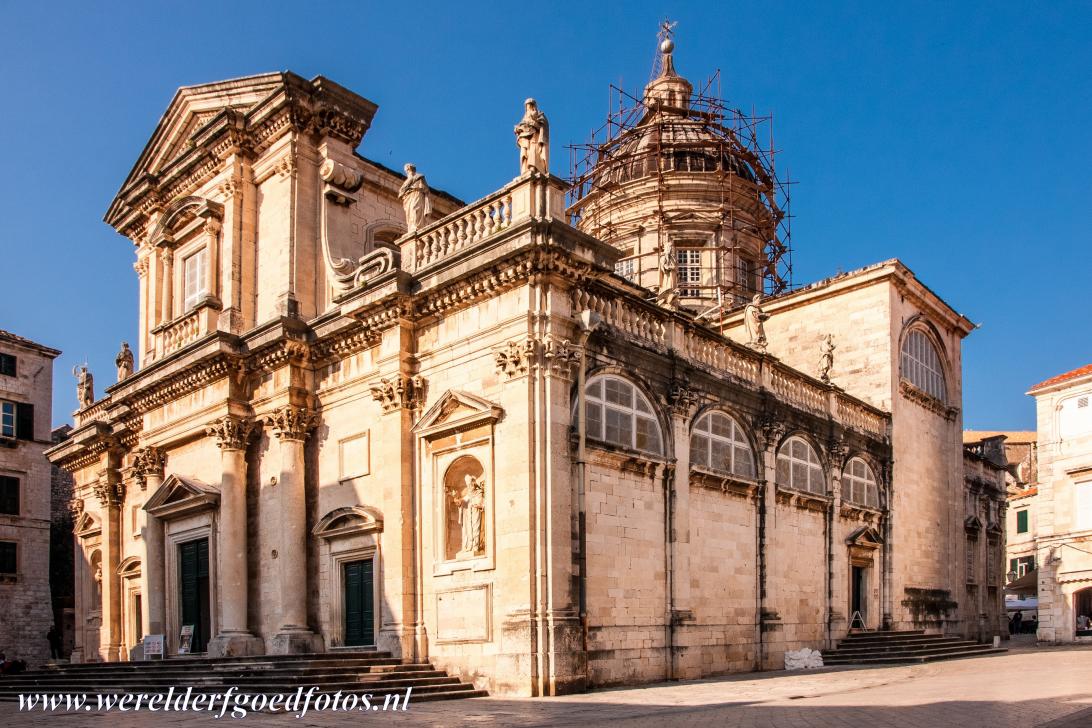
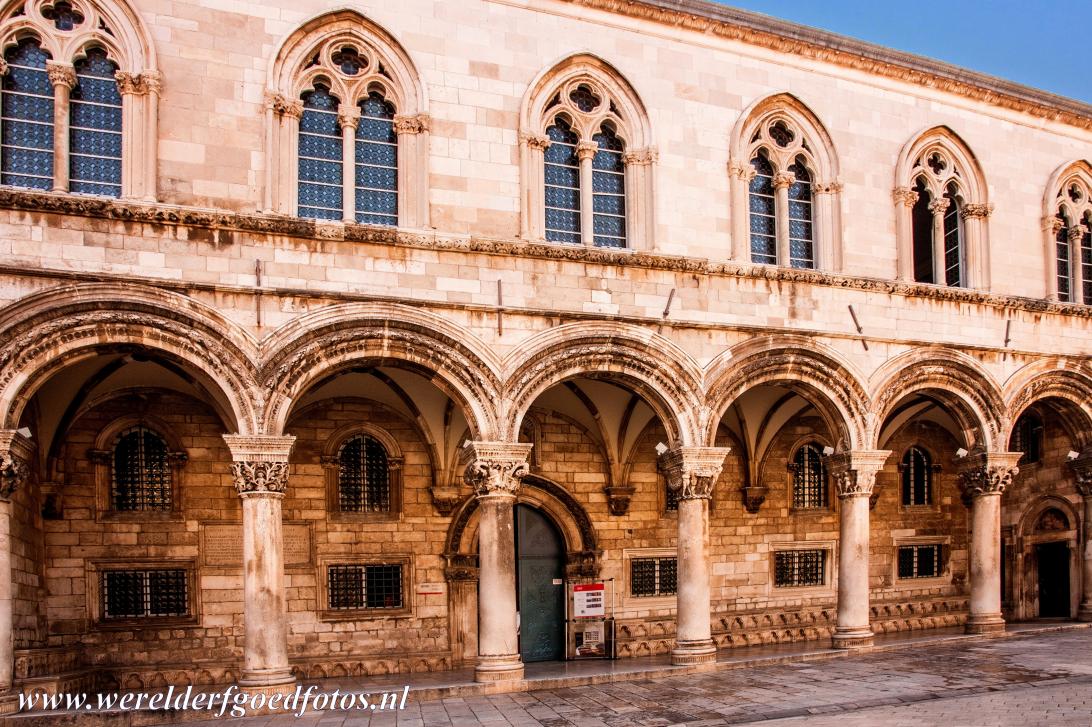
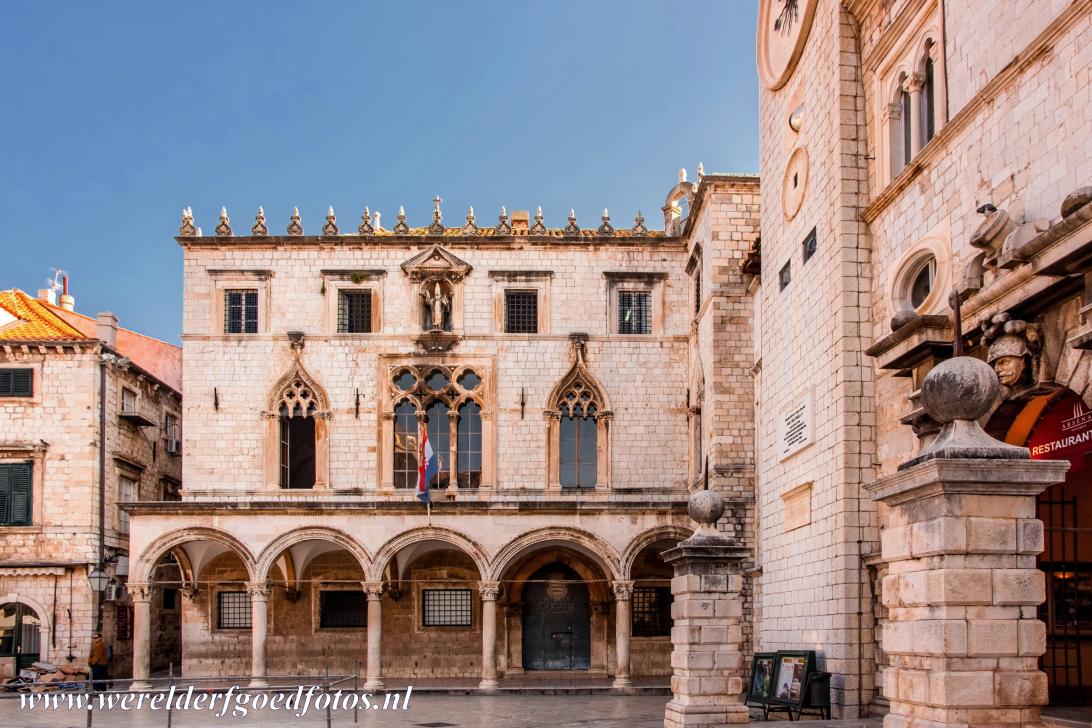
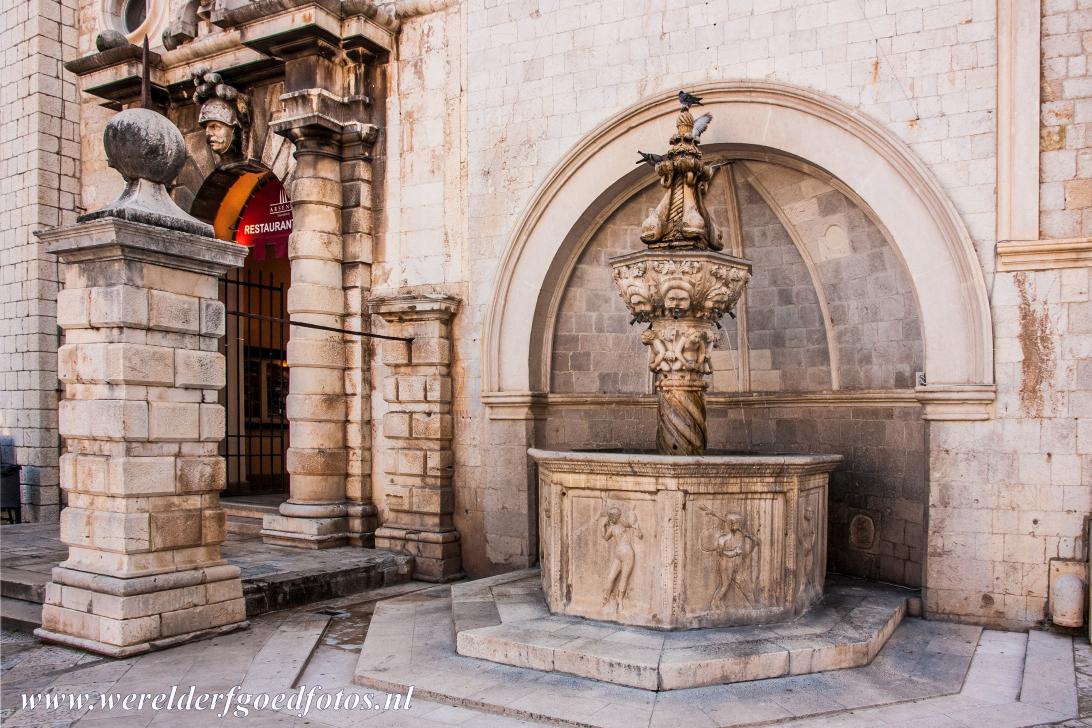
De muren, torens, forten, stadspoorten en de oude stad Dubrovnik binnen de muren vormen het Werelderfgoed: Old City of Dubrovnik. De Pile-poort is de hoofdpoort. De Ploce-poort staat bij de haven. Via de Pile-poort en Ploce-poort komt men over een stenen brug in de oude stad Dubrovnik. Bij de Ploce-poort staat de 14de eeuwse Asimov-toren. Een wandeling over de muren voert langs o.a. de Minceta-toren, Pile-poort en enkele forten: Fort Bokar, Fort Lovrijenac, Fort Revelin en het St. Jansfort. Vanaf de muren heeft men uitzicht op zee, de oude stad Dubrovnik en Grote Fontein van Onofrio. Dubrovnik heeft een regelmatig stratenplan. Stradun (of Placa) loopt van oost naar west, van de Pile-poort naar het Plein van de Loggia. Aan Stradun ligt een 14de eeuws Franciscaner klooster. Bij het Plein van de Loggia staan de klokkentoren van Dubrovnik, de Orlandozuil, het 15de eeuwse Rectorenpaleis en 14de eeuwse Sponzapaleis en de 18de eeuwse Blasiuskerk. De kathedraal van Dubrovnik en het Dominicanerklooster zijn herbouwd na de aardbeving van 1667.

De ommuurde oude vestingstad Dubrovnik werd in 1979 een Werelderfgoedsite en staat op de Werelderfgoedlijst van UNESCO als: Old City of Dubrovnik     

www.werelderfgoedfotos.nl     Old City of Dubrovnik     World Heritage Photos

 De oude vestingstad Dubrovnik   staat sinds 1979 op de Werelderfgoedlijst van UNESCO. 
  Old City of Dubrovnik was inscribed on the UNESCO World Heritage List in 1979.

De oude vestingstad Dubrovnik staat sinds 1979 op de Werelderfgoedlijst van UNESCO.

Old City of Dubrovnik was inscribed on the UNESCO World Heritage List in 1979.

 De oude vestingstad Dubrovnik   staat sinds 1979 op de Werelderfgoedlijst van UNESCO. 
  Old City of Dubrovnik was inscribed on the UNESCO World Heritage List in 1979.

De oude vestingstad Dubrovnik staat sinds 1979 op de Werelderfgoedlijst van UNESCO.

Old City of Dubrovnik was inscribed on the UNESCO World Heritage List in 1979.

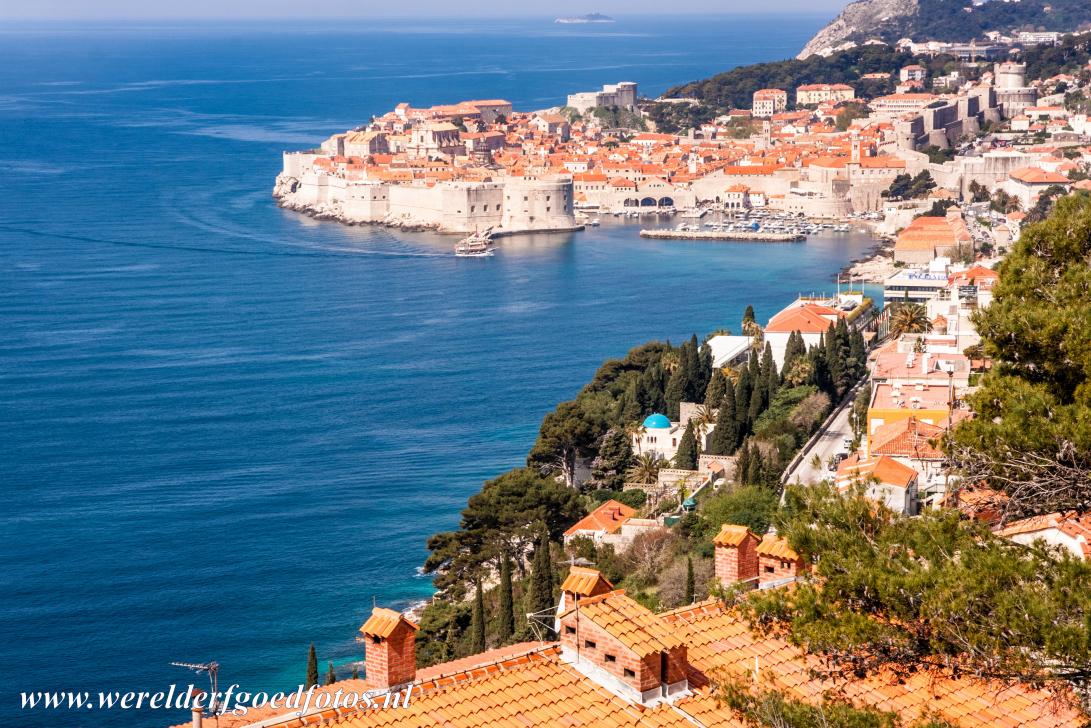
 De oude vestingstad Dubrovnik   ligt op een schiereiland in de Adriatische Zee. 
 De oude vestingstad Dubrovnik heeft aan de landzijde dikkere muren dan aan de zeekant, 
 aan de zeekant beschermen hoge rotsen samen met de muren de stad Dubrovnik. 
 De ommuurde oude vestingstad Dubrovnik werd in 1979 Werelderfgoed 
 en staat op de Werelderfgoedlijst van UNESCO als:  Old City of Dubrovnik.      
     
  Old City of Dubrovnik is located on a peninsula surrounded by the Adriatic Sea.  
  Old City of Dubrovnik sea walls are smaller than the land walls, the seaside is also  
  protected by high cliffs.

De oude vestingstad Dubrovnik ligt op een schiereiland in de Adriatische Zee.

De oude vestingstad Dubrovnik heeft aan de landzijde dikkere muren dan aan de zeekant,

aan de zeekant beschermen hoge rotsen samen met de muren de stad Dubrovnik.

De ommuurde oude vestingstad Dubrovnik werd in 1979 Werelderfgoed

en staat op de Werelderfgoedlijst van UNESCO als: Old City of Dubrovnik.    


Old City of Dubrovnik is located on a peninsula surrounded by the Adriatic Sea.

Old City of Dubrovnik sea walls are smaller than the land walls, the seaside is also

protected by high cliffs.

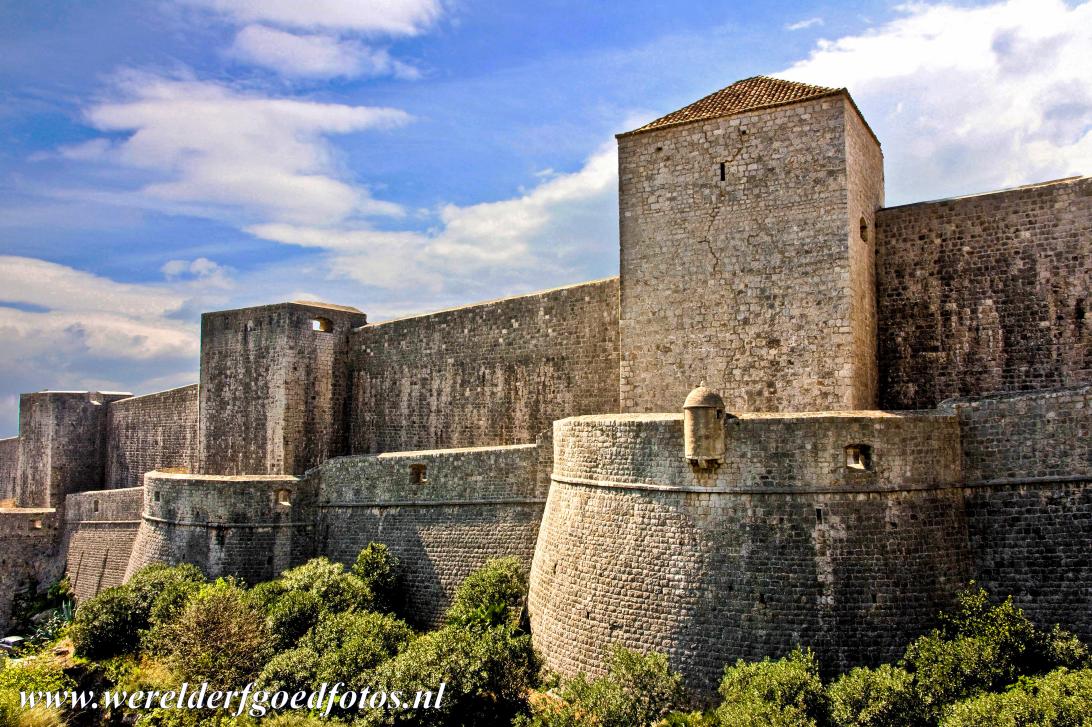
 De machtige middeleeuwse muren van de oude vestingstad Dubrovnik dateren uit de 
 10de en 13de eeuw, zijn ca. 25 m hoog en ommuren bijna de hele stad Dubrovnik. 
 De muren van de stad Dubrovnik zijn de meest complete van Europa .  
   
  The defensive stone walls of the Old City of Dubrovnik were built in   
  the 10th and 13th century. The walls of Dubrovnik reach a height of about 25 m.   
  The walls surround most of the Old City of Dubrovnik. T he city of Dubrovnik walls    
   are the most complete in Europe.

De machtige middeleeuwse muren van de oude vestingstad Dubrovnik dateren uit de

10de en 13de eeuw, zijn ca. 25 m hoog en ommuren bijna de hele stad Dubrovnik.

De muren van de stad Dubrovnik zijn de meest complete van Europa.


The defensive stone walls of the Old City of Dubrovnik were built in

the 10th and 13th century. The walls of Dubrovnik reach a height of about 25 m.

The walls surround most of the Old City of Dubrovnik. The city of Dubrovnik walls

are the most complete in Europe.

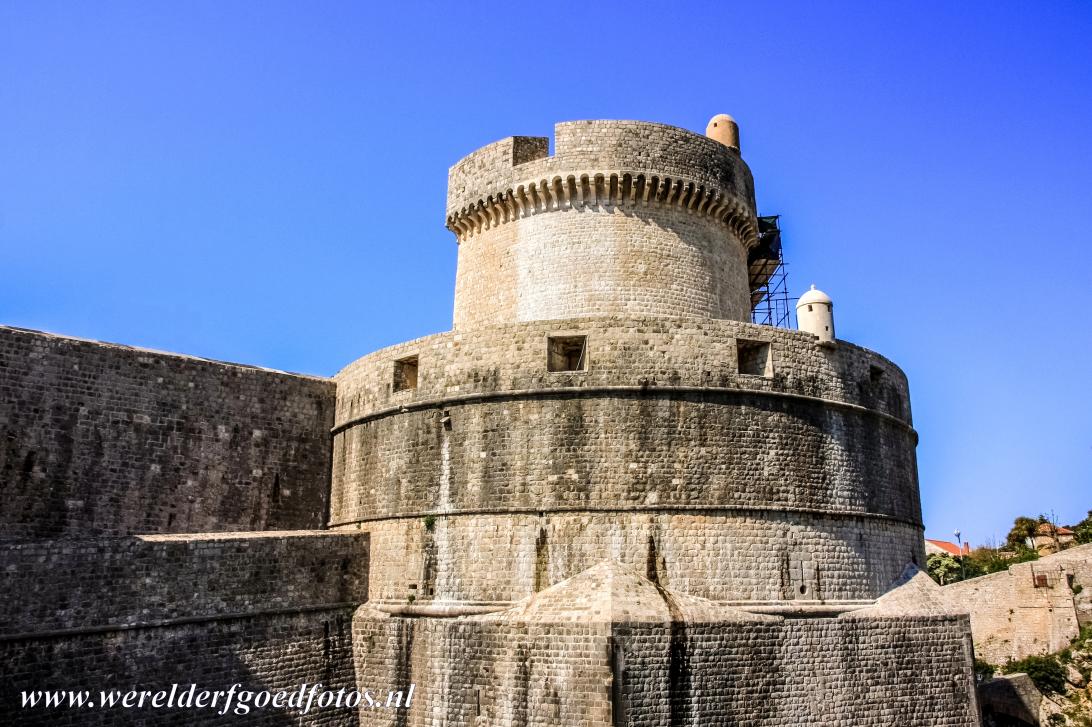
 De oude vestingstad Dubrovnik: De Minceta-toren werd in 1463 gebouwd. De  
 Minceta-toren is het hoogste punt van de muren en een symbool dat staat voor Dubrovnik 
 als onneembare vesting. De Minceta-toren kan vanaf de muren worden beklommen.    
     
  Old City of Dubrovnik: The Minceta Tower was built in 1463.  
  The Minceta Tower is the highest point of the Dubrovnik city walls and is the symbol   
  of the   unconquerable city of Dubrovnik. I t is possible to climb the Minceta Tower.

De oude vestingstad Dubrovnik: De Minceta-toren werd in 1463 gebouwd. De 

Minceta-toren is het hoogste punt van de muren en een symbool dat staat voor Dubrovnik

als onneembare vesting. De Minceta-toren kan vanaf de muren worden beklommen. 


Old City of Dubrovnik: The Minceta Tower was built in 1463.

The Minceta Tower is the highest point of the Dubrovnik city walls and is the symbol

of the unconquerable city of Dubrovnik. It is possible to climb the Minceta Tower.

 De oude vestingstad Dubrovnik: De vestingwerken en het Franciscaner klooster. 
     
  Old City of Dubrovnik: The walls and the Franciscan Monastery.

De oude vestingstad Dubrovnik: De vestingwerken en het Franciscaner klooster.


Old City of Dubrovnik: The walls and the Franciscan Monastery.

 Dubrovnik werd tijdens de oorlog (1991-1995) zwaar beschadigd, maar is bijna 
 geheel gerestaureerd. Wandelend over de stadsmuren van Dubrovnik zie je 
 de oude en nieuwe daken van de oude ommuurde vestingstad Dubrovnik. 
     
  Old City of Dubrovnik was damaged during the war (1991-1995).  
  New and old rooftops after the restoration of the city Dubrovnik.

Dubrovnik werd tijdens de oorlog (1991-1995) zwaar beschadigd, maar is bijna

geheel gerestaureerd. Wandelend over de stadsmuren van Dubrovnik zie je

de oude en nieuwe daken van de oude ommuurde vestingstad Dubrovnik.


Old City of Dubrovnik was damaged during the war (1991-1995).

New and old rooftops after the restoration of the city Dubrovnik.

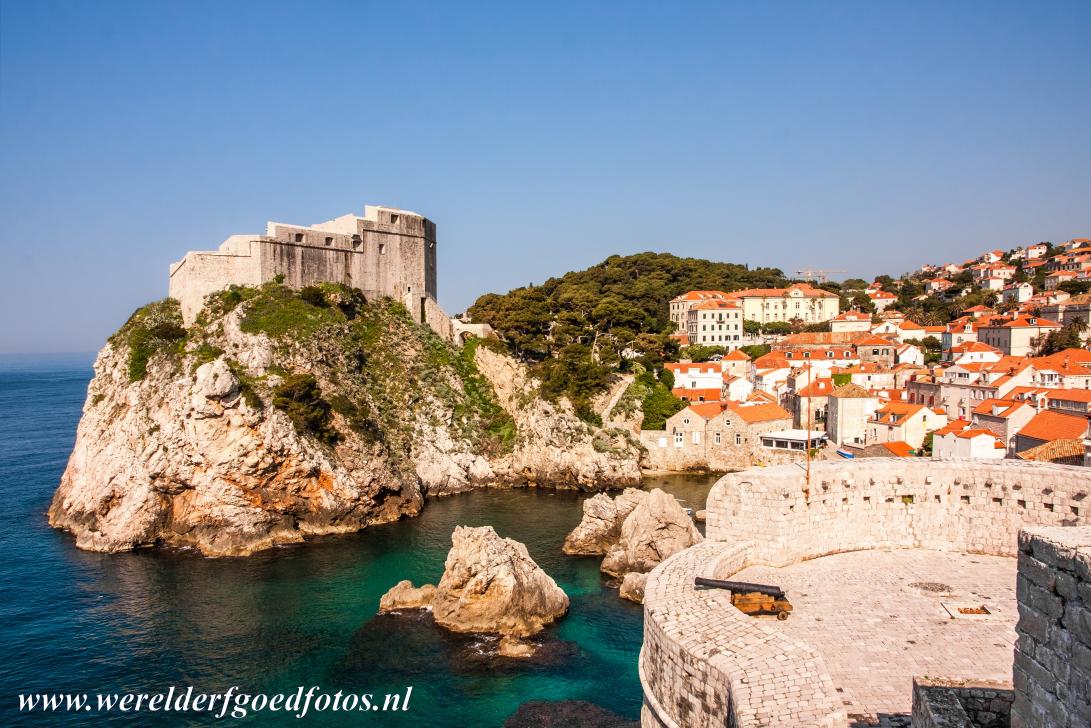
 De oude vestingstad Dubrovnik: Fort St. Lawrence of Fort Lovrijenac (links) werd in 
 de 11de eeuw gebouwd. Rechts Fort Bokar (1461-1463). Fort Bokar is waarschijnlijk 
 het oudste kazemat/fort in Europa. Fort Bokar is de hoofverdediging van de Pile-poort. 
     
  Old City of Dubrovnik: The St. Lawrence Fortress or Lovrijenac (on the left)   
  was built in the 11th century. On the right Fort Bokar (1461-1463), probably the  
  oldest casemented fortress in Europe. Fort Bokar is the keypoint in the defense  
  of the Pile Gate.

De oude vestingstad Dubrovnik: Fort St. Lawrence of Fort Lovrijenac (links) werd in

de 11de eeuw gebouwd. Rechts Fort Bokar (1461-1463). Fort Bokar is waarschijnlijk

het oudste kazemat/fort in Europa. Fort Bokar is de hoofverdediging van de Pile-poort.


Old City of Dubrovnik: The St. Lawrence Fortress or Lovrijenac (on the left)

was built in the 11th century. On the right Fort Bokar (1461-1463), probably the

oldest casemented fortress in Europe. Fort Bokar is the keypoint in the defense

of the Pile Gate.

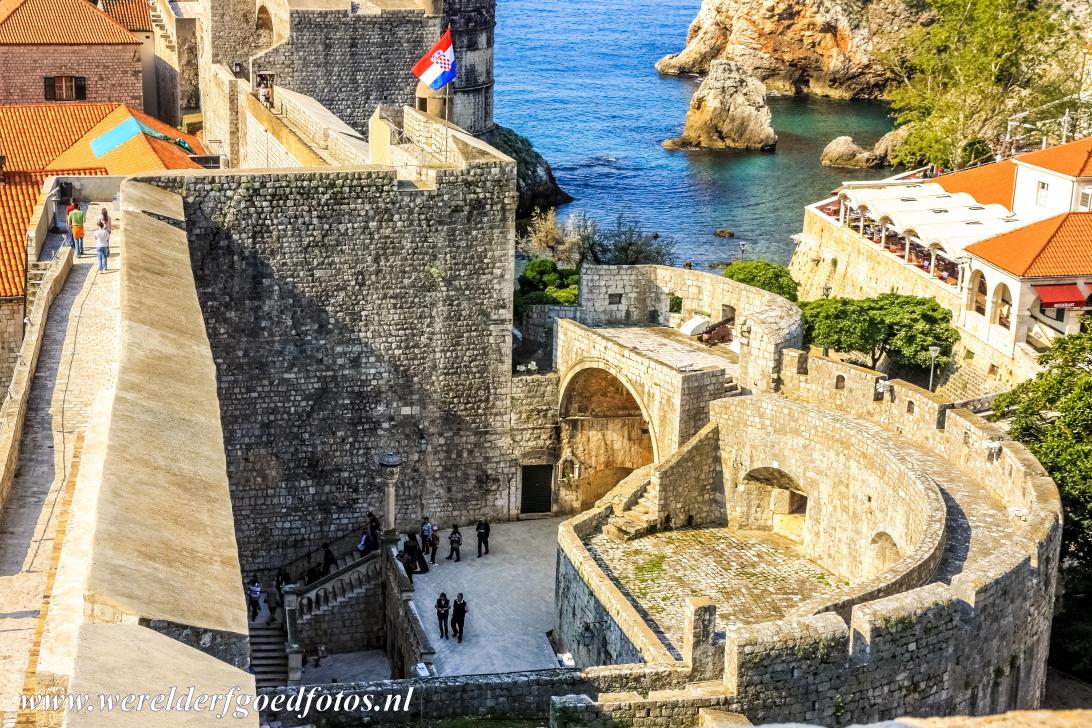
 De oude vestingstad Dubrovnik: De Pile-poort gezien vanaf de vestingmuren. De 
 Pile-poort is de hoofdpoort van de ommuurde stad Dubrovnik. De Pile-poort bestaat 
 uit een binnenpoort (1460) en een buitenpoort.    
     
  Old City of Dubrovnik: The fortified complex of the Pile Gate. The Pile Gate is the   
  main gate of the walled city of Dubrovnik. The Pile Gate consists of two seperate   
  gates,   an inner gate (1460)  and an outer gate.

De oude vestingstad Dubrovnik: De Pile-poort gezien vanaf de vestingmuren. De

Pile-poort is de hoofdpoort van de ommuurde stad Dubrovnik. De Pile-poort bestaat

uit een binnenpoort (1460) en een buitenpoort. 


Old City of Dubrovnik: The fortified complex of the Pile Gate. The Pile Gate is the

main gate of the walled city of Dubrovnik. The Pile Gate consists of two seperate

gates, an inner gate (1460) and an outer gate.

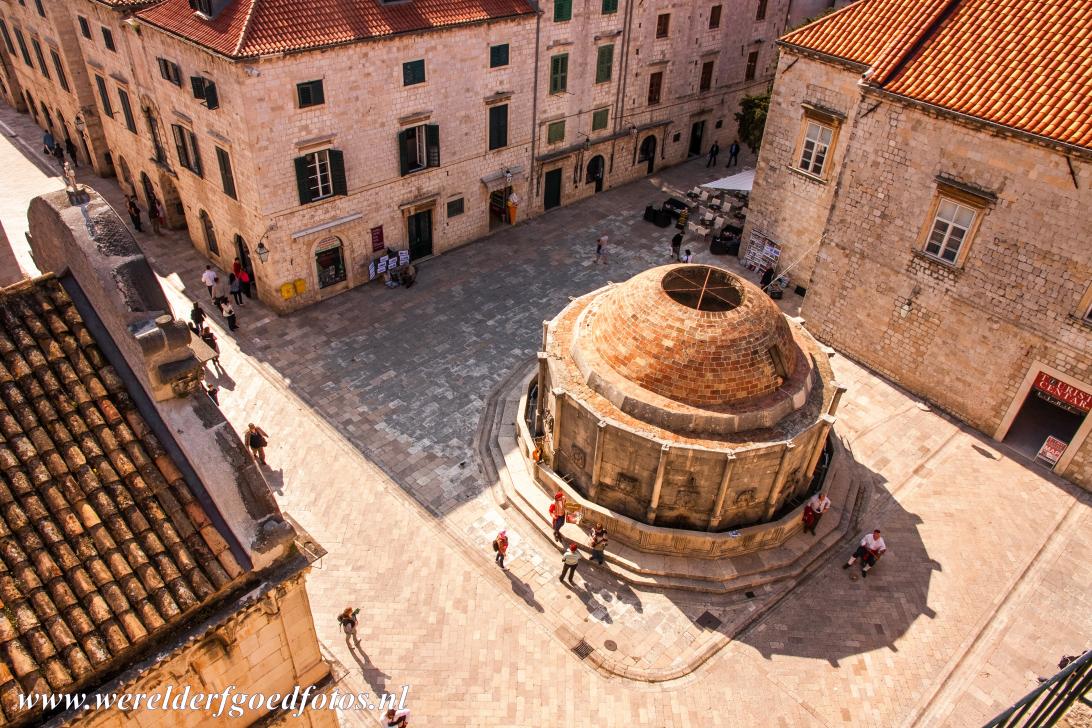
 De oude vestingstad Dubrovnik: De Grote Fontein Onofrio   gezien vanaf de vestingmuren. 
 De Grote Fontein Onofrio werd in 1438-1444 gebouwd en maakt deel uit van het systeem 
 van watervoorziening van Dubrovnik.    
     
  Old City of Dubrovnik: The Big Onofrio's Fountain seen from the walls of Dubrovnik.  
  Big Onofrio's Fountain was built in 1438-1444. The Big Onofrio's Fountain is part   
  of   Dubrovnik's water supply system.

De oude vestingstad Dubrovnik: De Grote Fontein Onofrio gezien vanaf de vestingmuren.

De Grote Fontein Onofrio werd in 1438-1444 gebouwd en maakt deel uit van het systeem

van watervoorziening van Dubrovnik. 


Old City of Dubrovnik: The Big Onofrio's Fountain seen from the walls of Dubrovnik.

Big Onofrio's Fountain was built in 1438-1444. The Big Onofrio's Fountain is part

of Dubrovnik's water supply system.

   
 De oude vestingstad Dubrovnik: Entree naar het Dominicaner klooster .  
 Het Dominicaner klooster werd herbouwd na de aardbeving van 1667. 
     
  Old City of Dubrovnik: The Dominican Monastery entrance gate.  
  The Dominican Monastery was rebuilt after the earthquake of 1667. 


De oude vestingstad Dubrovnik: Entree naar het Dominicaner klooster.

Het Dominicaner klooster werd herbouwd na de aardbeving van 1667.


Old City of Dubrovnik: The Dominican Monastery entrance gate.

The Dominican Monastery was rebuilt after the earthquake of 1667. 

 De oude vestingstad Dubrovnik: De kathedraal van Dubrovnik werd gebouwd op de 
 plaats van eerdere kerken. De kathedraal werd bij een aardbeving in 1667 verwoest en 
 weer opgebouwd. Bij het hoofdaltaar hangt het schilderij 'Mariahemelvaart' van Titiaan.     
     
  Old City of Dubrovnik: Dubrovnik Cathedral was built on the side of several former  
  cathedrals, destroyed by an earthquake in 1667 and rebuilt again.  
  The main altar   holds   a painting by Titian 'The Assumption of the Virgin Mary'.

De oude vestingstad Dubrovnik: De kathedraal van Dubrovnik werd gebouwd op de

plaats van eerdere kerken. De kathedraal werd bij een aardbeving in 1667 verwoest en

weer opgebouwd. Bij het hoofdaltaar hangt het schilderij 'Mariahemelvaart' van Titiaan.  


Old City of Dubrovnik: Dubrovnik Cathedral was built on the side of several former

cathedrals, destroyed by an earthquake in 1667 and rebuilt again.

The main altar holds a painting by Titian 'The Assumption of the Virgin Mary'.

   
 De klokkentoren   van Dubrovnik werd in 1444 gebouwd, afgebroken en herbouwd in 1928. 
 De klok (2000 kg) is de originele klok uit de eerste klokkentoren. 
     
  Dubrovnik City Bell Tower was built in 1444, broken down and rebuilt in 1928.  
  The bell (2000 kg) in the tower is the original bell from the first bell tower.


De klokkentoren van Dubrovnik werd in 1444 gebouwd, afgebroken en herbouwd in 1928.

De klok (2000 kg) is de originele klok uit de eerste klokkentoren.


Dubrovnik City Bell Tower was built in 1444, broken down and rebuilt in 1928.

The bell (2000 kg) in the tower is the original bell from the first bell tower.

 De vestingstad Dubrovnik: Het Sponzapaleis werd gebouwd in 1516-1522. 
 Het Sponzapaleis deed o.a dienst als douanegebouw en opslagplaats. 
 Het Sponzapaleis kwam ongeschonden uit de aardbeving van 1667. 
     
  Old City of Dubrovnik: The Sponza Palace was built in 1516-1522. It was a custom   
  house   and a warehouse. The Sponza Palace remained in public use   
  until the 19th century. The Sponza Palace survived the earthquake of 1667.

De vestingstad Dubrovnik: Het Sponzapaleis werd gebouwd in 1516-1522.

Het Sponzapaleis deed o.a dienst als douanegebouw en opslagplaats.

Het Sponzapaleis kwam ongeschonden uit de aardbeving van 1667.


Old City of Dubrovnik: The Sponza Palace was built in 1516-1522. It was a custom

house and a warehouse. The Sponza Palace remained in public use

until the 19th century. The Sponza Palace survived the earthquake of 1667.

 De oude vestingstad Dubrovnik: Het Rectorenpaleis uit de 15de eeuw was de residentie 
 van de bestuurder van Dubrovnik. Tegenwoordig is het Rectorenpaleis een museum .  
     
  Old City of Dubrovnik: The Rector's Palace was built in the 15th century.  
  The Rector's Palace was the residence of Dubrovnik's Republic Rector.   
  The Rector's Palace nowadays houses a museum.

De oude vestingstad Dubrovnik: Het Rectorenpaleis uit de 15de eeuw was de residentie

van de bestuurder van Dubrovnik. Tegenwoordig is het Rectorenpaleis een museum.


Old City of Dubrovnik: The Rector's Palace was built in the 15th century.

The Rector's Palace was the residence of Dubrovnik's Republic Rector.

The Rector's Palace nowadays houses a museum.

 De vestingstad Dubrovnik: De Kleine Onofrio Fontein op het Plein van de Loggia. 
 De Kleine Onofrio Fontein werd gebouwd in 1441 en maakt 
 deel uit van de watervoorziening van de vestingstad Dubrovnik .  
     
  Old City of Dubrovnik: The Small Onofrio's Fountain was built in 1441   
  and is located near the Dubrovnik City Bell Tower.  
  The Small Onofrio's Fountain is part  of   Dubrovnik's water supply system.

De vestingstad Dubrovnik: De Kleine Onofrio Fontein op het Plein van de Loggia.

De Kleine Onofrio Fontein werd gebouwd in 1441 en maakt

deel uit van de watervoorziening van de vestingstad Dubrovnik.


Old City of Dubrovnik: The Small Onofrio's Fountain was built in 1441

and is located near the Dubrovnik City Bell Tower.

The Small Onofrio's Fountain is part of Dubrovnik's water supply system.

 De oude vestingstad Dubrovnik: De vismarkt van Dubrovnik   en   de Vispoort. 
 De Vispoort van Dubrovnik werd in 1381 gebouwd.     
     
  Old City of Dubrovnik: The Fishmarket and the Fishmarket Gate.  
  The Dubrovnik Fishmarket Gate was built in 1381.   

De oude vestingstad Dubrovnik: De vismarkt van Dubrovnik en de Vispoort.

De Vispoort van Dubrovnik werd in 1381 gebouwd.  


Old City of Dubrovnik: The Fishmarket and the Fishmarket Gate.

The Dubrovnik Fishmarket Gate was built in 1381.  

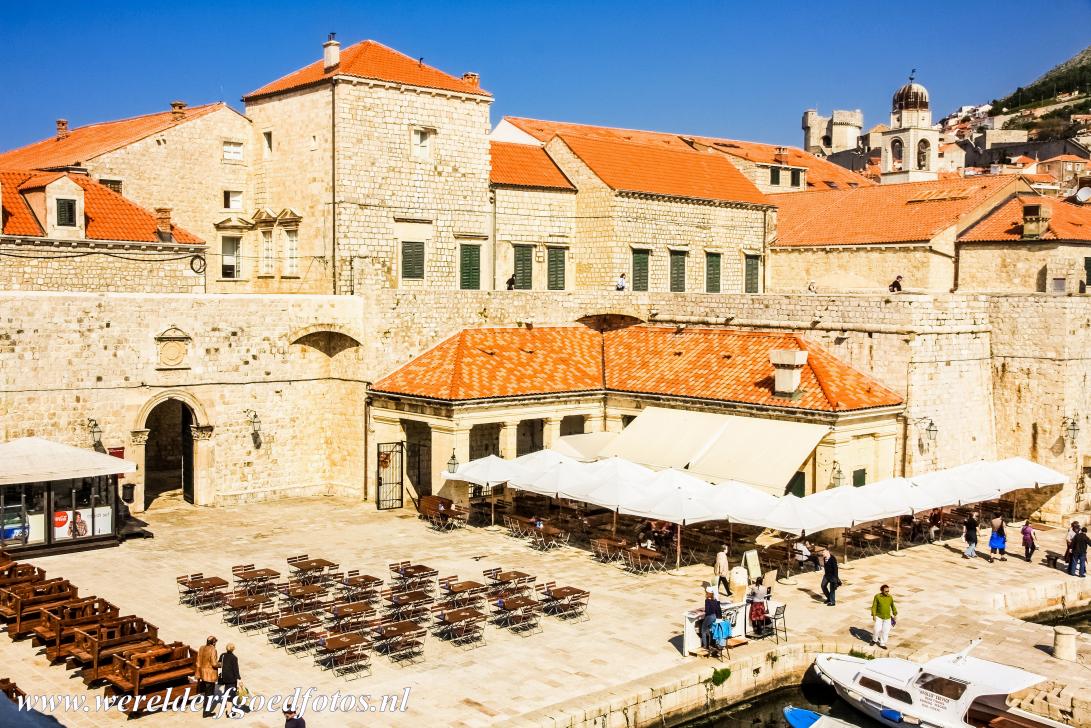
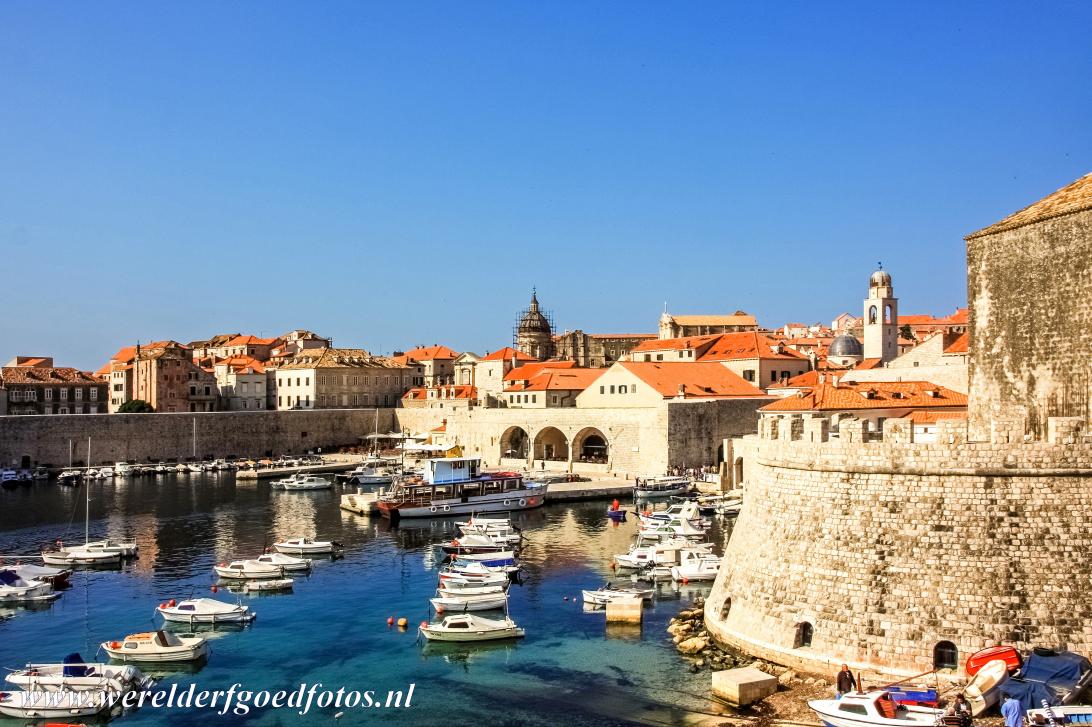
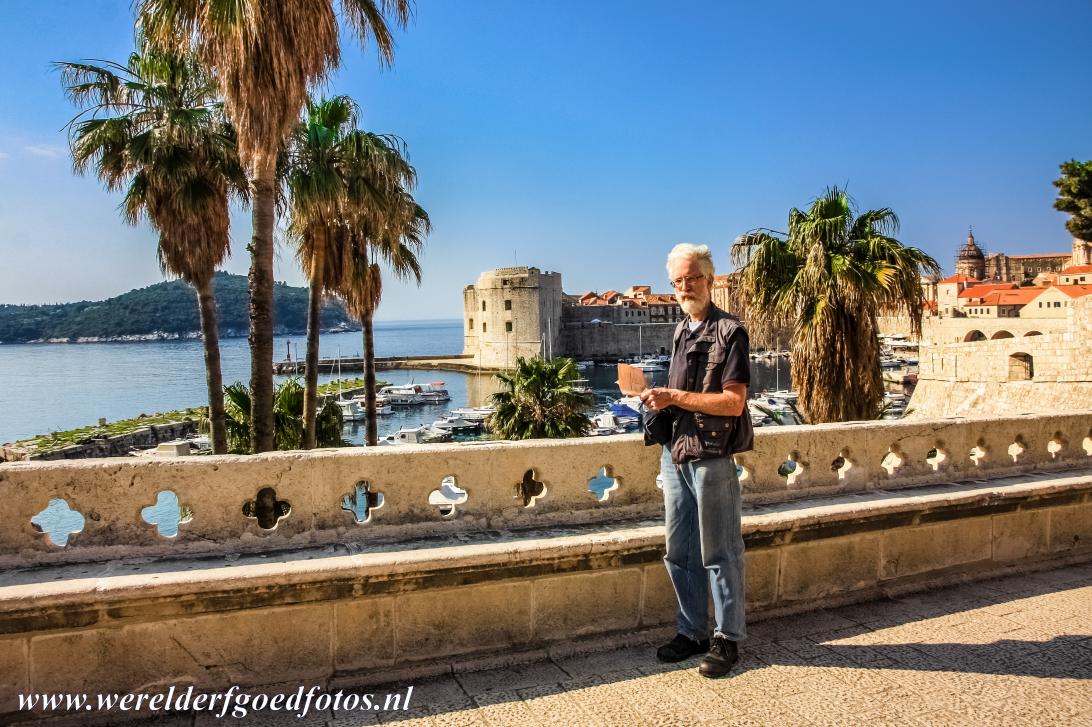
 De oude vestingstad Dubrovnik: Een deel van de vesting   en de haven, een van de oudste 
 delen van de stad Dubrovnik. De drie bogen zijn van een arsenaal uit de 12de eeuw. 
     
  Old City of Dubrovnik: The City Harbour is one of the oldest parts of Dubrovnik.  
  The arsenal with three arches was built in the 12th century.

De oude vestingstad Dubrovnik: Een deel van de vesting en de haven, een van de oudste

delen van de stad Dubrovnik. De drie bogen zijn van een arsenaal uit de 12de eeuw.


Old City of Dubrovnik: The City Harbour is one of the oldest parts of Dubrovnik.

The arsenal with three arches was built in the 12th century.

 De oude vestingstad Dubrovnik: Het St. Jansfort werd in de 14de eeuw gebouwd. 
 Het St. Jansfort werd in de 15de en 16de eeuw   aangepast.     
     
  Old City of Dubrovnik. The St. John Fortress was built in the 14th century.   
  The St. John Fortress was   modified in the 15th century and the 16th century.

De oude vestingstad Dubrovnik: Het St. Jansfort werd in de 14de eeuw gebouwd.

Het St. Jansfort werd in de 15de en 16de eeuw aangepast.  


Old City of Dubrovnik. The St. John Fortress was built in the 14th century. 

The St. John Fortress was modified in the 15th century and the 16th century.

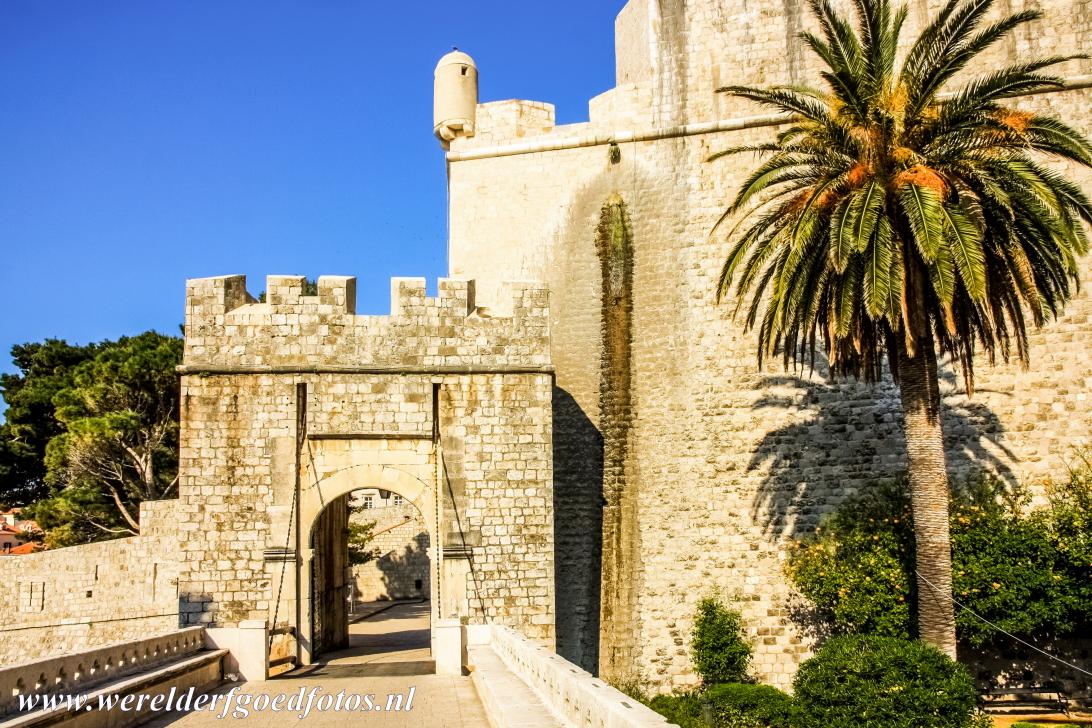
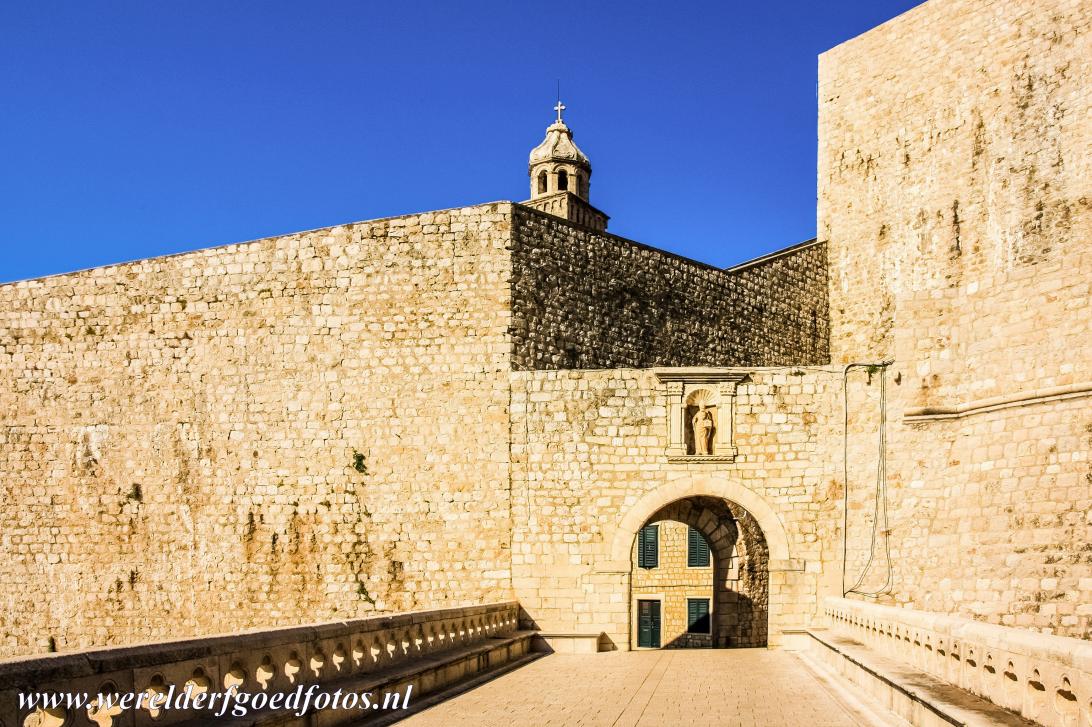
 Dubrovnik: De Ploce-poort bestaat uit twee poorten, een binnenpoort (foto)  
 en een buitenpoort, verbonden door een brug. 
 De oude vestingstad Dubrovnik werd in 1979 een Werelderfgoedsite.    
     
  Dubrovnik. The Ploce Gate consists of two seperate gates, an inner gate (photo)  
  and an outer gate.  
  Old City of Dubrovnik became a World Heritage Site in 1979.

Dubrovnik: De Ploce-poort bestaat uit twee poorten, een binnenpoort (foto) 

en een buitenpoort, verbonden door een brug.

De oude vestingstad Dubrovnik werd in 1979 een Werelderfgoedsite. 


Dubrovnik. The Ploce Gate consists of two seperate gates, an inner gate (photo)

and an outer gate.

Old City of Dubrovnik became a World Heritage Site in 1979.

 De oude vestingstad Dubrovnik: De Ploce-poort is de poort aan de oostzijde van 
 Dubrovnik. De Ploce-poort werd gebouwd in 1628, het is na de Pile-poort de tweede 
 belangrijke ingang naar de ommuurde stad Dubrovnik. Rechts het Fort Revelin (1580). 
     
  Old City of Dubrovnik: The Ploca Gate is the second major entrance to the city.  
  The Ploca Gate was built in 1628. On the right the Revelin Fortress (1580).

De oude vestingstad Dubrovnik: De Ploce-poort is de poort aan de oostzijde van

Dubrovnik. De Ploce-poort werd gebouwd in 1628, het is na de Pile-poort de tweede

belangrijke ingang naar de ommuurde stad Dubrovnik. Rechts het Fort Revelin (1580).


Old City of Dubrovnik: The Ploca Gate is the second major entrance to the city.

The Ploca Gate was built in 1628. On the right the Revelin Fortress (1580).